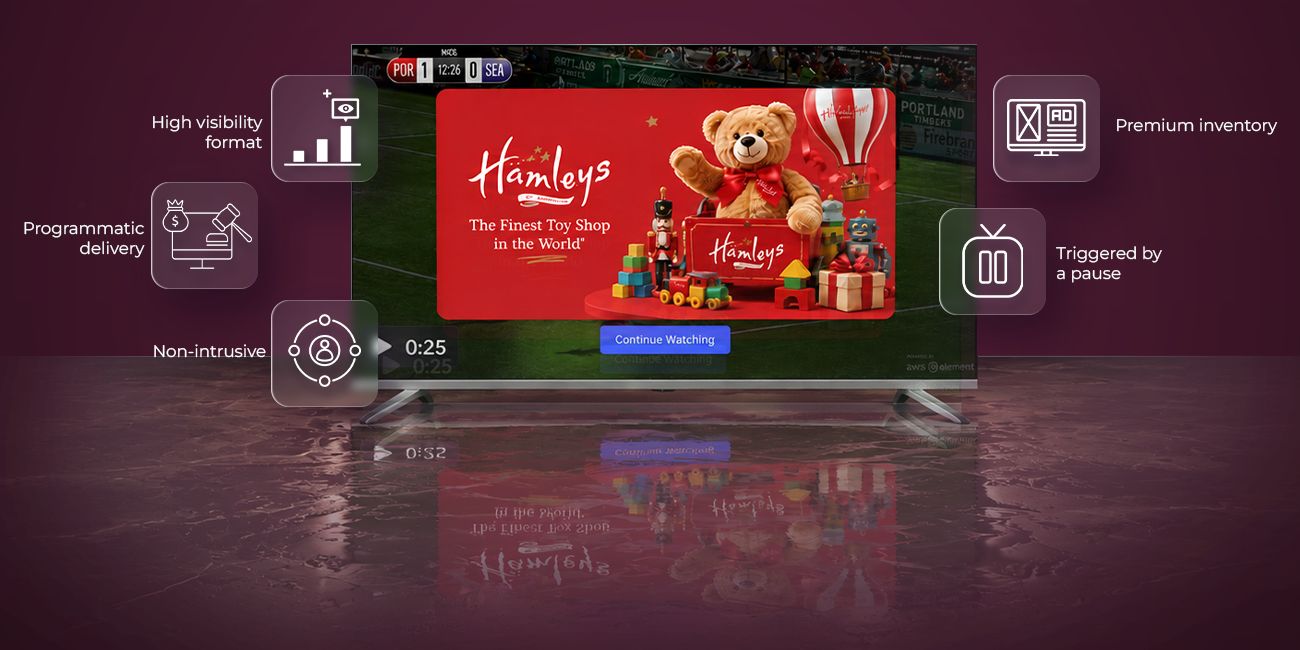

Quick Answer
Winning seasonal pause ad deals comes down to four things done in order: reserving inventory before demand peaks rather than after, choosing a deal type that matches how much certainty a campaign needs, building creative that fits a seasonal moment rather than reusing evergreen assets, and getting measurement fully tested before launch rather than mid-flight.
Because pause ad supply is still developing, advertisers planning around a fixed seasonal window should raise inventory availability early rather than assume premium placements will still be open close to launch. For advertisers using a CTV platform such as Unwire, programmatic guaranteed and private marketplace deals can provide more control over premium Pause Ad inventory where those deal types are supported.
Introduction
Seasonal advertising campaigns work within tight windows. Retail holidays, back-to-school periods, sports events, and other high-demand moments can concentrate advertiser budgets around the same dates, audiences, and content environments. For CTV campaigns, that makes planning the right inventory and deal structure before the peak especially important.
Pause ads add another planning consideration. Unlike standard pre-roll or mid-roll inventory, they appear when a viewer chooses to pause content, so availability can vary by publisher, platform, content environment, and deal type. Because the format is still developing across the CTV ecosystem, advertisers should not assume that the same inventory, targeting options, or buying conditions will be available across every platform.
For seasonal campaigns, the goal is therefore not simply to buy pause ads. Advertisers need to decide when to start inventory discussions, which deal type fits the campaign, what creative should be ready before launch, and how delivery and measurement should be checked before the seasonal peak begins.
This article explains how to plan those decisions for seasonal CTV pause ad campaigns in 2026, from early inventory planning and deal selection to creative preparation, pre-launch checks, and campaign execution.

Why Seasonal Campaigns Should Plan Pause Ad Inventory Early
Because Pause Ad supply varies by publisher, platform, deal type and content environment, advertisers planning around fixed seasonal dates should discuss availability early rather than assume premium placements will remain available close to launch.
Retail is the largest ad spending category on CTV, representing just under one-fifth of all CTV ad spending. Retail campaigns also concentrate around major seasonal periods, making these windows important planning periods for premium CTV inventory.
Broader CTV CPMs have generally moderated as more ad-supported streaming inventory has entered the market, so the assumption that all CTV inventory automatically becomes more expensive during peak periods does not always hold. Pause ads sit in a different position within that trend. Because the format is still developing, availability can vary by publisher, platform, deal type, and content environment. For campaigns built around fixed seasonal windows, advertisers should therefore discuss inventory availability with their platform early rather than assume premium pause placements will remain open close to launch.
Genre-level demand adds another consideration. Pause-ad campaigns can incorporate contextual signals such as content genre and program context, depending on the available inventory and targeting capabilities. Seasonal advertisers may also prioritize environments that naturally align with the campaign, such as holiday programming, lifestyle content, or sports around major events. When several advertisers target similar seasonal environments, availability for specific premium placements can become an important planning consideration.
Why 2026 Is a Different Planning Year for Pause Ads
Two developments make this season different from the last two years of pause ad buying. First, IAB Tech Lab’s CTV Ad Portfolio signaling guidance was finalized in July 2026, giving buyers and sellers a more standardized framework for communicating and transacting emerging formats such as Pause Ads programmatically rather than negotiating platform by platform. This is the first Q4 planning cycle following that finalization.
Second, demand-side interest in the format has measurable momentum behind it. Per BrightLine data cited by EMARKETER, pause ads deliver a 34% lift in unaided recall, and the same source notes that pause ads represent one of the few standardizable formats available consistently across streaming services as CTV continues to fragment across platforms. Standardized infrastructure plus demonstrated performance is the combination that tends to pull buyers toward a format faster.
When Should Advertisers Start Reserving Seasonal Pause Inventory?
Pause ad inventory does not need a different calendar from the rest of a seasonal CTV plan, but it does need to be treated as a distinct line item within that calendar rather than an afterthought layered on late. A practical planning framework for seasonal pause campaigns could look like this:

The reservation phase is where seasonal pause ad plans can lose ground. Waiting until creative is finished to start inventory conversations means competing for whatever premium pause placements have not already been claimed by advertisers who reserved earlier.
Which Deal Type Fits a Seasonal Pause Campaign?
The mechanics of open auction, private marketplace, and programmatic guaranteed deals are covered in full in how private marketplaces work for CTV. For a seasonal pause campaign specifically, the decision comes down to how much volume certainty the campaign actually needs during the exact weeks that matter most.
Programmatic guaranteed fits campaigns built around a fixed peak window, since it locks a defined volume of pause inventory at a negotiated price before the season starts, removing the risk of getting outbid during the highest-demand days. Private marketplace deals fit campaigns that want curated, premium pause inventory with more flexibility on exact delivery, useful when a campaign runs across a longer seasonal window rather than a single peak. Open auction access may be better treated as a supplementary strategy when a campaign depends on specific premium pause placements during a concentrated seasonal window, rather than the primary way that inventory is secured.
For advertisers using a CTV platform such as Unwire, programmatic guaranteed and private marketplace deals can provide more control over premium pause inventory where those deal types are supported, which is what allows a seasonal reservation to be locked in and can give advertisers more control over premium pause inventory when those deal types are supported, particularly for campaigns planned around fixed seasonal dates.
None of this requires choosing one deal type exclusively. A common approach is to secure a base of guaranteed volume for the exact peak dates that matter most, then layer private marketplace access around it for the surrounding weeks of the season when some flexibility on delivery is acceptable. What matters is deciding this mix during the reservation phase, not improvising it once the season is already underway and the highest-certainty options have already been claimed by advertisers who planned earlier.
How Should Seasonal Creative Differ From Evergreen Pause Creative?
Evergreen pause creative is built to hold up indefinitely: a clear brand mark, a single uncluttered message, no dependency on a specific offer or date. Seasonal creative needs a different design brief, because it is working against a shorter window and a more specific intent.
The clearest opportunity is interactive and QR-driven creative tied to a seasonal offer with a defined validity window rather than a generic brand message. For seasonal campaigns, interactive or QR-enabled creative can give viewers a direct path from the paused screen to an offer, product page, or other campaign destination where the platform supports those capabilities. Because pause ad dwell time still varies by viewer, seasonal creative should keep the primary offer readable within the first few seconds, then use any additional screen time for supporting detail rather than a delayed reveal, since there is no guarantee a viewer stays paused long enough to see a slow build.
Reusing an evergreen pause asset for a seasonal push can miss the opportunity to make the creative relevant to a specific seasonal offer, audience need, or shopping moment. A pause moment is a quiet, deliberate viewing state, and a message that does not reflect the specific reason a viewer would care right now reads as filler rather than relevant.

What Should Be Ready Before the Season Starts?
A short pre-launch checklist prevents the most common seasonal pause ad failures, none of which are about the format itself.
- Landing pages are live and season-specific: confirm QR codes and any clickable elements route to a season-specific landing page rather than a generic homepage, since a mismatch between the offer on screen and the page it leads to undermines the format’s action-taking advantage
- Tracking is tested end to end: verify cross-device attribution before launch rather than during the first week of delivery, so early performance data can actually be trusted for in-flight optimization
- Creative renders correctly everywhere: check rendering across every platform included in the deal, since pause ad implementation can vary and a creative that looks right on one platform is not guaranteed to look right on another
- Delivery pacing is confirmed with the platform: verify reserved volume and pacing expectations ahead of the peak window, so any delivery gap surfaces with enough time to react rather than showing up mid-peak when reallocating budget is harder
What Happens When Advertisers Plan Too Late?
Planning late can reduce the range of deal and inventory options available, particularly when a campaign depends on specific premium placements or fixed peak dates. Advertisers who delay reservation into the season itself are more likely to be choosing between paying more for whatever guaranteed volume remains or relying on open auction access during weeks when that access carries more risk for pause inventory specifically. Locking a deal during the reservation phase, before seasonal demand peaks, keeps more of that flexibility available.
Conclusion
Winning seasonal pause ad deals is less about the format’s performance, which is already well established, and more about treating pause inventory as its own line item with its own calendar. 2026 adds a genuine structural reason to move early: standardized signaling is now finalized, while advertiser interest in the format is developing and inventory availability can vary significantly by publisher and platform. Reserving early, matching the deal type to the certainty a campaign needs, building creative for the specific season rather than reusing evergreen assets, and testing measurement before launch put a seasonal pause campaign in a stronger position than waiting and adjusting plans once the peak window is already underway.
Meet Team Xapads at DMEXCO 2026
Planning your seasonal CTV Pause Ad strategy? Meet Team Xapads at DMEXCO 2026 to explore premium Pause Ad inventory and scalable programmatic CTV opportunities for Q4.
23–24 September 2026
Koelnmesse GmbH
Messeplatz 1, 50679 Köln, Germany
Hall 06.1 | Booth A030
Frequently Asked Questions
How far in advance should advertisers reserve seasonal pause ad inventory?
As a general planning guide, inventory conversations should start eight to ten weeks before the seasonal peak, with deal type and volume locked six to eight weeks out, ahead of the reservation window competitors are also targeting.
Is programmatic guaranteed necessary for a seasonal pause ad campaign?
Not always. Programmatic guaranteed makes the most sense when a campaign is built around a fixed, high-stakes peak window. A private marketplace deal can work well for campaigns running across a longer seasonal period with more flexibility on exact delivery timing.
Can seasonal pause ad creative reuse evergreen assets?
It can, but seasonal-specific creative gives advertisers more opportunity to align the message, offer, landing page, and timing with the campaign objective, rather than relying on a generic message that does not reflect the specific moment.
Why is 2026 different for pause ad availability compared with previous years?
This is the first Q4 planning cycle following the finalization of IAB Tech Lab’s CTV Ad Portfolio signaling guidance in July 2026, giving buyers and sellers a more standardized framework for communicating and transacting emerging formats such as Pause Ads.
What happens if an advertiser waits until the season starts to buy pause inventory?
They may have fewer premium inventory and deal options available, particularly if the campaign depends on specific dates, publishers, content environments, or guaranteed volume.
Does seasonal pause ad inventory need to be bought separately from the rest of a CTV plan?
It does not have to be a separate purchase, but it works best when planned as its own line item within the broader CTV buy, since pause inventory has a narrower, still-scaling supply base than run-of-network CTV placements and can tighten on a different timeline than the rest of a media plan.
Further Reading
Related Post