
Open exchange, private marketplace (PMP), and programmatic guaranteed (PG) are three separate ways programmatic inventory gets bought and sold, and each trades a different amount of access for a different amount of control. Open exchange lets any buyer bid on any available impression with no invitation needed. PMP restricts that same real-time auction to a selected list of advertisers using a Deal ID. PG removes the auction entirely and locks a fixed price and volume in advance. The right model depends on whether a campaign is optimizing for scale, quality, or certainty.

Introduction
Advertisers buying programmatic inventory choose between three distinct models, and the choice changes what a campaign pays, what it can control, and what it can guarantee. Open exchange offers the broadest reach at the lowest average cost. PMP narrows that same auction to a curated, invited pool of buyers. PG replaces the auction altogether with a fixed price and a fixed volume, agreed before the campaign starts.
These are not interchangeable. A campaign built for open exchange scale will underperform if forced into PG’s fixed terms, and a campaign that needs guaranteed placement will fail if left to open auction dynamics. Choosing the wrong model for the goal is one of the most common and most avoidable sources of wasted programmatic budget.
Spending patterns already reflect this shift. More than 91% of total US programmatic display ad spending now flows through PMPs and programmatic direct, according to eMarketer’s analysis of the market, with PMP spend growing faster than open exchange spend. Advertisers are actively trading bid-price savings for structure and quality, not defaulting to whichever model is easiest to set up.
The sections below compare the three models directly, then define each one briefly for reference.
How do PMP, open exchange, and PG differ in access and control?
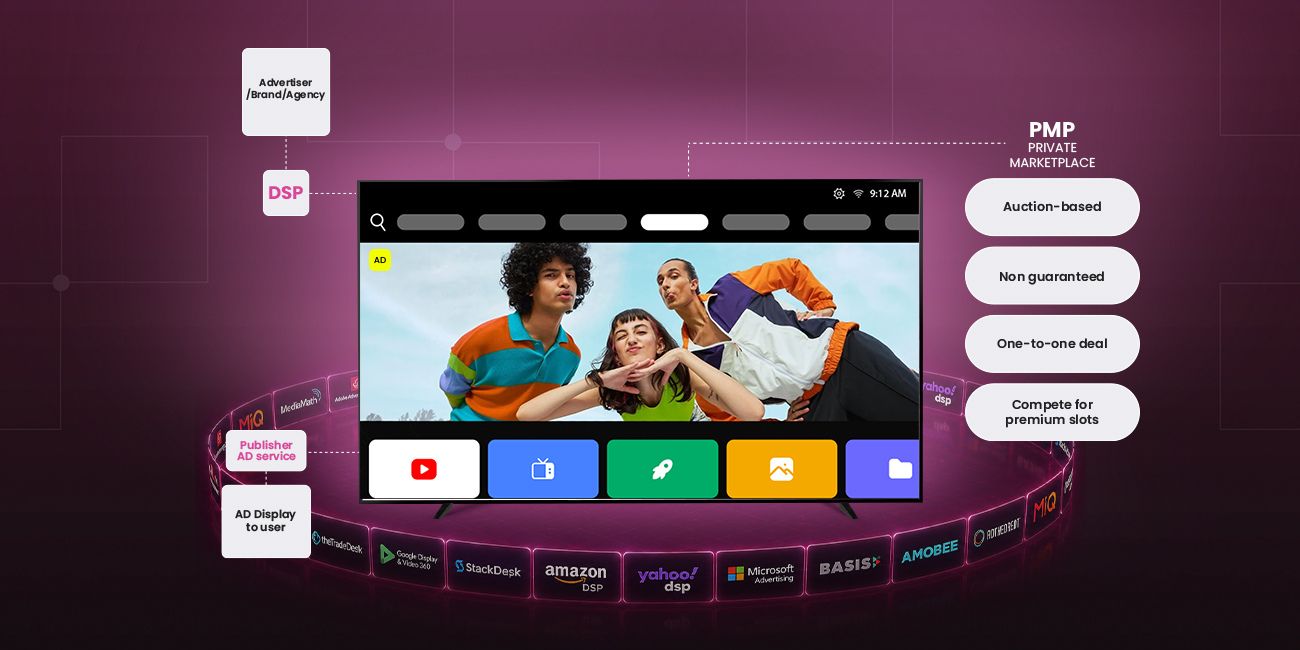
Access is the clearest dividing line. Open exchange has no restriction; any registered buyer can bid on any available impression. PMP restricts access to advertisers the publisher has approved, using a Deal ID as the gate. PG restricts access further still, down to a single negotiated relationship between one publisher and one advertiser.
Control follows the same pattern. Open exchange gives advertisers the least control over placement, since inventory spans every participating publisher. PMP gives more control because the publisher curates the inventory pool before the auction runs. PG gives the most control, since placement, volume, and schedule are all fixed by agreement rather than decided by an auction outcome.
How do PMP, open exchange, and PG differ in pricing and auction type?
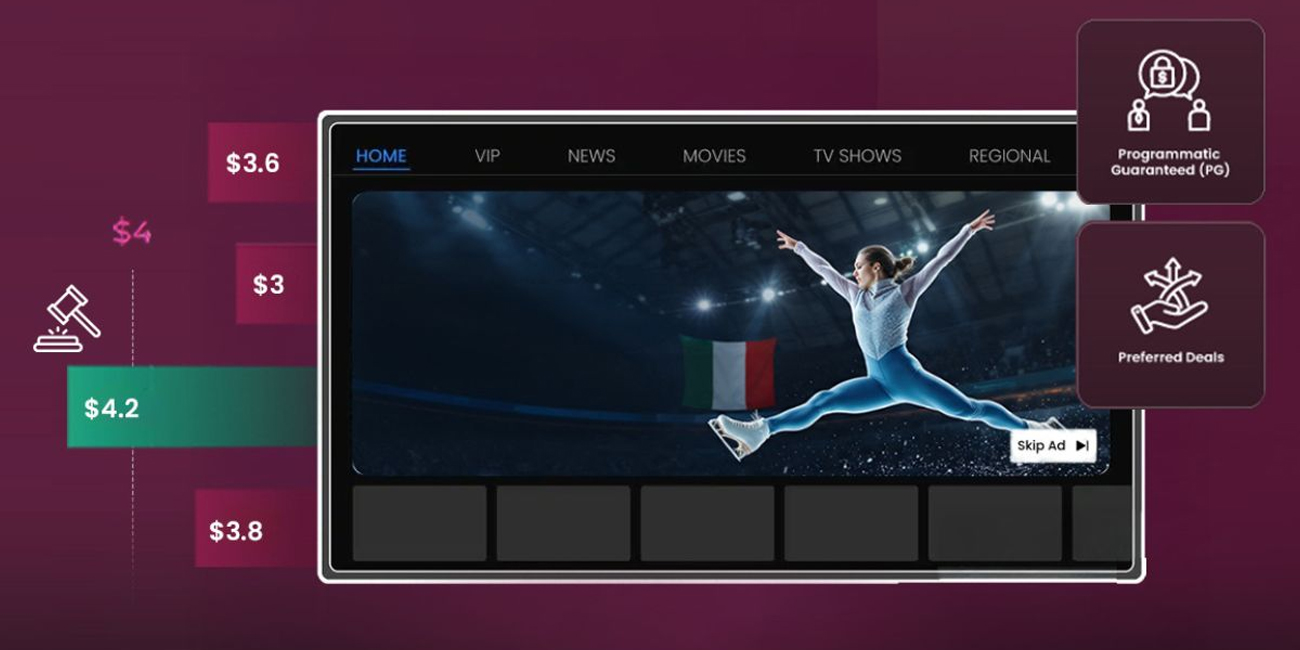
Open exchange runs on pure auction dynamics, which typically produces the lowest average cost per impression along with the widest variance in placement quality. PMP also runs on auction pricing, but with a higher floor set by the publisher to reflect the curated inventory behind it.
PG removes the auction. Price and volume are fixed before the campaign begins, with no bidding and no fluctuation during the flight. That makes PG the most predictable model for budget planning, typically at a higher committed cost than either auction-based option, since the publisher is trading pricing flexibility for guaranteed revenue.

How do PMP, open exchange, and PG differ in inventory quality and transparency?
Inventory quality tends to rise as access narrows. Open exchange includes the widest range of publishers, so quality varies and requires active filtering. PMP inventory is pre-selected by the publisher, raising the baseline quality before the auction even starts. PG inventory is the most controlled, since the exact placement is agreed in advance.

Which model should advertisers choose for their campaign goals?
Many campaigns do not use only one model. A media plan might run open exchange for reach, PMP for brand-safe mid-funnel placements, and PG for a high-visibility launch moment, all inside the same flight.
Operational complexity increases as soon as a campaign mixes these models across formats, Web, In-App, and CTV. Each deal type carries its own Deal ID setup, creative approval process, pacing logic, and reporting structure, and coordinating all three without a centralized workflow tends to create gaps in tracking and delivery. This is the operational layer platforms like Xapads support through the Deal Desk, managing PMP and PG setup across formats so advertisers are not running each deal type through separate, disconnected processes.
What is open exchange in programmatic advertising?
Open exchange, also called the open auction, is the default form of programmatic buying. A supply-side platform sends a bid request the moment an ad slot loads, demand-side platforms evaluate and bid in milliseconds, and the highest bid wins. There is no prior relationship between buyer and seller, and no publisher approval is required to participate.fcampaign goals
What is a private marketplace (PMP)?
A PMP narrows the open auction to a closed group of advertisers chosen by the publisher, using a Deal ID to grant access. The auction mechanics stay the same as open exchange, but only invited buyers can bid, which lets publishers package premium inventory for advertisers willing to pay a higher floor for it. A full breakdown of Deal ID mechanics and PMP deal types is covered separately, since it is a large enough topic on its own.
What is programmatic guaranteed (PG)?
Programmatic guaranteed transactions commit to both a fixed price and a fixed inventory volume before the campaign starts, which is what separates PG from a preferred deal that only fixes price. PG functions closer to a traditional direct-sold campaign than to an auction, executed through automated delivery systems instead of manual insertion orders.
Common mistakes advertisers make when choosing a buying model
Defaulting to open exchange for every campaign is the most frequent mistake, since it treats a scale tool as a general-purpose one and leaves brand safety and placement quality to chance. The opposite mistake is using PG for campaigns that need reach rather than certainty, which locks budget into a fixed volume that open exchange or PMP could deliver more efficiently. A third common error is treating PMP as automatically safer than open exchange without checking who was actually invited to the deal, since a poorly curated PMP list can perform no better than the open auction it was meant to improve on.
FAQ
Can advertisers mix PMP and open exchange in one campaign?
Yes. Many campaigns run PMP for premium, brand-safe placements alongside open exchange for additional reach, treating the two as complementary rather than exclusive.
Is programmatic guaranteed the same as a direct-sold campaign?
Not exactly. PG shares the fixed price and fixed volume of a direct-sold deal, but it is executed through automated, programmatic delivery systems rather than a manual insertion order.
Is PMP better than open exchange for CTV campaigns?
PMP is generally preferred for CTV when brand safety and placement quality matter, since publishers can curate premium CTV inventory for invited buyers rather than leaving it to open bidding.
Can one Deal ID cover multiple ad formats?
Deal ID structure depends on how the publisher and platform configure the deal. Some Deal IDs are format-specific, while others span multiple formats under a single agreement.
Is PMP always more expensive than open exchange?
PMP typically carries a higher floor price than open exchange because the inventory is curated and pre-approved. The higher cost reflects placement quality and reduced risk rather than the buying method itself.
What is the main risk of choosing the wrong model?
Using open exchange for a campaign that needs guaranteed placement risks inconsistent delivery. Using PG for a campaign that needs broad reach risks paying a premium for volume that open exchange could deliver more efficiently.
Related Post