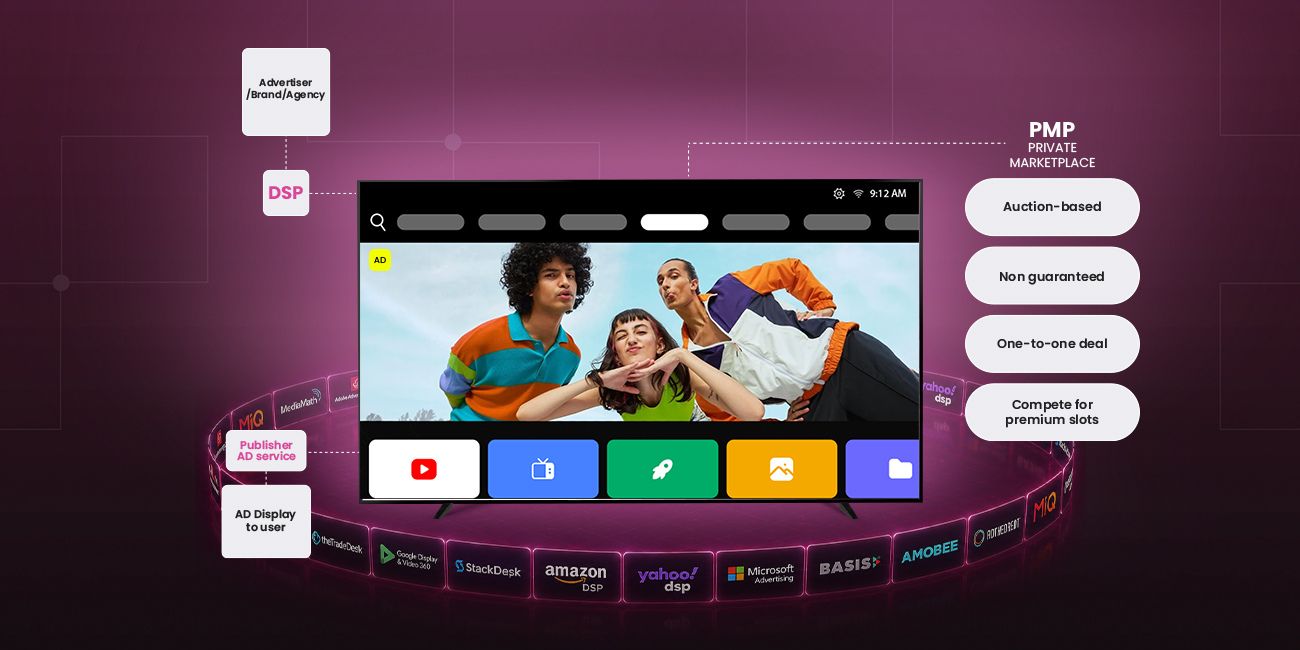
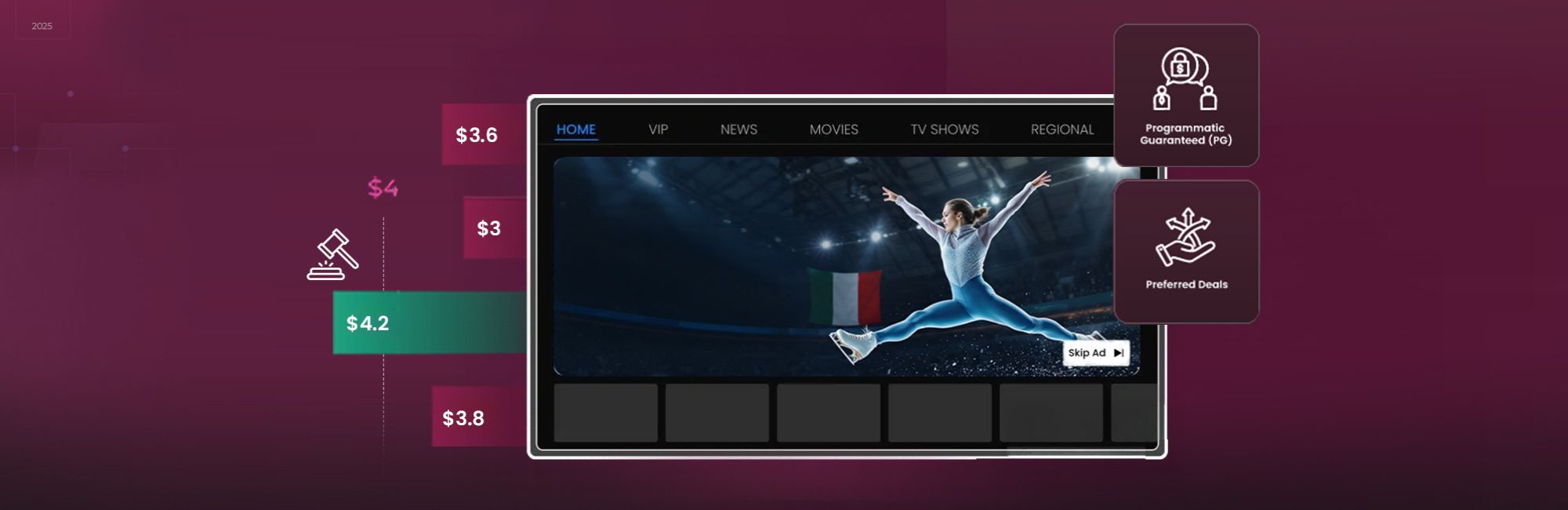
A private marketplace, or PMP, is an invite-only programmatic auction where a publisher offers premium ad inventory to a small group of selected advertisers before that inventory reaches the open exchange. Each PMP runs through a Deal ID, a unique code that links a specific buyer to a publisher’s inventory under agreed terms such as price floor, audience, and format. Buyers still bid in real time, but only invited brands can compete, which keeps low-quality demand out and opens access to higher-value placements.
A private marketplace gives advertisers a way to buy premium inventory through real-time bidding while keeping tight control over where ads run. This matters more than ever in 2026, because most digital advertising now moves through automated buying. The majority of digital display ad spend transacts programmatically, and that share keeps climbing as more screens, apps, and connected TV households come online.
Automation made buying fast and large-scale. It did not, on its own, make every impression premium or every supply path clean. The open exchange, where almost any buyer can bid on almost any impression, struggles to tell advertisers which sites their ads run on, who else is bidding, and whether the supply path is direct.
Private marketplaces close that gap. A PMP keeps the real-time auction that makes programmatic efficient, then adds a layer of control. The publisher picks the buyers. The buyer sees exactly which inventory is on offer. Both sides agree on terms before a single bid is placed.
This article explains what a private marketplace is, how a PMP deal works step by step, the two main deal types, and why advertisers choose this buying method heading into 2030.

What is a Private Marketplace (PMP)?
A PMP sits in the middle of the programmatic buying stack. On one side is the open exchange, where any buyer can bid with little restriction. On the other side is programmatic guaranteed, where one buyer commits to a fixed volume at a fixed price with no auction at all. A PMP blends both worlds. It keeps an auction, so price stays competitive, but limits that auction to chosen buyers, so quality and control stay high.
The table below shows where each main buying method sits.
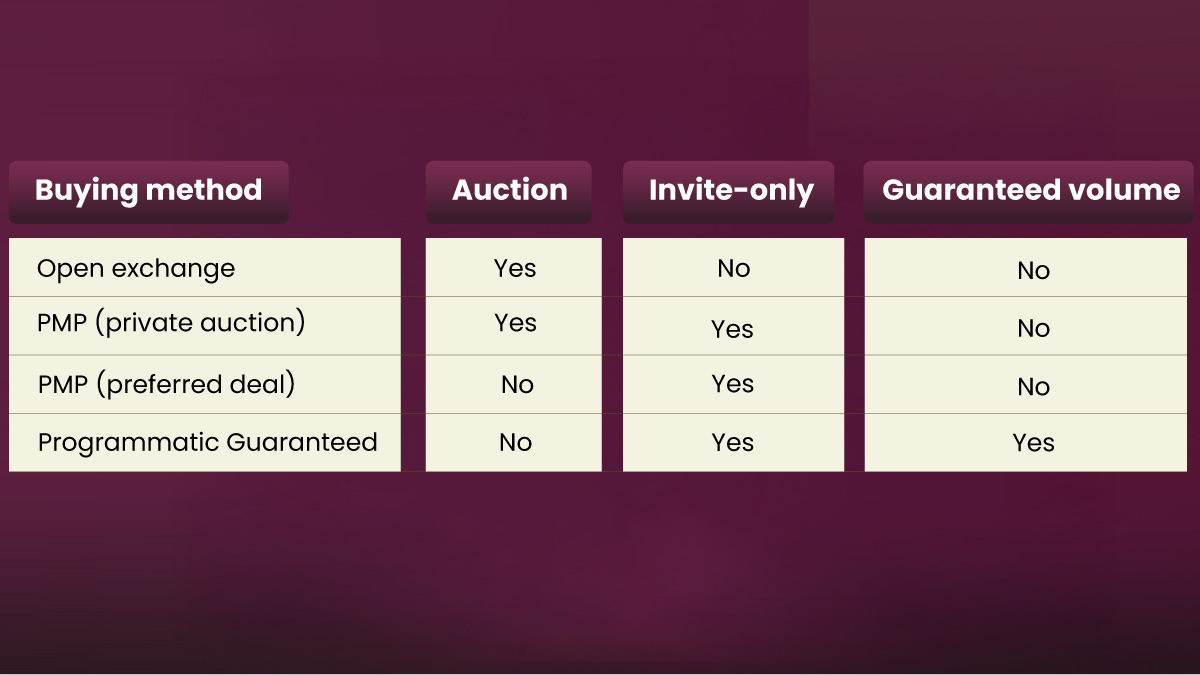
This middle position is the whole point. Advertisers gain access to inventory that publishers do not release into the open market, such as homepage placements, premium video, or high-value audience segments, while publishers keep control over who buys and at what floor price.
How Does a PMP deal work?
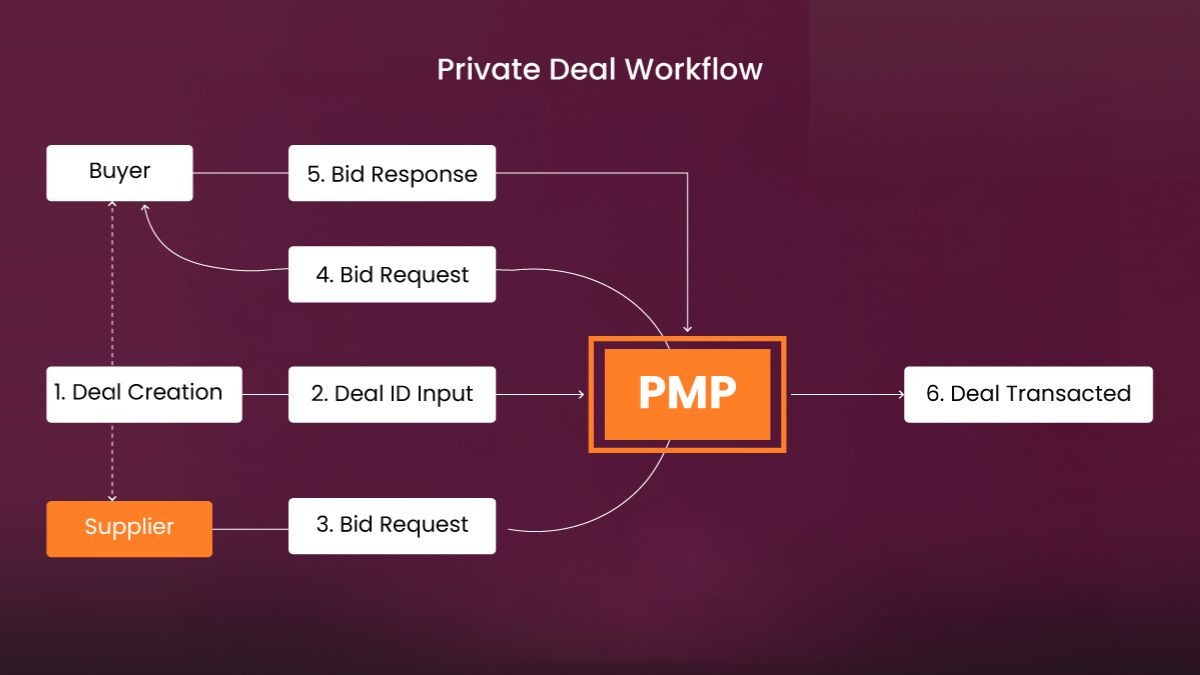
A PMP deal follows a clear sequence. First, the publisher decides which inventory to offer, such as a section of a site, a video unit, or an audience segment. Next, the publisher sets the terms, including the price floor, the formats, and the buyers allowed to bid. The platform then generates a Deal ID that carries those terms. The buyer adds that Deal ID inside the demand-side platform, and from that point the inventory becomes available to bid on whenever it matches the deal rules. When a matching impression appears, the auction runs, the winning bid is selected, and the ad serves, all in real time.
What is a Deal ID and what does it do?
A Deal ID is the unique code that holds a PMP deal together. It links a specific buyer, or set of buyers, to a specific publisher’s inventory under agreed conditions. The Deal ID carries the rules of the deal: the floor price, the eligible formats, the targeting, and the priority level. When a buyer activates a Deal ID inside a demand-side platform, the system knows exactly which impressions qualify and what terms apply. Without a Deal ID, a PMP cannot function, because nothing would connect the agreed terms to the live auction.
How Does the auction run inside a PMP?
Inventory inside a PMP is usually offered to invited buyers before it reaches the open exchange. This is often called a first look, and whether it applies depends on how the supply-side platform and exchange are configured. If an invited buyer meets the floor price and wins, that bid serves. If no PMP bid clears the floor, the impression can fall through to the open exchange. Most exchanges today run a first-price auction, which means the winning buyer pays the exact amount bid rather than one cent above the second-highest bid. Inside a PMP, this rewards buyers who value the inventory and keeps pricing clear for the publisher.
What are the two main PMP deal types?
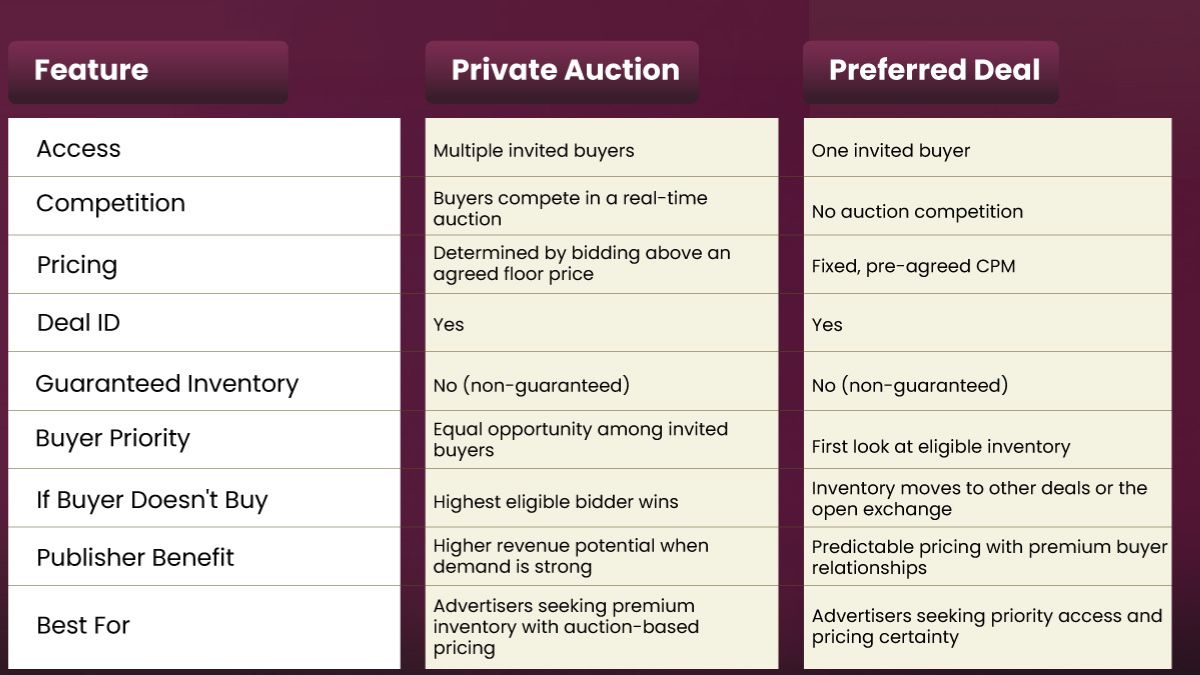
Private marketplaces come in two common forms. Both run through a Deal ID, and both limit access to invited buyers, but they handle competition and pricing differently.
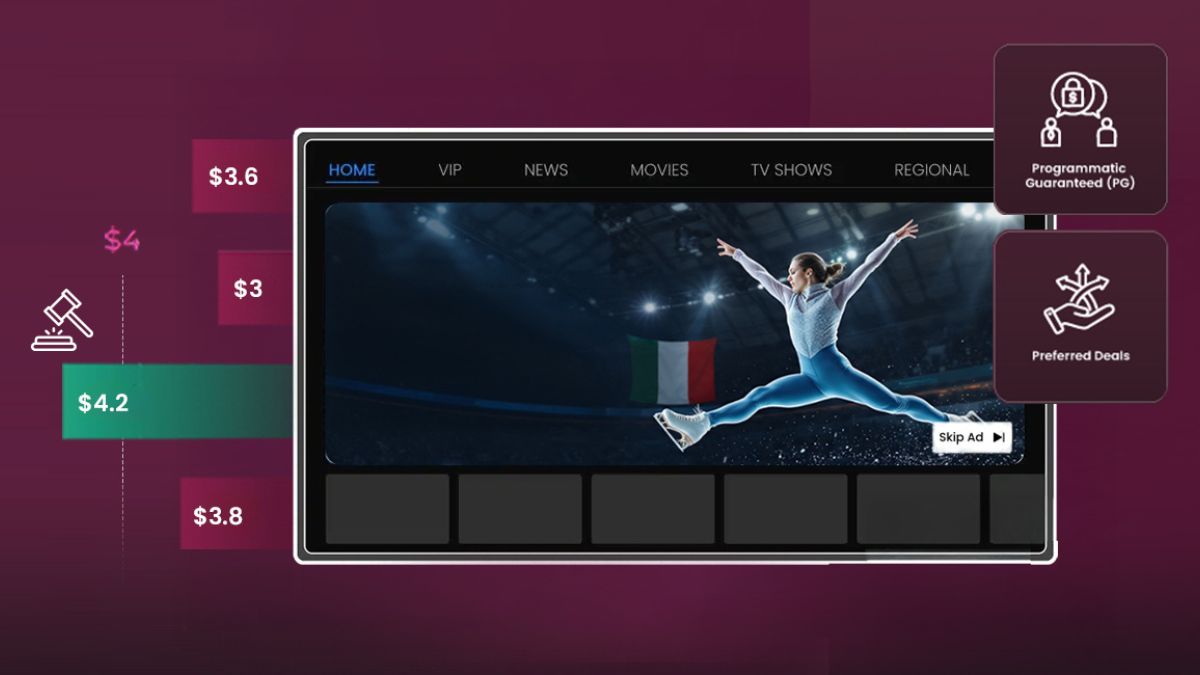
A private auction invites several selected buyers to compete for the same inventory in a real-time auction. Pricing is set by that competition above an agreed floor, so the publisher can earn more when demand is strong. A private auction is non-guaranteed, which means no fixed volume is promised to any buyer. This format suits advertisers who want premium supply but still want auction pricing rather than a flat rate.
A preferred deal invites a single buyer to view inventory first at a fixed, pre-agreed price. There is no auction competition. The buyer gets the first chance to bid on each matching impression and can choose to accept or pass. If the buyer passes, the impression moves on to other deals or the open exchange. A preferred deal is also non-guaranteed, so the buyer is not locked into a set volume. This format suits advertisers who want priority access and predictable pricing without a hard commitment.
The simple way to separate them is this. A private auction is about competition among a few invited buyers. A preferred deal is about priority for one buyer at a set price.
Why do Advertisers choose a PMP?
Advertisers choose private marketplaces for three core reasons.
The first is premium inventory access. Publishers reserve their best placements, such as homepage units, premium video, and strong audience segments, for PMP and direct deals rather than the open market. A PMP is often the only programmatic route to that supply.
The second is transparency. In a PMP, the buyer knows the publisher, the placement, and the deal terms in advance. This visibility helps media planners measure quality and keep the supply path short and direct, rather than buying blind through a long chain of resellers.
The third is brand safety and suitability control. Because the publisher and the inventory are known up front, advertisers reduce the risk of ads appearing next to unsuitable content.
Many supply partners add further protection by filtering invalid traffic at both the pre-bid and post-bid stages. The Xapads Deal Desk runs PMP and programmatic guaranteed deals across Web, In-App, and CTV, where CTV private marketplaces are delivered through Unwire.
Invalid traffic is actively filtered before and after each bid to protect campaign quality, and performance reporting follows shortly after go-live. This lets advertisers buy premium supply through a controlled channel without giving up the speed of real-time bidding.
Together these reasons explain why PMP spend continues to grow. As programmatic budgets expand through 2030, more of that spend is moving into controlled, invite-only environments rather than the open exchange.

FAQ
Is a PMP the same as a private auction?
No. A private auction is one type of PMP. A private marketplace is the wider category, and it also includes preferred deals, where a single buyer gets first look at a fixed price.
Do PMP deals guarantee ad inventory?
No. Most PMP deals, including both private auctions and preferred deals, are non-guaranteed. The buyer is not promised a fixed volume. Programmatic Guaranteed is the buying method that locks in guaranteed volume at a fixed price.
Is a PMP more expensive than the open exchange?
PMP inventory usually carries higher prices than the open exchange because it offers premium placements and tighter control. Advertisers accept the higher relative cost in exchange for quality, transparency, and brand safety.
Can smaller advertisers use PMP deals?
Yes, if a publisher invites them. Access depends on the publisher’s rules rather than only on budget size. Any invited buyer can activate the Deal ID inside a demand-side platform.
What is a Deal ID in a PMP?
A Deal ID is a unique code that connects a buyer to a publisher’s inventory under agreed terms. It carries the floor price, formats, targeting, and priority, and it is required for any PMP deal to run.
Is a PMP better than Programmatic Guaranteed?
Neither is better in every case. A PMP keeps auction flexibility and is non-guaranteed, while Programmatic Guaranteed locks in fixed volume at a fixed price. The right choice depends on the campaign goal.
Related Post