Quick Answer
No single ad format wins across every PMP deal. In-stream video and rich media tend to justify the premium pricing of curated inventory best, native fits contextual, content-driven buys, and standard display remains the most scalable, cost-efficient option for reach-driven campaigns.

Introduction
A private marketplace (PMP) gives selected buyers access to curated publisher inventory through an invite-only programmatic deal. However, access to premium inventory alone does not determine campaign performance. The ad format also matters because video, native, rich media, and standard display each support different campaign goals and user experiences.
Choosing the right format becomes particularly important in PMP buying because publishers may control which formats are available within a specific deal. For example, a publisher may offer native and standard display on editorial pages while reserving video or high-impact formats for specific premium placements. Buyers therefore need to consider both their campaign objectives and the formats supported by the publisher before activating a deal.
Advertisers are still spending more on standard display ads, but more of their programmatic budgets are now going toward video and native ads. As these formats become more popular, buyers need to think carefully about which ad format best fits their campaign goals instead of using the same format for every PMP deal.
Format selection can also affect pricing and measurement. Premium placements may carry higher CPMs than comparable open-auction inventory, but whether that premium delivers value depends on factors such as audience quality, placement, creative fit, campaign objectives, and measurement criteria.
This article focuses primarily on in-stream video, native, rich media and high-impact display, and standard display, while briefly covering audio and DOOH as additional formats that may be available through PMP deals. Because format availability varies by publisher and deal, buyers should confirm the available formats and deal terms with the publisher or supply partner before building their media plan.

Why Does Ad Format Choice Matter More in a PMP Environment?
Publishers offer PMP access specifically because they want to protect the value of their inventory. That protection comes from curation: limiting which buyers can access the placement and, often, which formats are even permitted on it. A publisher running a premium PMP deal on a news homepage, for example, may restrict inventory to native and standard display while keeping intrusive, high-impact formats off the page entirely to protect the reading experience.
For buyers, this means the format decision inside a PMP deal is partly about performance and partly about matching what the publisher is actually willing to offer at that curated tier. A format that works well in the open exchange, where any buyer can bid on any available slot, does not automatically transfer well into a PMP deal where the publisher has specific expectations about how the inventory gets used.
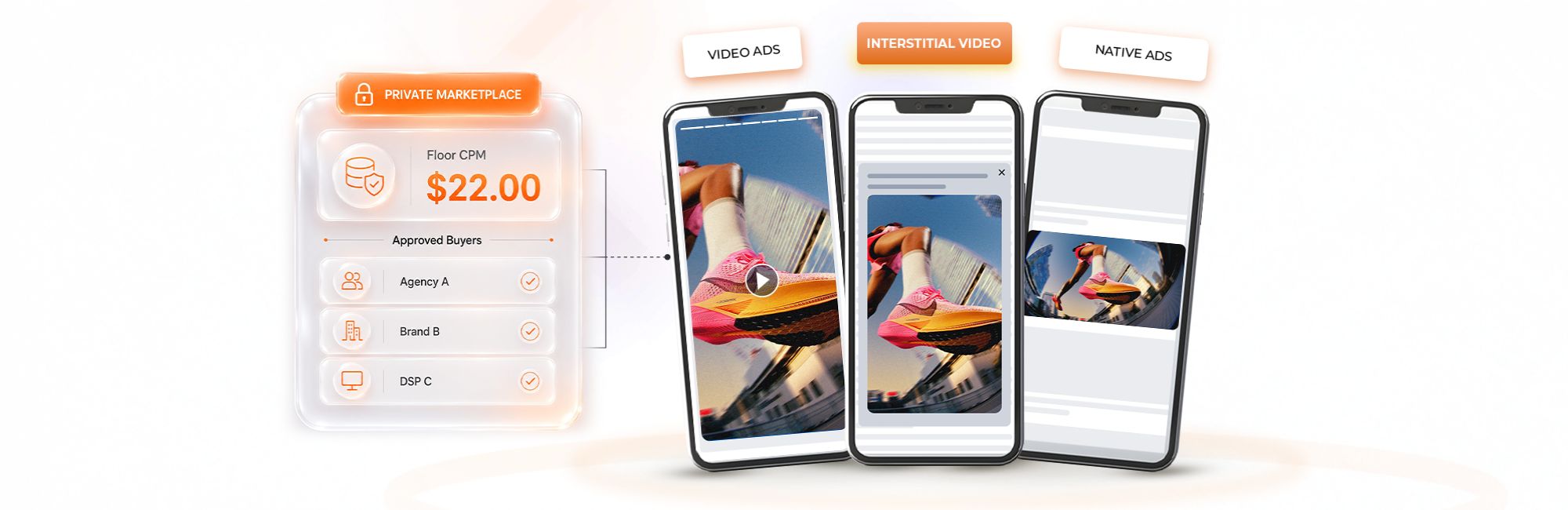
The pricing logic follows the same pattern. Formats that create stronger engagement or attention, such as video and rich media, tend to command higher floor prices inside PMP deals, since publishers know these formats justify the premium compared to open auction rates. Formats built for scale, like standard display, usually carry lower floors but make up for it in volume and cost efficiency. Matching the format to both the campaign goal and the publisher’s curation intent is what separates a PMP deal that performs from one that simply costs more than the open exchange without a clear return.

In-Stream Video
In-stream video ads run within streaming or video content, appearing before, during, or after the content a viewer has chosen to watch. In-stream video often sits at the higher end of PMP pricing, reflecting inventory scarcity, placement quality, and the value publishers place on premium video environments.
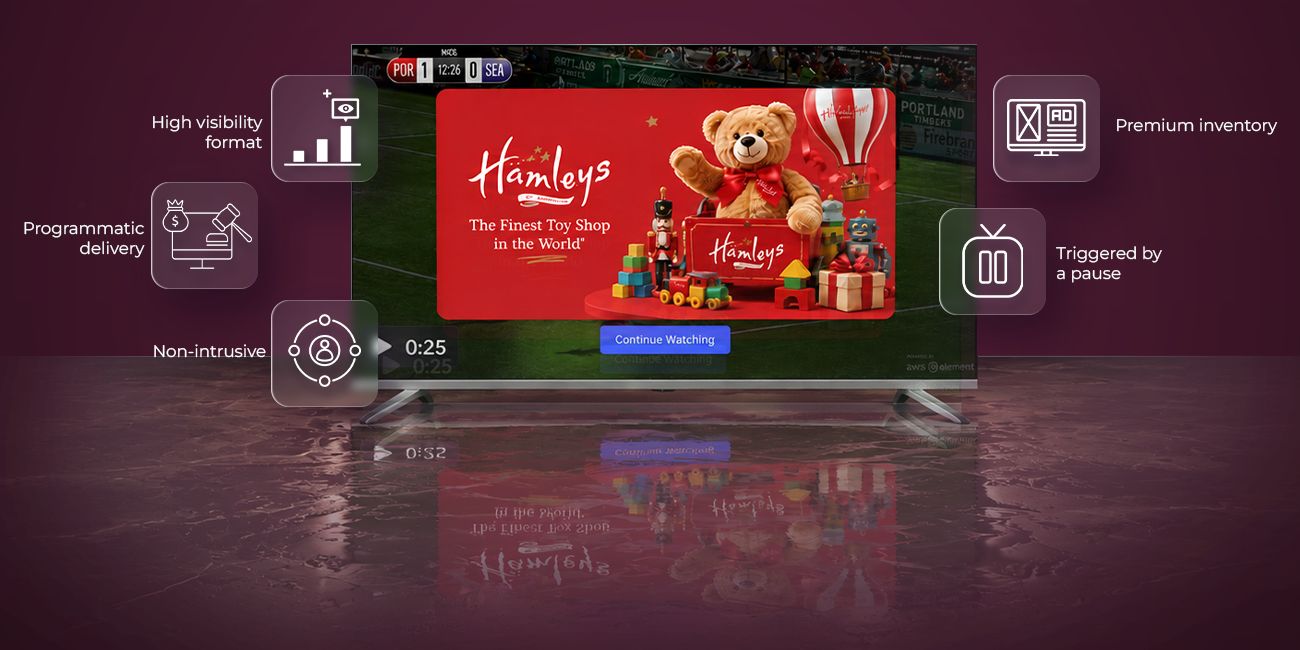
Video fits curated PMP buying particularly well because publishers offering premium video inventory, whether editorial video or connected TV content, are usually protecting a specific viewing experience and want advertisers whose creative matches that quality bar. For brand-awareness campaigns where completion, attention, or recall matter, curated PMP inventory can give buyers greater control over the publisher environments in which video appears. For a full breakdown of how in-stream video behaves specifically inside connected TV environments, including ad pod delivery and household-level targeting, that mechanic deserves its own dedicated explanation rather than a summary here.
Native Ads
Native ads are designed to match the visual style and tone of the content around them, appearing as sponsored articles, in-feed recommendations, or content cards rather than a clearly separated ad unit. This makes them well suited to editorial and content-heavy publisher environments, which are exactly the kind of premium inventory publishers tend to protect through PMP access.
Because native ads blend into the surrounding content, native formats can support deeper content-driven engagement when the creative closely matches the publisher environment, without requiring the same production investment as video. This makes native a strong middle-ground choice inside PMP deals for advertisers who want above-average engagement without paying video-level floor prices. The tradeoff is that native ads depend heavily on strong creative and copy that genuinely fits the publisher’s editorial voice, since a native placement filled with generic, poorly matched creative can underperform expectations regardless of the format’s general strengths.
Rich Media and High-Impact Display
Rich media ads go beyond a static banner, incorporating interactive elements such as expandable units, embedded video, product carousels, or scroll-triggered animations. High-impact formats, including interstitials and takeovers, prioritize visibility over subtlety, often occupying a large share of the screen at a key moment in the user’s session.
These formats tend to carry some of the highest floor prices available through PMP deals, similar to video, since they require more publisher screen real estate and more careful implementation to avoid disrupting the user experience. Rich media fits PMP buying well for product-focused campaigns that benefit from demonstrating multiple features or telling a short visual story, such as automotive, travel, or electronics launches. The main limitation is technical: rich media units are heavier and can affect page load times, so publishers curating premium PMP inventory are often more selective about which rich media formats they allow compared to how they treat standard display or native.
Platforms built specifically for this format matter here. Xaprio, a DSP focused on branding and rich media storytelling, reports campaigns built around interactive, cross-channel rich media creative seeing roughly 2x brand recall lift and average engagement times near 7.4 seconds, figures that reflect why buyers pursuing rich media through curated PMP inventory tend to prioritize a platform built around storytelling rather than adapting standard display tooling.
Standard Display
Standard display covers the traditional IAB banner sizes that have formed the backbone of programmatic buying since its earliest days. Inside a PMP deal, standard display generally carries the lowest floor price of the formats covered here, but that lower cost comes with a tradeoff in engagement compared to native, video, or rich media.
Standard display still has a clear role inside PMP buying, particularly for retargeting, frequency-driven campaigns, or budget-conscious buys where the value of the deal comes from controlled access to curated publisher inventory rather than from the format’s own engagement power. A buyer running an always-on retargeting campaign, for instance, often gets more value from a lower-cost standard display PMP deal on trusted inventory than from a higher-cost native or video deal that was not built for that kind of always-on delivery.
Audio
Programmatic audio ads can run across podcasts, music streaming platforms, and digital radio. Within PMP buying, advertisers may use curated audio inventory when publisher context and audience quality are important. Audio is generally suited to awareness and reach objectives where the campaign does not depend on visual product storytelling.
Digital Out-of-Home (DOOH)
Digital out-of-home (DOOH) advertising runs across connected screens such as digital billboards, transit displays, and place-based screens. Within PMP buying, curated DOOH inventory can give advertisers greater control over locations and screen environments, particularly for campaigns focused on specific geographic areas or high-visibility placements.

How Should Buyers Match Format to Campaign Goal?
Matching format to goal starts with being honest about what the campaign actually needs to prove. For brand-awareness campaigns, buyers may prioritize formats such as video, rich media, or DOOH when attention and visibility are key objectives. For campaigns focused on clicks, conversions, or retargeting, standard display and native may offer more flexible options depending on creative, audience, inventory, and pricing.
Budget stage matters too. Advertisers testing a new PMP publisher relationship often start with a lower-commitment format like standard display or native before moving budget into video or rich media once the relationship and delivery quality have been confirmed. This staged approach limits risk while still allowing the buyer to scale into higher-impact formats once the curated inventory has proven itself.
Measurement expectations should also shift with the format. Video campaigns may focus on completion rate, viewability, attention, and brand-lift measures. Rich media campaigns may track interaction rate, engagement, viewability, or other creative-specific signals. Standard display and native campaigns may use click-through and conversion metrics when those outcomes align with the campaign objective. Applying the same measurement framework across every PMP format can create misleading comparisons because each format serves a different role in the media plan.
Conclusion
Format selection inside a PMP deal should reflect the campaign objective, available publisher inventory, creative requirements, and measurement strategy. Video and rich media can support attention-led campaigns, native can fit content-driven environments, and standard display can support scalable reach and retargeting. Other formats may also be considered depending on the campaign requirements and inventory available through the deal.
No single format is the best choice for every PMP deal. Buyers should consider pricing, audience quality, placement, creative fit, and the outcomes they want to measure before choosing the right format for their campaign.
FAQ
Does a PMP deal restrict which ad formats can be used?
Often yes. Publishers curating PMP inventory frequently limit which formats are permitted on a given placement to protect the user experience, so buyers should confirm allowed formats before finalizing deal terms rather than assuming any format can run on any curated placement.
Is video always the best-performing format for PMP deals?
Not for every campaign. Video is often prioritized for brand awareness and recall objectives, but performance-driven campaigns focused on clicks or conversions may see better cost efficiency from native or standard display instead, depending on creative and audience fit.
Why does native advertising typically cost less than video in a PMP deal?
Native ads generally require less production investment than video and occupy less disruptive ad space, which usually places their floor prices below video and rich media, though actual pricing still depends on the publisher and placement.
Can rich media formats run on any publisher offering PMP deals?
Not always. Rich media units are heavier and can affect page performance, so some publishers restrict which rich media formats they allow inside their PMP inventory, even when the same publisher permits it in direct-sold placements.
How should a buyer decide between native and standard display for a PMP deal?
The decision usually comes down to available creative and campaign goal. Native works best when the buyer has content-style creative that can genuinely match the publisher’s tone, while standard display suits campaigns prioritizing scale, retargeting, or lower cost per impression over deep engagement.
Further Reading
For a broader look at how PMP deals compare to programmatic guaranteed and preferred deals, see Types of Programmatic Advertising Deals: The Complete Guide.
Related Post