Quick Answer
Most programmatic advertising campaigns underperform because of problems around campaign setup, measurement, audience targeting, creative, inventory quality, and optimization, rather than one single flaw in programmatic technology itself. Common issues include broken conversion tracking, audiences that are too broad, optimization toward vanity metrics, weak creative rotation, poor supply-path transparency, and incomplete first-party data.
The fix starts with accurate measurement and clear business KPIs, followed by tighter audience strategy, regular creative testing, transparent inventory buying, and continuous performance analysis. Advertisers should diagnose the specific point of failure before changing budgets or targeting, since the right fix depends on whether the problem sits in delivery, engagement, conversion, or measurement.
Introduction
You launched the campaign. The impressions came in. The clicks came in. The leads didn’t. If that sounds familiar, you’re likely not dealing with a broken channel, you’re dealing with one of a small set of setup and management mistakes that show up repeatedly in underperforming programmatic accounts. Roughly nine out of ten display advertising dollars in the United States already move through programmatic buying, so the technology clearly works at scale. What breaks more often is the execution around it: the measurement, the targeting discipline, the patience, and the vendor relationships behind the campaign.
Here are nine common mistakes that can cause programmatic campaigns to underperform, and practical ways to address each one. Most of them are not exotic technical failures. They are ordinary setup and management gaps that are easy to overlook precisely because a campaign can look like it is running correctly, delivering impressions on schedule, while quietly failing at the parts that actually determine whether it produces a return.
Mistake 1: Launching Without a Clear Conversion Tracking Setup
You can’t optimize what you can’t measure, and programmatic bidding depends on measurement to work. The algorithm learns by watching which impressions lead to conversions, then shifting spend toward the audiences and placements that produce them. If conversion tracking is incomplete or inaccurate at launch, the bidding system may optimize using incomplete signals or fail to learn effectively against the intended conversion objective, since actual behavior depends on the configured optimization goal and bidding strategy rather than a fixed fallback rule.
This is also one of the more expensive mistakes to leave uncaught, because it compounds. Spend during a period of broken tracking doesn’t just get wasted, it can actively train the system toward the wrong signal, which slows down the eventual correction. It’s worth testing across devices and browsers separately, not just once on desktop during setup. A form that fires correctly on desktop Chrome can silently fail on mobile Safari due to how a tag manager handles certain redirects, and that gap won’t show up anywhere in a dashboard, it just quietly undercounts real conversions.
This mistake usually isn’t about a lack of knowledge either. Launch deadlines, packed campaign calendars, and pressure to get something live by a promised date often push tracking QA to the bottom of the checklist, treated as something to confirm after launch rather than before it.
Solution: Before a campaign goes live, test every conversion event manually form fills, calls, and purchases across devices and browsers, and confirm each one appears correctly inside the demand-side platform’s reporting. Treat this as a launch blocker, not a post-launch cleanup task.

Mistake 2: Defining Audiences Too Broadly
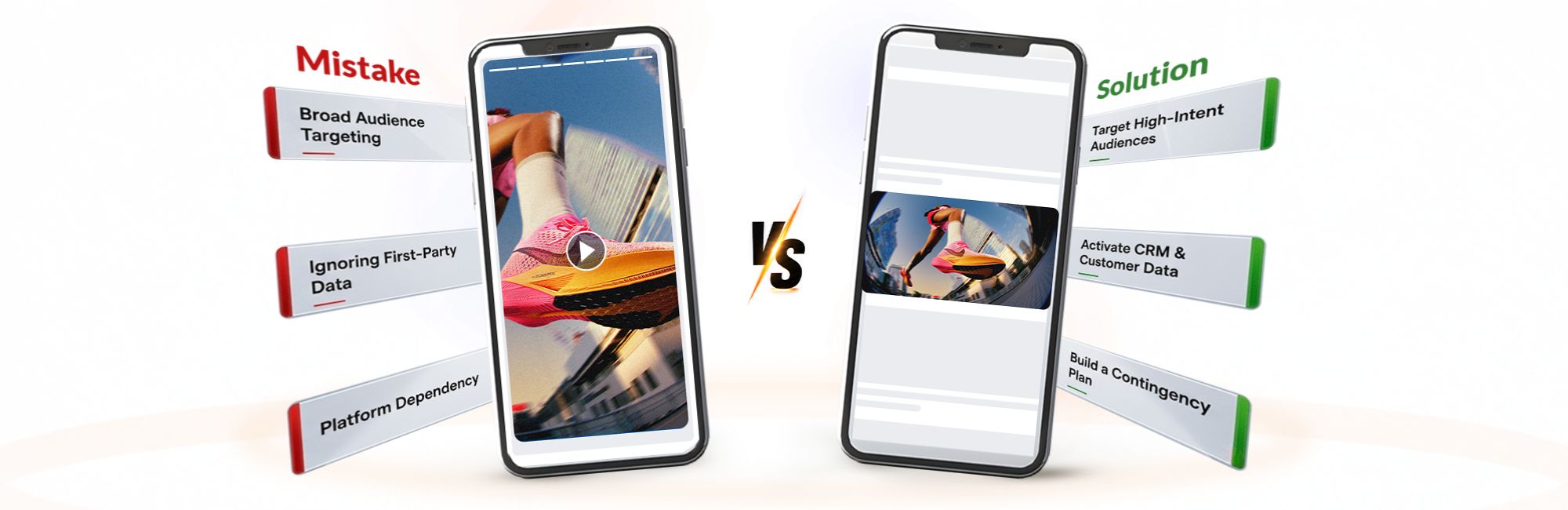
Targeting “everyone” feels like it protects reach, but it mostly protects budget from converting. A useful audience definition may combine demographic, geographic, contextual, behavioral, first-party, or business attributes, depending on the campaign and customer profile. For B2B campaigns specifically, that often means industry, company size, and role. For B2C campaigns, geographic, contextual, or behavioral signals are usually more relevant.
A more relevant audience can reduce wasted impressions, but narrowing too aggressively can also limit scale and restrict the system’s ability to learn. The goal isn’t to make the audience as small as possible, it’s to make it specific enough to reflect genuine buying potential while preserving enough reach and data for the campaign to optimize. It’s also worth revisiting audience definitions on a set schedule rather than only at launch, since the behavioral signals that made a segment relevant six months ago don’t stay fixed as buyer behavior and competitor offers shift.
Part of why this mistake persists is that a broad audience is an easier number to defend internally. A large reach figure feels like it justifies the budget, and narrowing it down can feel like shrinking the campaign’s apparent scale, even when the narrower version is the one more likely to convert.
Solution: Describe the target audience in one sentence using demographic, behavioral, contextual, first-party, or business attributes relevant to the customer profile. If that sentence still describes millions of people with no meaningful distinction, the audience hasn’t been narrowed, it’s been relabeled. Revisit the definition on a set schedule rather than treating it as a one-time setup task.

Programmatic Marketing Isn’t the Problem, Setup Is
It’s worth being direct about something before going further: programmatic advertising itself isn’t unreliable. It remains the dominant way display inventory gets bought and sold because, done correctly, it delivers efficient, precise targeting at a scale manual buying can’t match. The gap between a campaign that runs and a campaign that performs almost always comes down to the mistakes on this list, not the auction mechanics underneath it. That distinction matters because it changes what actually needs fixing. The channel rarely needs replacing, the setup usually does.
Mistake 3: Optimizing for CTR Instead of Lead Quality
Click-through rate is one of the easiest metrics to move and one of the least reliable for judging whether a campaign is working. A high CTR doesn’t necessarily indicate strong buying intent, since campaigns can generate clicks without producing qualified leads or revenue. Lead quality and marketing qualified leads rank as the most important success metric for marketers in 2026, ahead of raw lead volume. Shifting optimization toward cost-per-qualified-lead or pipeline contribution, instead of clicks, aligns the campaign with outcomes that actually matter to the business.
It’s worth understanding why this happens in the first place, since it’s rarely a knowledge gap. Marketers often lean on CTR because it’s available immediately, while lead quality and pipeline contribution can take weeks to materialize. Under budget pressure to show early results, and stakeholder pressure to demonstrate that a campaign is working, CTR becomes the easiest number to report in a weekly update, even when everyone involved knows it isn’t the metric that matters most.
Solution: Shift the optimization goal and the reporting conversation toward cost-per-qualified-lead or pipeline contribution instead of clicks. Just as important, set expectations with stakeholders upfront that the meaningful numbers will lag the campaign by design, so a slower-moving lead-quality metric doesn’t get mistaken for a stalled campaign in week one of reporting.
Mistake 4: Judging Performance Too Early
Programmatic campaigns need enough time and conversion data for bidding and optimization systems to identify meaningful performance patterns. How long that takes varies by demand-side platform, budget, audience size, campaign objective, and conversion volume, so applying a fixed universal timeline to every campaign is a mistake in itself. Instead of assuming a set number of days, advertisers should monitor whether the campaign has collected enough reliable data before making major decisions. In the early stages, focus on tracking accuracy, delivery, pacing, and initial conversion signals before judging long-term efficiency. Businesses that treat early results as final risk abandoning a channel just as it starts to gather the data it needs to perform well.
This mistake is rarely about impatience alone. Budget pressure to justify spend quickly, stakeholder pressure to show that a new channel was the right call, and weekly reporting cycles that expect a fresh number every Monday all push teams to react to short-term dips that are a normal part of a campaign still gathering data. A campaign that looks flat in week two isn’t necessarily failing, it may just not have enough signal yet for the system to have optimized against.
Solution: Set expectations with stakeholders before launch, using leading indicators, tracking accuracy, delivery pacing, and early conversion signals, as the agreed early-stage checkpoints, rather than final cost-per-lead. That keeps a normal early dip from being read as a channel failure.

Mistake 5: Neglecting Creative Refresh
The same creative shown to the same audience repeatedly loses effectiveness over time, and can eventually produce negative rather than neutral brand associations. Because this decline is gradual, it’s easy to miss until performance has already dropped. A rising frequency metric alongside a flattening click-through rate for the same segment is usually an early sign that the audience has seen the creative enough times that it’s stopped registering as new information.
Creative refresh tends to slip for a practical reason: producing new assets takes time and budget, and without someone explicitly owning the refresh cadence, it competes with other priorities until performance has already declined enough to force the issue.
Solution: Monitor frequency and creative-level performance directly, and rotate creative when engagement declines, frequency rises, or the data indicates fatigue, rather than waiting for a fixed calendar date. Building a small rotation of creative variants before launch removes the dependency on someone remembering to refresh it later.
Mistake 6: Ignoring Brand Safety and Ad Fraud
Brand safety and invalid traffic controls vary across demand-side platforms, supply-side platforms, verification partners, and campaign configurations. Advertisers should not assume every available protection is automatically applied to every campaign. Before launch, it’s worth confirming which pre-bid filters, brand-suitability settings, inventory controls, and post-bid verification tools are actually active for the inventory being purchased, rather than relying on whatever the default configuration happens to be.
This is also where supply path quality becomes relevant, since a longer, less transparent path between advertiser and publisher makes both fraud and brand safety harder to control. Xapads’ programmatic infrastructure runs on a single-hop, green supply path that is fully ads.txt and app-ads.txt compliant, which keeps the route between campaign and inventory short and auditable. On verification specifically, Xapads treats HUMAN and Pixalate as separate, distinct layers rather than a single combined guarantee. With the support of HUMAN’s post-bid integration, Xapads has maintained competitive invalid traffic levels in the industry. Separately, Pixalate’s pre-bid data supports Xapads‘ supply quality filtering before a bid is placed. These layers serve different roles in the verification process, so advertisers evaluating any partner, not just Xapads, should confirm which pre-bid and post-bid controls apply to their specific campaign setup.
The distinction between pre-bid and post-bid matters more than it might initially seem, though neither one is a guarantee on its own. Pre-bid filtering helps screen inventory against configured quality and suitability criteria before a bid is placed, which reduces exposure to risk but doesn’t eliminate it entirely. Post-bid verification helps identify and measure issues after an impression has already been purchased or served. Both layers play a different role in campaign quality control.
Solution: Before committing budget, confirm which pre-bid filters, brand-suitability settings, and post-bid verification tools are actually active for the inventory being purchased, rather than assuming the platform’s defaults have it covered. Ask any demand or supply partner, including Xapads, which controls apply at each stage of the buy.
Mistake 7: Failing to Use First-Party Data
As privacy requirements increase and access to traditional cross-site identifiers becomes more limited and fragmented, first-party data, the information customers give directly through forms, purchases, and CRM interactions, is becoming one of the more reliable ways to build accurate audiences and measure results honestly. Roughly one in five marketers cite adopting a data-driven marketing strategy as one of their biggest challenges in 2026, which reflects how widely this gap is felt.
This one often gets deprioritized simply because it feels like a separate data project rather than a marketing task, something for another team to eventually build, rather than something marketing can start using immediately with what it already has.
Solution: Start small. A basic export of CRM contacts matching an ideal customer profile, uploaded as a custom audience or used to build a lookalike segment, gives the system a real starting point instead of a cold, broad audience with no signal behind it. A full data platform can come later.
Mistake 8: Running Programmatic in Isolation
Programmatic tends to work best as one coordinated part of a broader marketing system, not as a channel reviewed occasionally on its own. Only 44 percent of marketers currently analyze campaign performance on a weekly basis. Regular performance analysis can help advertisers catch changes in delivery, creative performance, audience response, and conversion signals before issues persist for extended periods.
This isolation often isn’t a strategy choice, it’s an org-chart outcome. Programmatic frequently sits with a different owner, team, or agency than search, email, and sales, so coordinating across channels requires extra effort that no single team is directly incentivized to make happen.
Solution: Review programmatic alongside search retargeting, email nurture, and sales outreach on a shared, regular cadence, and align on common conversion definitions across channels. That lets each channel reinforce the intent the others generated, rather than measuring itself in isolation.
Mistake 9: Ignoring Supply-Path and Platform Dependency Risk
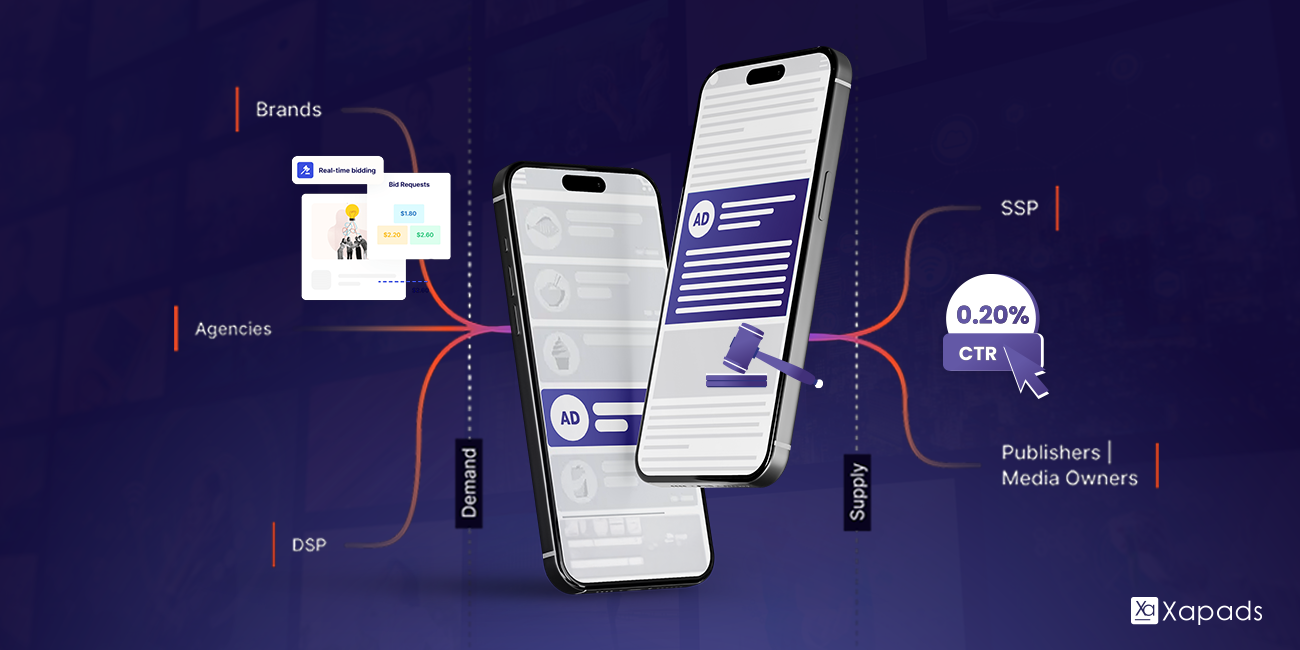
This risk rarely comes up until it causes a problem. When a single demand-side platform or integration handling bid requests experiences an outage or a business disruption, campaigns routed entirely through that one dependency can stall regardless of how well the campaign itself was built. The relevant question for advertisers isn’t about publisher-side infrastructure like header bidding wrappers, which sit outside an advertiser’s direct control, it’s understanding which platform handles activation, which supply sources feed that platform, whether a critical campaign depends heavily on one integration, and whether a contingency option exists if that dependency goes down. Reviewing this once a year, the same way a business would review any other single point of failure, catches concentration risk before it becomes an emergency.
This tends to hide behind convenience. Consolidating everything with one platform is simpler to manage day to day, and for a while it looks like it’s working fine, right up until it isn’t. Businesses that get caught out by this aren’t usually the ones who made a bad initial choice, they’re the ones who never revisited a reasonable early decision as their spend and dependence on that one platform grew over time.
Solution: Once a month, review platform dependency the same way you’d review any other single point of failure in the business. Understand which platform handles activation, which supply sources feed it, whether a critical campaign depends heavily on one integration, and whether a contingency option exists if that dependency goes down.
Frequently Asked Questions
Why isn’t my programmatic campaign converting?
The most common causes are broad audience targeting, weak or generic creative, a landing page that doesn’t match the ad’s message, incomplete conversion tracking, or judging the campaign before enough performance data has been collected.
How long should I wait before judging a campaign’s results?
There’s no universal number of days. It depends on the platform, budget, audience size, and conversion volume. Watch for signs the system has collected enough reliable data, rather than applying a fixed timeline, before making major changes.
Is programmatic worth it with a small budget?
Campaigns with very limited budgets may struggle to generate enough conversion data for effective algorithmic optimization, depending on the platform, audience size, and campaign objective. For businesses with a very limited budget and clear high-intent search demand, search advertising may sometimes offer a more practical starting point.
What’s the difference between ad fraud and a brand safety issue?
Ad fraud involves invalid traffic, such as bots or fraudulent clicks, artificially inflating metrics. Brand safety concerns where an ad appears, such as next to content that could damage brand perception, independent of whether the traffic itself is genuine.
How do I know if my ads are running on reputable inventory?
Ask a demand or supply partner for a supply path report showing how many resellers sit between the advertiser and the publisher, and confirm ads.txt or app-ads.txt compliance for the inventory being purchased.
What’s the single biggest fix if a campaign is struggling right now?
Diagnose before changing anything. A low click-through rate may point to issues with creative, audience relevance, placement, or format, not just the audience alone. Strong click volume with weak conversion may point to landing-page friction, offer mismatch, or low-quality traffic. Identify where in the funnel performance is actually breaking down before deciding what to optimize.

Conclusion: Programmatic Works When Done Right
Programmatic advertising tends to reward patience and correct setup more than it rewards budget size. Businesses that get consistent results usually aren’t spending more than everyone else, they’ve removed the predictable points of failure covered above, from tracking gaps to platform dependency risk, and given the system enough time and oversight to work as intended. None of these fixes require rebuilding a campaign from scratch. Most are checks that can be run against an existing account this week: confirm tracking fires correctly, review the actual audience definition, request a supply path report, and confirm the campaign isn’t entirely dependent on a single platform or integration.
Further Reading
For a deeper look at how supply path optimization reduces intermediary hops and improves transparency, see Xapads’ guide to DSPs, SSPs, and ad exchanges.
Related Post