Quick Answer
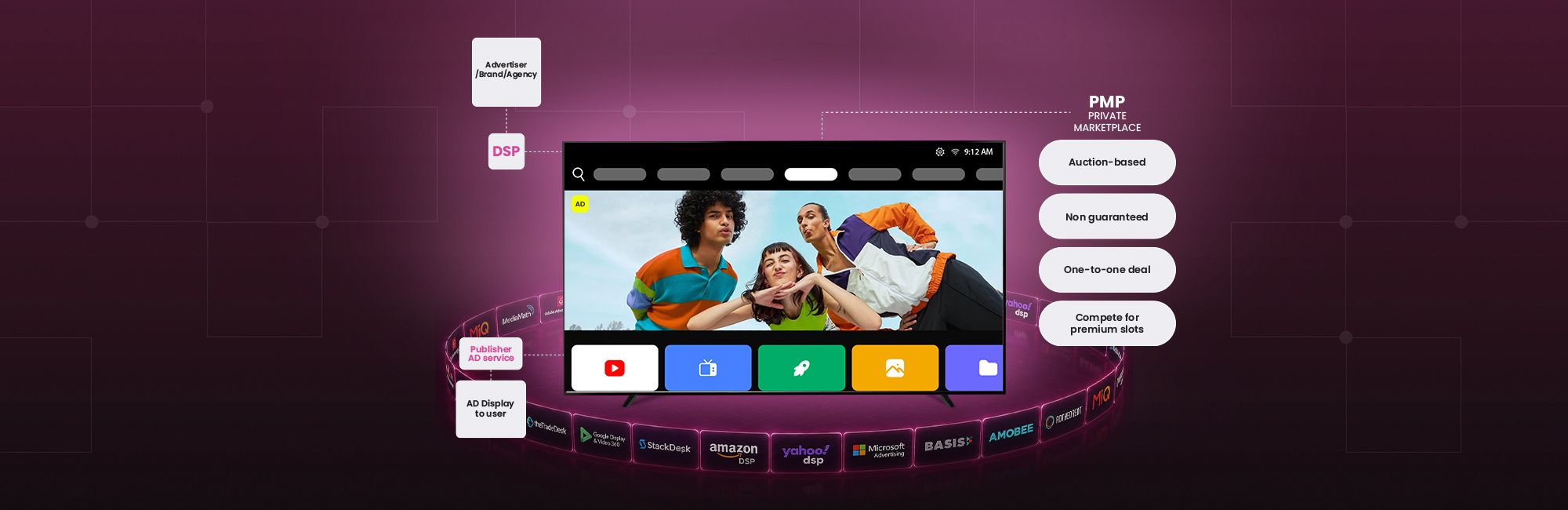
A CTV private marketplace works the same way as a display PMP at the deal level. A publisher or supply-side platform sets up an invite-only auction, assigns a Deal ID, and shares that ID with selected buyers. The difference sits inside delivery. CTV inventory reaches viewers through ad pods placed inside a live stream, and most of that stream is delivered through server-side ad insertion rather than a browser-based tag. That single mechanical difference changes how targeting, frequency capping, and measurement behave compared with a standard web or in-app PMP. Buyers who treat CTV PMP as “display PMP with a bigger screen” usually run into problems with under-delivery, duplicate ad pods, or unclear reach numbers. The steps below outline how a CTV PMP deal actually moves from setup to delivery.
- A publisher or CTV app owner packages a slice of inventory (by genre, device type, or audience segment) and creates a private deal on its SSP.
- The SSP generates a Deal ID and shares it with approved demand-side platforms and agency trading desks.
- The buyer loads the Deal ID into its DSP seat and sets a floor CPM, targeting rules, and frequency caps.
- When a viewer starts a stream, the streaming app or server-side ad inserter requests an ad decision and matches it against the Deal ID.
- The winning ad is stitched into the video stream as part of an ad pod and reported back through the SSP and DSP.
Introduction
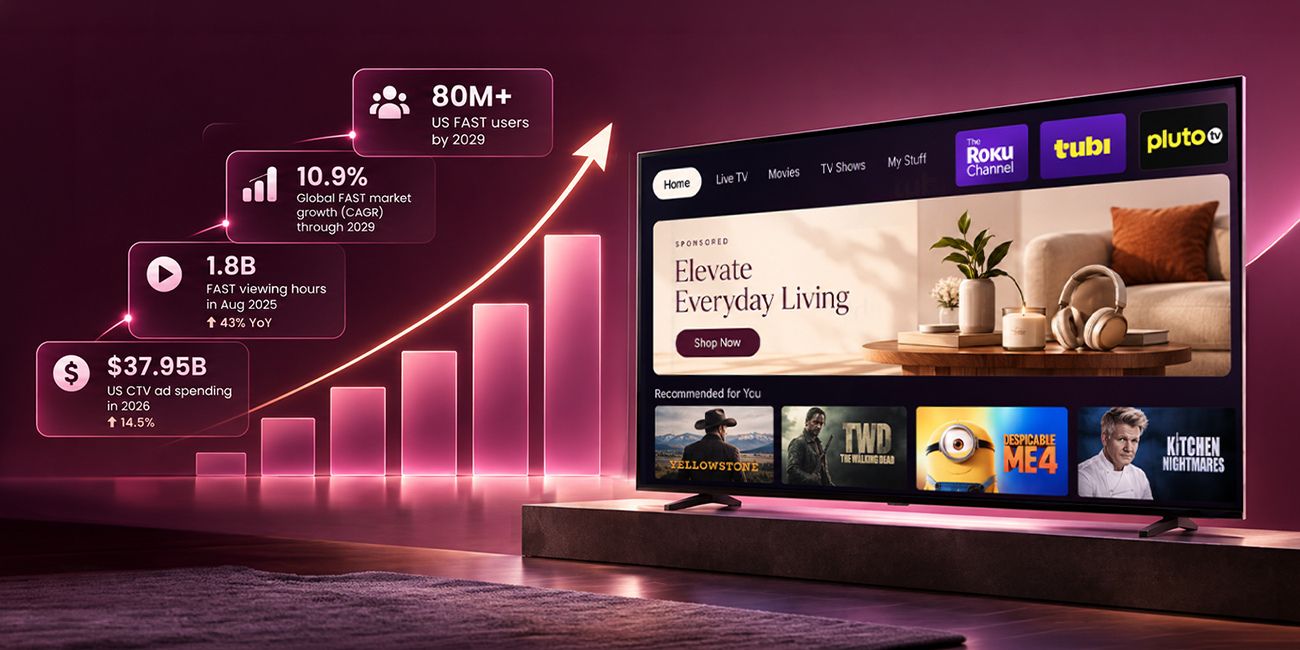
Private marketplaces are not new. Display buyers have used invite-only auctions for over a decade to get closer to premium inventory without committing to a full guarantee. What is new is how much of that same PMP logic has moved into streaming television, where budgets are shifting faster than most buying teams can update their playbooks. Global connected TV ad spending was expected to surpass 29 billion U.S. dollars in 2024, with projections of over 38 billion by 2027, which places CTV firmly in the same budget conversation as web and in-app video rather than as a side experiment.
2026 is also the year streaming fragmentation stopped being a talking point and became an operational headache. The smart TV penetration rate in U.S. TV households reached over 80 percent in 2025, spreading viewers across dozens of apps, devices, and operating systems instead of a handful of channels. Every one of those environments handles identity, frequency capping, and ad insertion slightly differently, which means a Deal ID that performs well on one app can behave inconsistently on another.
At the same time, buyers are shifting more programmatic budgets toward curated, deal-based buying. More than 91 percent of total US programmatic display ad spending flows through private marketplaces and programmatic direct deals. CTV is also contributing to the growth of private and direct programmatic transactions, as advertisers prioritize premium inventory, brand safety, measurement transparency, and closer publisher relationships. Understanding the mechanics behind a CTV PMP deal, not just the commercial terms, is what separates campaigns that scale from campaigns that quietly under-deliver.
How Does a PMP Deal Actually Deliver an Ad Inside a CTV Stream?

A PMP deal on paper looks identical whether it covers a news website or a streaming app: a Deal ID, a floor price, and a list of approved buyers. What happens after the auction clears is where CTV diverges from display.
Ad Pods and Server-Side Ad Insertion Explained
An ad pod is a scheduled break inside a video stream, similar to a commercial break on linear TV, except it is assembled dynamically for each viewer or household. Instead of one ad tag firing on a webpage, the streaming app requests a pod, and the ad server prepares a set of ads to fill it as part of the stream.
CTV inventory is often delivered through server-side ad insertion, or SSAI, rather than browser-based ad tags. With SSAI, the server inserts ads into the video stream as it is prepared for delivery, so the ad and the show content arrive as one combined stream. This is one reason CTV ads are generally more difficult to skip or block than a browser-based ad. The ad decision typically happens on the server side as the stream and its ad breaks are assembled, rather than through a browser-based, client-side auction the way header bidding works on the open web. Exact implementation still varies by publisher and by whether the stream is live or on demand.
How the Deal ID Travels From SSP to the Streaming App
The Deal ID itself starts on the SSP, exactly like a display PMP. The SSP passes that ID and its terms to the DSP, and the buyer’s trading desk loads it into a line item with targeting and pacing rules.
From there, the path depends on the publisher’s ad insertion setup. Many CTV transactions are exchanged through OpenRTB-compatible workflows, using VAST or VMAP tags, the industry standard formats for describing video ad breaks and pod structure. Within Xapads’ CTV infrastructure, CTV inventory requests route through Publica as part of the programmatic integration workflow. The ad server checks the Deal ID against available pod slots, confirms the buyer is on the approved list, and only then releases the creative into the SSAI process. A mismatch here, such as a Deal ID that has not been mapped correctly to a specific app’s pod structure, is one of the more common reasons a technically “live” PMP deal shows zero or inconsistent delivery.
How Is CTV PMP Targeting Different From Display PMP Targeting?

Targeting logic on a CTV PMP deal looks similar on the surface, with segments, geography, and dayparting all available as buying levers. The identity layer underneath behaves differently.
Household-Level IDs Instead of Cookies
Display and mobile PMPs typically resolve to an individual browser or device through a cookie or a mobile advertising ID. CTV environments generally do not rely on browser cookies in the same way as web advertising. Instead, targeting and measurement may use device identifiers, household-level signals, publisher first-party data, or other identity approaches, depending on the platform and device, and most connected TV devices are also shared by an entire household rather than one person. Identity frameworks continue to evolve as privacy-first measurement becomes more standard across connected TV ecosystems, so the specific signal available to a buyer can shift from one deal to the next.
This affects what a frequency cap actually caps. A rule that operates at the individual level in another digital environment may operate at the device or household level in CTV, depending on the identity signals available to the buying platform, and a single household could include several different viewers watching at different times. Buyers who copy display frequency logic directly into a CTV PMP line item without confirming the identity signal in use can see effective frequency run higher than planned.
Why Co-Viewing Complicates Audience Guarantees
Co-viewing, where more than one person watches the same stream on the same screen at the same time, adds a second layer of difficulty. A household-level ID cannot distinguish between one viewer and four viewers watching the same program together, which means audience guarantees built around a specific demographic (for example, adults 25 to 34) are statistical estimates layered on top of household data rather than confirmed individual-level facts.
This is a genuine measurement gap in the industry, not a solved problem. Media planners buying CTV PMP deals against a guaranteed audience composition should ask the publisher or DSP directly how co-viewing is modeled into that guarantee, since methods vary by measurement partner and are rarely disclosed by default in the deal terms.

Which CTV Publishers Are Actually Available Through PMP?
Not every streaming service that carries advertising makes its inventory available through a standard, SSP-routed PMP.
Open Supply vs Walled Garden Inventory
Ad-supported streaming inventory generally falls into two groups. The first group makes at least some inventory available through SSP-supported programmatic transactions, which may include PMP, programmatic guaranteed, or open auction access depending on the publisher, similar to how most websites and mobile apps operate. The second group, often called walled gardens, keeps a large share of its inventory inside direct, self-managed sales relationships and only opens a limited portion, if any, to third-party PMP access.
Some of the largest ad-supported streaming platforms fall closer to the walled garden model, meaning brands and agencies often need a direct or managed-service relationship to reach that inventory, rather than assuming a standard Deal ID will resolve there. This distinction matters at the planning stage, before a single dollar moves, because a media plan built around “PMP access to premium streaming” can quietly exclude some of the biggest audiences in the category if that access was assumed rather than confirmed.
What to Check Before Assuming a Publisher Is Reachable
Before finalizing a CTV PMP plan, buyers should confirm three things directly with the publisher or SSP: whether the inventory is available through standard PMP access at all, what share of that publisher’s total ad load is exposed to PMP versus reserved for direct deals, and whether the Deal ID covers all apps and devices the publisher supports or only a subset. Skipping this step is one of the more common causes of a media plan that looks complete on paper but under-delivers once it goes live.
Unwire is Xapads’ dedicated CTV advertising platform, built specifically for connected TV inventory and campaign delivery. Its CTV-focused infrastructure supports PMP and programmatic guaranteed deals, helping advertisers plan and manage premium streaming inventory through workflows built for connected TV rather than adapted from display or mobile.
How Should Floor Prices and Bidding Work for CTV PMP Deals?
Floor pricing on CTV PMP deals tends to run higher than display or standard in-app video, largely because ad pods are limited in number per hour and demand for premium streaming inventory has grown faster than available supply. A media planner should treat the floor as a starting point for deal planning, not a fixed number, and should confirm directly with the publisher or SSP how the floor is enforced and whether any platform-specific auction rules apply, since floor mechanics vary by exchange and by deal configuration.
A few practical habits keep CTV PMP bidding efficient:
- Set bids according to the agreed deal terms, then monitor win rate, delivery, and pacing after launch before making significant adjustments, rather than reacting to the first few hours of data.
- Ask the publisher whether frequency capping is enforced at the SSP level, the DSP level, or both, since double-enforcement can silently reduce delivery below the booked volume.
- Confirm brand safety and invalid traffic controls in writing before launch. HUMAN’s post-bid integration helps Xapads maintain industry-leading invalid traffic controls after the bid. Separately, Pixalate’s pre-bid data supports supply-quality filtering before a bid is placed. Advertisers should confirm which pre-bid and post-bid protections apply to each CTV PMP deal before launch.
- Revisit pacing regularly for CTV specifically, since pod inventory volume can swing noticeably around live sports and tentpole programming windows in ways that standard daily pacing tools are not always built to anticipate.
What Are the Pros and Cons of Using PMP Deals for CTV Campaigns?
Pros
- Cleaner supply path with fewer resellers. A CTV PMP deal is negotiated directly between the buyer and a named publisher or its SSP, which removes several of the reselling layers common in open auction. This generally means a shorter, more transparent supply chain and an easier audit trail if a campaign needs to confirm exactly where impressions ran.
- Access to curated, premium ad pods. Because the deal is invite-only, PMPs can give selected buyers access to curated or premium inventory, such as pods placed near popular live programming, that may not be available through the same open auction paths. Actual priority and availability still depend on how each publisher configures its own deal and auction setup.
- More control over targeting and frequency rules. PMP terms are negotiated up front, so a buyer can set specific frequency caps, dayparting rules, and content category exclusions as part of the deal itself. This level of control is harder to guarantee in an open auction, where the buyer has less influence over how a publisher configures its own pod logic.
Cons
- Higher floor CPMs than open auction. Because CTV PMP inventory is curated and pod volume is limited, floor prices typically sit well above open auction rates for comparable reach. Smaller budgets may find it harder to hit meaningful scale once the higher floor is factored into a flight plan.
- Setup and verification take real time. Confirming Deal ID mapping, pod structure, and frequency enforcement across every app a publisher supports is a manual process that can take longer than launching an open auction line item. Campaigns with very short lead times sometimes skip this verification step, which is exactly when delivery problems tend to surface mid-flight.
- Household-level measurement limits precision. Since most CTV identity resolves to a household rather than an individual, PMP audience guarantees are built on modeled estimates rather than confirmed individual-level targeting. Buyers expecting the same precision as a logged-in mobile or web environment need to adjust expectations accordingly.
PMP vs Programmatic Guaranteed for CTV: Which One Fits the Campaign?

Conclusion
A CTV PMP deal shares its commercial structure with any other private marketplace deal: an invite-only auction, a Deal ID, and negotiated terms. Everything that happens after the auction clears, from ad pods and server-side ad insertion to household-level identity and walled garden supply, is specific to streaming and easy to overlook if a buying team applies display-era assumptions to a 2026 CTV plan. Verifying pod mapping, frequency enforcement, and publisher supply access before launch is what turns a PMP deal from a line item on a media plan into consistent delivery on screen. Advertisers that understand these differences are better positioned to plan CTV PMP campaigns with realistic delivery expectations, more accurate measurement, and stronger publisher relationships.
FAQ
Does CTV PMP guarantee viewability?
Not automatically. Viewability terms are negotiated as part of the deal, and buyers should confirm in writing whether the publisher commits to a specific viewability standard or simply reports it after delivery.
Can the same Deal ID be used across multiple streaming apps?
Sometimes, but not by default. A Deal ID is usually mapped to specific apps and devices during setup, so buyers should confirm coverage across every platform a publisher supports rather than assuming one ID reaches all of them.
Why do CTV PMP floor prices run higher than display?
Ad pod volume per hour is limited, unlike display inventory, which can scale far more easily. Limited pod supply combined with strong demand for premium streaming placements keeps floor CPMs elevated compared with web or in-app display.
How is frequency capping enforced on CTV PMP deals?
Frequency capping usually resolves at the household level through a device or household ID rather than an individual cookie, and it can be enforced at the SSP, the DSP, or both. Buyers should confirm which system applies the cap to avoid under-delivery from double enforcement.
What is the difference between programmatic direct and PMP for CTV?
Programmatic direct usually refers to a fixed, one-to-one deal with agreed volume and pricing, while PMP is an invite-only auction where price and delivery can still shift within negotiated terms. Programmatic guaranteed sits inside the broader programmatic direct category.
Do all streaming publishers sell CTV inventory through PMP?
No. Some of the largest ad-supported streaming platforms keep most of their inventory inside direct, self-managed sales relationships and expose only a portion, if any, through standard SSP-routed PMP deals.
Related Post