
Quick Answer
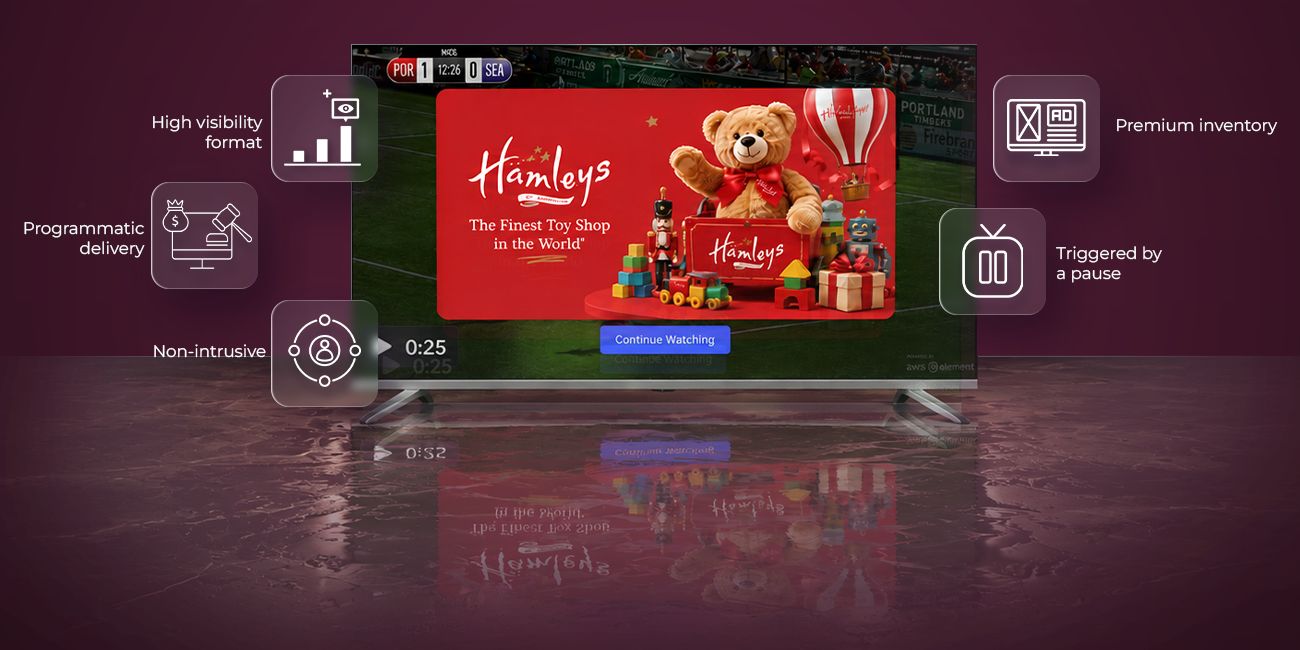
CTV pause ads offer several benefits that recent research points to: substantially higher viewer attention than standard CTV spots, extended exposure time because the ad stays visible for as long as the pause lasts, a highly prominent share of the screen with limited competing advertising creative in the same moment, and the ability to add touchpoints among viewers who typically skip or tune out other CTV ad formats. Research also points to a further benefit worth planning around: pause ads convert attention into action, with a meaningful share of viewers clicking through, scanning a QR code, or saving an offer after seeing one. In an IAB Tech Lab industry survey covering eight CTV ad formats, Pause Ads received the strongest overall response from advertising leaders, including for user experience and willingness to increase spend. Each benefit matters differently depending on the campaign objective, which is why evaluating them individually, rather than as a single bundled pitch, leads to better media planning decisions.
Introduction
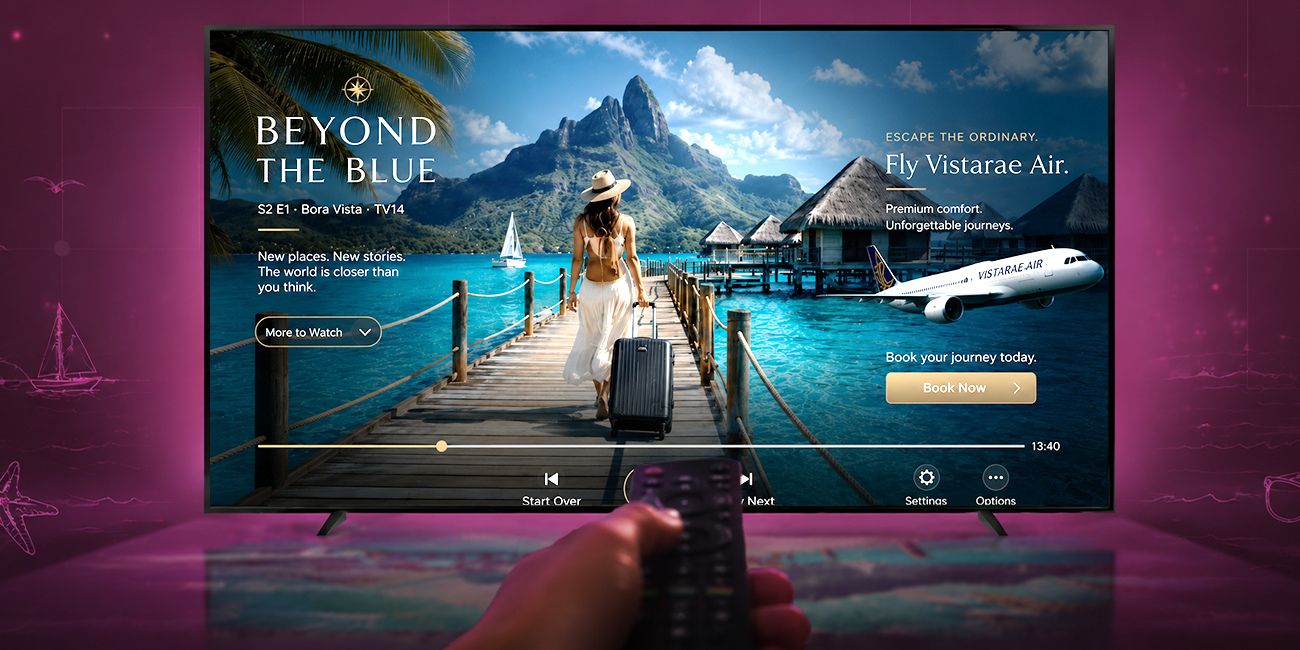
A CTV pause ad appears when a viewer pauses streaming content and disappears when playback resumes. What that explainer does not answer is the question media planners actually need answered before allocating budget: what does the format deliver, and is the evidence behind those claims solid enough to act on.
That question matters because pause ad marketing material is full of impressive-sounding numbers that rarely point back to where they came from. A recall lift here, an engagement rate there, none of it useful if it cannot be traced to an actual study. This article works through the benefits that are backed by named, citable research, explains what each one means in practice, and maps each benefit to the type of campaign it actually supports.

How Much Attention Do Pause Ads Actually Earn?
Attention is the benefit with the clearest research behind it. Third-party attention research has found that pause ads generate substantially higher viewer attention than standard sixty second CTV spots, a gap that holds up across content categories rather than in one narrow vertical.
This matters commercially, not just as a media metric. When advertising leaders were surveyed at an IAB Tech Lab event that tested eight CTV ad formats, including menu, overlay, and in scene placements, pause ads were rated the most effective of the group, offering the best user experience and the greatest increase in ad spend. Attention research and advertiser spending behavior are pointing in the same direction, which is a stronger signal than either data point on its own.
How Long Does a Pause Actually Last?
A fifteen or thirty second spot has a fixed, short window to land a message. A pause ad does not work that way. Research on pause duration provides a useful way to understand the format’s potential exposure window.
According to a study from Magna and DirecTV, 81% of viewers pause content specifically to avoid missing what they are watching, and most pauses last far longer than a standard ad break: 54% of viewers pause for one to five minutes, 24% pause for thirty seconds to one minute, and 11% pause for as long as fifteen minutes. For more than half of pauses, that means a brand has potentially several minutes of exposure while the content remains paused, rather than the fixed few seconds a standard spot allows, without paying for extended video production to fill it.
Do Viewers Actually Prefer Pause Ads, or Just Tolerate Them?
It is worth being precise about what the preference research actually measures. Viewers are not being asked whether they prefer pause ads to no ads at all. They are being asked whether they prefer a pause ad to the alternative that exists in that exact moment: a frozen, blank screen.
On that specific comparison, the answer is consistent across age groups. The same Magna and DirecTV research found that 67% of Gen Z, 67% of millennials, 63% of Gen X, and 60% of Baby Boomers prefer pause ads to a frozen screen. That is a majority in every generation tested, which is a rare result for any advertising format and suggests the benefit is not limited to a single demographic a campaign would need to target narrowly.
Why High On-Screen Prominence Matters for Recall
Pause ads can give the advertiser a highly prominent share of the screen, with limited competing advertising creative in the same moment. Depending on the implementation, that means little to no adjacent content competing for attention and no other advertiser’s message appearing at the same time, a meaningfully different environment from most other digital ad placements. That prominence does not guarantee recall on its own, but it reduces one of the biggest obstacles to recall: competing stimuli in the same moment of attention.
This is also part of why the attention research cited earlier holds up the way it does. A largely uncluttered, single-advertiser frame is easier to notice and easier to remember than a format competing against surrounding content or other creative for the same few seconds.
Because the ad appears during a viewer-initiated pause rather than inside a conventional ad pod, advertisers can avoid some of the sequencing and competitive clutter associated with multi-ad breaks. For categories where brand adjacency matters, that reduced clutter is a benefit in its own right, independent of any attention or recall figure.
Do Pause Ads Reach Viewers Other CTV Formats Miss?
CTV as a channel has a reach limitation that pre-roll and mid-roll formats do not solve on their own: viewers who skip, mute, or otherwise tune out standard ad breaks are difficult to reach consistently through those formats. Pause ads work differently because delivery is not contingent on the viewer sitting through a scheduled break.
Research suggests a potential incremental-reach benefit here. Pause ads can reach viewers who are likely to skip or ignore traditional CTV ads, adding touchpoints within a household and helping offset CTV’s comparatively low household reach. For advertisers running CTV primarily through pre-roll and mid-roll today, this is the benefit most likely to move total reach numbers rather than just improve performance within an already-reached audience.

Can Pause Ads Drive Action, Not Just Awareness?
Pause ads are frequently framed as a pure awareness format, but the evidence points to something more useful: a meaningful share of viewers act on what they see. Per the Video Advertising Bureau, 51% of viewers take some form of action after viewing a pause ad.
That action-taking behavior varies by generation, and the pattern is worth planning creative around rather than ignoring. The same research found that 53% of Gen Z and 50% of millennials favor pause ads with a clickable button linking to a brand’s site or app, while younger viewers also show the strongest preference for pause ads with scannable QR codes. For advertisers targeting a younger audience, an interactive or QR-enabled pause ad is not a novelty add-on; it is an implementation that younger audiences show a particularly strong preference for.
For advertisers who want to combine that attention with a measurable next step, pause ad inventory through a platform such as Unwire can be planned alongside interactive and QR-enabled creative rather than bought as a static, awareness-only placement.
Why Standardization Makes These Benefits Easier to Scale
A benefit that only exists on one streaming platform is a limited benefit. This is where the IAB Tech Lab event findings matter beyond the headline result. Advertising leaders did not just rate pause ads the most effective format tested; they specifically flagged pause ads as the format most likely to scale through standardization, a view reinforced by IAB Tech Lab’s CTV Ad Portfolio, which formally defines Pause as one of its six core CTV ad formats. As of August 2026, that standardization work has moved past the proposal stage: the CTV Ad Portfolio’s signaling guidance was finalized in July 2026, giving Pause and the other portfolio formats a defined way to be communicated and transacted programmatically rather than relying on custom, platform-by-platform integrations.
That combination, a format advertisers already rate highly and one with finalized shared infrastructure behind it, is what turns the individual benefits above from a single-platform experiment into something that can be planned across a media buy rather than piloted in isolation. For an audience of buyers, publishers, and ad-tech platforms specifically, this is arguably the more consequential development: it is the difference between a format that performs well in isolated tests and one that is becoming straightforward to transact at scale.
Why Pause Ads Matter for the European CTV Conversation
As CTV takes up a larger share of European media planning, advertisers are evaluating formats that can complement traditional pre-roll and mid-roll inventory rather than replace it.
We’ll be at DMEXCO 2026, one of Europe’s biggest meeting points for the digital marketing and technology industry.
Meet our team to explore how we can help you unlock new opportunities across CTV, reach audiences in premium environments, and drive greater impact from your campaigns.
Date: 23–24 September, 2026
Location: Cologne, Germany
Booth No: Hall 06.1 | Booth A030

How Should Advertisers Weigh These Benefits by Objective?
Not every benefit above matters equally for every campaign. Matching the benefit to the objective is an important part of pause ad planning, since teams often buy the format as a single, undifferentiated line item and then judge it against a metric it was never positioned to move.
- Brand awareness campaigns: lean on the attention and on-screen prominence benefits, since the format’s core strength is high-attention exposure with limited competing creative
- Performance or lower-funnel campaigns: lean on the action-taking data, and prioritize QR-enabled or clickable creative, particularly for younger audience segments
- Reach-constrained campaigns: lean on the potential incremental-reach benefit, since pause ads can add touchpoints among viewers who are likely to skip or ignore scheduled CTV ad breaks
- Scale-focused, multi-platform buys: lean on the standardization benefit, because common format definitions and finalized signaling can make cross-platform planning and programmatic transactions more consistent
A CTV platform such as Unwire can help advertisers plan against more than one of these objectives at once, bringing pause screen inventory into a broader programmatic CTV strategy rather than treating each benefit as a reason for a separate, standalone buy.

What These Benefits Don’t Guarantee
None of the research above describes a guaranteed outcome for every campaign. Attention, preference, and action-taking figures come from studies measuring the format in aggregate, not a specific brand’s creative in a specific category. A pause ad with a cluttered layout, a weak call to action, or a message that takes too long to land will underperform the benchmarks cited here regardless of how strong the underlying format is. The research makes the case for testing pause ads with real budget behind them. It does not make the case for skipping measurement once a campaign is live, since execution quality still determines how much of the format’s potential a given campaign actually captures.
Conclusion
The strongest case for CTV pause ads is not a single standout statistic. It is that several named research findings from different industry studies, attention research, viewer preference surveys, and standards-body findings, all point in the same direction at once. Attention is measurably higher, viewers across every generation tested prefer the format to the alternative it replaces, exposure time runs longer than any fixed-length spot, and a majority of viewers take some action after seeing one. None of that means pause ads replace pre-roll or mid-roll inventory. It means the format earns a specific, evidence-backed role in a CTV plan rather than a place based on hype.
Frequently Asked Questions
Are the benefits of CTV pause ads backed by research?
Yes. This article draws on named third-party research and industry studies, including research from Magna and DirecTV, Video Advertising Bureau data, and findings from an IAB Tech Lab industry survey, rather than unattributed marketing claims.
How much extra attention do pause ads earn compared with standard CTV ads? Third-party attention research has found pause ads generate substantially higher attention than standard sixty second CTV spots, a gap that holds across content categories.
Do younger and older audiences respond to pause ads differently?
Preference for pause ads over a frozen screen is high across every generation studied, but younger viewers show a notably stronger preference for interactive elements such as clickable buttons and scannable QR codes.
Can pause ads help reach viewers who typically skip CTV ads?
Yes. Because delivery does not depend on a viewer sitting through a scheduled ad break, pause ads can reach viewers who skip or ignore standard pre-roll and mid-roll formats, adding incremental household touchpoints.
Do pause ads drive viewers to take action, or only build awareness?
Both. Research from the Video Advertising Bureau found that just over half of viewers take some action after viewing a pause ad, and that behavior is strongest among younger viewers when the creative includes a clickable or scannable element.
Which advertising objective benefits most from pause ads?
It depends on which benefit a campaign is built around. Awareness campaigns benefit most from the attention and share of voice advantage, while performance campaigns benefit most from the action-taking data, particularly with interactive creative.
Related Post