This can be a bit better? Retail media is no longer optional. It is now a core part of digital advertising strategy in 2026. US retail media ad spend is set to reach $71.09 billion this year, placing it alongside search and social as one of the three biggest digital ad channels globally. This reflects a major shift in how advertising budgets are allocated.
Brands and media planners who treated retail media as a test budget three years ago are now making it a core line item. The reason is clear. Few advertising environments give brands access to audience data built on actual purchases, based on what shoppers bought rather than what they browsed or clicked.
“The strongest retail media strategies today are not limited to onsite placements. They combine onsite intent capture with offsite scale and full-funnel activation.”
This guide covers what retail media networks are, how they work, who the major players are in 2026, and how advertisers build strategies that produce real results from this channel.
What Is a Retail Media Network?
A retail media network is an advertising platform that a retailer builds and runs using its own shopper data and digital properties. The retailer sells advertising space to brands. Those brands reach shoppers using the retailer’s transaction history, loyalty program data, and app behaviour.
When a brand places an ad on a retailer’s website, inside the retailer’s mobile app, or on digital screens inside a physical store, that is retail media in action. The retailer acts as both publisher and audience intelligence layer at the same time.
Amazon built the model. Walmart, Target, Kroger, Home Depot, and hundreds of others followed. Nearly 80% of major retailers now operate a retail media network, and that number keeps climbing.
How RMNs Differ From Traditional Digital Advertising
Google and Meta built advertising empires on behavioral and interest-based signals. They know what users searched, what content users consumed, and what users clicked. What they do not know is what users actually purchased.
Retail media networks start exactly where Google and Meta stop. The data inside an RMN comes from real purchase transactions, cart additions, loyalty card usage, and in-store movement patterns. Advertisers running campaigns through an RMN reach shoppers who already bought in the category, not shoppers who expressed vague interest in it.
That distinction matters more in 2026 than it ever did before. Third-party cookies have largely left the advertising stack. Advertisers now need privacy-compliant, transaction-grade signals to run precision campaigns. Retail media networks deliver that at scale.
The Three Layers of a Retail Media Network
Retail media inventory exists across three distinct environments, and understanding each one is critical before building a strategy.
Onsite retail media covers sponsored product listings, display ads, video placements, and search ads on the retailer’s own website or mobile app. Shoppers browsing a category see brand ads in that exact purchase context. This is one of the highest-intent advertising environments available because the shopper is already inside the retailer’s property and actively weighing purchase decisions.
Offsite retail media takes the retailer’s shopper audience data and activates it across the open web, social platforms, programmatic exchanges, and connected TV. Ad spend on US offsite retail media is forecast to grow 27.1%, making it the fastest-growing segment inside the entire RMN ecosystem.
In-store retail media activates advertising inside physical retail locations through digital screens, audio systems, QR-enabled activations, and point-of-sale displays. Physical retail remains the dominant purchase environment, and building in-store media capabilities is the next major operational priority for most networks moving through 2026 and into 2027.
Why Retail Media Networks Are Growing So Fast in 2026
The Shopper Transaction Data Advantage
Retail media networks hold some of the most commercially valuable audience data available to advertisers. Purchase history, cart behaviour, search patterns on retail platforms, loyalty program engagement, and in-store movement data give retailers an intelligence layer that few other media owners can replicate.
Advertisers running campaigns against these signals reach audiences of verified buyers in specific categories, not probabilistic matches built on inferred interest. The gap in conversion efficiency between this targeting approach and standard behavioral targeting is the central reason budgets have shifted into this channel so consistently.
Closed-Loop Attribution That Proves Real Sales
The measurement capability inside a retail media network is fundamentally different from what search or social advertising offers. When a shopper sees a sponsored product ad on a retail platform and then buys that product, the retailer records both the ad exposure and the transaction. The attribution is direct and verifiable.
This closed-loop measurement makes retail media reporting credible to finance teams in ways that impression-based or modeled attribution from other channels simply cannot match. The channel proves its contribution to actual sales, not just awareness metrics or click counts.
The Market Has Crossed a Threshold
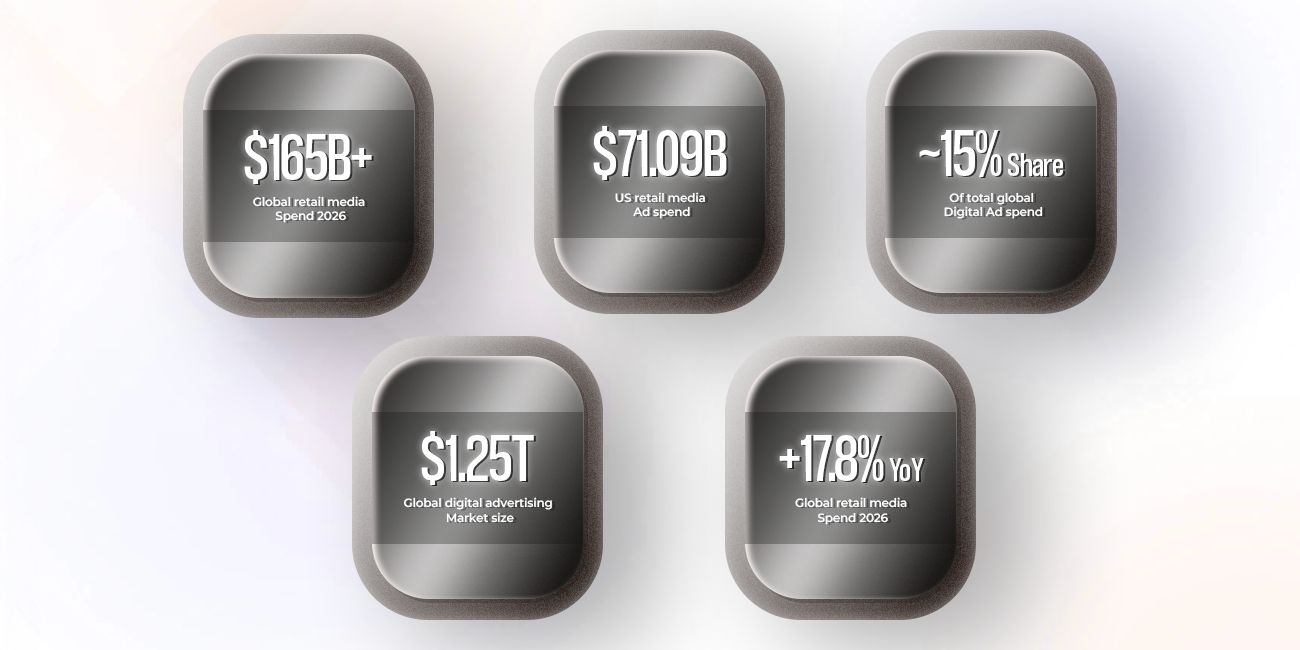
Global retail media is expected to cross $165 billion in 2026. US spend alone hits $71.09 billion. Global digital ad spend is approaching $1.25 trillion, which means retail media now accounts for roughly 15% of all digital advertising worldwide. That is not a niche allocation anymore. It is a mainstream budget category.
Retail media spend grew 17.8% year-over-year, outpacing both search and social advertising growth rates. The channel is expanding faster than the broader digital market it sits inside.
Retail Media Now Spans the Full Purchase Journey
The early version of retail media was essentially a bottom-funnel paid search product. Brands bid on sponsored placements to capture shoppers at the final decision stage. In 2026, the channel spans the entire purchase journey.
Retail media is now recognized as a top-three advertising channel globally. Advertisers use it for awareness through CTV and video, for brand consideration through rich media and native formats, and for conversion through sponsored search and mobile performance placements.
The Three Types of Retail Media Inventory Advertisers Must Understand
Retail media does not operate as a single inventory type. It spans multiple environments where shopper intent, scale, and ad formats behave very differently. Understanding these three core inventory types helps advertisers choose the right strategy for each stage of the purchase journey.
Onsite Retail Media
On-site is where retail media started, and it is where the majority of budget still concentrates. Sponsored product listings appear at the top of category search results on retail platforms. Display ads run on category and product pages. Video placements appear in product detail sections and on the retailer’s homepage.
The defining characteristic of onsite retail media is proximity to the purchase decision. Shoppers browsing a product category on a retail platform are in an active decision-making state. Ads appearing in that context reach shoppers at one of the highest points of commercial intent available in digital advertising today.
On-site inventory is finite. As more brands compete for the same sponsored search positions on major networks, CPMs for premium onsite placements have risen steadily. Advertisers who rely exclusively on onsite placements face rising costs and limited scale, which is exactly what pushes smarter advertisers to activate the full channel stack.
Offsite Retail Media
Offsite activation is where retail media becomes a true programmatic channel. Retailers take their shopper audience segments and make them available for targeting across the open web, social platforms, connected TV, and digital out-of-home. Advertisers access the same purchase-based audience intelligence that powers onsite placements, but serve those ads across a vastly larger inventory surface at lower average CPMs.
This is where programmatic infrastructure becomes critical to campaign performance. Platforms that activate retailer audience segments through DSP connections allow advertisers to extend retail media campaigns far beyond the retailer’s owned properties without sacrificing data quality.
For mobile-focused performance campaigns activating retailer audience data, Xerxes connects advertisers to 18,000-plus websites, 25,000-plus mobile apps, and 50-plus SSPs, especially across in-app environments where shopper attention is highest. Coverage spans India (472M MAU), Southeast Asia (212M MAU), America (122M MAU), and Europe (105M MAU). CPM, CPC, CPI, and CPA buying models give performance advertisers full flexibility to optimize toward the outcome that matters most for each campaign.
In-Store Retail Media
In-store retail media activates advertising inside physical retail locations. Digital screens near product categories serve contextually relevant ads at the moment of purchase consideration. 70% of grocery retailers plan to deploy in-store retail media within 18 months, signalling how seriously the industry is treating physical retail as an advertising channel.
The growth opportunity in in-store retail media is significant, but the operational complexity is high. Coordinating physical screen infrastructure across hundreds or thousands of retail locations requires alignment across media, merchandising, IT, and store operations teams. This segment remains the least standardized part of the ecosystem in 2026, creating both challenges and early-mover opportunities for brands willing to invest.
Retail Media Networks: Pros and Cons for Advertisers
Retail Media Networks (RMNs) have become one of the fastest-growing advertising channels, allowing brands to reach customers directly on shopping platforms. These networks combine strong first-party data with high purchase intent, making them highly effective for performance marketing. However, along with these advantages, there are operational and measurement challenges that advertisers must understand before scaling investments.
Pros of Retail Media Networks
Retail Media Networks offer powerful advantages because they operate close to the point of purchase, where user intent is already high, and data accuracy is stronger compared to traditional channels.
- Purchase-level audience targeting using real transaction data improves ad relevance and conversion rates.
- Closed-loop attribution helps advertisers directly connect ad spend to actual sales, giving clear visibility on performance.
- High commercial intent ensures users are already in a buying mindset, leading to better ROI.
- Access to exclusive first-party shopper data allows brands to target audiences unavailable on other platforms.
- Full-funnel activation supports awareness, consideration, and conversion within a single ecosystem.
- Measurable ROI makes it easier to justify budgets to performance-focused teams and stakeholders.
Cons of Retail Media Networks
Despite strong benefits, retail media networks introduce complexity in execution, measurement, and scaling, which advertisers must carefully manage.
- Fragmentation across multiple networks creates challenges in standardization, reporting, and scaling campaigns.
- Rising CPMs and CPCs on premium placements increase competition and reduce profit margins over time.
- Inconsistent attribution methodologies across platforms make performance comparison difficult.
- In-store and online activation requires coordination between multiple teams, increasing operational complexity.
- Budget allocation becomes more difficult as the number of networks and campaigns grows.
- Lack of incrementality testing can lead to overstated ROAS and misleading performance insights.
How Retail Media Networks Actually Work
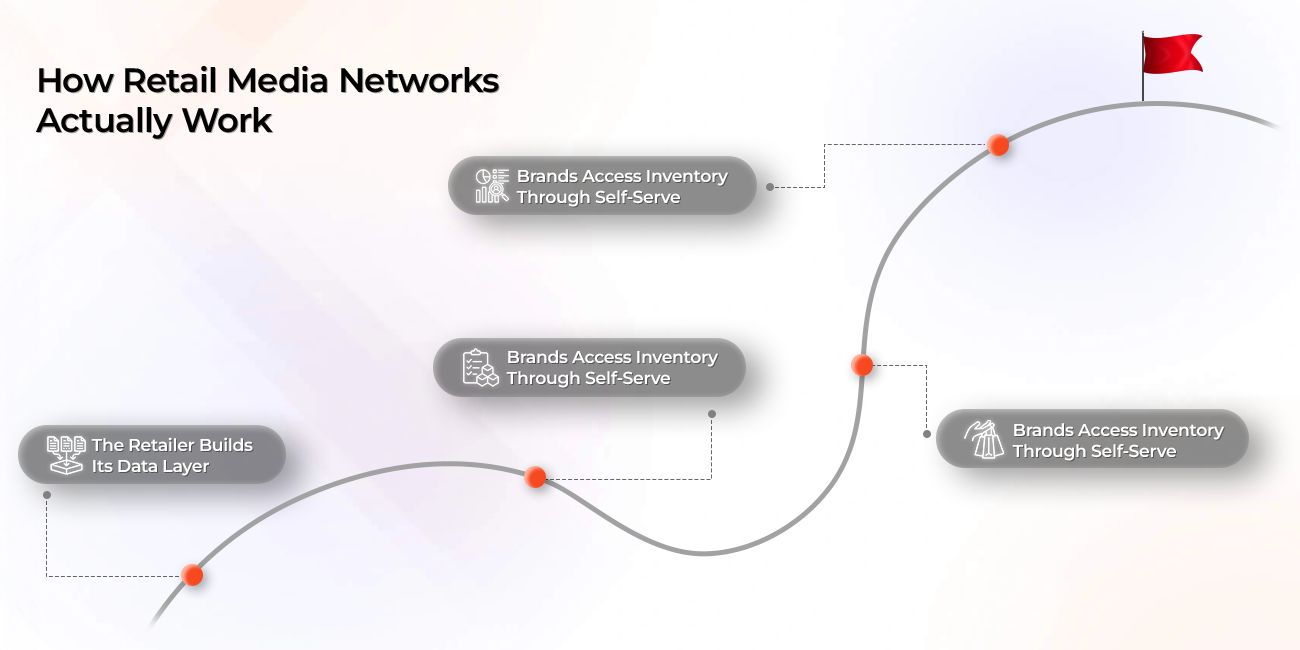
Step 1: The Retailer Builds Its Data Layer
Every retail media network starts with the retailer’s customer data platform. Loyalty program registrations, app usage data, purchase history across all channels, cart behavior, and browsing patterns inside the retailer’s digital properties combine into a structured audience layer. The depth of this data determines the targeting precision available to advertisers. Retailers with mature loyalty programs hold some of the deepest category-level purchase intelligence in the advertising ecosystem.
Step 2: Brands Access Inventory Through Self-Serve or Managed Platforms
Most major retail media networks now offer self-serve campaign management tools. Brands set budgets, choose targeting parameters, select ad placements, and monitor performance in real time. Self-serve access has opened the channel to mid-market brands alongside the large CPG advertisers who were early movers.
Larger campaigns, particularly those involving offsite programmatic or custom audience builds, typically run through managed service teams or private marketplace deals. Programmatic guaranteed and preferred marketplace structures allow brands to secure premium inventory at agreed pricing while keeping targeting flexibility.
Step 3: Ads Run at the Moment of Highest Shopping Intent
Onsite placements use the retailer’s contextual signals to serve ads in relevant category and search contexts. A shopper searching for a specific product category on a grocery retail platform sees ads from brands competing in that exact space. The serving logic prioritizes relevance and bid strength simultaneously.
Offsite placements use audience matching, segment transfer, and lookalike modeling to reach the same shopper segments across external inventory. The data quality travels with the audience segment even as the serving environment changes.
Step 4: Closed-Loop Measurement Ties Ads to Real Sales
After campaign delivery, the retailer matches ad exposures to purchase transactions using its own records. This process produces attribution that connects specific ad impressions to specific sales outcomes, both online and in-store.
Closed-loop reporting gives advertisers transaction-level proof of campaign contribution, including attributed sales volume, new-to-brand acquisition rates, repeat purchase rates, and category share of voice. All of these metrics tie directly to documented ad spend, making the ROI case clear for stakeholders.
The Biggest Retail Media Networks in 2026: A Landscape Map
The Tier 1 Giants
Amazon Ads holds approximately 79.7% of the US retail media share, with advertising revenue estimated at $56 billion in 2025. Amazon operates as a closed ecosystem. Its advertising tools are only available to brands actively selling products on the Amazon platform.
Walmart Connect generated approximately $4.4 billion in advertising revenue in 2025, a 27% year-over-year increase. Walmart’s network blends in-store, online, and offsite placements. Its partnership with Disney lets brands use Walmart shopper segments to buy advertising on Disney streaming properties, with sales impact measured through secure data-matching environments.
The Tier 2 Specialists
Target Roundel, Instacart, Kroger Precision Marketing, Home Depot, and CVS Health each operate networks built around specific shopper demographics and product categories. Target Roundel reaches a younger, higher-income demographic. Instacart gives grocery and household brands access to immediate-purchase intent signals. Kroger delivers deep CPG category data. Home Depot serves home improvement and contractor audiences. CVS reaches health, pharmacy, and convenience shoppers.
Each of these networks offers category-specific signals that mass-market platforms cannot replicate because they do not hold the transaction-level purchase data for those specific categories.
The Emerging Global Players
APAC retail media is growing fast. Alibaba, JD Media, and Rakuten Advertising operate sophisticated retail media businesses across China, Japan, and Southeast Asia. European retail media accelerates through grocery-led networks including Carrefour Media and Tesco Media and Insight.
India and Southeast Asia represent the next major expansion opportunity in global retail media. Mobile-first commerce, especially in-app shopping environments, is driving retail media growth across APAC markets. Retail media infrastructure is now built on app-based shopping ecosystems that reach hundreds of millions of active shoppers. Most advertising frameworks covering retail media ignore APAC entirely, leaving a significant gap for brands already operating in these regions.
The OEM Layer: A Retail Media Parallel Worth Understanding
Device-based advertising through OEM platforms operates with similarities to retail media networks. OEM platforms hold device-level usage data, app install patterns, content consumption behavior, and purchase intent signals tied to real device identities. The targeting precision and owned-inventory characteristics run parallel to what retailers offer.
Mi.xapads.com, Xapads’ exclusive Xiaomi OEM advertising desk, gives advertisers access to 564 million MIUI monthly active users across 272 countries, with 3.2 billion average daily impressions. India accounts for 133 million users. Europe adds 104 million. Southeast Asia contributes 59 million. Latin America reaches 56 million. Mi TV alone delivers access to 60 million-plus monthly unique digital users across 106 countries.
This is an area that many retail media strategies still underutilize. Advertisers running retail media strategies in Asia-Pacific markets who do not activate through OEM channels miss a high-intent mobile audience that sits directly inside the purchase journey.
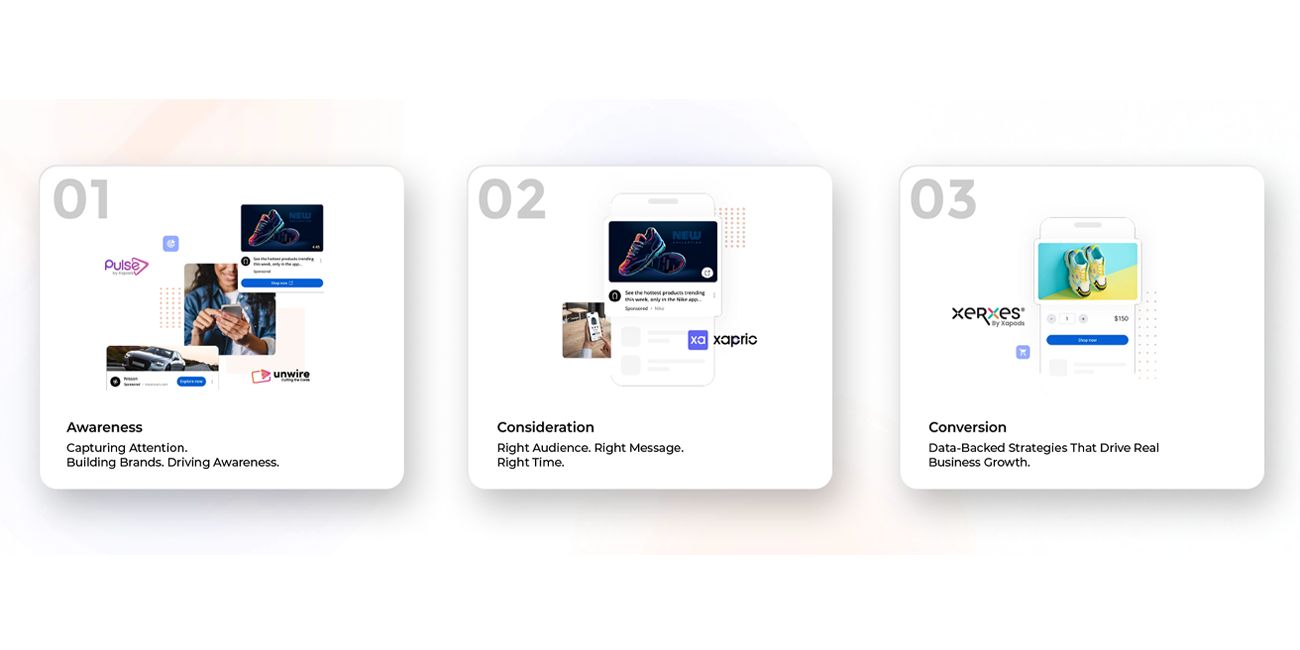
The Full-Funnel Retail Media Strategy: From Awareness to Conversion
Retail media performs best when structured across the full funnel rather than treated as a bottom-funnel channel. The table below shows how each stage maps to the right platform and objective.
Upper Funnel: Building Brand Awareness at Scale
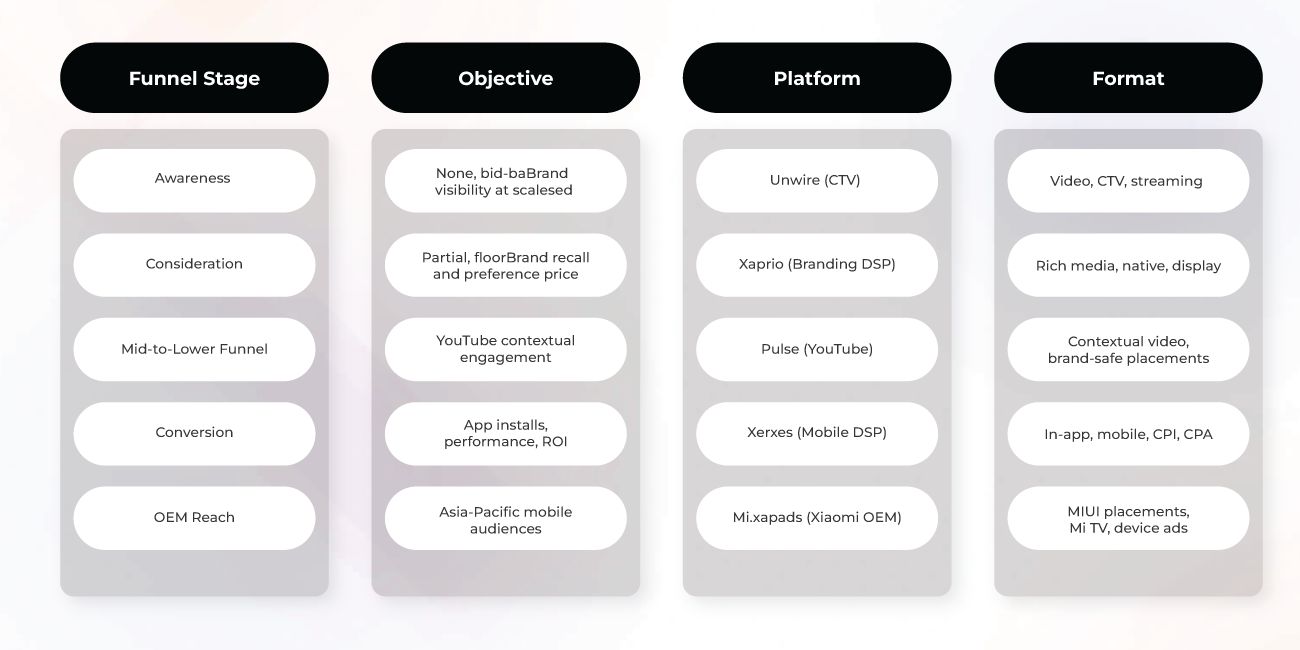
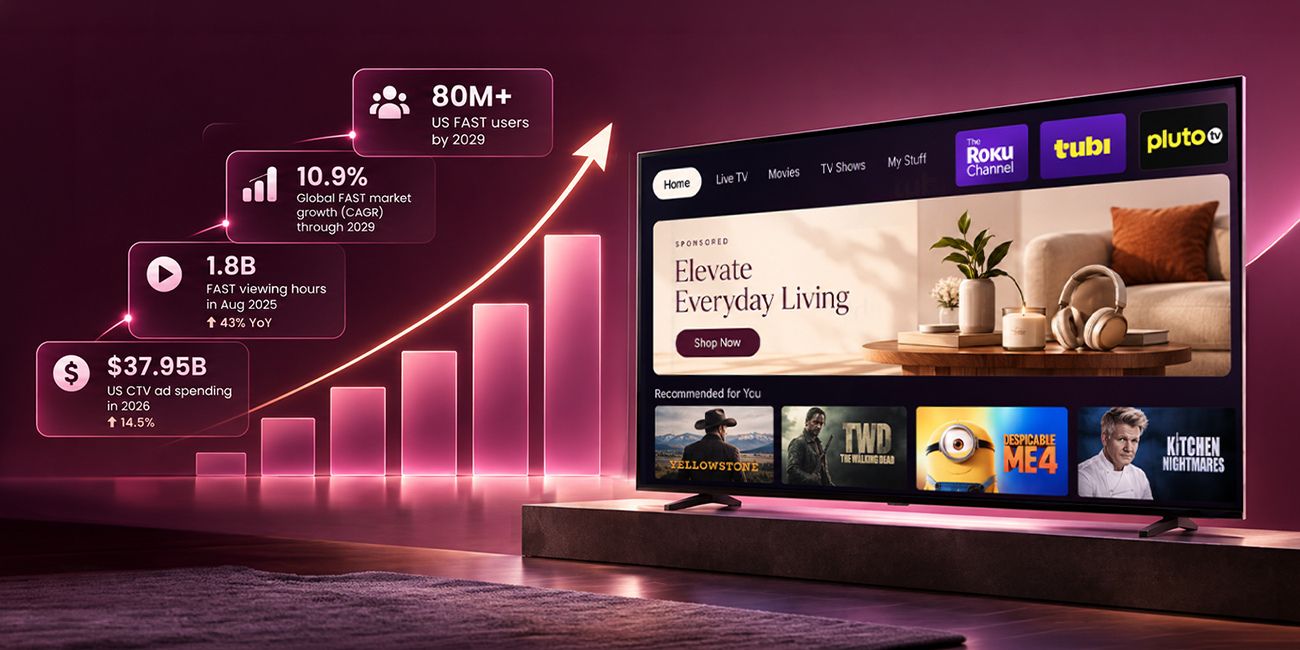
Brand awareness through retail media now runs primarily through connected TV and streaming video. CTV gives advertisers the storytelling canvas of television combined with the precision targeting of digital, powered by shopper transaction data. 59% of CTV viewers find TV ads useful for shopping decisions, making the format a strong fit for retail brands building upper-funnel demand.
Unwire, Xapads’ dedicated CTV advertising platform, gives advertisers 120 million-plus global reach with 100% viewability across premium channels, 85%-plus view-through rate with non-blockable video ads, and 99%-plus fraud-free delivery verified by Pixalate. Unwire’s context-based targeting activates across content genres, programmes, and audience segments with OTT header bidding, smart media planner, PMP and PG deal configuration, cross-device targeting across CTV and mobile, and real-time reporting built into the platform.
Mid Funnel: Building Consideration and Brand Recall
The consideration phase is where brands convert awareness into purchase preference. Rich media formats, interactive units, and native placements keep audiences engaged with the brand between retailer visits. Creative quality and contextual relevance at this stage determine whether a brand builds lasting recall or fades into background noise.
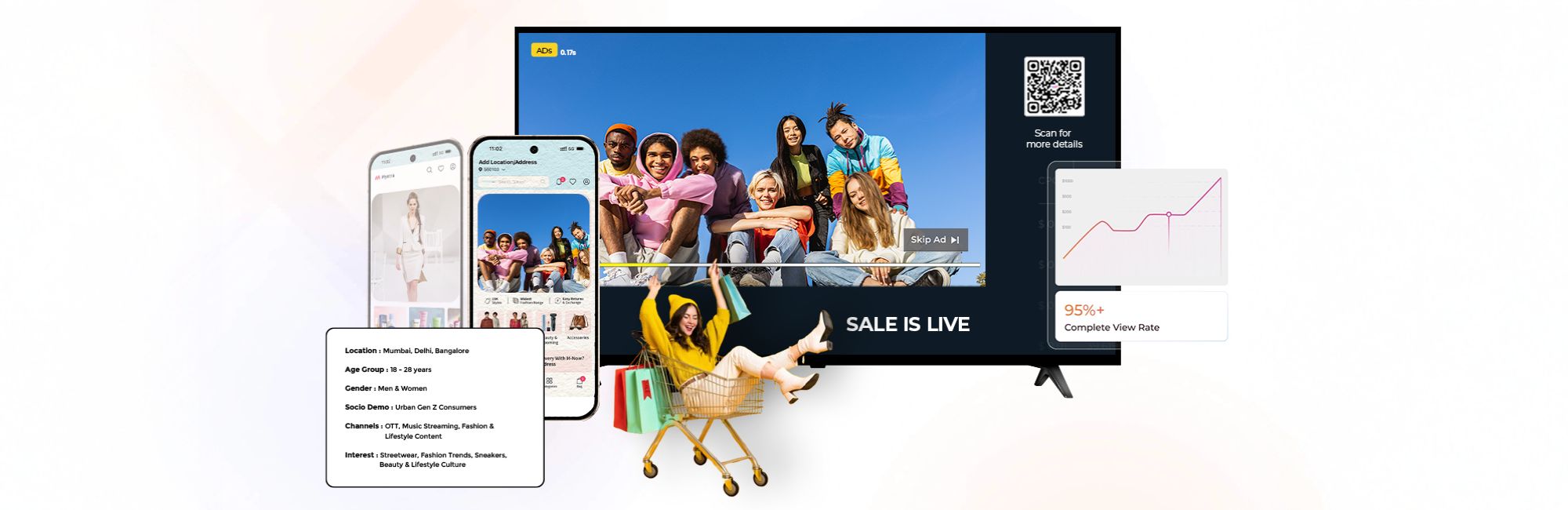
Xaprio, Xapads’ omnichannel branding DSP, delivers 2x brand recall lift and 7.4 seconds of average rich media engagement per session, with 3.2 times the time spent compared to static banners. Xaprio activates across CTV, OEM, native, display, and video from a single unified platform, with 50-plus ad formats, 70-plus global and OEM supply partners, and 100% transparent buying. Retail advertisers running brand consideration campaigns use Xaprio to extend brand messaging across every screen a shopper encounters between retail visits.
Mid-to-Lower Funnel: YouTube Contextual Targeting
YouTube is increasingly activated for mid-to-lower funnel engagement in retail media campaigns, particularly for product launches, seasonal campaigns, and brand-safe performance formats. The platform sits at the intersection of content consumption and purchase research, making contextual placement quality a key driver of campaign performance.
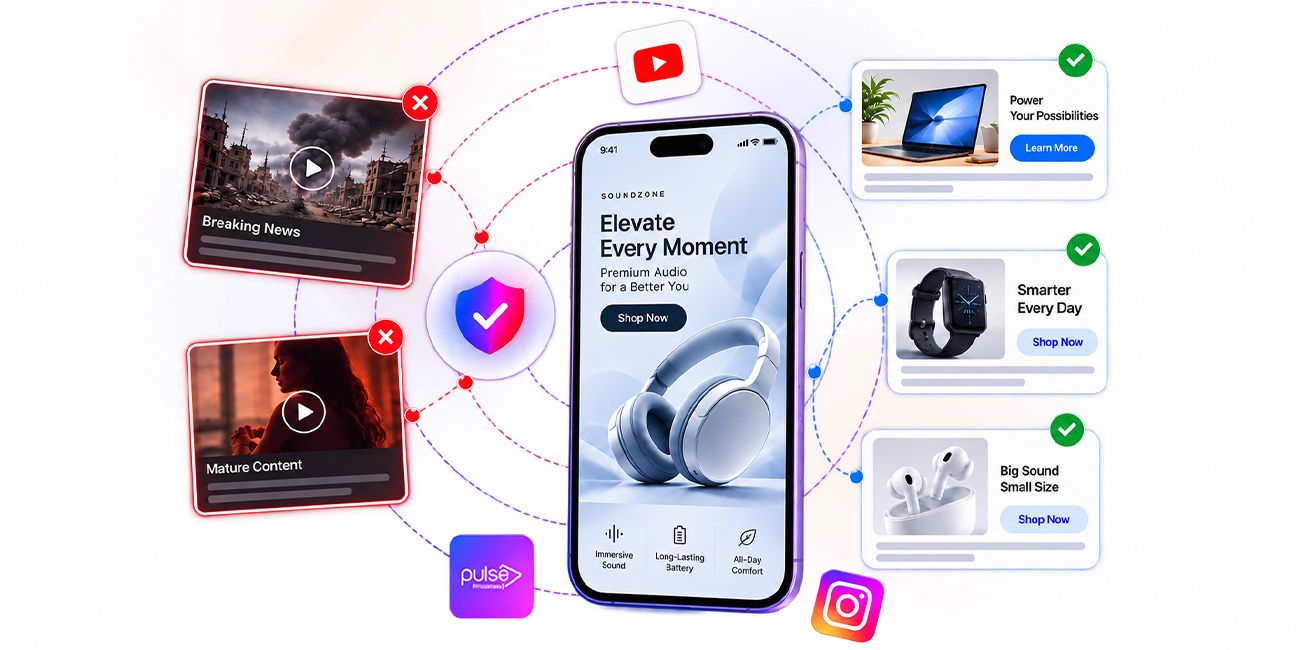
Pulse by Xapads is an AI-powered contextual targeting engine built specifically for YouTube. Pulse analyzes content signals including keywords, themes, and brand suitability to place ads in high-intent, brand-safe video environments aligned with GARM industry standards. Campaigns managed through Pulse benefit from smarter placement decisions, real-time optimization, and performance signals that continuously sharpen audience targeting across mid-to-lower funnel objectives.
Lower Funnel: Driving Conversion and Mobile Performance
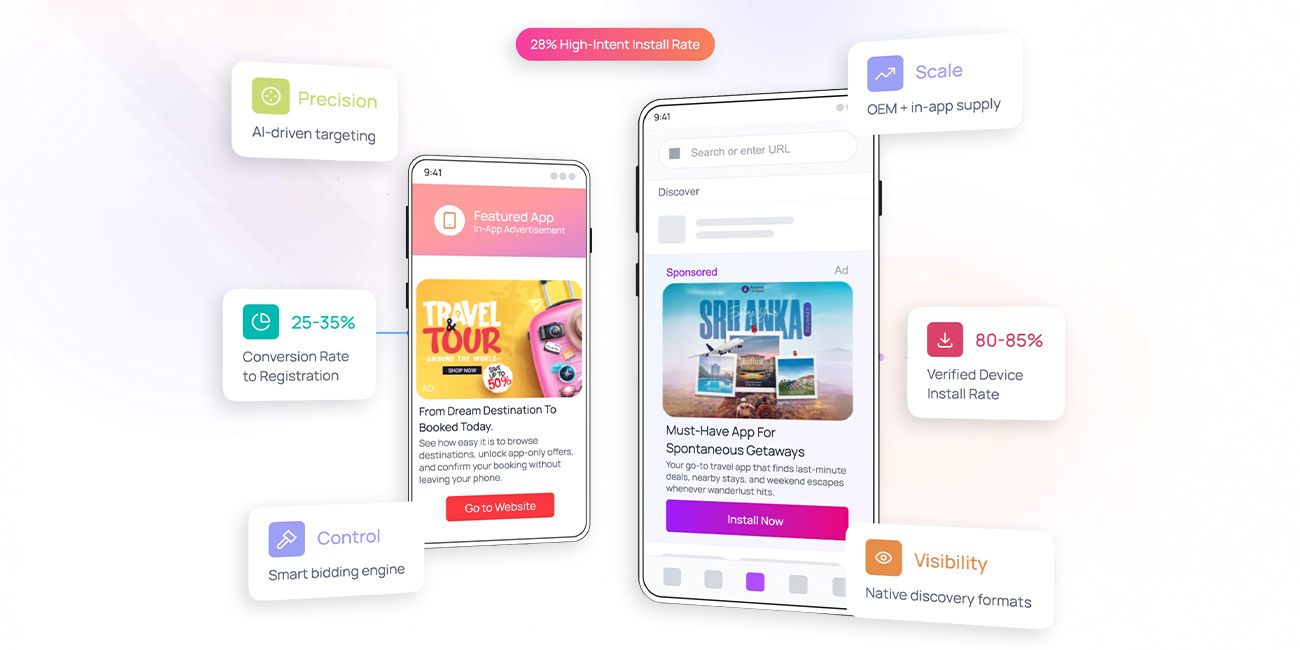
At the conversion stage, advertisers need environments where purchase intent is high and campaign optimization runs toward downstream outcomes. Mobile-first commerce, especially across in-app environments where shopper attention is at its peak, is the primary conversion surface in retail media today.
Xerxes activates across 18,000-plus websites, 25,000-plus mobile apps, and 50-plus SSPs with CPM, CPC, CPI, and CPA buying models. Xerxes operates as an AI and ML-enabled mobile performance DSP designed for brands running app marketing, user acquisition, and performance campaigns across India, Southeast Asia, America, and Europe.

The Measurement Bridge: Connecting Channels to Sales Outcomes
The hardest operational challenge in retail media is connecting upper-funnel brand investment to lower-funnel sales outcomes. When a shopper sees a CTV ad from a retail brand, encounters a rich media unit on a publisher platform three days later, and buys the product on the retailer’s app the following week, the attribution chain spans three different platforms with three different measurement methodologies.
Secure data-matching environments are becoming the standard infrastructure for solving this problem. Retailers and advertisers share encrypted, privacy-safe audience match data to build cross-channel attribution models without exposing raw customer records. As this infrastructure matures through 2026 and 2027, advertisers will gain clearer visibility into how each channel contributes to the complete purchase journey.
Common Mistakes Advertisers Make in Retail Media
Understanding the channel is one thing. Executing it without falling into well-documented traps is another. These are the mistakes that consistently limit retail media performance in 2026.
Over-Reliance on Onsite Inventory Only
Many advertisers start with onsite sponsored placements and never move beyond them. Onsite inventory delivers strong intent signals, but it is finite and increasingly expensive. Brands that do not activate offsite programmatic reach cap their audience size and pay premium CPMs for every impression. Offsite activation using the same shopper audience data extends reach at lower cost with comparable data quality.
Skipping Incrementality Testing
ROAS reported by retail media networks often includes purchases that would have happened regardless of the ad. Advertisers who optimize directly on reported ROAS without running exposed-versus-unexposed lift tests routinely overstate the channel’s true contribution. Incrementality testing before scaling budget is not optional for rigorous retail media investment decisions.
Ignoring Offsite and In-App Scale
Mobile-first commerce, especially across in-app environments, is where a significant share of retail media reach lives. Advertisers who plan around desktop-only or onsite-only behavior miss a large portion of the addressable audience, particularly in India, Southeast Asia, and other APAC markets where in-app commerce is the dominant shopping behavior.
Poor Cross-Channel Measurement Architecture
Running CTV awareness, rich media consideration, and sponsored search conversion across three different platforms without a unified attribution framework produces disconnected metrics that do not tell a coherent performance story. Brands that invest in cross-channel attribution infrastructure early generate compounding insight advantages over those who measure each channel in isolation.
Single-Network Dependence
Concentrating all retail media investment in one network creates competitive vulnerability as inventory costs rise and audience overlap with other advertisers increases. A portfolio approach across multiple networks delivers better cost efficiency, broader reach, and more defensible results over a full campaign cycle.
Retail Media Challenges Advertisers Face in 2026
Fragmentation Across Too Many Networks
Hundreds of retail media networks now operate globally. Most brands actively use a small fraction of available networks, creating coverage gaps and missed opportunities. Managing campaigns across five or more networks simultaneously produces data fragmentation, inconsistent reporting frameworks, and significant operational overhead that compounds as the portfolio grows.
Inconsistent Measurement Standards
No two retail media networks define attribution the same way. ROAS windows vary. New-to-brand definitions differ. Incrementality methodologies are not standardized across the industry. Brands running campaigns across multiple RMNs cannot compare performance data without manual normalization, which creates real inefficiency at the planning level.
The industry is moving toward independent measurement verification rather than letting retailers self-report campaign performance. Large advertisers are pushing networks to adopt consistent attribution standards as a condition of continued investment.
Rising CPMs for High-Intent Inventory
Premium onsite retail media placements, particularly sponsored search positions on major networks, have seen steady CPM inflation as advertiser demand outpaces available inventory. Advertisers need offsite activation and full-funnel investment to maintain cost efficiency at meaningful scale.
In-Store Activation Remains Operationally Complex
86% of grocery retailers report their retail media networks remain siloed from other marketing and merchandising functions. Moving advertising infrastructure into physical stores requires cross-functional coordination that most media teams are not currently built to execute, limiting in-store retail media as a practical channel for most advertisers through 2026.
Budget Allocation Complexity Across Channels
Retail media competes for budget with search, social, programmatic display, and traditional media. Without clear incrementality data showing what retail media contributes beyond what other channels would have captured anyway, budget allocation becomes a negotiation rather than a data-driven decision. Brands that invest in proper measurement infrastructure capture this clarity. Brands that skip it stay in perpetual budget uncertainty cycle after cycle.
Where Retail Media Is Heading: The 2026 to 2030 Roadmap
Programmatic RMN Buying Goes Mainstream
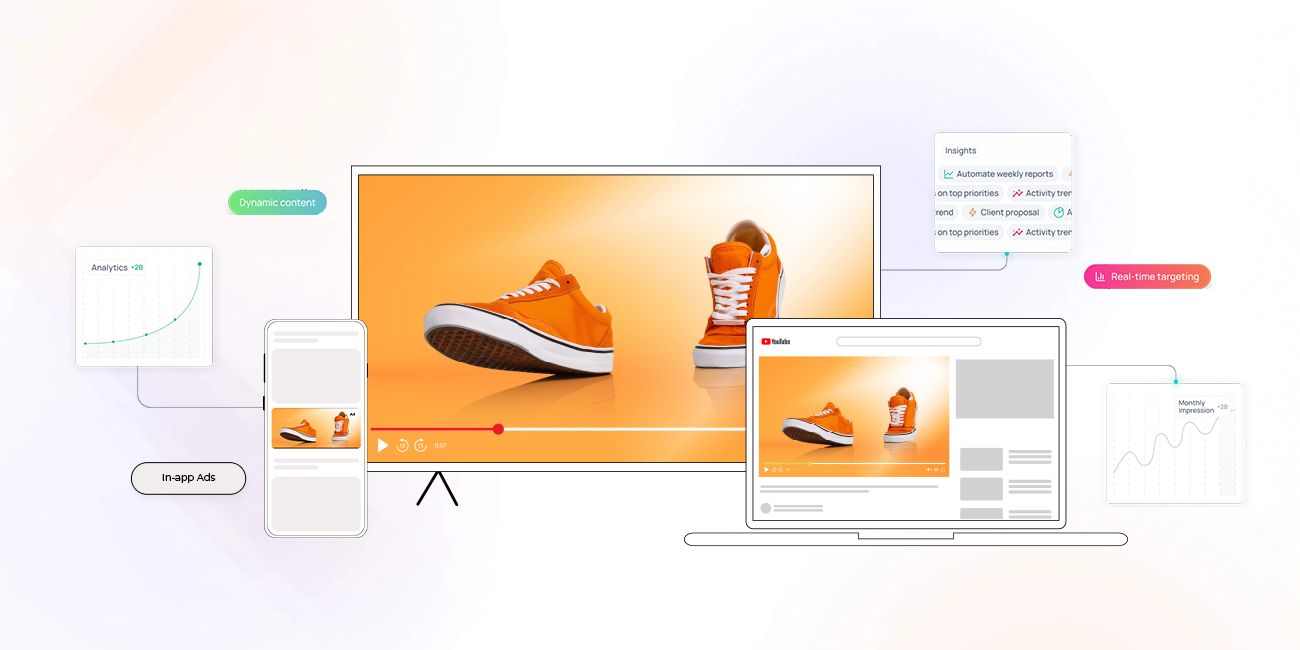
Retailers are opening their ad inventory to DSP connections and programmatic exchanges. Real-time bidding on retail media ad space, unified campaign management across multiple networks, and programmatic access to retailer audience segments through open infrastructure will define the next development phase. By 2027 and 2028, the line between programmatic and retail media buying will narrow significantly as the technology infrastructure converges.

CTV Becomes the Primary Offsite Channel
The convergence of retail and connected TV is accelerating faster than most industry forecasts anticipated. Retailers activate shopper audience data to target and measure ads on streaming platforms, connecting CTV exposure directly to in-store and online purchase outcomes. This loop, reaching a shopper on CTV using retailer audience data and measuring whether that shopper bought the product afterward, is the high-value use case driving retail media CTV investment through 2030.
AI and Agentic Tools Automate Campaign Operations
Generative AI is entering retail media operations at every level. Audience planning, bid optimization, creative variation testing, and cross-network reporting normalization are all moving toward automation. By 2027, leading advertisers will run AI-assisted campaign operations that reduce manual overhead and accelerate optimization cycles. Networks that build strong AI tooling into their self-serve platforms will retain budget share. Those that do not will lose ground to more capable competitors.
APAC and India Become the Next Major Growth Markets
India and Southeast Asia are accelerating faster than Western markets in retail media development. Mobile-first commerce, high smartphone penetration, and rapidly growing consumer bases create conditions for retail media networks to scale quickly in these regions. Advertisers who build OEM and mobile infrastructure in these markets now position themselves ahead of the competitive intensity that will define APAC retail media by 2028. Most global brands are still significantly underinvested here.
Commerce Media Expands Beyond Retail
The retail media model is being replicated across industries. Travel platforms, financial services apps, ride-sharing networks, and food delivery platforms are all building commerce media businesses using their transaction-level data. Retail media built the template, and the addressable ecosystem now extends into every commerce environment where brands want to reach buyers at the moment of a financial decision.
How to Build a Retail Media Strategy That Actually Works
Start With Audience Intent, Not Inventory Type
The first decision in retail media planning is not which network to activate. It is which audience intent stage the campaign is designed to address. Upper-funnel brand building requires CTV and video. Mid-funnel consideration requires rich media, native, and interactive formats. Lower-funnel conversion requires sponsored search and mobile performance placements. Matching format to intent stage is the foundation of an effective retail media strategy. Brands that choose inventory before defining audience intent end up with disconnected campaigns and unclear attribution.
Test Incrementality Before Scaling Budget
ROAS reported by retail media networks includes activity the brand would have captured without advertising. Running exposed-versus-unexposed lift tests before scaling budgets reveals the true incremental contribution of the investment. Brands that skip incrementality testing routinely overpay for revenue they were already generating through other channels.
Activate Offsite to Extend Audience Reach programmatic
Onsite retail media inventory is finite. Offsite activation extends retailer audience segments across programmatic exchanges, connected TV, and the open web at significantly larger scale and lower CPMs than premium onsite placements. A well-structured retail media plan combines onsite for high-intent conversion capture with offsite for scale and consideration building across the broader purchase journey.
Build a Multi-Network Portfolio
Winning retail media advertisers in 2026 spread investment across multiple networks strategically. Amazon provides catalog scale and transaction volume. Walmart delivers value-oriented shopper access. Category-specific networks provide vertical-relevant audience precision. Offsite DSP activation extends all of these audiences beyond owned retail properties. Single-network dependence creates competitive vulnerability as inventory costs rise.
Demand Transparency and Standardized Reporting
Retail media networks that cannot provide consistent attribution methodology, independent measurement options, and clear documentation of how campaign performance is calculated should face direct scrutiny from advertisers. Budget share follows transparency. Networks that give advertisers genuine confidence in their reporting will retain investment through 2027 and beyond.
Retail Media Networks vs Other Digital Channels

RMN vs Search Advertising
Search advertising captures shoppers who are actively looking for solutions. Retail media captures shoppers inside a commerce environment who are already deciding what to buy in a specific product category. Both intent signals are high quality, but retail media operates closer to the actual transaction and connects directly to purchase data that search platforms cannot access. The combination of search and retail media together runs many of the most efficient full-funnel strategies active in 2026.
RMN vs Programmatic Display
Standard programmatic display uses behavioral data to target audiences across publisher inventory. Retail media offsite programmatic uses the same DSP infrastructure but activates retailer transaction data instead of behavioral proxies. The inventory mechanics are identical. The data quality difference is significant and shows directly in conversion rates and attribution accuracy at scale.

RMN vs Social Media
Social advertising reaches large audiences built on interest and demographic signals. Retail media reaches verified buyers using transaction history. Retail media can be up to 50% more effective than social media at driving action after ad exposure. For campaigns targeting in-market shoppers, the data quality advantage of retail media over social interest targeting is a core difference in how the two channels operate.
RMN vs Traditional TV
Traditional television reaches mass audiences without the ability to target specific buyer segments or measure sales outcomes. CTV-linked retail media combines television-quality storytelling with purchase-data targeting and closed-loop measurement. For brands that need to justify advertising investment to performance-oriented stakeholders, the ability to connect a TV-quality ad impression to a verified transaction is the deciding factor.
Key Metrics Advertisers Should Track in Retail Media Campaigns
Attributed sales and incremental revenue measure the direct purchase contribution tied to campaign activity. This metric separates revenue genuinely generated by advertising from revenue that would have occurred without any campaign.
Return on ad spend and incremental ROAS work alongside each other in a mature measurement framework. Total ROAS tells advertisers how much revenue was attributed per dollar spent. Incremental ROAS reveals how much of that revenue was genuinely caused by the advertising itself, not by organic purchase behavior.
New-to-brand percentage tracks the share of buyers who had not purchased from the brand in the previous twelve months. High new-to-brand rates indicate successful customer acquisition rather than recycled spend on existing buyers. This metric matters especially for brands trying to grow category share.
Category share of voice measures the proportion of total advertising impressions a brand captures in its category relative to competitors. This metric connects campaign activity directly to competitive positioning.
View-through rate and completion rate apply to video and CTV placements. High completion rates signal strong creative resonance and quality placement selection. These rates inform both creative optimization and media planning going into the next campaign cycle.
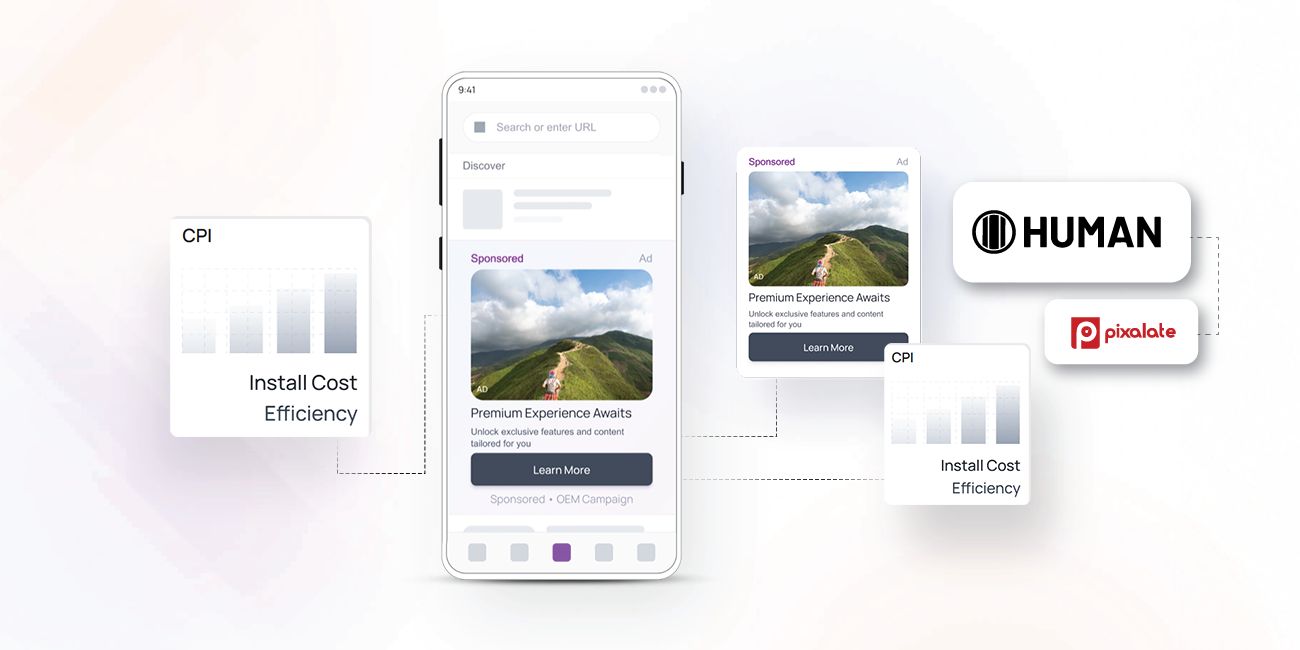
Cost per acquisition and cost per install apply to mobile performance campaigns. For brands activating retailer audience data to drive app installs or ecommerce conversions, these metrics normalize performance across buying models and make cross-campaign comparison practical.
Conclusion
Retail media networks are now the third-largest advertising channel in digital marketing. The channel is projected to cross $165 billion globally in 2026 and shows no sign of decelerating through 2030. Advertisers who build genuine full-funnel strategies, connect offsite programmatic activation to onsite intent, link CTV brand investment to downstream conversion data, and demand measurement accountability from every network in their portfolio will consistently outperform competitors still treating retail media as a sponsored product add-on.
The channel rewards strategic architecture. Brands that map ad formats to intent stages, test incrementality before scaling, build multi-network portfolios, and deploy the right tools for the right objectives at each funnel stage generate compounding returns. The infrastructure to do this exists in 2026. The window for building it before the market gets significantly more competitive is open now, but it will not stay open indefinitely.
Xapads Media operates a full ecosystem of advertising platforms built across the funnel, reaching 1.9 billion-plus audiences across 245 countries through 9 global offices and 100-plus industry awards. Unwire powers CTV awareness. Xaprio drives omnichannel brand consideration. Pulse delivers YouTube contextual precision at the mid-to-lower funnel. Xerxes activates mobile performance conversion. Each platform operates independently for its specific role in the funnel, giving advertisers focused tools rather than a generic all-in-one stack.
Advertisers who align data, channels, and measurement across this structure will lead the next phase of retail media growth.
Frequently Asked Questions
What is a retail media network in simple terms?
A retail media network is an advertising platform that a retailer runs using its own shopper data and digital properties. Brands pay to place ads on the retailer’s website, app, or in-store screens, and the retailer measures which ads drove actual purchases.
How big is the retail media market in 2026?
Global retail media ad spend is expected to cross $165 billion in 2026, with US spend at $71.09 billion. The channel is growing at 17.8% year-over-year, outpacing both search and social advertising growth rates.
What is the difference between onsite and offsite retail media?
Onsite retail media places ads directly on the retailer’s own website, app, or in-store screens. Offsite retail media activates the retailer’s shopper audience data across the open web, connected TV, and social networks. Both rely on the retailer’s transaction data. Offsite typically offers larger reach at lower average CPMs.
Why are retail media networks growing faster than other ad channels?
Retail media networks hold purchase transaction data that few other media owners control. As third-party cookies exit the advertising stack, advertisers need privacy-compliant, transaction-grade signals for precision targeting. Closed-loop measurement, connecting ad exposure directly to verified sales, also drives advertiser confidence in ways that modeled attribution from other channels cannot match.
What is the biggest challenge in retail media advertising today?
Fragmentation is the primary operational challenge. Hundreds of networks operate globally with inconsistent measurement standards and siloed reporting. Brands managing campaigns across multiple networks face data normalization overhead and difficulty making cross-network performance comparisons that support smart budget allocation.
How does CTV connect to retail media strategy?
Connected TV is becoming the key offsite channel for retail media advertisers. Retailers activate shopper audience segments to target ads on streaming platforms and measure which CTV exposures drove in-store or online purchases through closed-loop data matching. This combination of storytelling and purchase data attribution gives retail-linked CTV a measurability advantage over traditional broadcast TV.
What metrics matter most in retail media campaigns?
The most important metrics are incremental ROAS, new-to-brand percentage, attributed sales volume, and category share of voice. For video and CTV, view-through rate and completion rate indicate creative performance. For mobile campaigns, cost per acquisition and cost per install normalize outcomes across buying models.
How should advertisers structure a full-funnel retail media strategy?
Upper-funnel investment goes into CTV and video for brand awareness. Mid-funnel goes into rich media, native, and interactive formats for consideration. Lower-funnel goes into sponsored search and mobile performance placements for conversion. Measurement infrastructure connecting all three layers turns a fragmented channel mix into a coherent, provable investment case.
What role does OEM advertising play in retail media strategies?
OEM advertising platforms hold device-level user data and owned ad inventory that mirrors the model of retail media networks. For advertisers targeting Asia-Pacific markets, OEM channels like Mi.xapads.com provide access to 564 million MIUI Monthly Active Users across 272 countries with 3.2 billion average daily impressions. This adds a mobile-first dimension that traditional RMN planning frameworks rarely address, creating real competitive advantage for brands that activate early.
Related Post