
Every time a viewer starts streaming, an ad auction fires before the first frame of content plays.
Multiple demand partners bid simultaneously for a single placement. The highest eligible bid wins. The winning ad stitches into the video stream in milliseconds, invisible to the viewer behind the content experience.
That mechanism is OTT header bidding. It replaced the waterfall model that sent impressions through a sequential queue, leaving revenue unrealised and competitive buyers locked out regardless of bid strength.
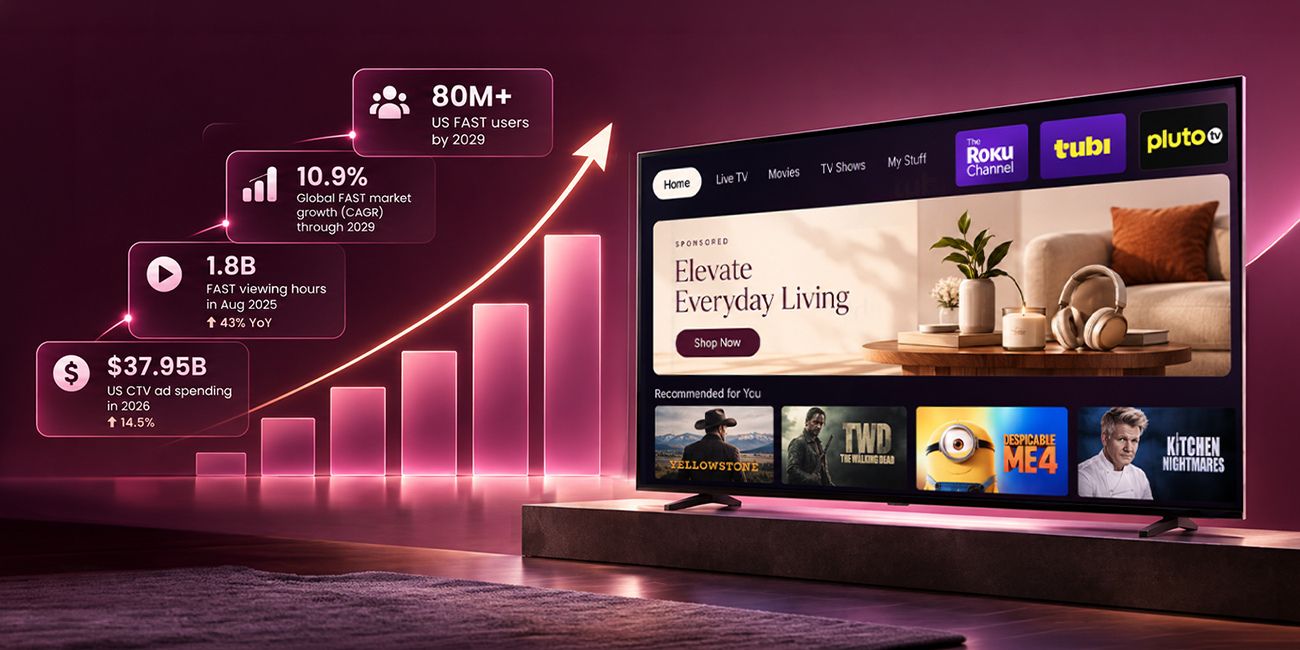
US connected TV ad spend reached USD 33.35 billion in 2025, as per Statista CTV Ad Spend United States 2025. As that budget grows, understanding the infrastructure beneath it becomes a core competency for any media planner working in streaming environments.
This guide covers how OTT header bidding works in CTV, why it outperforms waterfall, how ad pods and server-side architecture operate, and how the three major deal types fit inside a unified auction environment in 2026.
OTT Header Bidding vs Waterfall: Quick Comparison
The table below captures the structural differences between both models. Every section that follows explains how these differences work in practice.

What Is OTT Header Bidding and Why It Matters in 2026
The Old Way: Waterfall Auctions and Why They Failed
The waterfall model sent each ad impression to demand partners one by one, in a pre-set priority order. The first partner to meet the price floor won the impression. Demand partners lower in the queue never saw the impression, regardless of how high they were willing to bid.
Premium inventory regularly sold to lower-value buyers because of queue position, not bid price. Publishers earned less than the inventory was worth. Advertisers with strong bids but poor queue positions missed placements they should have won.
Waterfall auctions also built latency into every ad break. In a streaming video environment, that delay disrupted playback continuity. Neither publishers nor advertisers benefited from a system that penalised everyone for its inefficiency.
What OTT Header Bidding Actually Does Differently
Header bidding fires a simultaneous auction. The publisher sends the ad request to multiple DSPs, SSPs, and exchanges at the same time. Every connected demand partner evaluates the impression and submits a bid.
In an open auction, the highest eligible bid wins. In environments where private marketplace or programmatic guaranteed deals are active, deal-level priority rules apply before the open auction bid is evaluated.
For CTV advertising, simultaneous bidding matters because streaming inventory is scarce. When all demand partners compete at the same time, CPMs tend to reflect genuine market value rather than queue-based outcomes.
Why CTV Has No Browser Header, and What Replaces It
The term “header bidding” comes from display advertising, where JavaScript code sits in a webpage header and fires a simultaneous auction. CTV apps do not run in browsers. Smart TVs, streaming sticks, and set-top boxes run as native applications on dedicated operating systems.
CTV header bidding moves the auction logic server-side. A server intercepts the ad request from the streaming app, sends it to all demand partners simultaneously, collects bids, selects the winner, and returns the resolved ad to the delivery layer. The device handles none of this complexity.
Server-side execution makes unified CTV auctions technically workable across all device types. The infrastructure operates consistently across smart TVs, Roku sticks, Apple TVs, gaming consoles, and set-top boxes because the device never runs the auction. The server does.
OTT Header Bidding: Step-by-Step Flow
The table below shows the complete process from the moment a viewer presses play to the moment reporting updates in the advertiser dashboard.

Step 1: The Ad Request Is Born
When a viewer opens a streaming app and content begins, the app identifies an upcoming ad break. The publisher ad server generates a bid request containing metadata about the inventory: content genre, device type, geographic region, household audience data, and break length. The request fires before the break begins.
Step 2: The Unified Auction Fires Across Demand Partners
The bid request goes simultaneously to every DSP and SSP connected to the header bidding wrapper. Each demand partner receives identical impression details at the same moment.
They evaluate the request against active campaigns, audience criteria, and budget parameters, then submit a bid. All bids must arrive within a defined timeout window, typically 200 to 400 milliseconds on well-optimised server infrastructure.
Step 3: Bids Are Evaluated in Real Time
The wrapper collects valid bids and runs evaluation logic. For open auction inventory, the highest eligible bid wins.
Where PMP or programmatic guaranteed deals are active, deal priority rules evaluate first before falling to open auction bids. Quality filters, frequency caps, competitive exclusion rules, and brand safety checks run alongside price evaluation in the same millisecond window.
Step 4: The Winning Ad Gets Stitched In via SSAI
Server-Side Ad Insertion (SSAI) merges the winning ad creative directly into the video bitstream at the server level before delivery to the viewer device. The ad and the content become a single continuous stream. No separate network request fires from the device.
Because the ad is embedded inside the video bitstream rather than served as a separate request, SSAI significantly reduces the effectiveness of most ad blockers. Device-level blocking tools that intercept separate ad network calls generally have limited ability to remove content already embedded within the video stream itself.
Step 5: Reporting and Attribution Follow Instantly
As the ad plays, the platform fires impression trackers and completion beacons at each quartile of the ad duration. These signals flow to the DSP and any third-party measurement vendors in real time.
Advertisers see impression delivery, completion rates, and reach data update live in reporting dashboards, enabling in-flight optimization rather than end-of-campaign analysis.
Why Advertisers and Media Planners Should Care About CTV Header Bidding

Premium inventory access: bid-based auctions give all demand partners equal access to the same inventory. Queue-based exclusion for competitive DSPs is largely removed.
More competitive CPMs: simultaneous competition generally produces prices closer to true market demand. Overpaying because of an inherited waterfall position becomes less likely.
Higher fill rates: server-side execution typically handles more bids within timeout windows than sequential waterfall chains, reducing unfilled impressions.
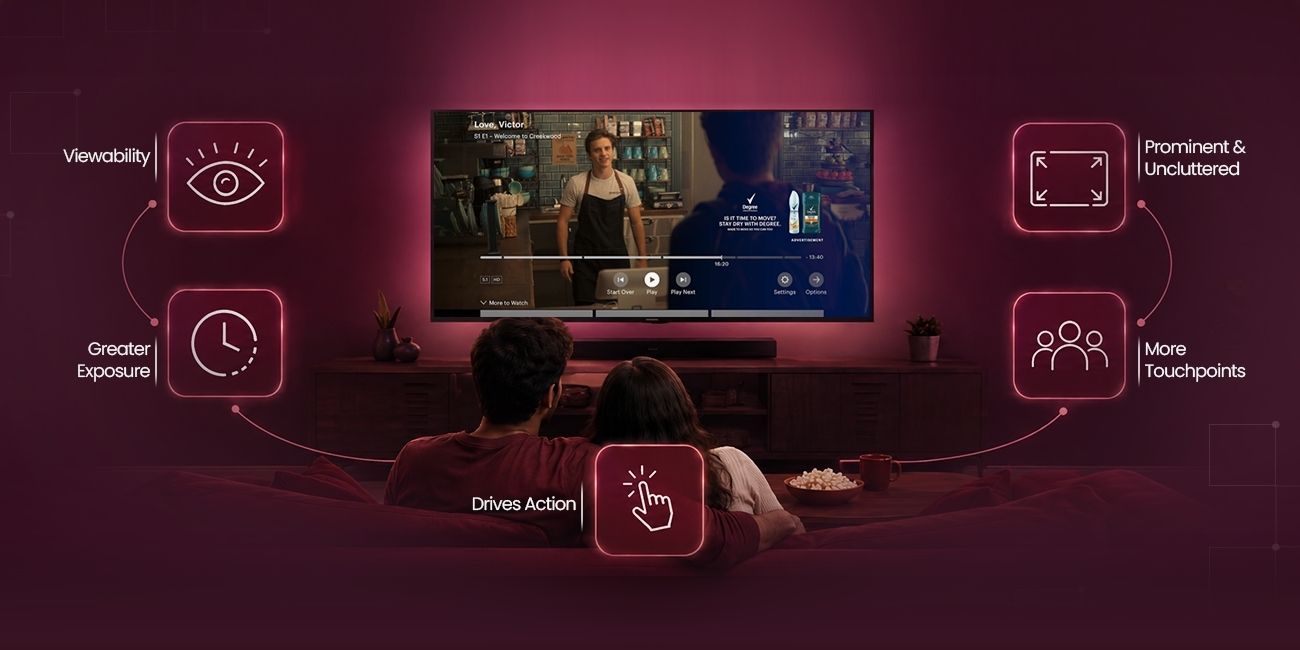
Consistently high viewability: SSAI delivery inside the video stream produces viewability rates approaching 100% in premium CTV environments, which display channels generally cannot replicate through the same mechanism.
Full transparency: impression-level reporting shows exactly where each ad served, in what content environment, at what CPM, and through which supply path.
The Role of Ad Pods in OTT Header Bidding

What Is an Ad Pod
An ad pod is a commercial break in a streaming environment. One pod can contain multiple individual ads assembled to fill a defined break duration. In linear TV, ad pods were built weeks ahead by traffic teams assigning specific creatives to specific breaks. In OTT, ad pods assemble dynamically at the moment the break approaches.
Each slot within a pod is auctioned separately. The header bidding wrapper runs individual auctions for each position, fills the break with winning creatives, and assembles the pod in real time. Advertisers do not reserve a static slot in a static break. Each position is earned through competitive bidding at the moment it becomes available.
How Competitive Exclusion Protects Brands
Competitive exclusion is designed to prevent two brands from the same category appearing in the same ad break. An automotive brand and its direct competitor should not both win slots in the same pod. The platform typically enforces this during bid evaluation, before the auction result is finalised.
For media planners in competitive product categories, the competitive exclusion implementation in the buying platform deserves explicit evaluation. A platform that applies exclusion at pod level rather than the impression level generally provides stronger brand protection.
Server-Side vs Client-Side: Which One Powers CTV Header Bidding
Why Client-Side Does Not Work on CTV
Client-side header bidding executes JavaScript inside a browser. Every browser on every desktop or mobile device can run this code. CTV apps run as native applications, not inside web browsers. A streaming app on a smart TV or Roku device has no browser environment in which JavaScript can execute.
Attempting client-side header bidding on CTV produces technical failures. The bid request infrastructure breaks down, and ad insertion cannot happen through browser-based mechanisms. The client-side model is architecturally incompatible with how native streaming apps function.
How Server-Side Execution Solves This
Server-side header bidding relocates the entire auction to external infrastructure. The streaming app sends one ad request to the header bidding server. The server handles all demand partner communication, runs the parallel auction, selects the winner, and returns a resolved creative manifest to the app.
The architecture works consistently across all CTV device types and operating systems: smart TVs running Tizen, streaming sticks running Roku OS, Apple TV running tvOS, and gaming consoles running proprietary systems all interact with the same server-side layer in the same way.
What Server-Side Execution Means for Advertisers
Lower latency is the primary operational gain. Server-side infrastructure typically completes auctions faster than device-based execution, which means more demand partners can submit bids within timeout windows. More bids generally mean more competition and more accurate market pricing.
Server-side architecture also handles audience and contextual data enrichment more effectively than client-side bidding, because the server accesses household-level audience data and content signals without requiring browser cookies, which do not function in CTV environments.
Deal Types Inside OTT Header Bidding: Open Auction, PMP, and Programmatic Guaranteed

Open Auction RTB: Scale and Discovery
Open auction real-time bidding gives any advertiser connected through a DSP access to available CTV impressions. Every connected demand partner competes simultaneously. The highest eligible bid in the open auction wins inventory that no deal-level commitment has claimed first.
Open auction works best for campaigns seeking broad reach across diverse streaming content. Scale is the primary strength. Control over specific placement environments is lower than deal-based buying, but the breadth of inventory access makes open RTB well-suited for audience-first campaigns where reach volume matters most.
Private Marketplace (PMP): Brand Safety and Premium Placement
A PMP deal gives an advertiser negotiated access to specific publisher inventory before it reaches the open auction. The publisher and advertiser agree on the content environment, audience parameters, price floor, and impression volume. The deal runs through the header bidding wrapper with a priority layer above open auction bids.
When the PMP bid clears the negotiated floor, it wins the impression directly. If the PMP bid does not meet the floor, the impression falls to open-auction competition. For brands where content adjacency and placement quality define campaign effectiveness, PMP deals inside OTT header bidding combine the control of a direct buy with the operational efficiency of programmatic execution.
Programmatic Guaranteed (PG): Certainty for High-Stakes Campaigns
Programmatic Guaranteed is the programmatic equivalent of a traditional direct TV buy. Advertiser and publisher agree in advance on a fixed CPM, a guaranteed impression volume, and a flight window. Execution happens through DSP and SSP infrastructure, but delivery is reserved rather than competitive.
PG deals take the highest priority in the auction evaluation stack. They execute before PMP bids and before any open auction consideration. For product launches, seasonal campaigns, and brand moments where specific delivery is required, PG provides a level of certainty that neither PMP nor open RTB can match.
Choosing the Right Deal Type
Broad audience reach campaigns with flexible placement tolerance typically run open RTB. Brand-sensitive campaigns requiring premium content environments use PMP deals. Campaigns where specific volume and specific inventory are non-negotiable are generally structured as Programmatic Guaranteed.
Most sophisticated media plans use all three simultaneously: PG for anchor placements, PMP for premium content adjacency, open RTB for reach extension and frequency management.
Conclusion
OTT header bidding is not a feature layer on top of CTV advertising. It is the transaction mechanism that determines how premium streaming impressions get bought and sold in the programmatic era.
The unified auction, server-side execution, SSAI delivery, dynamic ad pod construction, and structured deal-type priority stack all exist to address specific problems in premium streaming ad delivery. Understanding each component helps media planners set up campaigns that work with the auction mechanics rather than against them.
Frequently Asked Questions
What is OTT header bidding in CTV advertising?
OTT header bidding is the auction technology that determines which ad plays in a CTV ad break. Instead of passing impressions to demand partners one at a time as waterfall auctions do, header bidding sends the impression simultaneously to multiple DSPs, SSPs, and exchanges. All connected partners bid in parallel, and the highest eligible bid wins, subject to any deal-level priorities. The entire process runs server-side in milliseconds before the streaming viewer reaches the ad break.
What is the difference between OTT header bidding and waterfall in CTV?
Waterfall auctions pass each impression through a priority list of demand partners sequentially. The first partner to meet the price floor wins, regardless of whether higher bids exist lower in the queue. Header bidding sends the same impression to all demand partners simultaneously. The highest eligible bid wins. Header bidding generally produces stronger revenue for publishers and broader inventory access for advertisers.
Why does CTV header bidding run server-side?
CTV streaming apps run as native applications, not inside web browsers. Client-side header bidding requires JavaScript execution in a browser environment, which CTV devices do not support. Server-side header bidding moves the auction to external servers. The streaming app sends one ad request, the server handles all auction complexity, selects the winner, and returns the resolved creative. The architecture works consistently across all CTV device types and operating systems.
What is SSAI and why does it matter for CTV advertising?
Server-Side Ad Insertion stitches the winning ad creative directly into the video stream at the server level before delivery to the viewer device. The ad and the content become a single continuous bitstream. No separate network request fires from the device. The result is seamless playback with consistently high viewability rates, reduced ad blocker effectiveness, and completion rates that display advertising generally cannot achieve through the same structural mechanism.
What deal types work inside OTT header bidding?
Three deal types operate within a unified OTT header bidding environment. Open Auction RTB gives all connected advertisers competitive access to available impressions at scale. Private Marketplace deals give specific advertisers preferential access to defined premium inventory with a negotiated price floor. Programmatic Guaranteed provides fixed-price reserved impression delivery for campaigns requiring predictable outcomes. Sophisticated media plans typically use all three in combination.
Related Post