Are you preparing your media strategy for a world without third-party cookies? The shift to cookieless advertising is already underway, changing how marketers target audiences, measure performance, and plan campaigns across digital channels. What once relied on cross-site tracking now depends on privacy-first signals, contextual relevance, and platform-level intelligence.
Cookieless advertising is not about losing targeting precision. It is about using new signals that respect user privacy while still delivering meaningful campaign outcomes. Contextual targeting, Connected TV, OEM and in-app environments, consent-based audience signals, and modeled attribution are quickly becoming the foundation of modern programmatic advertising in 2026.
For marketers and media planners, the challenge is understanding which cookieless strategies actually work and how to combine them into a measurable full-funnel approach. This guide explains cookieless targeting, privacy-first advertising infrastructure, measurement without cookies, and the channels that already operate independently of browser tracking. By the end, you will understand how cookieless advertising works in practice and how to build campaigns designed for 2026 and beyond.
What Is Cookieless Advertising
Cookieless advertising is the practice of running digital ad campaigns without using third-party cookies to track, target, or measure audiences. For a long time, third-party cookies sat invisibly inside browsers and recorded user behavior across websites. Ad platforms used that data to build audience profiles, retarget users, control ad frequency, and track conversions. That system is now under serious strain.
The shift does not mean advertising stops working. It means the data signals that power ad campaigns need to come from different, more privacy-safe sources. Cookieless advertising can run on contextual signals, consented audience data, device-level identifiers, and AI-driven modeling to reach the right people at the right time.
For marketers, media planners, and advertisers, this is not a small technical update. It is a structural change in how campaigns get planned, bought, and measured. Brands that build cookieless campaign infrastructure today may hold a meaningful competitive edge through 2030 and beyond.
Why Third-Party Cookies Are Going Away

The decline of the third-party cookie did not happen in a single moment. It is the result of growing privacy regulation, browser-level enforcement, and a deep shift in how users and lawmakers view data collection.
Safari blocked third-party cookies by default years ago. Firefox followed. Google Chrome holds over 60 percent of global browser share and has been testing Privacy Sandbox alternatives. Third-party cookie deprecation timelines in Chrome continue to evolve, but the broader industry direction is clear. 87 percent of US browsers could become cookieless in the long term as privacy controls tighten across all major platforms.
User behavior is pushing this shift further. 67 percent of US adults have turned off cookies or website tracking to protect their privacy, and that number grows each year. Fewer than 1 in 5 US users say they always accept third-party cookies when given the choice.
Regulatory pressure reinforces the direction. Over 80 percent of global internet users are now protected under data privacy laws including GDPR and CCPA, which fundamentally change how digital advertising systems can collect and use audience data. Non-compliance carries financial penalties and long-term reputational risk.
Google Privacy Sandbox continues to develop. Its Topics API and Protected Audiences framework group users into broad interest categories rather than tracking them individually across sites. While Chrome privacy policy details will continue to evolve through 2026 and beyond, the trajectory for the industry is toward privacy-safe targeting. Advertisers who wait for a single perfect replacement may find themselves behind. Building a layered cookieless strategy now makes sense regardless of how any single browser timeline resolves.
What Advertisers Lose Without Cookies
Understanding what cookie deprecation removes from campaign capability helps advertisers choose the right solutions. The impact typically falls across four areas.
Cross-site audience tracking takes the biggest hit. Third-party cookies allowed ad platforms to follow users across multiple websites and build behavioral profiles for targeting. Without them, behavioral retargeting based on cross-site browsing history becomes difficult to sustain at scale.
Retargeting pools shrink significantly. Campaigns that relied on cookie-based retargeting audiences can lose a large portion of addressable users. Safari and Firefox users have been excluded from cookie-based retargeting for years already. As Chrome privacy controls deepen, that share may continue to reduce.
Cross-site frequency capping becomes more complex. Without a shared persistent identifier that works across different sites, ad platforms may find it harder to track how many times a specific user has seen a specific ad. Publishers, device IDs, clean rooms, and probabilistic models all offer partial solutions, but cross-publisher frequency management becomes a more deliberate and technical process than it was with cookies.
Multi-touch attribution loses fidelity. Cookie-based attribution connected ad impressions to conversions across websites and devices. Without that shared identifier, last-click models often become the fallback, which can distort how media budget gets allocated across the funnel.
Advertiser concern about cookie deprecation is high globally, with a significant share of advertisers and publishers reporting concern about business impact. The gap between concern and preparedness is where competitive opportunity lives. Brands that act now can build infrastructure advantages over those who delay.


The 6 Cookieless Advertising Strategies That Work in 2026
1. Contextual Targeting: Smarter Than Ever

Contextual targeting places ads based on the content a user is viewing right now, not based on browsing history. A sports nutrition brand appears next to a marathon training article. A finance product runs within a personal budgeting blog. No cross-site user tracking required.
What makes contextual targeting in 2026 meaningfully different from earlier versions is the intelligence layer underneath it. Modern contextual platforms use natural language processing, semantic content analysis, and real-time signals that go far beyond simple keyword matching. These systems can read page sentiment, topic structure, audience engagement patterns, and even visual and audio signals within video content.
Contextual advertising has been performing close to behavioral targeting on key campaign metrics, while often outperforming it on brand safety indicators. For many campaign types, contextual targeting can deliver equivalent or better outcomes than cookie-based behavioral advertising, with privacy compliance built in from the start.
Contextual targeting works across channels including web display, video, Connected TV, YouTube, and native. It can scale globally without consent friction, making it one of the more practical and durable approaches to cookieless advertising available today.
2. Consented Audience Data and Zero-Party Signals

Consented audience data is information brands collect directly from their own audiences through owned channels. Loyalty programs, email subscriptions, app engagement, purchase histories, and CRM records all form part of this asset. Zero-party data goes a step further: it is information audiences actively and intentionally share, such as preference surveys, product quiz responses, and account profile inputs.
Both data types are privacy-compliant, durable, and owned by the brand. Unlike cookie-derived data, consented audience signals do not disappear when browsers update their privacy policies.
The challenge is scale. Consented audience data tends to be rich but more limited in absolute reach compared to third-party cookie pools. Advertisers typically need to build collection across customer touchpoints, integrate that data in a Customer Data Platform, and activate it across programmatic campaigns through platform connections or clean room infrastructure.
A strong and growing share of global ad budgets now flows through platforms built on privacy-by-design principles. Advertisers who build and own robust consented audience assets today may operate with a structural advantage that compounds over time.
3. Connected TV Advertising: No Cookie Dependency

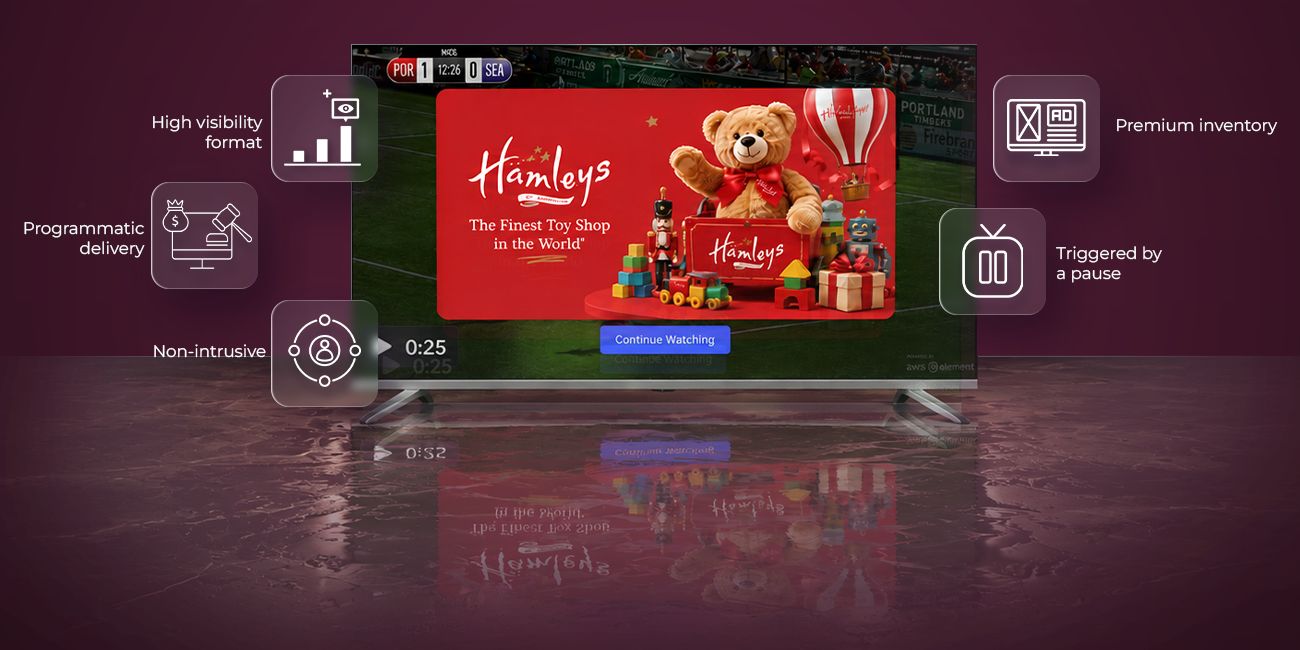
Connected TV advertising has never relied on browser cookies. Smart TVs, streaming sticks, and OTT platforms operate in a completely different environment from desktop web browsing. Targeting on CTV uses IP addresses, household-level signals, device identifiers, content metadata, and contextual signals, none of which depend on third-party browser cookies.
This means CTV campaigns are already structured for a cookieless environment. Advertisers do not need to retrofit CTV for a privacy-first world, because CTV was never built around browser tracking in the first place.
CTV reaches audiences at intentional, lean-back moments. Streaming audiences actively choose their content and typically watch with sustained attention. Non-skippable video formats on premium streaming inventory are often associated with high completion rates and strong brand recall, which reflects the quality of the viewing environment rather than any audience surveillance mechanism.
Context-based CTV targeting adds precision by matching ad content to what is on screen at the moment of delivery. A travel brand runs during a travel documentary. A food brand appears during a cooking series. The relevance signal is immediate and content-driven.
4. OEM and In-App Advertising: Device-Level Signal

OEM advertising reaches users directly through the operating system and pre-installed apps on their devices. These placements are separate from browser cookie policies because they operate at the device and OS level.
Xiaomi operates a large OEM advertising ecosystem. Through the Mi.Xapads platform, Xiaomi reaches 564 million MIUI monthly active users across 272 countries and regions, generating 3.2 billion average daily impressions. Regional reach includes 133 million users in India, 104 million in Europe, 59 million in Southeast Asia, 56 million in Latin America, and 23 million in the Middle East.
Placements include home screen wallpaper carousel ads with 7 billion daily exposures reaching 100 million users, Mi Music integrations reaching 220 million monthly active users, and system-level user acquisition campaigns. These are device-native environments that operate without browser cookies and provide large-scale device-level reach across global markets.
In-app advertising works on a similar principle. Mobile apps rely on privacy-safe device signals including consented identifiers and contextual signals. The specific identifiers in use, and the consent frameworks around them, continue to evolve under platforms like Android Privacy Sandbox and Apple ATT. Advertisers who build in-app targeting strategies around contextual and consented device signals can maintain meaningful reach in mobile environments as those frameworks develop.
5. YouTube Contextual Targeting: Safe, Relevant, Scalable

YouTube is a leading video platform and the second-largest search engine globally. While YouTube advertising does not depend on third-party browser cookies in the traditional sense, reaching quality audiences on YouTube typically requires a thoughtful contextual strategy to maximize relevance and brand safety.
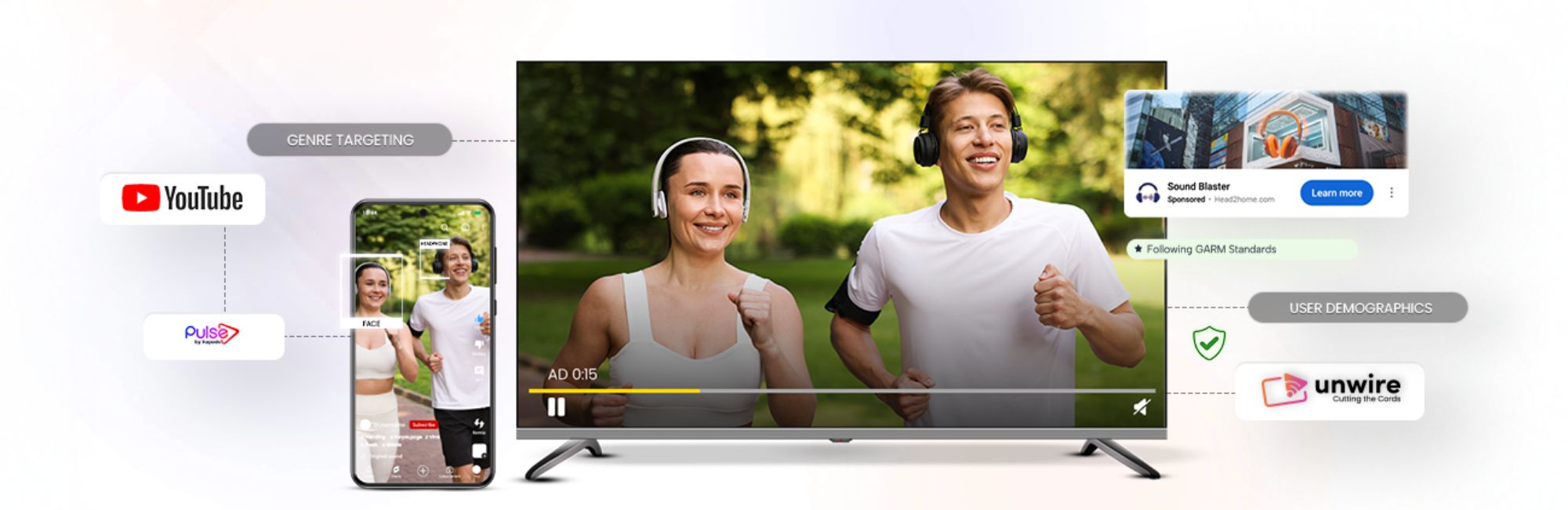
AI-powered contextual targeting for YouTube analyzes video content signals including keywords, themes, tone, on-screen text, audio sentiment, and visual elements to identify which videos may be appropriate environments for specific ad campaigns. This goes beyond basic category and keyword selection. Campaigns can align with specific content environments without relying on cross-site cookie tracking.
Brand safety on YouTube is a genuine concern for advertisers running video campaigns at scale. Contextual AI platforms that operate under GARM (Global Alliance for Responsible Media) industry safety standards help ensure ads appear in verified brand-safe environments, supporting both campaign ROI and brand reputation.
Contextual YouTube targeting can scale across global markets, may work across language environments when built on visual and semantic content signals, and aligns with the consent-based direction digital advertising is taking.
6. Data Clean Rooms and Identity Resolution

Data clean rooms allow multiple parties to share audience insights without exposing raw user data to each other. Advertisers can collaborate with publishers or platform partners to analyze overlapping audiences, measure campaign reach and frequency, and attribute conversions, all inside a privacy-safe environment where neither side accesses the other’s raw identifiers.
Major platforms offer clean room infrastructure, including Google Ads Data Hub, Meta’s advanced measurement suite, and Amazon’s clean room capabilities. These environments are particularly useful for measuring CTV and cross-channel campaign performance, where traditional cookie-based attribution tends to fall short.
Identity resolution works alongside clean rooms. Deterministic matching uses known identifiers like hashed email addresses to connect ad exposures to conversions with reasonable accuracy. Probabilistic modeling fills gaps using device patterns, location signals, and behavioral data within privacy-safe frameworks.
Cookieless identity solutions have become a top investment priority among marketing leaders. Clean rooms and identity resolution can together form a strong measurement foundation for advanced cookieless campaigns, and adoption is growing steadily through 2026.

How the Full-Funnel Cookieless Stack Works
Cookieless advertising tends to work best when each channel serves the right role at the right stage. Mixing channels without a funnel structure can create wasted spend and unclear attribution. A clear cookieless funnel maps each channel to a stage: awareness, consideration, and conversion.
Awareness
Awareness calls for channels that reach broad audiences with high-impact creative in brand-safe, cookieless environments.
Connected TV is a strong awareness channel in this context. Unwire is a dedicated CTV advertising platform that delivers awareness campaigns across premium streaming inventory. Unwire offers 120 million global reach, 100 percent viewability across premium channels, 85 percent view-through rates with non-blockable video ads, and 99 percent fraud-free delivery Pixalate verification. OTT header bidding connects advertisers to premium video supply across leading SSPs, while Smart Media Planner, PMP deal support, and real-time reporting give media teams practical campaign control. For brands building cookieless awareness at scale, CTV through Unwire offers reach, viewability, and content alignment in a fully cookie-independent environment.
YouTube-based awareness runs alongside CTV. Pulse by Xapads is an AI-powered contextual targeting engine for YouTube that places ads in contextually relevant video moments with full GARM-compliant brand safety. Pulse analyzes content signals including on-screen text, audio, sentiment, brands, and places to place ads in relevant environments without relying on audience cookie tracking.
Consideration
Consideration calls for rich media and omnichannel formats that reinforce brand messaging and build deeper audience engagement across surfaces.
Xaprio is an omnichannel branding DSP that runs campaigns across OEM, native, display, and video formats. Xaprio can generate 2 times brand recall lift, 7.4 seconds of average rich media engagement per session, and 3.2 times more time spent compared to static banners. With 50 or more ad formats and 70 or more global and OEM supply partners, Xaprio gives media planners the inventory breadth and creative flexibility to build brand consideration at scale without cookie dependencies.
Conversion
Conversion calls for precision targeting at the device and in-app level.
Xerxes is a mobile performance DSP powered by AI and ML. Xerxes drives app installs, in-app actions, and performance conversions across mobile inventory reaching 472 million monthly active users in India, 212 million in Southeast Asia, 122 million in the Americas, and 105 million in Europe. With 18,000 or more websites, 25,000 or more mobile apps, and 50 or more SSPs in its network, and buying models across CPM, CPC, CPI, and CPA, Xerxes operates in a mobile-native environment where performance campaigns run on device identifiers rather than browser cookies.
Xapads Media, the parent company behind this full cookieless ecosystem, reaches 1.9 billion or more total audiences across 245 or more countries, backed by 100 or more industry awards and a global team of 200 or more advertising professionals operating from 9 offices worldwide. This Awareness to Consideration to Conversion architecture gives advertisers a complete, integrated, and privacy-safe campaign structure that can work across every stage of the customer journey.
CTV Advertising and the Cookieless Advantage

Connected TV stands apart from most digital advertising channels in one important way: it was never built on third-party cookies. While display and search advertising grew up inside browser environments where cookies provided the targeting infrastructure, CTV developed from a television model where household-level data, content metadata, and IP-based signals were always the standard.
CTV advertisers face no deprecation event, no retargeting pool collapse, and no attribution disruption from browser policy changes. The cookieless transition that affects display and paid search does not touch the core mechanics of CTV campaign delivery.
Household-level targeting reaches the entire viewing household through a single identifier, rather than a single browser session on one device. Content-based contextual targeting aligns brand messages with specific genres, themes, and programming across streaming platforms worldwide. Real-time bidding through OTT header bidding connects advertisers to premium inventory from multiple video SSPs in a unified auction.
Cross-device targeting adds further reach. CTV campaigns can coordinate with the same household across mobile devices, creating connected messaging that spans both the big screen and mobile. This capability can bridge lean-back CTV viewing with mobile-driven conversion behavior, offering a connected, cookieless path from awareness to action.
CTV also tends to generate stronger viewability figures than web display advertising. Non-skippable video in a full-screen streaming environment, with audiences who actively chose to open the platform and selected their content, produces an attention quality that differs significantly from a banner ad competing with editorial content in a browser window.
Media planners who allocate meaningful video budget to CTV in 2026 are not just adapting to a cookieless environment. They are moving toward a higher-quality, more brand-safe channel at the same time.
What Changes in Measurement and Attribution
Measurement is where the cookieless transition creates the most immediate operational difficulty for advertisers. Cookie-based last-click attribution, retargeting window attribution, and cross-site user journey mapping no longer function reliably as browser privacy controls tighten.
Rebuilding measurement for a cookieless environment typically involves three components working together.
Server-side tracking moves data collection from the browser to the advertiser’s own server. When a user completes a purchase or submits a form, the server captures that event and sends it directly to ad platforms through Conversion APIs. This can bypass browser-based ad blockers, iOS privacy restrictions, and cookie policies. Cookieless measurement infrastructure has become a top CMO investment priority. Advertisers who implement server-side tracking often report meaningful recovery of conversion signals that browser-based pixel tracking was already missing.
Modeled attribution replaces deterministic last-click models with statistical approaches that use aggregate patterns, machine learning, and controlled experiments to estimate campaign contribution. Modeled approaches can function without cookie-level individual user IDs and may produce more complete pictures of campaign impact across the full funnel.
Incrementality testing offers a rigorous way to measure true campaign impact. Geo-lift tests compare conversion rates between markets exposed to advertising and control markets that were not. Holdout tests exclude a portion of the target audience from campaign delivery and measure the lift generated by advertising versus no exposure. These methods measure whether advertising drives real business outcomes, not just which touchpoint appeared last before a conversion.
For CTV campaigns specifically, attention metrics, brand lift studies, and household conversion lift analysis replace click-and-cookie attribution chains. CTV measurement does not depend on click-through mechanics, and measuring it well benefits from purpose-built tools that reflect how television-format advertising builds brand outcomes.
Measurement can improve meaningfully when modeled attribution and server-side tracking are implemented together. Advertisers who build this infrastructure in parallel with targeting changes will be in a stronger position to understand performance and optimize spend in a cookieless environment.
Cookieless Advertising From 2026 to 2030: What Comes Next
The 2026 to 2030 period will likely shape which advertising technologies and strategies become the lasting standard of digital marketing. Several trends are already forming.
AI-led contextual targeting may mature quickly. What contextual platforms deliver in 2026 is already strong. As large language models and multimodal AI systems continue to improve, contextual engines may analyze content with increasing sophistication, matching ad moments with precision that keyword and category targeting cannot approach. Real-time content understanding across text, video, audio, and visual signals could make contextual targeting more useful than behavioral cookie profiling was for many campaign types.
Zero-party data strategies may become standard practice. Advertisers are building programs to collect declared audience preferences, interests, and intentions directly. Loyalty programs, preference centers, interactive campaign elements, and CRM enrichment may replace inferred behavioral data with explicit, consented signals. The value exchange between brands and audiences is becoming more transparent and more intentional.
Clean room adoption may accelerate. As more publishers, advertisers, and platforms invest in privacy-safe data collaboration, clean rooms may move from advanced capability to standard practice. Measuring cross-channel performance, validating reach and frequency, and attributing outcomes without exposing raw user data could become a baseline expectation for professional campaign management.
Connected TV ad spending is expanding through 2030 as audiences continue to shift from linear television to on-demand streaming. As CTV measurement capabilities improve and programmatic infrastructure matures, CTV may attract spending that currently sits in digital video and social media budgets.
OEM advertising may grow into a primary channel category. As mobile usage deepens globally and OEM ecosystems like Xiaomi expand advertising capabilities, device-native advertising could grow from a specialist option into a mainstream channel. Deep device-level signals, pre-installed app environments, and large-scale reach create a cookieless targeting environment that browser-based channels can struggle to replicate.
Privacy legislation will likely expand to cover more markets. Countries developing privacy frameworks across Asia, Africa, and Latin America will finalize regulations that shape how data collection and audience targeting must work. Advertisers building cookieless infrastructure now may face fewer compliance disruptions as those laws take effect.
The direction is broadly clear: advertising is moving toward explicit consent, contextual relevance, and audience-level thinking. Brands that align media strategies with this direction through 2030 can build more durable audience relationships alongside stronger campaign performance.
Common Mistakes Advertisers Make in the Cookieless Transition
This section covers what not to do. These mistakes are common, costly, and largely avoidable.
Waiting for a single perfect solution tends to be the most damaging mistake. No drop-in replacement for the third-party cookie exists. No single technology replicates everything cookies did across all channels. Advertisers who pause investment until a complete solution appears may fall behind competitors who build layered cookieless stacks using multiple complementary approaches.
Over-relying on one alternative creates its own risks. Some advertisers shift entirely to contextual targeting and assume the problem is solved. Others invest only in consented audience data without building the programmatic activation infrastructure to deploy it at scale. Stronger cookieless strategies tend to combine multiple approaches: contextual signals, consented audience data, identity resolution, clean rooms, CTV, and OEM channels working together across the funnel.
Ignoring CTV and OEM channels can leave significant cookieless reach unused. Both channels operate without cookie dependency by design, yet they remain underrepresented in many digital media plans. CTV can deliver premium video awareness at scale without any cookie dependency. OEM advertising reaches hundreds of millions of device users through native OS placements that operate entirely outside browser frameworks. Media budgets concentrated in cookie-dependent display and retargeting while leaving CTV and OEM out of the plan may miss some of the most accessible cookieless opportunities available.
Neglecting measurement infrastructure creates campaigns that run without reliable performance feedback. Advertisers who implement contextual targeting and consented audience strategies but keep last-click cookie attribution as their measurement model may misread results and misallocate budget. Server-side tracking, modelled attribution, and incrementality testing work best when built in parallel with targeting strategy changes rather than as a later addition.
Treating cookie deprecation as a display-only issue creates blind spots across the media plan. The shift away from third-party cookies affects every channel that uses cross-site audience data: display, video, social retargeting, programmatic, and web analytics. Updating only the display strategy while leaving video and programmatic channels on cookie-dependent infrastructure can lead to incomplete and misleading campaign performance data.
Under-investing in creativity for contextual environments is easy to overlook. Contextual targeting requires ad creative that performs inside a relevant content environment without the behavioral signal that previously told platforms when an individual was actively in-market. Creative designed for a contextually relevant audience rather than a narrow retargeted one often requires different thinking and production investment. Carrying over retargeting-optimized creative into contextual campaigns can underperform.
Pros and Cons of Cookieless Advertising
Cookieless advertising brings real advantages alongside real challenges. Media planners who understand both can build strategies that maximize the benefits and manage the trade-offs.
Starting with the advantages: privacy compliance tends to be built into cookieless strategies by design. Campaigns that run on contextual signals, consented audience data, and device-level identifiers operate within current and future privacy regulations from the ground up. This can reduce legal risk, compliance cost, and reputational exposure compared to cookie-dependent approaches.
Brand safety may improve in a cookieless model. Contextual targeting and content-aligned CTV advertising place brand messages in environments chosen for relevance and safety, rather than environments where a cookie-profiled user happened to browse. The placement decision is driven by content quality rather than user surveillance history.
Measurement can improve when modeled attribution and server-side tracking are implemented correctly. Server-side tracking and modeled attribution can recover conversion signals that cookie-based tracking was already missing due to ad blockers, iOS restrictions, and cross-device movement. Some advertisers find that their actual campaign performance looks stronger under this model than cookie-only measurement suggested.
CTV offers strong attention quality. CTV campaigns reach audiences in lean-back, intentional viewing environments that tend to be associated with high completion rates and brand recall.
On the challenge side: retargeting scale decreases without third-party cookies. Behavioral retargeting pools shrink significantly, affecting campaigns that relied on large cross-site retargeting audiences as a primary performance driver.
The transition requires infrastructure investment. Server-side tracking, Customer Data Platforms, clean rooms, and identity resolution infrastructure all require technical setup, integration, and ongoing management. This is a real resource cost, particularly for smaller advertising teams.
Consented audience data collection takes time. Developing rich owned audience assets is a multi-year process. Brands starting from limited consented data may face a transition period with reduced targeting precision before those assets mature.
Attribution becomes less deterministic. Modeled attribution and incrementality testing provide strong directional insight, but they are less granular than individual-level cookie-based attribution. Some degree of measurement uncertainty is a natural trade-off for operating in a privacy-compliant environment.
Key Takeaways for Marketers and Media Planners
Cookieless advertising is the operating reality of 2026, not a future scenario. Brands, agencies, and media teams building cookieless infrastructure now may gain structural advantages over those waiting for a solution that may not arrive in the form expected.
Contextual targeting can deliver campaign results within a close range of behavioral targeting on key metrics, while often outperforming on brand safety. The technology has matured significantly and is available to deploy today.
Connected TV operates without cookie dependency by design. Media planners who have not yet built CTV into their video strategy may be leaving a scalable, premium, and privacy-safe awareness channel out of their plans.
OEM advertising provides large-scale device-level reach in cookieless, device-native environments. Platforms like Mi.Xapads, with 564 million MIUI monthly active users and 3.2 billion daily impressions across 272 countries, give advertisers access to substantial cookieless reach that browser-based channels cannot replicate.
Building and owning consented audience data may be the most durable long-term advertising asset available. Every campaign and customer interaction is an opportunity to collect consented signals that can improve targeting quality over time.
Server-side tracking, modeled attribution, and incrementality testing can replace cookie-based measurement with approaches that are more privacy-compliant and more useful for budget optimization.
The full cookieless funnel, from CTV awareness through omnichannel brand consideration to mobile performance conversion, gives advertisers a complete and integrated campaign architecture that can work across every stage of the customer journey. That funnel is available and operational today.
For more on programmatic advertising strategy, contextual targeting, and CTV, explore the Xapads blog for regularly updated insights across all channels.
Frequently Asked Questions
How do advertisers balance scale and precision without cookies?
Advertisers combine multiple signals instead of relying on one source. Contextual targeting provides scale, while consented data and in-app signals improve precision. Together, they create a balanced approach that performs across different campaign stages.
Is cookieless advertising more suitable for branding or performance campaigns?
It works for both, but execution differs. Branding campaigns benefit from CTV and contextual video environments, while performance campaigns rely more on in-app, OEM, and AI-driven optimization. A full-funnel approach typically delivers the best results.
What role does AI play in cookieless advertising?
AI helps analyze large volumes of contextual, behavioral, and device-level signals to predict which impressions are most likely to drive outcomes. This replaces the need for individual user tracking and improves campaign efficiency over time.
How should advertisers test cookieless strategies before scaling?
Start with controlled campaigns across one or two channels, such as contextual display or in-app inventory. Measure performance using incrementality testing or modeled attribution before expanding budgets across additional channels.
Does cookieless advertising require changes in creative strategy?
Yes. Without behavioral targeting, creatives need to align more closely with context and audience intent. Messaging should match the environment where the ad appears, making relevance a key performance driver.
What is the biggest risk during the cookieless transition?
The biggest risk is relying on a single strategy. Advertisers who depend only on contextual targeting or only on owned data often face scale or performance limitations. Diversification across channels reduces this risk.
How do in-app environments support cookieless advertising?
In-app environments use privacy-safe device signals and contextual data rather than browser cookies. This allows advertisers to maintain targeting and measurement capabilities, especially for mobile-first audiences.
Can small and mid-sized advertisers adapt to cookieless advertising easily?
Yes, but it requires prioritization. Starting with contextual targeting and platform-based solutions allows smaller teams to operate effectively without building complex data infrastructure immediately.
Related Post