What is the difference between a mobile DSP and a general DSP?
Mobile advertising commands 55.9% of all global digital ad spend in 2026. In-app advertising drives 64% of that mobile budget. As per eMarketer Programmatic Advertising Forecast H1 2026. Programmatic advertising crossed USD 200 billion in the United States this year. Based on eMarketer US Programmatic Display 2026. Mobile is where most digital budgets now flow. The challenge is not spending on mobile. The challenge is that many marketers still evaluate demand-side platforms using criteria written for desktop display campaigns. A mobile DSP runs on different signals, different bidding logic, and different optimization mechanics. This guide outlines a framework for marketers, media planners, and app growth teams to select, deploy, and scale a mobile DSP stack in 2026.
What Separates a Mobile DSP from a General DSP
Most DSPs started life as desktop display buying tools. They were built to manage viewable impressions, click-through rates, and session-level targeting on desktop browsers. Applying that same technology to mobile app campaigns is like using the wrong tool for the job. It may work in limited cases, but it wastes budget and produces weaker results than a purpose-built mobile platform.
Why Display-Optimized DSPs Underperform on Mobile Campaigns
Display DSPs optimize for viewable impressions and click signals. Mobile app campaigns need a different foundation. In-app inventory operates on short sessions, tap-based interactions, and SDK-level event tracking. Fraud patterns on mobile differ from desktop too. A DSP built for desktop cannot read device-level signals, cannot process SDK-reported events, and cannot adjust bids based on post-install behaviour. That signal gap is why display DSPs tend to produce higher CPIs and lower post-install event rates when applied to mobile campaigns.
OEM advertising on mobile is emerging as a high-performing acquisition channel for app marketers in 2026, often delivering a lower cost per acquisition compared to traditional walled garden buying. Standard display DSPs have no access to OEM inventory. This creates a capability gap that has a direct impact on acquisition cost.
The Four Mobile-Specific Signals That Drive Real Optimization

High-performing mobile DSPs process four signals that display platforms generally do not handle. The first is device-level data: OEM manufacturer, operating system version, screen resolution, and hardware tier. The second is app category context, meaning the genre and intent profile of the app where the impression appears. The third is SDK-reported in-app events, including installs, registrations, purchases, and session depth. The fourth is MMP postback data that closes the measurement loop between an ad impression and a post-install conversion. DSPs that combine all four signals in real-time bidding tend to produce better CPA outcomes than platforms relying on cookie-based or session-level signals alone.
Mobile-Native Bidding vs Campaign-Level Rules: The Performance Gap
Campaign-level rules set a maximum bid, a daily cap, and a target CPI. Mobile-native AI bidding works at the impression level. The system predicts the probability of a valuable post-install action before each bid is submitted.
As conversion data builds up, the model learns which device types, app categories, geographies, and time windows produce the most valuable installs. It adjusts bids automatically without waiting for manual input. This approach tends to outperform rule-based systems by a growing margin as campaign data accumulates.
The Mobile App Advertiser Funnel: Match the Platform to the Objective

Running the same platform for every campaign objective often limits mobile app performance. Awareness, consideration, conversion, and retention each rely on different inventory, signals, and optimization logic. App growth teams typically structure campaigns by funnel stage, matching each objective to the platform best suited for that role.
Stage 1: Awareness — Video and Cross-Screen Reach
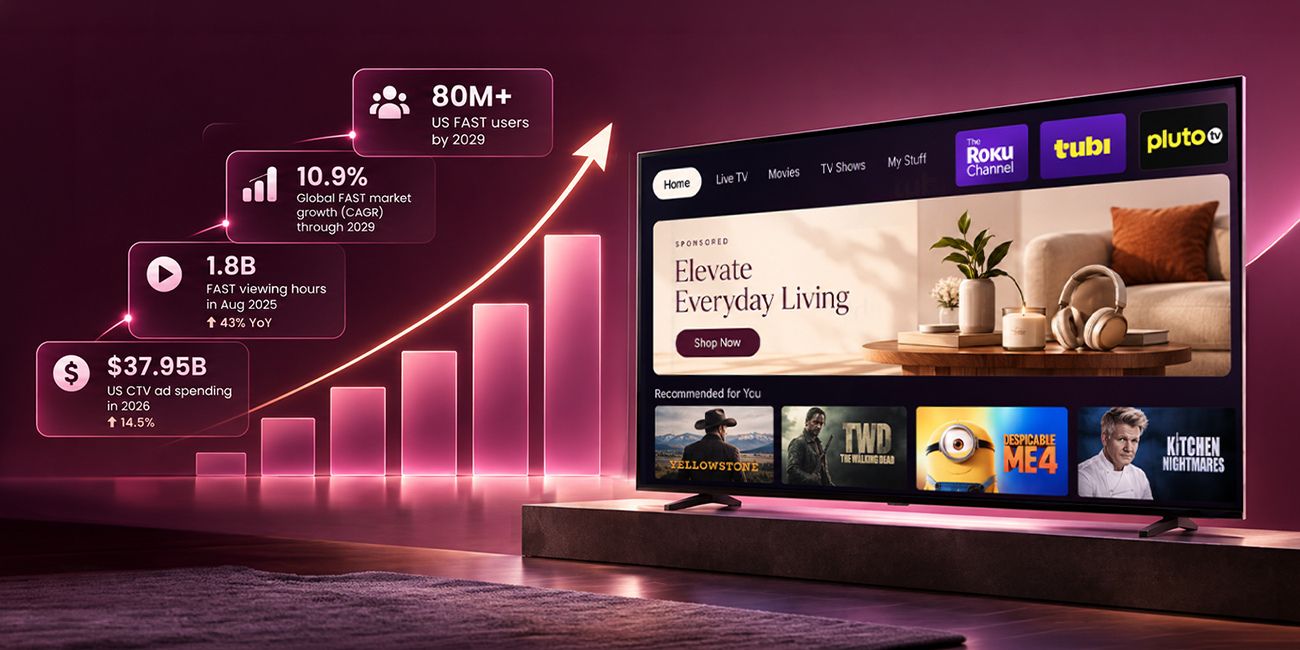
App awareness campaigns focus on broad reach and strong message recall. Video environments such as CTV and YouTube can support this stage by introducing the app to new audiences before performance activity begins. These formats deliver full-screen visibility and contextual alignment, helping build familiarity that later supports install-driven campaigns.
Unwire supports CTV-based awareness campaigns with full-screen playback environments and non-skippable video formats. It reaches 120 million users globally, delivers 85% or higher view-through rates, and maintains 99% or higher fraud-free delivery verified by Pixalate. CTV ad spend is projected to surpass USD 45 billion globally, as per Statista Digital Advertising Statistics. This stage focuses on introducing the app to new households and building initial recall before users encounter performance-driven messaging.
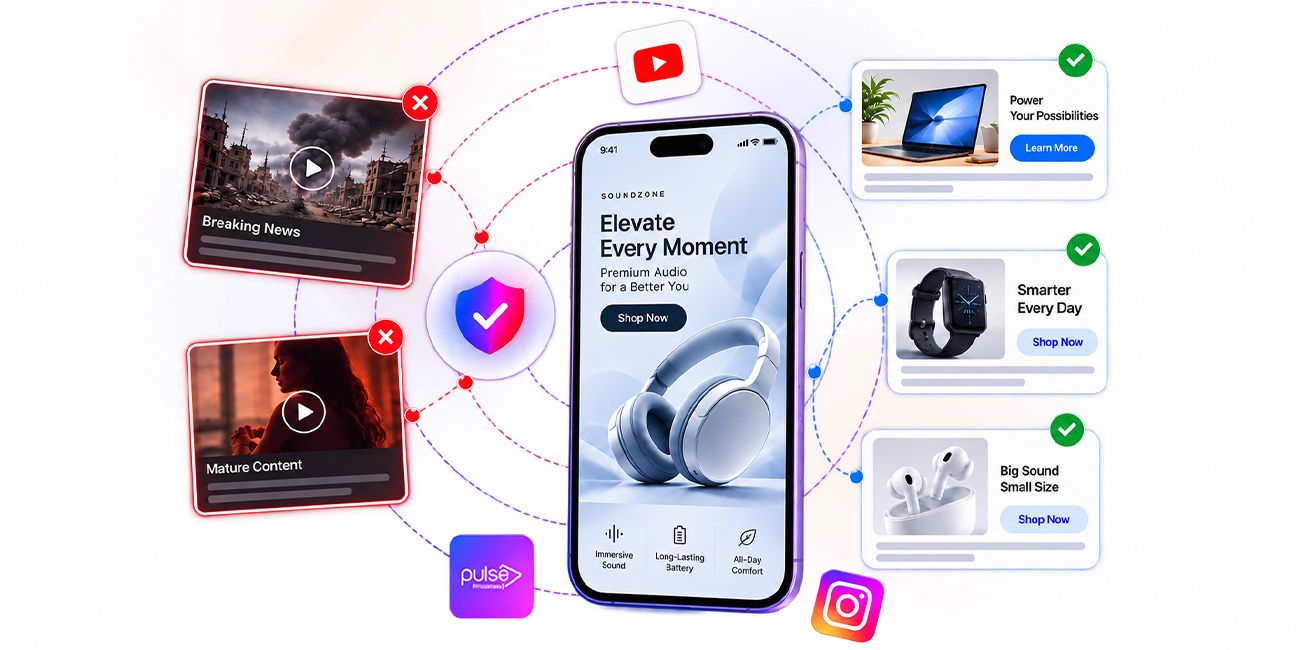
For YouTube, Pulse by Xapads applies AI-driven contextual targeting to align video ads with relevant content. The platform analyzes themes, keywords, and brand safety signals to place ads in suitable viewing environments, helping extend awareness across mobile-first video consumption. YouTube reaches 77% of US smartphone users, as per HubSpot Marketing Statistics.
Stage 2: Consideration — Omnichannel Rich Media Engagement
After awareness builds, campaigns move to engagement-focused messaging across multiple touchpoints. Omnichannel branding platforms help maintain visibility while audiences evaluate whether to install or explore the app further.
Xaprio supports this consideration stage by running rich media campaigns across OEM, native, display, and video inventory from a single platform. It delivers a 2x brand recall lift, supports 50 or more ad formats, and generates an average of 7.4 seconds of rich media engagement per session. Time spent on Xaprio rich media is 3.2 times longer than on static banner placements. The platform operates with 100% transparent buying across 70 or more global and OEM supply partners.
Stage 3: Conversion — Performance DSP for Installs and In-App Actions
Conversion campaigns need a platform built specifically for mobile performance optimization. Xerxes by Xapads is a dedicated mobile performance DSP that uses AI and machine learning to drive app install and post-install outcomes. It supports CPM, CPC, CPI, and CPA buying models and connects to 18,000 or more websites, 25,000 or more mobile apps, and 50 or more SSPs. Xerxes handles the conversion stage of the funnel: turning awareness and consideration into measurable installs and in-app actions.
Stage 4: Retention — Retargeting and Re-engagement Logic
Retention campaigns target users who installed an app but became inactive. A mobile DSP with post-install event visibility and MMP integration runs retargeting campaigns designed to re-activate specific in-app behaviors rather than just sessions. Global remarketing spend reached USD 31.3 billion in 2025, up 37% year-over-year. As per eMarketer Programmatic Forecast H1 2026 source. This growth reflects how seriously performance teams now treat the post-install phase as a ROAS driver.
7 Must-Have Features of a High-Performing App Marketing DSP

Choosing a platform based only on a feature checklist often leads to weaker performance later. What matters more is how the platform optimizes installs, improves user quality, and adapts as campaign data grows. The following seven capabilities directly influence app acquisition efficiency. Platforms missing these features usually rely on manual adjustments that slow optimization and reduce long-term performance.
1. Mobile-Native AI Bidding Optimized for Installs and User Value
A strong app marketing DSP should optimize bids at the impression level, not just at the campaign level. The system analyzes device signals, in-app events, and user behavior to identify which impressions are more likely to drive high-quality installs.
As conversion data builds, the model automatically shifts spend toward inventory that delivers better install quality and stronger post-install engagement. Platforms that rely heavily on manual bid changes typically respond more slowly and struggle to maintain consistent CPA performance.
2. OEM Inventory Access at the Device Layer
OEM inventory sits at the device level. Home screen placements, lock screen positions, minus-one screen formats, and native OEM app store promotions reach users before any third-party app interaction. This inventory creates a high-intent moment in the mobile experience, especially during device setup and discovery.
Campaigns running on OEM channels often improve acquisition efficiency compared to traditional walled garden environments because ads appear earlier in the user journey. Standard open exchange platforms typically do not have access to this inventory layer.
Through its exclusive Xiaomi OEM partnership, Xapads provides access to MIUI home screen placements, Mi TV inventory, and device-level discovery formats. This direct OEM integration allows advertisers to reach users within the device ecosystem rather than relying only on in-app or web-based inventory.
3. Multi-Buying-Model Support in One Platform: CPM, CPC, CPI, CPA
Different campaign stages need different cost structures. Awareness campaigns run on CPM. Traffic campaigns run on CPC. Install campaigns run on CPI. Post-install optimization runs on CPA. A mobile DSP that supports all four models inside a single interface removes the cost and data fragmentation of moving budgets across separate platforms as campaign objectives change.
4. MMP Integration and Real-Time Attribution Feedback Loop
Mobile Measurement Partners including AppsFlyer, Adjust, and Singular are the attribution source of record. A mobile DSP must connect cleanly with these platforms, sending and receiving all postback data without manipulation or delay. The attribution loop does more than reporting. Every install and in-app event flowing through the MMP feeds back into the DSP bidding model as a learning signal that sharpens future bids.
5. Fraud Prevention at the Supply Path Level, Not Post-Bid
Mobile ad fraud continues to impact campaign efficiency across in-app inventory. Pre-bid filtering removes invalid traffic before any budget is spent, which is more effective than post-bid crediting that attempts to recover spend later. Platforms applying fraud protection at the supply path level help maintain cleaner delivery from the first impression.
Xerxes integrates fraud prevention partners, including Pixalate to detect invalid traffic before bids are placed. These integrations help filter non-human traffic, SDK spoofing, and low-quality inventory sources across in-app environments. Campaigns running through this model maintain fraud rates below 0.80%, supporting more reliable install quality and cleaner performance measurement.
6. Privacy-Safe Targeting: Contextual Cohorts and SKAdNetwork Support
Google’s Privacy Sandbox on Android replaces the Google Advertising ID with on-device, privacy-preserving API signals. Apple’s App Tracking Transparency framework limits cross-app tracking on iOS, with opt-in rates stabilizing well below 50% across most markets. As per eMarketer Programmatic Advertising Forecast H1 2026 report. Mobile DSPs that optimize on contextual signals, behavioral cohorts, and SKAdNetwork-compatible attributions are better positioned for campaigns running in privacy-constrained environments. Platforms still dependent on device ID targeting face growing signal loss through 2026 and 2027.
7. Regional Depth in High-Growth Mobile Markets
High-growth mobile markets across India, Southeast Asia, the Middle East, and Latin America represent significant user acquisition opportunity. Acquisition costs in these regions tend to be more manageable than in Tier 1 markets while user lifetime value continues to grow. As per Data Reportal Digital 2026 Global Overview Report. A mobile DSP with limited inventory coverage in these regions constrains campaign scale to the most competitive and expensive markets.
OEM Advertising: The Mobile Inventory Layer Many DSPs Cannot Access

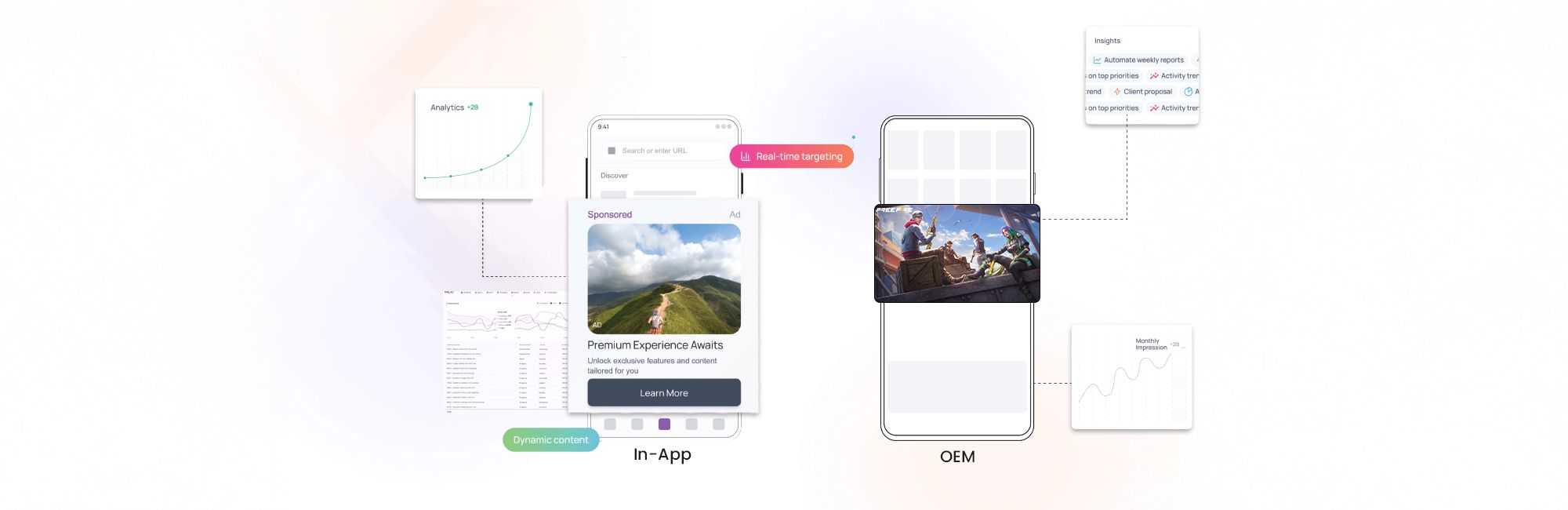
OEM advertising provides access to device-level inventory that operates outside standard open exchange environments. Home screen placements, lock screen formats, minus-one screen discovery, and native OEM app store promotions reach users before they open any third-party app. This inventory requires direct OEM integrations or specialized platform access, which most standard programmatic buying paths do not provide. For app marketers, this creates an additional acquisition channel that complements in-app and open exchange strategies rather than replacing them.
What OEM Inventory Is and Why It Reaches Users Before App Stores Do
OEM advertising places brand messages directly on the device at the hardware layer. Lock screen placements, home screen banners, minus-one screen discovery formats, and native promotions inside the OEM’s own app store all appear before users open any third-party app. The brand message reaches users before competing advertising has filled the session. This early placement often results in higher openness to discovery, particularly for users setting up a new device.
Xiaomi OEM Scale: 564 Million MAU, 272 Countries, 3.2 Billion Daily Impressions
Through mi.xapads.com, Xapads supports campaigns across Xiaomi’s MiAds inventory. The scale of this ecosystem is substantial. Xiaomi’s MIUI reaches 564 million monthly active users across 272 countries and regions, generating 3.2 billion average daily impressions with a year-over-year growth rate of 30% or higher.
Regional coverage: India 133 million users, Europe 104 million, Southeast Asia 59 million, Latin America 56 million, and Middle East 23 million. Mi TV extends this reach to 60 million or more monthly unique digital users across 106 countries.
Which App Verticals Perform Best on OEM Inventory and Why
Gaming apps benefit from OEM placements because device-level exposure reaches users before they encounter competitive app store discovery. The pre-installation moment is when users are more open to adding new entertainment. Fintech apps tend to perform well on OEM channels because device-level placements carry an implicit trust signal from the hardware manufacturer. E-commerce apps benefit during device setup when users are actively evaluating which utility and shopping tools to add. Utility and productivity apps often see strong day-one retention on OEM channels because the acquisition intent aligns with the behavior of someone configuring a new device.
How mi.xapads.com Connects Advertisers to the Xiaomi MiAds Ecosystem
Xiaomi’s advertising infrastructure supports factory preloads, air preloads, user acquisition ads, retargeting ads, and new device transmission placements. Advertisers accessing this ecosystem through mi.xapads.com gain a channel with reach and intent quality that standard programmatic exchanges generally do not offer. The Xiaomi OEM relationship provides structured access through the partnership, with reach across 272 countries and 3.2 billion average daily impressions.
Xerxes: The Mobile Performance DSP Built for App Growth

Xerxes is the dedicated mobile performance DSP within the Xapads ecosystem. It operates at the conversion stage of the marketing funnel. After Unwire and Pulse build awareness, and after Xaprio deepens engagement through rich media, Xerxes handles the performance work of turning intent into installs, registrations, purchases, and in-app events at a sustainable cost.
Inventory Scale and Supply Depth
Xerxes connects performance campaigns across 25,000 or more mobile apps through 50 or more SSP integrations. This supply breadth reduces dependency on any single exchange and maximizes unique user reach. Supply path optimization allows campaigns to favor the inventory routes that consistently produce better post-install quality.
Regional Reach: India 472M, SEA 212M, Americas 122M, Europe 105M
Xerxes maintains active audience coverage across key growth markets: India with 472 million monthly active users, Southeast Asia with 212 million, the Americas with 122 million, and Europe with 105 million. Performance campaigns scale across these markets simultaneously without rebuilding targeting structures or moving to separate regional platforms.
Supported Buying Models and When to Use Each
- CPM: upper-funnel mobile inventory where broad reach is the objective before performance optimization begins
- CPC: campaigns where traffic quality and engagement rate are the lead optimization targets
- CPI: app install campaigns where cost per install is the primary efficiency benchmark
- CPA: post-install optimization targeting registrations, purchases, subscriptions, or defined in-app actions
How AI Optimization in Xerxes Improves CPI Over Campaign Lifetime
Xerxes processes install signals, post-install event data, and MMP postback feeds continuously. As conversion volume accumulates, the model identifies which device types, app categories, geographies, and session windows produce the highest-value installs. Bids adjust at the impression level based on these patterns. Campaigns progressively concentrate spend on inventory segments that produce engaged users, reducing effective CPI over time without reducing conversion volume.
Vertical-Specific DSP Strategy: Gaming, Fintech, Ecommerce, and Utility Apps
Many guides on mobile DSPs apply a one-size-fits-all approach to campaign strategy. The optimization logic for a gaming app is meaningfully different from a fintech app or an ecommerce app. Applying the same targeting, bidding, and creative approach across all app categories is one of the more common reasons mobile campaigns fall short of their potential.
Gaming Apps: Creative Volume, Rewarded Video, and ROAS Optimization
Gaming campaigns require high creative volume with rapid rotation. Users in gaming environments respond to playable previews and rewarded video formats that show gameplay before the install decision. ROAS optimization in gaming means tracking post-install purchase events, not just installs, since most gaming revenue arrives days or weeks after installation. OEM placements work well for gaming because users setting up a new device are actively looking for entertainment.
Fintech Apps: High-Intent Targeting, Fraud Resistance, and Compliance Layers
Fintech campaigns require strong fraud protection because synthetic installs and fake events inflate reported metrics without producing revenue. Pre-bid invalid traffic filtering is essential rather than optional. Targeting needs to focus on signals that correlate with financial intent: app browsing patterns, device type, and geographic profiles associated with financial services activity. Compliance requirements in financial advertising also mean the DSP needs to support creative review workflows and precise geo-exclusion configurations.
E-commerce Apps: Retargeting Logic, Dynamic Creative, and LTV Segmentation
Ecommerce campaigns divide into two pools: new user acquisition and retargeting. New user acquisition targets category-relevant inventory and lookalike modeling built from existing high-LTV customer cohorts. Retargeting reaches users who browsed but did not purchase, using dynamic creative tied to the specific products or categories they viewed. LTV segmentation lets the DSP bid higher for users matching the behavioral profile of high-value existing customers, improving ROAS by prioritizing acquisition quality over raw volume.
Utility Apps: CPI Efficiency, OEM Placements, and Day-One Retention Signals
Utility apps compete in a crowded category where users frequently install and quickly remove apps that fail to deliver immediate value. CPI efficiency requires targeting inventory where utility discovery intent is high, particularly OEM placements during device setup. Day-one retention signals need to feed back into the bidding model quickly, letting the platform shift spend away from inventory segments that generate installs without engagement toward segments that produce active users.


The CTV-to-Mobile Install Attribution Loop

Cross-screen campaigns create a measurable signal path that single-platform campaigns cannot replicate. An audience that encounters an app through a CTV placement and later sees a mobile ad for the same app is more likely to install than an audience reached through mobile alone. According to eMarketer’s guide on CTV for user acquisition, CTV earns its place in the user acquisition stack when measured by installs, sign-ups, or purchases, and CTV ads reach shared screens while installs happen on personal devices.
How a CTV Ad Impression Generates a Mobile App Install
The sequence works in three steps. A CTV impression on a platform like Unwire builds awareness and creates brand recall. Household-level device association signals connect the streaming device to mobile devices used in the same household. When the mobile install occurs, the MMP receives the cross-device signal and connects it back to the CTV exposure within the attribution window. Unwire supports cross-device targeting from CTV to mobile, enabling this connection within a single campaign structure.
Unwire as the Awareness Layer That Feeds the Xerxes Conversion Layer
The Xapads funnel positions Unwire at awareness and Xerxes at conversion. Unwire delivers reach and recall through CTV across 120 million global reach, full-screen playback environments supporting high viewability, 85% or higher view-through rates, and 99% or higher fraud-free delivery. Xerxes then captures install intent across mobile inventory. Advertisers combining CTV awareness and mobile performance within a unified ecosystem create a sequential signal path that strengthens install intent before performance campaigns begin.
What Advertisers Need from Their MMP to Measure Cross-Screen Attribution
Cross-screen attribution requires the MMP to receive impression-level data from the CTV campaign including timestamp, household identifier, and device type. The MMP matches this data to an install event on a different device within the configured attribution window. Advertisers setting up CTV-to-mobile campaigns should configure multi-touch attribution windows of 24 to 72 hours and confirm that the CTV platform passes VAST impression data compatible with the MMP cross-device attribution model. As per eMarketer CTV for User Acquisition reports.
Privacy Shifts and What They Mean for Mobile DSP Performance in 2026

Many guides on mobile DSP selection do not address privacy changes in detail. This is a significant omission because both major mobile operating systems are actively changing how targeting and measurement work. Marketers who understand these changes can plan campaign infrastructure to handle signal loss proactively rather than reactively.
Android Privacy Sandbox: What Changes for In-App Targeting and Bidding
Google’s Privacy Sandbox on Android replaces the Google Advertising ID with a set of privacy-preserving APIs designed to enable targeting without exposing user data to third parties. The Protected App Signals API and Topics API deliver on-device signals that DSPs bid against without accessing individual user identifiers. Bidding logic must operate against these new signal sets rather than deterministic user profiles. Source: eMarketer Programmatic Advertising Forecast H1 2026. DSPs that began testing Privacy Sandbox APIs and building compatible optimization models before 2026 are better positioned for this transition.
iOS ATT and SKAdNetwork: How Mobile DSPs Adapt
Apple’s App Tracking Transparency framework restricts cross-app tracking on iOS to users who explicitly opt in. Opt-in rates remain well below 50% across most markets globally. Source: eMarketer Mobile Programmatic 2026. Most iOS inventory is now measured through SKAdNetwork, which provides campaign-level conversion signals with delayed and aggregated reporting rather than user-level data. Mobile DSPs need separate optimization models for opted-in traffic and SKAdNetwork traffic running simultaneously. Platforms that manage both signal environments cleanly within a single interface give advertisers a measurement advantage.
Contextual Cohorts as the New Targeting Foundation
As user-level identifiers become less available, contextual signals gain more importance. App category, content environment, time of day, device type, and behavioral cohort signals built from aggregated in-app event patterns give mobile DSPs a targeting foundation that does not require individual user identification. Investing in contextual targeting infrastructure in 2026 builds a durable advantage that grows stronger as privacy regulations deepen through 2027 and 2028.
Media Planner Decision Matrix: Which DSP Setup Fits Which Campaign
The table below maps budget level, campaign objective, geography, and buying model to a platform configuration. Media planners can use this as a starting framework and adjust based on app vertical and market priorities.
5 Early Warning Signs a Mobile DSP Is Underperforming

Most articles on mobile DSPs focus on how to choose a platform. Fewer explain how to recognize when one is already failing. These five signals help performance teams identify problems before they compound across weeks of campaign spend.
1. CPI Is Flat or Rising After the Learning Phase
A well-functioning mobile DSP produces declining CPI over the first four to six weeks as the AI model accumulates conversion signals and improves targeting precision. Flat or rising CPI after the learning phase suggests the optimization model is not responding to the data it receives. This pattern typically points to a bidding model operating at the campaign level rather than the impression level, or a supply mix that does not generate enough conversion volume for meaningful learning.
2. Post-Install Event Rates Are Low Despite Strong Install Volume
Strong install volume combined with low post-install event rates is a traffic quality signal. The DSP is acquiring users who install but do not engage. This usually means the platform is optimizing for installs as the terminal event rather than treating post-install actions as the true conversion target. Correcting this requires configuring the DSP to receive MMP postback data for post-install events and weighting those events in the bidding model rather than counting installs alone.
3. Fraud Rate Exceeds 2 Percent on MMP Postback Data
A fraud rate above 2% on MMP postback data points to a supply quality problem rather than a campaign execution issue. When the MMP reports significantly more fraud than the DSP’s own fraud metrics show, the discrepancy reveals that fraud detection is happening post-bid rather than pre-bid. Source: eMarketer Programmatic FAQ 2026. Moving to a DSP with pre-bid IVT filtering at the supply path level removes fraudulent impressions before budget is spent.
4. Geographic Concentration Is Too Narrow for the Growth Target
If a campaign configured for multi-market delivery delivers more than 60% of installs from a single market, the DSP likely lacks the inventory coverage the campaign needs. This is a supply depth issue. DSPs with strong regional inventory across India, Southeast Asia, and Latin America produce more evenly distributed geographic delivery and reduce over-dependence on higher-CPI Tier 1 markets.
5. Attribution Discrepancy Between DSP Dashboard and MMP
A consistent gap between DSP-reported installs and MMP-attributed installs is a signal that the measurement setup needs review. Some discrepancy is normal. Attribution window differences and view-through versus click-through counting methods naturally produce variation between platforms.
When the gap grows beyond what the team considers acceptable for the campaign type, the likely causes are window misalignment between the DSP and MMP, postback URL configuration errors, or DSP self-attribution claiming credit for installs the MMP does not assign to that source.
The review checklist: confirm attribution windows match across both platforms, verify postback URLs are firing correctly for all event types, and confirm the DSP is not self-attributing traffic the MMP does not credit.
Mobile DSP Trends Shaping App Advertising from 2026 to 2030
Agentic AI: From Bid Suggestions to Autonomous Campaign Execution
The programmatic ecosystem is moving from AI-assisted optimization toward autonomous campaign execution. Agentic AI systems adjust and execute campaign decisions with minimal human intervention, reallocating budgets across inventory sources, adjusting bids based on live conversion patterns, and pausing underperforming placements in real time. As per eMarketer Programmatic Advertising Forecast H1 2026. DSPs building agentic AI capabilities now are developing an optimization advantage that compounds through 2027 and 2028.
Contextual Infrastructure as the New DSP Competitive Moat
As privacy regulations reduce access to behavioral targeting data, DSPs with strong contextual modeling capabilities build a structural advantage. App category, content environment, time-of-day patterns, and device behavioral cohorts built from aggregated signals allow targeting precision without individual user identification. DataReportal Digital 2026 Global Overview Report. This advantage grows larger as privacy regulations tighten through 2028 and 2030.
5G and the Rise of Interactive Rich Media in APAC and MENA
5G adoption is accelerating across India, Southeast Asia, and the Middle East, making heavier interactive ad formats more scalable in these markets. Sensor-powered rich media, high-definition video interstitials, and interactive formats will move toward standard mobile ad inventory in these regions by 2028. Statista 5G Mobile Network Statistics. DSPs with established OEM and publisher relationships in APAC and MENA are positioned to access this expanding inventory early.
Private Marketplace Growth and the Shift from Open Auction Volatility
Programmatic Guaranteed and private marketplace deals are growing as buyers seek premium inventory with more predictable quality and pricing. Says FutureMarketInsights Programmatic Display Market 2026 to 2036. Mobile DSPs that facilitate direct publisher relationships and curated supply paths give campaign teams an alternative to open auction price swings, particularly in high-competition verticals like gaming and fintech.
Cross-Screen Attribution Becomes Standard Practice by 2028
The CTV-to-mobile install attribution loop that leading advertisers are building now is expected to become a standard campaign requirement by 2028. As measurement infrastructure matures and household device association signals improve, marketers will expect cross-screen attribution data as a baseline capability rather than a premium add-on. Building this infrastructure in 2026 creates a measurement maturity advantage that compounds over time.
Pros and Cons of Running a Dedicated Mobile DSP Stack
Advantages for Performance Teams and Media Planners
- Granular targeting across device type, operating system, app category, location, and behavioral cohort signals that walled gardens do not expose to external buyers
- OEM inventory access at the device layer, reaching users before app store discovery begins with lower cost per acquisition compared to traditional walled garden channels
- Flexible buying models covering CPM, CPC, CPI, and CPA within a single interface, adapting to every funnel stage without platform migration or data fragmentation
- AI optimization that improves automatically as conversion data accumulates, reducing effective CPI over campaign lifetime without manual intervention
- Full attribution transparency through MMP integration and access to log-level impression and event data for independent verification
- Pre-bid fraud protection through invalid traffic filtering at the supply path level, protecting budgets before fraudulent impressions are purchased
- Cross-channel inventory reach beyond Google and Meta into independent app ecosystems, OEM placements, and premium publisher supply
Operational Considerations Before Platform Selection
- Dedicated mobile DSPs deliver best results with skilled campaign managers providing ongoing optimization attention, rather than a set-and-forget approach
- MMP configuration, postback setup, and attribution window alignment require upfront time investment before campaigns enter the learning phase efficiently
- AI optimization models need four to six weeks and sufficient conversion volume before performance stabilizes at target efficiency
- Privacy Sandbox transition on Android requires coordination between the DSP, MMP, and SSP partners to maintain attribution continuity as ecosystem changes continue
Conclusion
Mobile advertising commands 55.9% of all global digital ad spend, and in-app advertising drives 64% of that mobile budget, as per Statista via DataReportal Digital 2026 Global Overview Report. Global mobile advertising is on a long-term growth trajectory. App marketers who build a structured, full-funnel mobile DSP stack in 2026 are not just solving an immediate campaign challenge. They are building an infrastructure that compounds in value as the market grows.
App marketers and media planners reviewing their DSP stack in 2026 can start by mapping campaign goals to the capabilities each funnel stage requires. Platforms that produce the best results are those designed for a specific purpose with the technical infrastructure to execute it at scale. The trends from 2026 toward 2030 consistently reward specificity, AI-driven optimization, privacy-safe infrastructure, and full-funnel campaign thinking.
Frequently Asked Questions
What is the best DSP for mobile app user acquisition in 2026?
The most effective DSP for mobile app user acquisition in 2026 is one purpose-built for mobile performance optimization rather than adapted from desktop display technology. Xerxes by Xapads is a dedicated mobile performance DSP using AI and machine learning to drive CPI and CPA outcomes across 25,000 or more mobile apps and 50 or more SSPs. For full-funnel campaigns, pairing Xerxes with Unwire for CTV awareness and Pulse for YouTube contextual targeting builds a cross-screen acquisition structure that tends to outperform single-platform approaches on both reach and conversion quality.
What is the difference between a mobile DSP and a general DSP?
A mobile DSP processes device-level signals, SDK-reported in-app events, and MMP postback data in real time. A general DSP was built for desktop display advertising and relies on cookie-based signals, session-level data, and viewability metrics. When a general DSP runs mobile campaigns, it cannot read the signals that determine mobile conversion quality. The common result is higher CPIs and lower post-install event rates compared to a mobile-native platform.
How does OEM advertising work in a mobile app campaign?
OEM advertising places brand messages at the device level including home screen, lock screen, minus-one screen, and native OEM app store formats. These placements reach users before they open any third-party app. Campaigns running through mi.xapads.com access Xiaomi’s MiAds ecosystem with 564 million MIUI monthly active users and 3.2 billion average daily impressions, offering cost per acquisition advantages over traditional walled garden channels.
What buying models does a mobile DSP support?
A well-built mobile DSP supports CPM for impression-based awareness campaigns, CPC for traffic and engagement objectives, CPI for app install campaigns, and CPA for post-install conversion optimization. Supporting all four models in a single platform removes the need to migrate campaigns across separate tools as objectives evolve through the funnel.
How does a mobile DSP integrate with an MMP for attribution?
A mobile DSP integrates with an MMP by sending impression and click data to the MMP, which matches these touchpoints to install and post-install events. The MMP then fires postback signals back to the DSP when defined events occur. The DSP uses these postback signals as conversion inputs for its bidding model. Clean integration requires matched attribution windows, consistent event naming conventions, and log-level data access for independent attribution verification.
What is CPI and CPA optimization in a mobile DSP?
CPI optimization means the DSP adjusts bids in real time based on the predicted probability of an app install from each available impression, working toward the lowest sustainable cost per install. CPA optimization extends this to post-install events such as registrations, purchases, or subscriptions. CPA optimization generally requires at least 50 qualifying post-install events per campaign per week for the machine learning model to identify reliable patterns.
How does a mobile DSP prevent ad fraud?
Effective mobile DSP fraud prevention operates at the supply path level before a bid is placed. Pre-bid filtering removes fraudulent inventory before the budget is spent. Integration with MRC-accredited IVT detection partners such as Pixalate verifies traffic authenticity at the impression level. App-ads.txt compliance verification confirms that publishers selling inventory are authorized to do so. Post-bid fraud crediting is a secondary safeguard, not a replacement for pre-bid filtering.
What is the role of CTV advertising in mobile app growth?
CTV advertising is still in its nascent build and the awareness that often converts into mobile app installs. Users who encounter an app on a connected TV screen are more likely to search for and install it on mobile within 24 to 72 hours. Unwire reaches 120 million global streaming audiences with 85% or higher view-through rates and cross-device targeting from CTV to mobile. The CTV impression creates brand recall that a mobile performance DSP can then convert into installs, forming a measurable cross-screen acquisition funnel.
Related Post