Mother’s Day in Mexico is not just a commercial event. It is one of the most emotionally significant moments of the year, where families come together to celebrate mothers through gifts, experiences, and shared time. This emotional weight directly influences how people search, browse, and purchase, turning May 10 into one of the most powerful high-intent buying days in the country.
In Mexico, this occasion is fixed. It falls on May 10 every year without exception. That single date compresses buying behavior, concentrates mobile traffic, and drives advertising spend into a predictable 10-day window that repeats consistently each year. For brands and media planners, this is not uncertainty. It is a structural advantage. Campaigns can be planned with precision, from early awareness to post-event retargeting, and improved cycle after cycle based on performance data.
Mexico’s advertising ecosystem is expanding alongside this opportunity. Latin America’s total advertising spend is forecast to reach USD 29.7 billion in 2026, and Mexico’s digital ad market is set to grow 10.5% to reach USD 13.14 billion in 2026. Programmatic advertising across the region is on track to hit USD 14.92 billion in 2026. Brands that plan earlier, select the right channels, and execute with regional precision take the largest share of that spend window.
Most existing Mother’s Day strategies are built for markets like the United States or the United Kingdom, where the date changes annually, and consumer behaviour follows a different pattern. These approaches rely on generic messaging, flexible shopping timelines, and English-language creative. None of these aligns with how Mexico behaves. The fixed-date structure, mobile-first consumption, and strong cultural context require a localized strategy built specifically for this market.
This article outlines a Mexico-first approach, combining timing, targeting, channel strategy, and creative execution to help advertisers capture demand during one of the most predictable and high-conversion seasonal windows in the country.
Why Mother’s Day is a different advertising moment in Mexico
May 10 is fixed in Mexico, and it changes everything
Mother’s Day in Mexico is a distinct advertising moment because it always falls on May 10, creating a fixed and highly predictable buying cycle that shapes how campaigns are planned and executed. Unlike markets such as the United States, where the date changes every year, Mexican consumers operate against a clear deadline, with purchase activity building steadily in early May and peaking sharply on May 9 and 10.
This results in a compressed window where demand, mobile traffic, and conversion intent rise simultaneously. In 2026, May 10 falls on a Sunday, aligning temporarily with other markets that follow the second Sunday of May, but this alignment is not consistent year to year. Because of this fixed-date structure, campaigns in Mexico must be timed precisely, with early awareness and mid-funnel engagement already in place before the final conversion surge begins. Brands that adapt to this predictable pattern consistently outperform those using global strategies designed for flexible or weekend-based shopping behavior.
Why global Mother’s Day strategies fail in Mexico
This is the gap most global brands miss. Campaign strategies built for markets like the US or UK assume a flexible Sunday-based observance, a longer shopping window, English-language creative, and discovery driven by social feeds or retail promotions. None of these assumptions apply to Mexico.
Mother’s Day in Mexico is fixed on May 10, which compresses buying behavior into a short, high-intent window. Messaging also shifts toward localized, culturally relevant Spanish communication rather than generic global creative. Mobile behavior is another major difference, with 78.5% of e-commerce purchases in Mexico happening on mobile devices , compared to more balanced device usage in other markets. Cultural context plays a critical role as well. Día de las Madres carries strong emotional and family significance, and campaigns that fail to reflect this local sentiment consistently underperform.
Global campaigns adapted without localization miss these structural differences. In Mexico, aligning with fixed timing, mobile-first behavior, and culturally relevant messaging is not optional. It directly determines whether campaigns capture demand or lose it to locally optimized competitors.
Where Mexico sits in the advertising landscape
Mexico is one of the largest and fastest-growing advertising markets in the region, with digital ad spend expanding rapidly alongside rising e-commerce adoption. Total advertising spend across Latin America is projected to reach USD 29.7 billion by 2026 , with Mexico contributing a significant share of this growth. Programmatic advertising in Mexico alone is expected to reach approximately USD 4.82 billion by 2026 , driven by increased adoption of mobile, video, and data-driven buying strategies.
Within the country, digital purchasing activity is highly concentrated in major urban centers such as Mexico City, Guadalajara, and Monterrey, where internet penetration, smartphone usage, and purchasing power are highest. Campaigns that prioritize these key metros during the early phases and expand based on performance data consistently deliver stronger ROAS compared to strategies that distribute budgets evenly from the start.
How consumer behaviour shifts in the 10 days before May 10
Categories that spike: Beauty, gifting, food, apparel, and jewellery
Consumer spending in Mexico shifts sharply in the 10 days leading to May 10. Beauty and personal care, fashion, jewelry, food delivery, restaurant experiences, and gifting across FMCG categories all see significant volume increases. These are not passive browsing sessions. Buyers in this window arrive with clear purchase intent. Research happens fast, and decisions follow faster.
Beauty and personal care products trigger 77.9% of online beauty orders in Mexico, making it the dominant Mother’s Day gifting category. Apparel and fashion accessories rank second. Jewelry and fine goods rank third. In the final 48 hours before May 10, food delivery and restaurant booking activity spikes sharply as last-minute gifters choose experiential options over products.
Brands in these categories should plan for inventory pressure and rising CPMs in the final seven days, and build conversion-stage creative that acknowledges time-sensitive buying behavior.
Mobile-first buying behavior in Mexico
Mobile phones drove 78.5% of all online purchases in Mexico in 2024, and that share continues to grow as 5G coverage expands across major metros. Smartphones account for 97.2% of internet connections in the country. Mexico has 145 million cellular mobile connections active and 110 million internet users as of 2026.
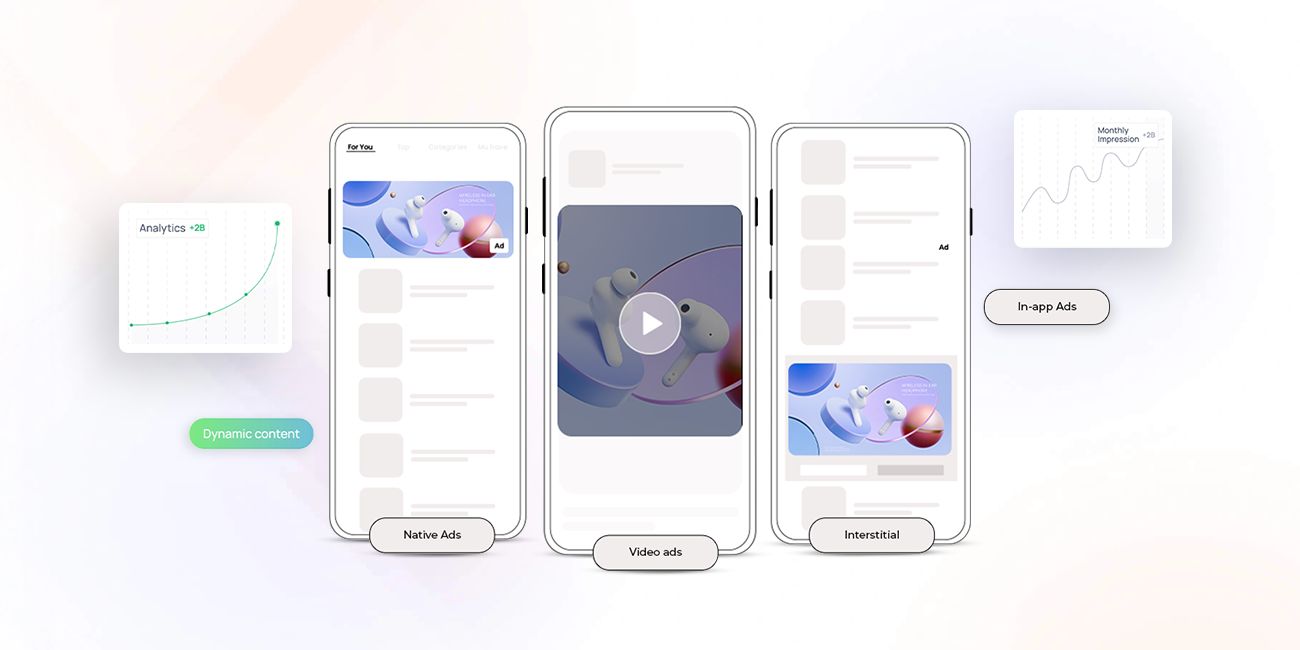
Campaigns without mobile-native creative, mobile-optimized landing pages, and mobile-first buying formats underperform in this environment regardless of targeting quality. That is not a channel preference, it is the structural reality of how Mexico shops. Full-screen interstitials, native in-app placements, and short-form video that renders within the app environment consistently outperform desktop-adapted formats in Mexican mobile inventory.
What triggers buying decisions during this window
Three primary signals drive purchase decisions in the Mexican gifting window. Price and perceived value lead, with buyers comparing offers across multiple apps before committing. Social and cultural pressure follows, as Mother’s Day in Mexico carries significant family weight that drives high-emotion purchase motivation. Convenience closes the cycle, particularly in the final 48 hours before May 10 when same-day delivery and app-based ordering drive a concentrated surge in conversion activity.
Brands that address all three signals across their campaign creative and offer structure outperform those that address only one. Emotional storytelling lands in the awareness phase. Value-led messaging works in the consideration phase. Speed and convenience messaging performs strongest in the conversion window.
70% of Mother’s Day shoppers plan their purchases at least two weeks in advance, which means the discovery window opens in late April and peaks in early May. Brands without creative assets live before the planning window opens are already behind.
What the advertising opportunity looks like in Mexico
Mexico e-commerce market size and growth
Mexico’s e-commerce market reached USD 54.4 billion in 2025 and is forecast to reach USD 62.16 billion in 2026, growing at an 18.22% CAGR through 2031. This positions Mexico among the fastest-expanding e-commerce markets globally. The Mother’s Day gifting window is not a niche seasonal moment inside this economy. It is a high-volume commercial event inside one of the world’s fastest-growing digital markets, with predictable demand that repeats at the same calendar point every year.
Programmatic ad spend in Mexico approaching USD 4.82 billion
Programmatic ad spend in Mexico is projected to reach USD 4.82 billion in 2026, with mobile video programmatic growing as the fastest format in the market. Retail media programmatic, driven by Mercado Libre and Amazon Mexico, is also scaling rapidly inside the country. The programmatic infrastructure available to Mexican market advertisers in 2026 is significantly more mature than in previous cycles. Audience targeting is more precise. Brand safety controls are stronger. Measurement capabilities have improved substantially. Mother’s Day campaigns running on this infrastructure in 2026 have access to tools that simply did not exist at the same level two years ago.
Why CPMs rise in Mexico and what to prepare for
CPMs on premium placements in Mexico rise sharply in the final seven days before May 10. Advertiser demand for mobile and video inventory concentrates at exactly the same moment that audience intent peaks. Supply of premium, brand-safe placements does not expand proportionally to meet that demand. Advertisers who secure PMP deals or programmatic guaranteed inventory three to four weeks before the event avoid the CPM spike entirely. Those who rely solely on open exchange RTB in the final week pay a premium for inventory that could have been reserved at lower cost earlier. Early deal structure is among the highest-ROI decisions a Mexico media plan can make for this event.
Campaign timing: When to launch, when to push, when to retarget
For Mexico’s fixed May 10 date, the campaign breaks cleanly into four phases:
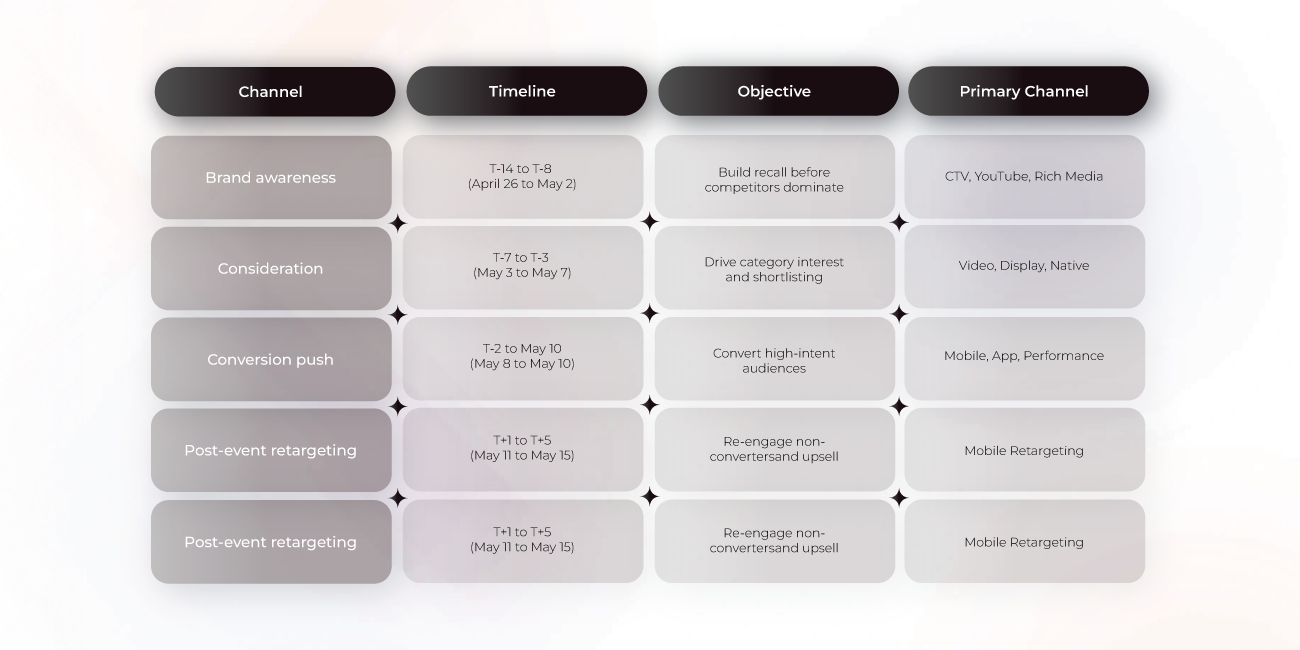
T-14 days: Brand awareness phase
The awareness phase runs from approximately April 26 to May 2. This is the window to establish brand presence before advertising intensity peaks. CTV campaigns reach households during prime streaming hours. YouTube contextual placements appear in relevant gifting, beauty, and lifestyle content. Rich media formats build brand recall across display inventory.
The goal in this phase is not conversion. It is mental availability. Brands present in the awareness phase pay lower CPAs at every subsequent funnel stage because they enter the conversion window already familiar to the audience.
T-7 to T-3 days: Consideration and intent phase
From May 3 to May 7, buyer intent sharpens measurably. Search volume for gift categories climbs. Retail app sessions increase. Video formats that demonstrate the product or gifting scenario outperform static creative in this window. Contextual targeting on YouTube, where ads appear alongside gift guides, beauty tutorials, and family content, delivers strong view-through rates because the content environment aligns with audience mindset.
Sequential messaging also activates here. Users who were served awareness-phase CTV or video ads and did not convert become high-priority mid-funnel targets. Showing those users a product-specific ad after a brand awareness impression drives stronger consideration outcomes than cold prospecting.
T-2 to event day: Conversion push
May 8 to May 10 is the highest-intensity conversion window. CPMs are at their peak. Mobile performance campaigns with CPI or CPA buying focus on driving app installs for retail, gifting, and food delivery brands. Geo-targeted placements in Mexico City, Guadalajara, and Monterrey push last-minute buyers toward brands offering same-day delivery or app-based ordering.
Creative in this phase should be direct. Clear product, clear offer, clear delivery timeline. Frequency management is critical in the final 48 hours. Audiences who have seen more than five impressions of the same creative without converting are unlikely to respond to a sixth.
T+1 to T+5: Post-event retargeting window
Most advertising budgets cut off on May 10. That is a significant missed opportunity. A substantial portion of gift-intent audiences who did not convert before the event remain reachable and relevant for five days afterward. These include buyers who researched but did not complete a purchase, buyers who received gifts they want to supplement, and audiences who discovered a brand through the event window but needed more time.
Post-event retargeting runs at lower CPMs because competitive pressure drops immediately after May 10. Advertisers who maintain budget through May 15 routinely capture conversions at significantly lower CPA than the pre-event window.
Channel-by-channel strategy for Mother’s Day in Mexico
Mobile performance campaigns for gift and retail app brands in Mexico
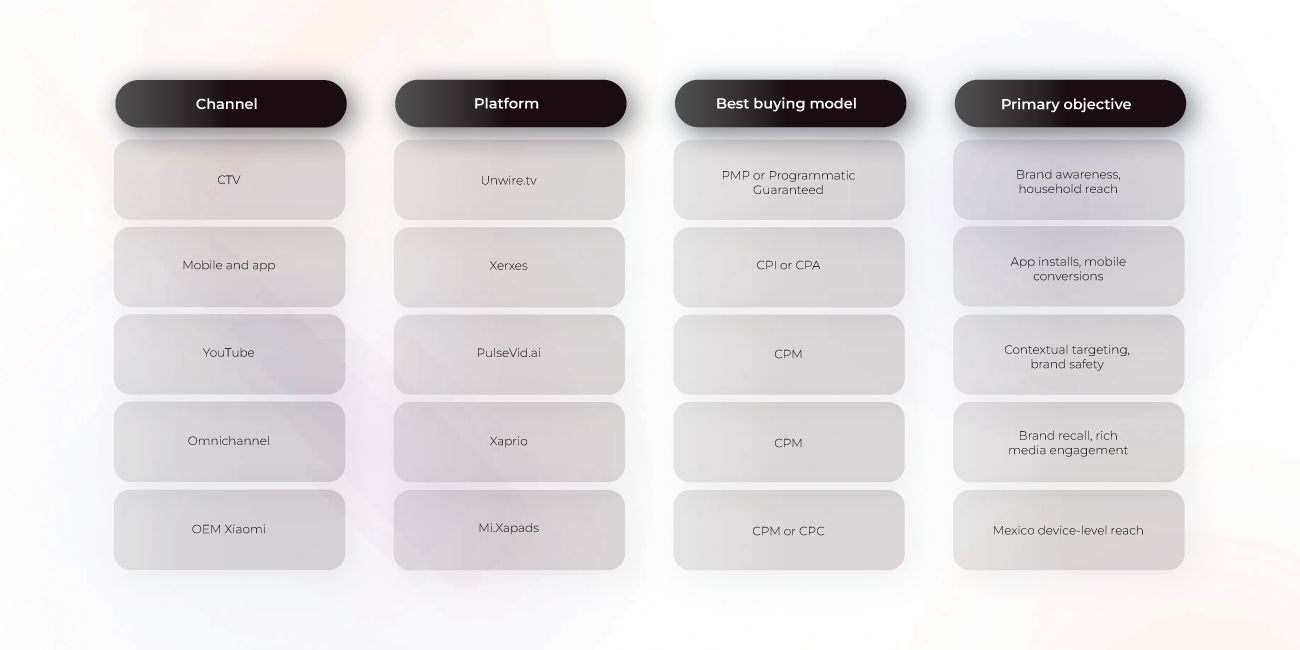
78.5% of all e-commerce in Mexico happens on mobile, making mobile performance the primary conversion channel for Mother’s Day in the country. Mobile performance campaigns require a DSP that supports CPI and CPA optimisation at scale across deep mobile inventory. Xerxes is a self-serve mobile performance DSP with AI and ML-driven bidding across 18K+ websites, 25K+ mobile apps, and 50+ SSPs globally. Xerxes covers the Americas with 122M+ Monthly Active Users, supporting CPM, CPC, CPI, and CPA buying. For Mother’s Day in Mexico, mobile performance campaigns on Xerxes should target app install objectives for retail and food delivery apps during the awareness and consideration phases, then shift to CPA optimisation for purchase events in the T-2 to event-day window.
YouTube contextual targeting during the gifting research phase in Mexico
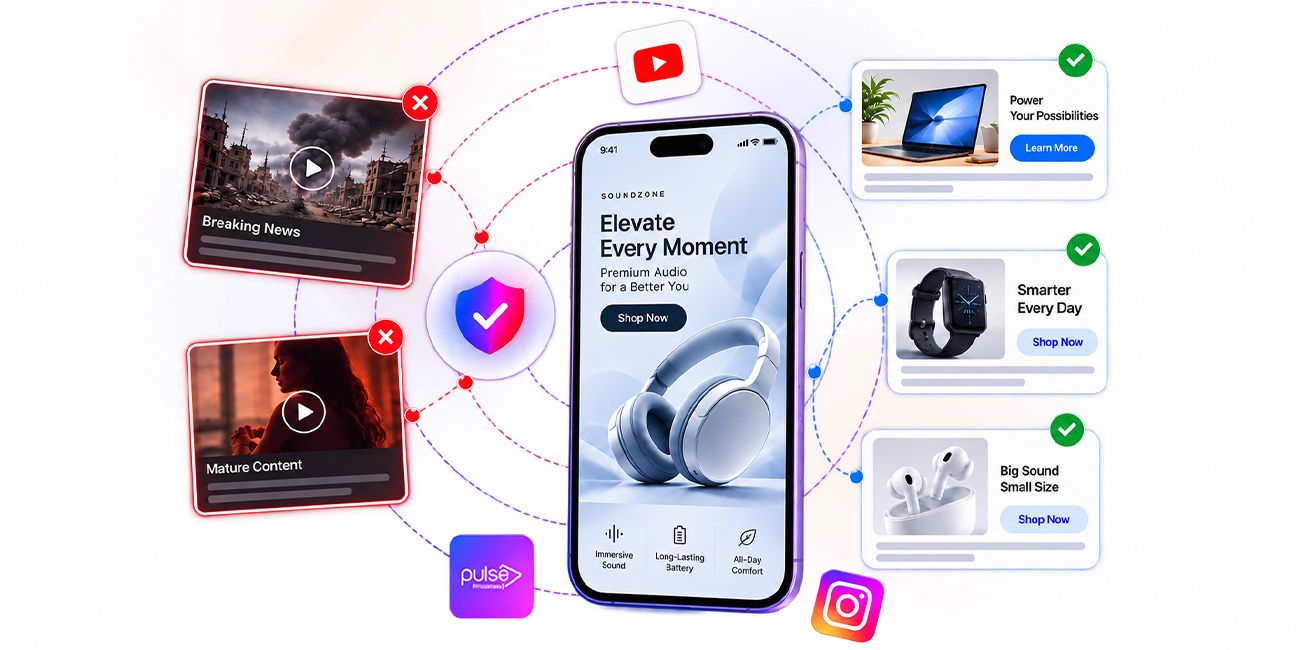
Mexico has 99 million social media user identities, with YouTube ranking among the most widely used platforms in the country. Mexican audiences searching for Mother’s Day gift ideas, beauty product reviews, family cooking videos, and unboxing content in the weeks before May 10 represent high-intent, mid-funnel targets. PulseVid.ai is an AI-powered YouTube ad targeting engine that analyses video content signals including on-screen text, audio, visible brands, and sentiment to place ads only in contextually matched, brand-safe moments. PulseVid.ai follows GARM brand safety standards, filtering categories including violence, adult content, and hate speech before any placement executes. For Mother’s Day campaigns in Mexico, PulseVid.ai enables advertisers to target Spanish-language YouTube content covering Dia de las Madres gift guides, beauty tutorials, family lifestyle videos, and cooking content, placing ads in the precise context where gifting intent is highest.
CTV campaigns for premium brand presence in Mexican streaming environments
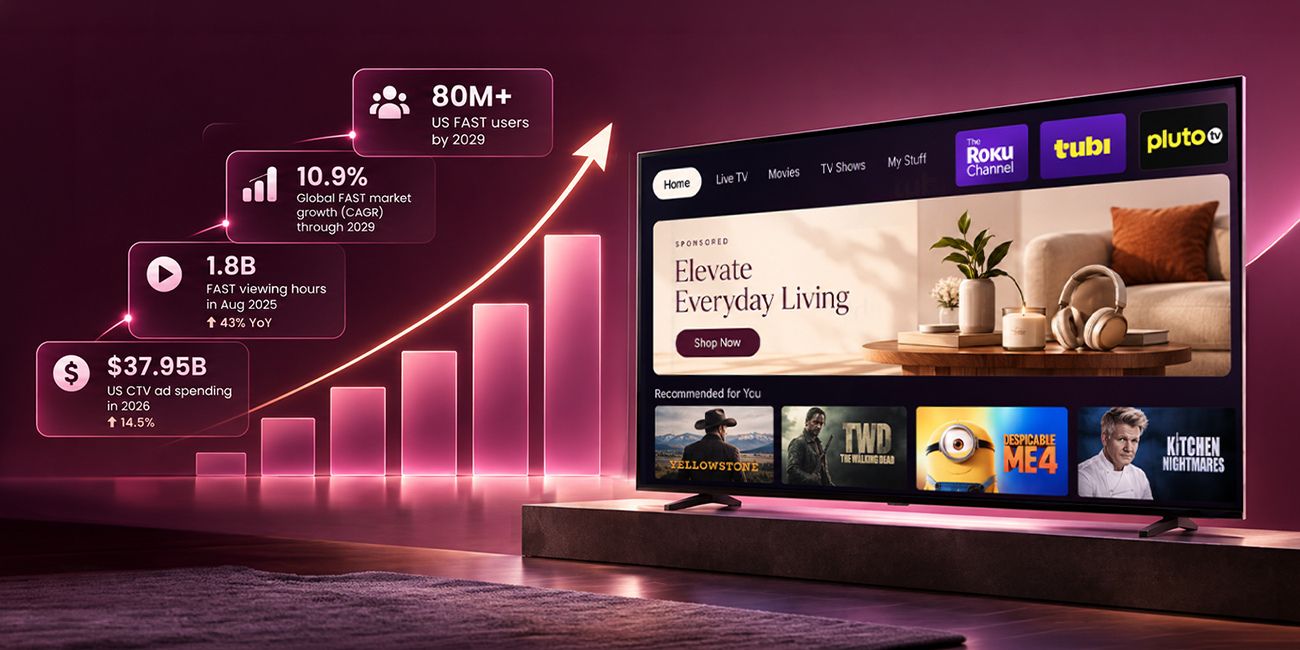
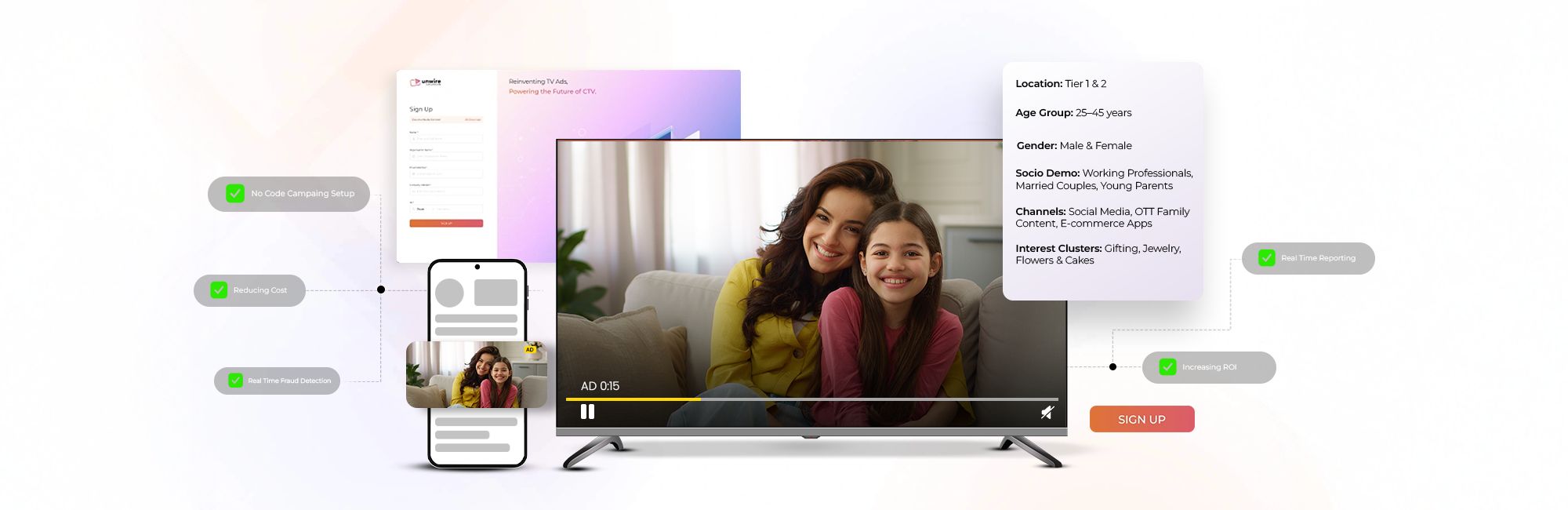
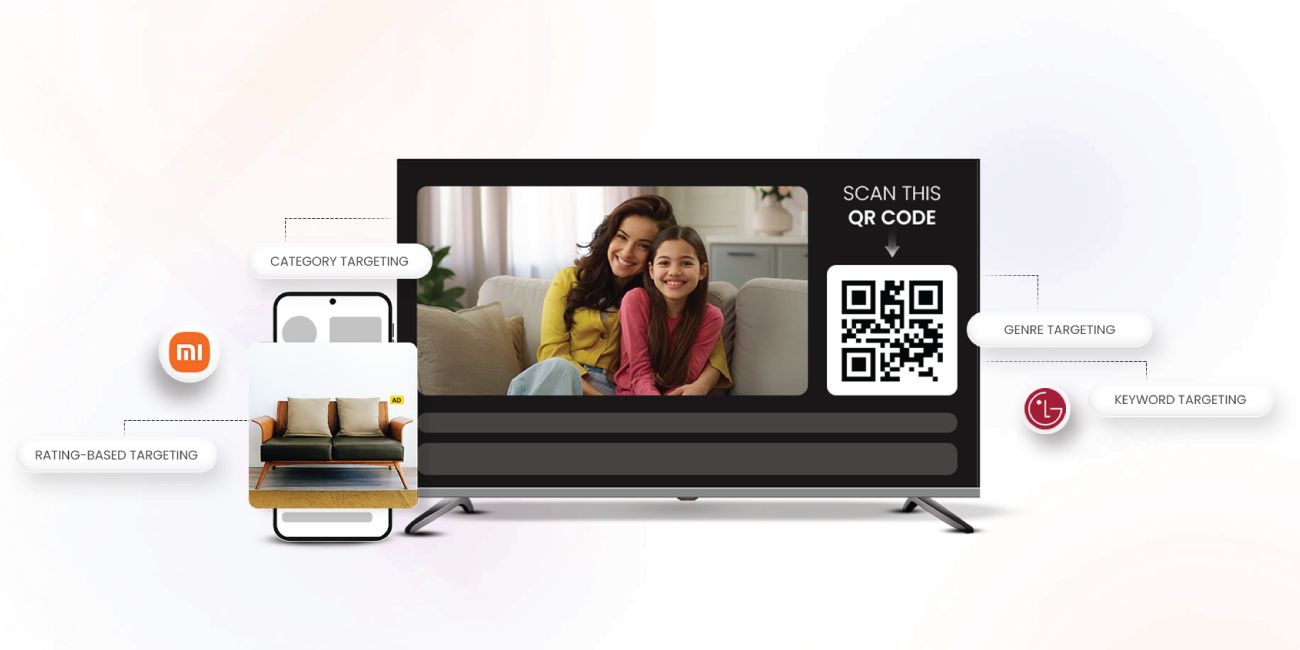
Streaming has replaced linear television as the primary evening screen for millions of Mexican households. For brands running awareness-phase campaigns in the T-14 to T-8 window, CTV reaches those households during high-attention viewing sessions where non-skippable video formats complete without interruption. Unwire.tv is a dedicated CTV advertising platform with 120M+ global reach, near-full-screen inferred viewability across premium channels, and 85%+ view-through rate with non-blockable video formats. Fraud-free delivery runs at 99%+ through Pixalate verification. Contextual targeting places ads within relevant content categories rather than relying on broad audience segments, which improves placement relevance without requiring behavioural data. For Mother’s Day campaigns in Mexico, CTV through Unwire.tv builds brand familiarity in the early awareness phase before consideration and conversion intensity peaks. Cross-device targeting extends a CTV household impression to mobile, enabling sequential follow-up messaging that carries the brand story from the living room screen into the gifting purchase window.
Rich media and omnichannel branding for recall and consideration in Mexico
Consideration-stage campaigns running across multiple digital environments simultaneously benefit from rich media formats that hold audience attention longer than standard display. Rich media formats drive 3.2x time spent versus static banners and 7.4 seconds average engagement per session compared to under two seconds for standard display. Xaprio is an omnichannel branding DSP built for rich media storytelling across CTV, OEM, native, display, and video from a single platform. Xaprio delivers 2x brand recall lift, across 50+ ad formats and 70+ global OEM and premium supply partners with 100% transparent buying.
For Mother’s Day in Mexico, Xaprio suits brands that need strong visual storytelling in the T-7 to T-3 consideration window. Interactive formats, expandable banners, and motion-based rich media showing gifting scenarios and product experiences drive significantly longer audience engagement than static creative in the same placements.
OEM device reach in Mexico via Mi.Xapads
Mi.Xapads provides exclusive access to Xiaomi OEM advertising placements across 564M MIUI Monthly Active Users in 272 countries, with 56M+ MAU across Latin America. Device-level placements on MIUI devices, covering home screen, music apps, and system apps, deliver high-attention inventory that sits outside standard mobile DSP buying. For Mother’s Day campaigns targeting Mexican audiences on Xiaomi devices, Mi.Xapads provides direct OEM-level access to those placements through a single dedicated partnership, reaching audiences at the device level before third-party apps compete for their attention
Targeting strategy: How to reach the right audience in Mexico
Behavioural segments—how to build gift-intent audiences inside a DSP
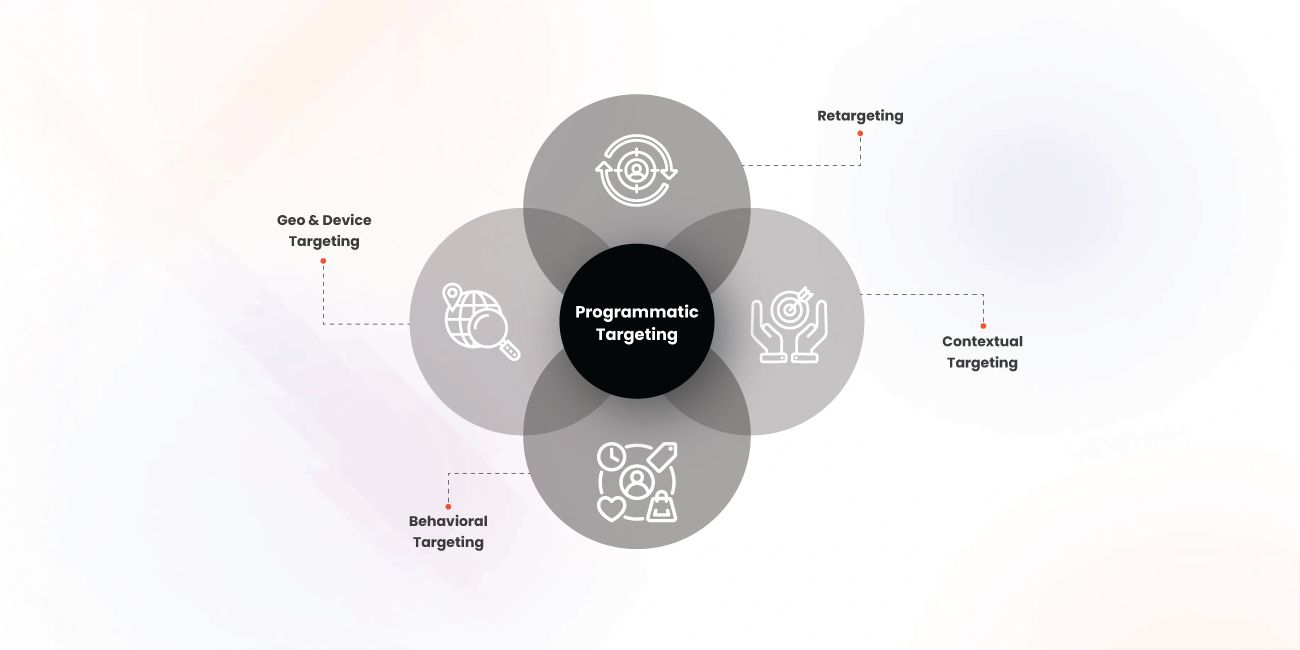
Effective targeting for Mother’s Day in Mexico starts with three signal layers and combines them inside the DSP to build segments that reflect real purchase intent rather than demographic proxies.
The first layer is gift-intent behaviour: audiences who searched gift-related terms in Spanish, visited gifting platforms such as Mercado Libre or Amazon Mexico, or engaged with gift guide content in the preceding 30 days. The second layer is category-specific interest: demonstrated affinity for beauty, fashion, jewellery, or food delivery apps based on app usage and mobile browsing history within Mexican inventory. The third layer is past-purchase signals: audiences who completed purchases in similar categories during prior seasonal windows such as Navidad or Dia de Reyes.
The key is combining all three layers, not activating them separately. An audience that shows gift-intent behaviour, category affinity in beauty, and a past seasonal purchase is a significantly higher-converting segment than any one of those signals alone. A mobile performance DSP with sufficient Mexican market data depth builds these combined segments at scale rather than defaulting to age and gender filters that capture volume but sacrifice precision.
Geo-targeting by city: Mexico City, Guadalajara, and Monterrey; audience profiles
Mexico’s urban concentration creates a clear geo-targeting priority. Mexico City, Guadalajara, and Monterrey collectively account for the largest share of digital purchasing volume in the country. Campaigns that concentrate budget in these three metros first, then expand to secondary cities including Puebla, Tijuana, and Monterrey based on performance data, consistently achieve better ROAS than campaigns that spread budget evenly from launch.
Each metro responds differently and creative briefing should reflect that. Mexico City audiences skew toward premium gifting categories, experiential offers such as restaurant bookings and spa experiences, and aspirational brand messaging. Guadalajara audiences show stronger response to family-oriented messaging, value-led offers, and local brand familiarity. Monterrey audiences respond well to quality signals and product-led messaging that emphasises craftsmanship and lasting value. Separating ad sets by geo and adapting creative to each city’s audience profile does not require running entirely separate campaigns. It requires geo-level ad set splits with tailored copy and offer within a shared campaign structure.
Lookalike and prospecting audiences for new customer acquisition in Mexico
Lookalike targeting expands reach beyond existing customer segments by identifying new Mexican audiences who share behavioural and interest profiles with the highest-value existing customers. For Mother’s Day, the strongest lookalike seeds are audiences who completed a gift purchase in a prior seasonal window, audiences who spent more than 60 seconds engaging with a product page in a gifting category, and audiences who installed a retail or food delivery app and completed at least one transaction.
Prospecting campaigns running against these lookalike segments in the T-14 to T-8 awareness window reach new audiences before they enter competitor consideration sets. The awareness impression builds brand familiarity at low CPM. Retargeting then activates against those same audiences in the consideration and conversion phases, where the campaign can show them a product-specific message rather than a cold brand introduction. This sequenced approach produces lower CPA at conversion than cold prospecting directly in the high-CPM final week.
Sequential retargeting building high-intent pools from awareness and consideration impressions
The retargeting pool does not build itself. It is built deliberately from every awareness and consideration impression that runs in the T-14 to T-3 phases. Every CTV household impression through Unwire.tv, every YouTube view through PulseVid.ai, and every rich media engagement through Xaprio creates a signal that feeds the retargeting audience for the conversion phase.
Audiences who watched 75% or more of a CTV or YouTube video ad are the highest-priority retargeting segment. They demonstrated sustained attention and are far more likely to convert than audiences who received an impression without engaging. Audiences who clicked through to a product page but did not add to cart rank second. Audiences who added to cart but did not complete checkout rank first in conversion priority and should receive the most direct, urgency-driven creative in the T-2 to May 10 window.
Sequential creative logic follows the journey. A household that received a brand awareness CTV impression receives a product-specific display ad next. A mobile user who engaged with a rich media format receives a value or delivery offer. A user who visited a product page receives a direct conversion message with same-day delivery or gifting deadline language. Each message moves the audience one deliberate step forward rather than repeating the same brand introduction they already processed.
Spanish-language and cultural relevance in creative and copy
Over 93% of Mexico’s population speaks Spanish as a primary language, making Spanish-language creative the non-negotiable baseline for any Mother’s Day campaign in the country. Spanish-language creative outperforms English or generic international creative for reasons that go beyond language preference. A Spanish-language ad written specifically for Mexico uses idioms, tone, and cultural references that signal genuine familiarity. A translated international ad, even if grammatically correct, reads as foreign and generates lower engagement as a result.
For Mother’s Day, the Dia de las Madres carries specific emotional and cultural weight that does not translate from English-language holiday conventions. Creative that reflects the specific emotional associations of May 10 in Mexico, centred on family, sacrifice, and deep personal gratitude rather than the lighter gift-focused tone of US executions, consistently outperforms translated or adapted executions in engagement and conversion. For more on how cultural resonance in ad creative drives campaign performance during major seasonal events, read How to strengthen sales during festivities via personalization.
Retargeting — Reconnecting with high-intent audiences who did not convert
Retargeting is among the highest-value tactics in the Mother’s Day Mexico window. Audiences who clicked an ad, visited a product page, added items to cart, or began a checkout flow without completing represent the highest-intent unconverted segment available. Post-event retargeting running from May 11 to May 15 captures a substantial share of these audiences at CPMs significantly lower than the pre-event window, because competitive pressure drops immediately after May 10. Advertisers who maintain retargeting budget through May 15 routinely achieve lower CPA on those conversions than anything they ran in the final pre-event days.
Creative and format guidance for Mother’s Day campaigns in Mexico
Short-form video: 6-second bumper vs 15-second non-skippable
The choice between a 6-second bumper and a 15-second non-skippable format depends on campaign phase and objective. In the awareness phase, 6-second bumpers deliver brand recall efficiently at lower CPM. They work best to establish a visual and brand identity signal early when Mexican audiences have not yet formed strong associations around the event. The constraint of six seconds demands creative discipline in Spanish-language executions. The brand, emotional signal, and product category must all be clear by second three.
The 15-second non-skippable format suits the consideration phase, where a slightly longer narrative can demonstrate a product, show a gifting scenario, or communicate a value proposition that six seconds cannot carry. For CTV campaigns through platforms with non-blockable video delivery, this format regularly delivers 85%+ view-through rates, making it highly efficient for consideration-stage storytelling in Mexican streaming environments.
Rich media— What formats drive engagement over static banners in Mexico
Static banners in standard IAB sizes underperform for gifting-category campaigns in Mexico. They do not demonstrate products effectively, generate minimal brand recall in competitive environments, and hold attention for under two seconds on average. Rich media formats including expandable banners, interactive product showcases, and motion-based creatives outperform static banners by 3.2x on time spent. For Mother’s Day in Mexico, the most effective rich media formats include interactive gift configurators that allow audiences to select product options, video-within-banner formats that autoplay a short Spanish-language product story, and expandable formats that open to show full gifting catalogue detail.
Emotional vs functional messaging—What works in the Mexican gifting context
The most effective Mother’s Day creative in Mexico balances emotional and functional signals. Pure emotional storytelling without a clear product or offer signal generates high video completion rates but weak conversion. Pure functional messaging with price and product specs without emotional resonance generates lower view-through rates in awareness placements. The optimal balance shifts by campaign phase. In the awareness phase, emotional resonance with a brand signal performs best. In the consideration phase, product-led messaging with a subtle emotional frame outperforms either extreme. In the conversion phase, functional offer clarity with urgency and delivery timelines win. Campaigns running a single creative concept across all three phases consistently underperform those that adapt messaging to the audience’s state of mind at each stage.
How to measure Mother’s Day campaign performance in Mexico
KPIs by funnel stage
Measuring Mother’s Day campaign performance requires separate KPI frameworks for each funnel stage. Applying performance metrics to awareness campaigns produces misleading conclusions about what is and is not working.Mexico market benchmarks
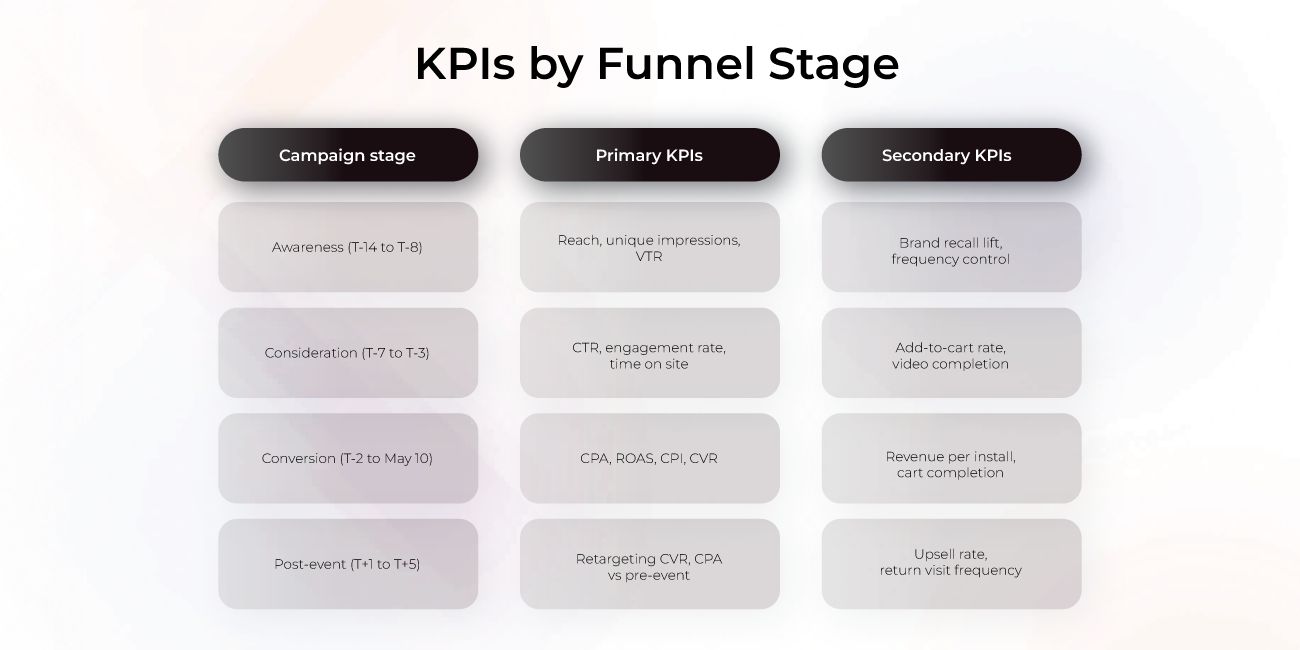
Performance benchmarks for Mexico differ from North American averages. Mobile CTR on standard banner placements in Mexico averages lower than the US, but rich media and video CTR averages higher when creative is properly localised in Spanish. Video completion rates for non-skippable formats on mobile in Mexico regularly exceed 80% when inventory is sourced from premium publishers rather than open exchange long-tail supply. CPI benchmarks in Mexico for retail and gifting apps vary by category and buying model. Advertisers should establish Mexico-specific baselines from prior campaign data rather than applying US or global benchmarks, which consistently understate the cost of acquiring high-quality users in premium categories.
Post-campaign data that improves the next May 10 cycle
The most valuable output of a well-measured Mother’s Day campaign is not the final ROAS number. It is the audience and channel performance intelligence that makes the next cycle more efficient. Which Mexico City neighbourhood-level geo delivered the lowest CPA? Which Spanish-language creative variant drove the highest view-through in the awareness phase? Which audience segment, gift-intent behavioural or category-specific, converted at the best ROAS in the conversion window? Advertisers who build structured post-campaign reporting for May 10 build a compounding performance advantage. Each cycle produces data that makes the next one more efficient.
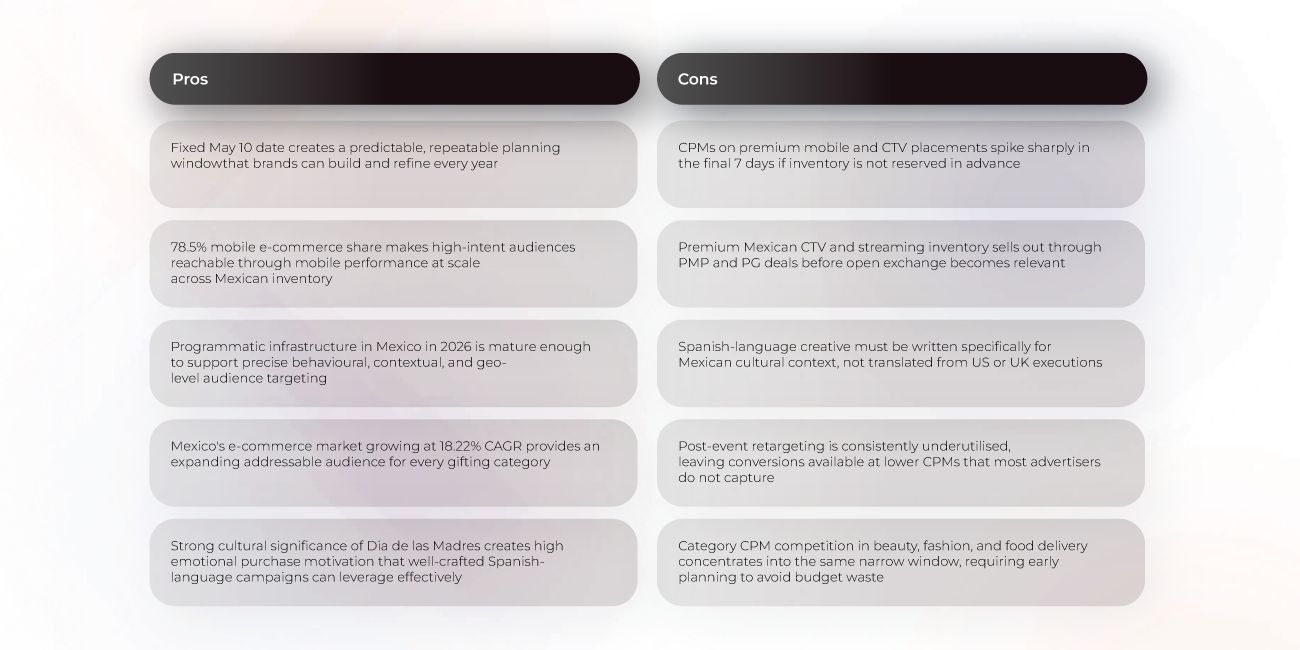
Pros and cons of running Mother’s Day campaigns in Mexico
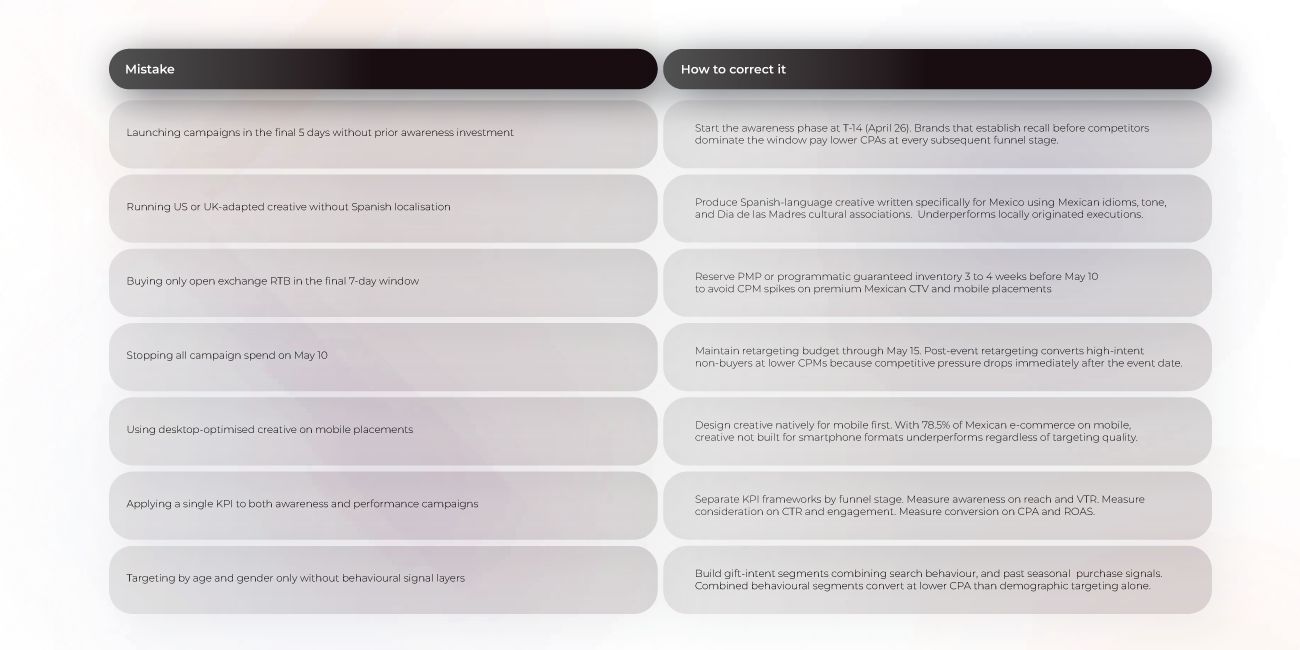
Common mistakes Mexico advertisers make during Mother’s Day and how to fix them
What Mother’s Day advertising in Mexico looks like from 2026 to 2030
CTV growth in Mexico as streaming replaces linear television
Global CTV programmatic spend is projected to surpass traditional TV ad spending in the US by 2028, and Mexico is following the same trajectory. Streaming has become the primary household entertainment channel across Mexico City, Guadalajara, and Monterrey as younger households abandon scheduled linear television entirely. By 2030, CTV will be the foundation of Mother’s Day awareness campaigns in Mexico rather than a supporting channel. Advertisers who build CTV buying expertise in the Mexican market now, establishing creative frameworks, measurement approaches, and PMP deal relationships specific to local streaming inventory, will hold a structural advantage as the channel becomes the dominant video format in the country.
AI-powered personalization for Spanish-language campaigns in Mexico
AI-driven campaign personalization is already reshaping how advertisers reach Mexican audiences in real time. By 2028, AI systems will select Spanish-language creative variants, adjust messaging by audience segment, and optimise bidding strategies across channels without manual execution-level intervention. The specific opportunity for advertisers active in Mexico is culturally grounded Spanish-language personalization at scale: systems that test idiom, tone, and regional reference variants simultaneously and shift budget toward whichever resonates most strongly with Mexican gifting audiences. Seasonal events like Mother’s Day, with their predictable annual structure and consistent behavioural patterns, are particularly well-suited to AI optimisation that compounds in accuracy and efficiency across cycles.
Mobile commerce growth and OEM advertising in Mexican metros
Mexico’s e-commerce market is growing at 18.22% CAGR through 2031, with mobile already driving 78.5% of all transactions. By 2030, mobile will be even more dominant as 5G coverage expands across Mexican metros and rural connectivity improves. Mobile performance advertising in Mexico will become more sophisticated, more competitive, and more measurable over the period. OEM device advertising is a growing complementary channel for reaching Mexican audiences at the device level. Mi.Xapads provides exclusive access to 56M+ Monthly Active Users in Latin America across Xiaomi devices, with device-level native placements on MIUI home screens, music apps, and system apps delivering high-attention inventory that sits outside standard mobile DSP buying. As Xiaomi device penetration grows across Mexican metros, this channel will expand into one of the most direct routes to mobile audiences in the region.
Frequently Asked Questions
Mother’s Day in Mexico always falls on May 10, regardless of the day of the week. This fixed date creates a predictable and compressed buying window, unlike markets where the date changes annually.
What is the best digital channel for Mother’s Day advertising in Mexico?
Channel effectiveness depends on the funnel stage. Mobile performance drives conversions as most purchases happen on mobile. CTV builds early awareness, while YouTube contextual targeting captures mid-funnel intent. Campaigns using a multi-channel approach across stages outperform single-channel strategies.
When should campaigns start in Mexico?
Campaigns should start 14 days before May 10 (around April 26). Early activation builds brand recall, allows optimization before peak CPM inflation, and creates retargeting pools for the final conversion phase.
Which categories perform best during Mother’s Day in Mexico?
Beauty and personal care lead, followed by fashion and jewelry. Food delivery and restaurant bookings peak in the final 48 hours, driven by last-minute buyers shifting toward experiential gifting.
Final Thoughts
Mother’s Day on May 10 is one of the most predictable and high-intent commercial events in Mexico. The fixed date, strong cultural significance, and mobile-first buying behavior create a consistent and repeatable performance window for advertisers.
Mexico’s e-commerce market is projected to reach USD 62.16 billion in 2026, with mobile driving the majority of transactions. This makes mobile performance, supported by video and CTV awareness, the foundation of effective campaign execution.
Campaigns that:
- launch at T-14
- use Spanish-language, culturally relevant creative
- align channels with funnel stages
- secure inventory early
- extend retargeting beyond May 10
consistently deliver stronger ROAS compared to late or single-channel approaches.
As Mexico’s digital advertising ecosystem evolves, channels like CTV, AI-driven personalization, and mobile commerce will continue to shape how seasonal campaigns perform. Advertisers who build structured, data-driven campaign frameworks today will gain a compounding advantage in future cycles.
Related Post