
Quick Answer
Moment-based targeting can improve relevance and engagement when the real-time signal closely aligns with the campaign objective. It uses signals such as content context, time of day, or a live event to make an ad more relevant to what is happening at that moment.
Demographic targeting uses audience traits such as age, gender, income, or location and remains useful when the goal is broad reach and audience scale. In practice, advertisers can combine both approaches, using demographic targeting to define a broader audience while applying moment-based signals to improve relevance within that audience.

Introduction
For decades, “the right message to the right person at the right time” was a marketing slogan rather than something a campaign could actually measure or control. Demographic targeting became the industry’s practical answer: group people by age, gender, income, or location, then assume shared interests within that group. It scaled easily and required no complex signal processing, which made it the default for most of digital advertising’s history.
That default is now under real pressure. Privacy regulation and the decline of persistent tracking identifiers have made identity-based targeting harder to sustain at scale. Almost 90 percent of US browsers could become cookieless in the future, which strips away a meaningful share of the infrastructure demographic targeting has historically depended on.
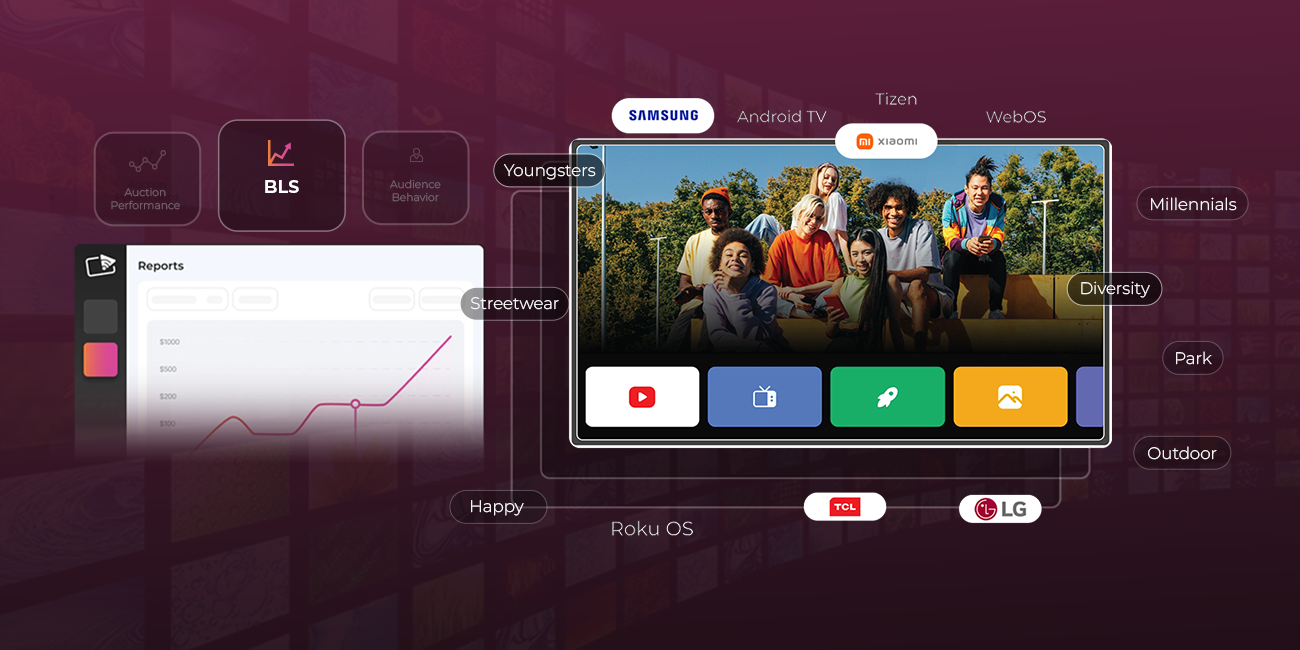
This is the environment moment-based targeting was built for. Instead of trying to identify who a person is through a tracked profile, moment-based targeting looks at what is happening around that person right now, the content they are engaging with, the time of day, or a live event unfolding in real time, and serves an ad relevant to that moment. Contextual targeting and advertiser-owned audience data have become the top strategies advertisers use to maintain targeting effectiveness amid this shift.
This article compares the two approaches directly, as a targeting methodology decision rather than a creative marketing tactic. Search results on “moment marketing” mostly describe reactive social content, a brand jumping on a trending meme or a viral event. That is a different discipline. This piece focuses on moment-based targeting as it functions inside programmatic buying: a real-time signal system that determines which ad a DSP serves, and why that system often outperforms a static demographic assumption.
For media planners, the distinction matters practically, not just conceptually. A campaign brief that defaults to demographic targeting out of habit, without evaluating whether moment-based signals fit the plan, may leave real relevance and engagement gains on the table. The sections below break down what each approach does, where each one wins, and where moment-based targeting’s real limits sit.

What Is Moment-Based Advertising?
Moment-based advertising serves an ad based on signals available at the exact moment an impression becomes available, rather than a pre-built profile of who the viewer is assumed to be. The targeting decision happens in real time, evaluating the content, timing, and environment surrounding that specific impression, without relying on a persistent user profile built from tracked history.
The Real-Time Signals It Actually Uses
Moment-based targeting typically draws on a combination of signals: the content a person is currently viewing or reading, the time of day or day of week, a live event happening in that moment such as a sports match or breaking news, weather conditions, and device or platform context. None of these signals require knowing who the individual person is. They describe the moment itself, which is what makes this approach viable even as identity-based tracking becomes harder to sustain.
How This Differs From “Moment Marketing” as a Creative Strategy
Most existing content on this topic describes moment marketing as a creative tactic, a brand posting a witty social response to a trending event. That is a real discipline, but fundamentally different from moment-based advertising as a targeting methodology. Creative moment marketing is about what a brand says and when. Moment-based targeting is about which specific impression a programmatic system chooses to bid on, based on real-time contextual signals rather than a demographic assumption. A brand can practice both, but they solve different problems through entirely different systems.
What Is Demographic Targeting, and Why Has It Been the Default?
Demographic targeting serves ads to people based on shared traits: age range, gender, income bracket, education level, or geographic location. A DSP or ad platform groups the available audience into these segments and directs a campaign’s budget toward the segments a brand has identified as its target customer.
The approach has remained dominant for a practical reason: it is simple to set up and easy to scale. A campaign manager can define an audience in a few clicks and immediately reach a large, predictable pool of impressions. Demographic data has also historically been easier to obtain and apply consistently across platforms than more granular behavioral or contextual signals, which made it the practical default long before contextual and moment-based systems matured.
Moment-Based vs Demographic Targeting: Where Each One Actually Wins
Neither approach is universally correct. The right choice depends on what the campaign is actually trying to achieve.
Demographic targeting still makes sense for campaigns prioritizing broad reach over precise relevance. A national brand awareness campaign trying to reach as many adults in a target age range as possible benefits from the scale and simplicity demographic segments provide. It also remains useful in categories where age or life stage genuinely predicts purchase intent closely, such as certain financial products or age-restricted categories, where the demographic signal itself carries real predictive value rather than serving as a rough proxy.
Moment-based targeting tends to win when relevance and engagement matter more than raw reach. A campaign trying to reach someone actively engaged with relevant content, during a moment when that content makes the ad feel additive rather than intrusive, generally sees stronger engagement than a demographic-only approach delivering the same message to a broad, loosely-defined audience segment regardless of what that audience is doing at the time.
A practical way to frame the decision is by campaign objective rather than by category alone. A launch campaign trying to build broad market awareness for a new product across a wide age range benefits from demographic targeting’s scale. A campaign trying to drive consideration by reaching people already engaged with genuinely relevant content, a sports fan during a live match, a viewer watching a comparable product review, or someone reading a hiking guide right before an outdoor gear ad appears, tends to benefit more from moment-based signals than a demographic label alone.
The table below summarizes where each approach tends to win, by campaign scenario.

Why Does Moment-Based Targeting Often Outperform Demographic Targeting?
The core mechanism is straightforward: demographic targeting makes an assumption about a person based on a group label, while moment-based targeting responds to an observable signal happening in real time. A 35-year-old in one city and a 35-year-old in another can fall into the exact same demographic segment while having almost nothing else in common in terms of interests or intent at any given moment. Demographic targeting treats them identically because the segment definition captures nothing beyond the shared trait.
Moment-based targeting does not need to make that assumption. It responds to what is actually happening: the content someone is engaged with, the timing of that engagement, and the environment surrounding it. This is why moment-based and contextual approaches tend to produce stronger relevance and engagement outcomes than a demographic label alone, since the ad is responding to a real, observable moment rather than a statistical guess about shared traits within a broad group.
This does not mean moment-based targeting always outperforms demographic targeting on every metric. Reach and cost efficiency at scale can still favor demographic segments in some campaigns. The performance advantage moment-based targeting holds is specifically in relevance and engagement quality, not in every dimension a campaign might optimize for.

How Does Moment-Based Targeting Work on YouTube Specifically?
YouTube is one of the clearest environments where moment-based, contextual targeting can be applied directly, since video content on the platform carries strong contextual signals: genre, topic, tone, and the specific moment within a video where an ad appears.
Pulse applies AI-powered contextual targeting specifically for YouTube, placing ads against videos and moments that fit the content environment rather than relying on a viewer’s demographic profile. This scope is specific to YouTube. Moment-based targeting exists across other formats and channels as well, including CTV, audio, and display, but Pulse’s contextual capability is built and applied specifically within the YouTube environment, supporting brand safety and placement relevance within that platform’s content ecosystem. This makes Pulse particularly suited to campaigns where content relevance in the moment matters more than reaching a predefined demographic segment.
Pulse operates within the broader Xapads programmatic ecosystem. Across its advertising solutions, Xapads reaches 1.9B+ total audience reach spanning mobile, CTV, OEM, and contextual advertising. A contextual approach applied on YouTube through Pulse can sit alongside other channel-specific targeting strategies within the same overall campaign.
What Are the Limitations of Moment-Based Targeting?
Moment-based targeting is not a universal replacement for every other targeting method, and treating it as one creates real risk in a media plan.
Signal availability varies significantly by platform and content type. Not every environment carries the same richness of contextual signal that a well-categorized video platform or a live sports broadcast provides, making moment-based targeting harder to apply consistently across a fragmented media plan.
Volume can also be less predictable than a demographic segment. Because moment-based targeting depends on the right contextual conditions occurring, campaigns leaning entirely on this approach may see more variable delivery volume than a broad segment available at a consistent, predictable scale.
Measurement also needs to adjust. A campaign built on moment-based targeting is optimizing for relevance and engagement within the right context, not simply maximizing reach against a segment definition. Applying demographic-campaign benchmarks directly to a moment-based campaign can produce a misleading read on performance, since the two approaches are built to win on different metrics.
For media planners, the practical implication is to treat moment-based targeting as a deliberate addition to a media plan, not a wholesale replacement for demographic segmentation. Campaigns pairing a broad demographic base with moment-based layering tend to balance predictable reach against relevance gains, rather than choosing one approach exclusively.
How Will Moment-Based Targeting Evolve Through 2030?
The structural conditions favoring moment-based targeting are not temporary. Privacy regulation continues to expand, and the decline of persistent identifiers is a direction, not a one-time event. As more of the browser and app ecosystem moves toward cookieless defaults, systems depending on real-time signal rather than stored identity become foundational rather than optional.
Contextual and moment-based systems are also becoming more capable, not just more necessary. AI-driven content understanding is improving how precisely a system can read video, audio, and text content in real time, extending moment-based targeting into formats where signal was previously too shallow to use effectively. Advertisers building media plans through the rest of this decade should expect moment-based targeting to move from a supplementary tactic to a default layer in most programmatic strategies.
Which Performs Better?
The direct answer depends on campaign objective. For relevance and engagement, moment-based targeting generally performs better, since it responds to a real signal rather than a group assumption. For broad, predictable reach at scale, demographic targeting still holds practical value. Neither approach is a universal winner across every goal a campaign might have.
Conclusion
Moment-based targeting and demographic targeting solve different problems, and the choice between them should follow the campaign’s actual goal rather than a default habit. Demographic targeting still has a clear place in campaigns prioritizing broad, predictable reach, particularly where age or life stage genuinely predicts intent. Moment-based targeting tends to outperform on relevance and engagement, since it responds to a real, observable signal rather than a statistical assumption. The more useful question is not which approach is universally better, but which mechanism actually matches what the campaign is trying to achieve.
As identity-based tracking continues to decline, media plans that treat moment-based signals as a core part of the targeting strategy, rather than a fallback, are better positioned for where targeting is heading. The two approaches are not competitors to choose between once. They are tools that solve different problems within the same media plan. For most advertisers, the strongest strategy is not replacing demographic targeting entirely, but combining it with moment-based signals where relevance has the greatest impact.
FAQ
Is moment-based targeting the same as contextual targeting?
They overlap significantly. Contextual targeting is one of the main signal types moment-based targeting relies on, alongside timing and live-event signals, so it can be understood as a broader category that contextual targeting sits within.
Does moment-based targeting work without cookies or tracking identifiers?
Yes. Moment-based targeting relies on signals describing the moment itself, such as content and timing, rather than a tracked identity, which is part of why it has become more relevant as persistent identifiers decline.
Can demographic and moment-based targeting be used together?
Yes. Many campaigns layer both, using demographic data to set broad audience parameters while applying moment-based signals to refine relevance within that audience.
Is moment-based targeting more expensive than demographic targeting?
Not inherently. Pricing depends on the platform, inventory, and competition for that specific moment, rather than the targeting method itself carrying a fixed premium.
Does moment-based targeting work for every ad format?
It applies more easily to formats with rich contextual signal, such as video and content-driven display, than to formats with limited contextual data. Signal richness varies by platform and format.
Why did demographic targeting remain the default for so long if moment-based targeting performs better on relevance?
Demographic targeting was simpler to set up and easier to scale than real-time contextual systems. As privacy regulation and cookie decline have made identity-based targeting harder to sustain, moment-based targeting has become a more practical alternative for campaigns where relevance matters more than raw scale.
Related Post