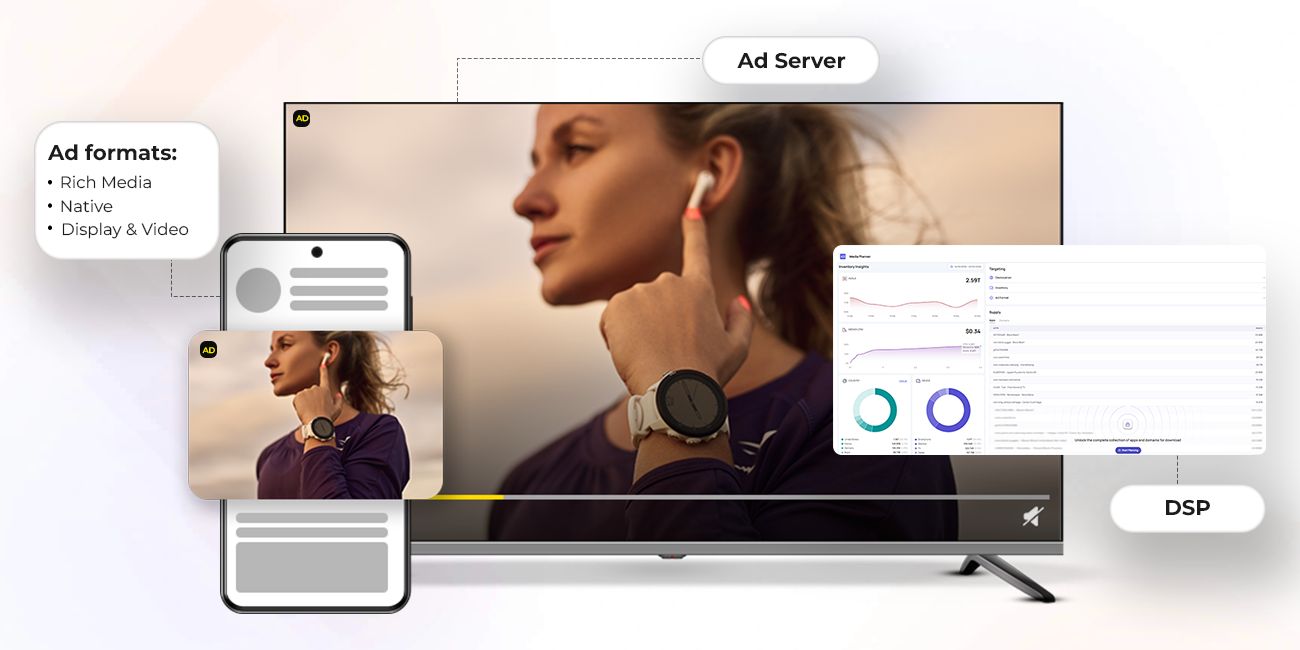
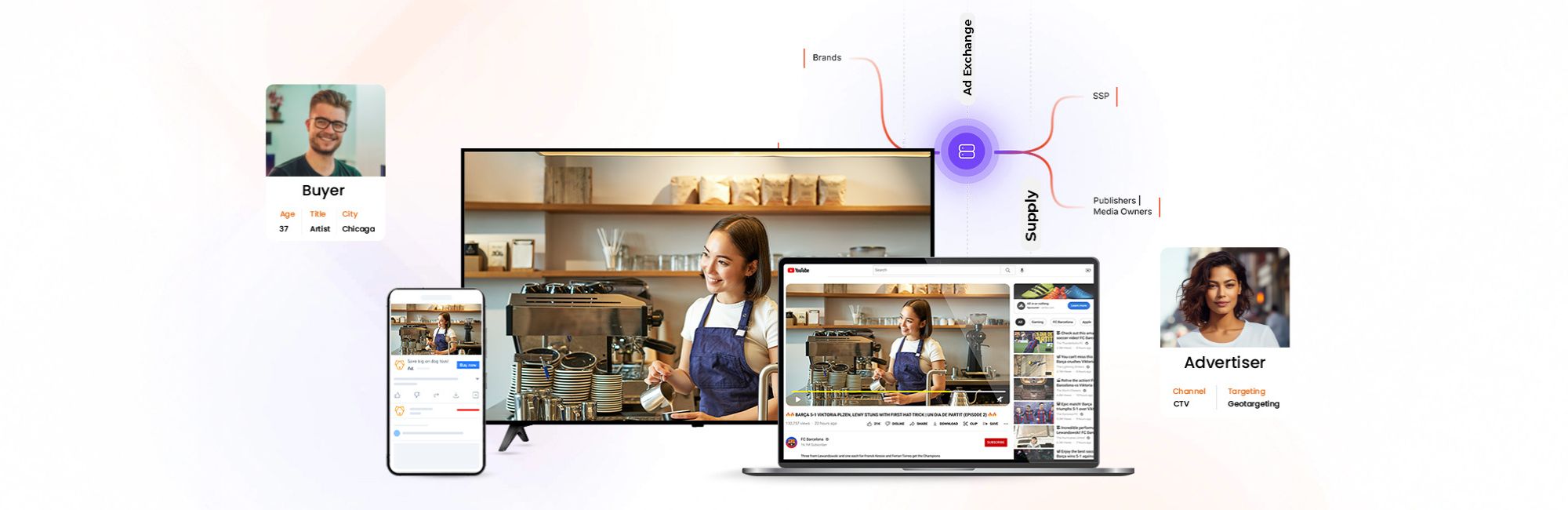
Understanding the full chain clarifies where each platform belongs.
When an advertiser launches a programmatic campaign, the sequence works like this: the advertiser configures targeting, budget, and creative inside a DSP. The DSP connects to ad exchanges and SSPs. When a user triggers an ad opportunity, the SSP sends a bid request to the DSP. The DSP evaluates the request and places a bid. If the bid wins, the DSP calls the ad server for the creative. The ad server delivers the creative to the publisher page or app. The ad server logs the impression, click, or interaction. Both the DSP and the ad server report back to the advertiser’s team.
Mapping the Stack to the Campaign Funnel
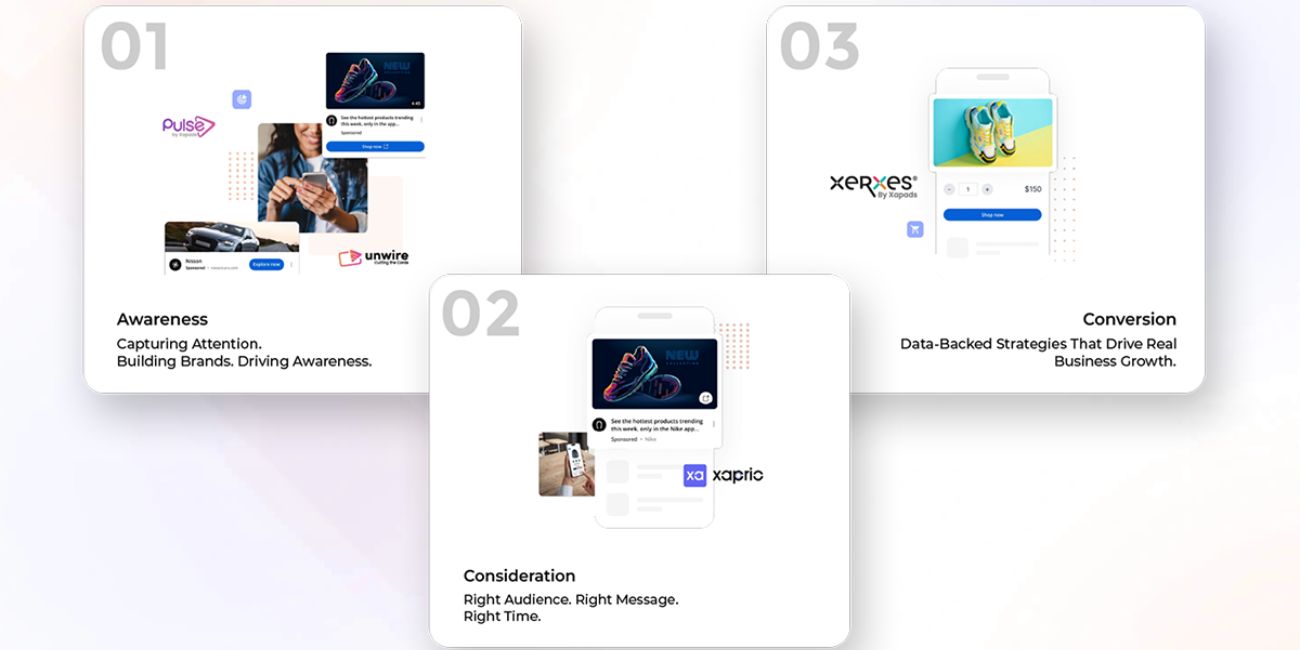
Modern campaign funnels require different tools and different inventory environments at each stage. Matching the right platform to the right stage is what separates efficient media buying from budget waste.
At the awareness stage, brands need maximum reach with premium viewability and verified fraud protection. CTV is the dominant channel for this in 2026. US CTV ad spending will increase nearly 15% this year to reach $37.95 billion, according to eMarketer’s US TV and Connected TV Ad Spending Forecasts H2 2025. For CTV-specific awareness, Unwire, Xapads’ dedicated CTV advertising platform, delivers 120M+ global reach, 100% viewability across premium channels, and 99%+ fraud-free delivery verified by Pixalate. With 85%+ view-through rates on non-blockable video ads and approximately 10 contextual ads per minute, Unwire operates at a standard that generic open exchange buying cannot match.
At the consideration stage, brands need rich media formats that drive time spent and brand recall. Xaprio (xaprio.com ), Xapads’ omnichannel branding DSP, is built specifically for this stage. With 50+ ad formats, 2x brand recall lift, and an average rich media engagement of 7.4 seconds per session (3.2x the time spent of static banners), Xaprio handles brand storytelling across CTV, OEM, native, display, and video inventory through 70+ global and OEM supply partners.
At the conversion stage, campaigns need a performance DSP optimized for mobile outcomes. Xerxes , Xapads’ mobile performance DSP, operates across 18,000+ websites, 25,000+ mobile apps, and 50+ SSPs with buying models covering CPM, CPC, CPI, and CPA. With audiences spanning India at 472M+ monthly active users, Southeast Asia at 212M+, Americas at 122M+, and Europe at 105M+, Xerxes is built to drive app installs and in-app acquisition outcomes at scale.
For YouTube-specific campaigns alongside this funnel, Pulse (pulsevid.ai) handles AI-powered contextual targeting to ensure video ads appear in brand-safe, relevant moments on YouTube with full GARM compliance. This is a level of placement precision that standard DSP buying does not provide.
OEM Inventory: The Layer Most Advertisers Miss
Beyond open exchange and CTV, OEM-level inventory gives advertisers direct access to device-level placements that open auction buying cannot reach. Mi.xapads (mi.xapads.com) is Xapads’ exclusive advertising partnership with Xiaomi, operating across 564M MIUI Monthly Active Users across 272 countries and regions, with 3.2B average daily impressions. Regional reach spans India at 133M, Europe at 104M, Southeast Asia at 59M, Latin America at 56M, and Middle East at 23M. Mi TV extends that reach to 60M+ monthly unique digital users across 106 countries. OEM-level inventory sits outside the standard programmatic auction, making it a distinct layer in the full-stack that DSPs and ad servers alone do not cover.
Mobile Programmatic Is Dominated by DSP Logic
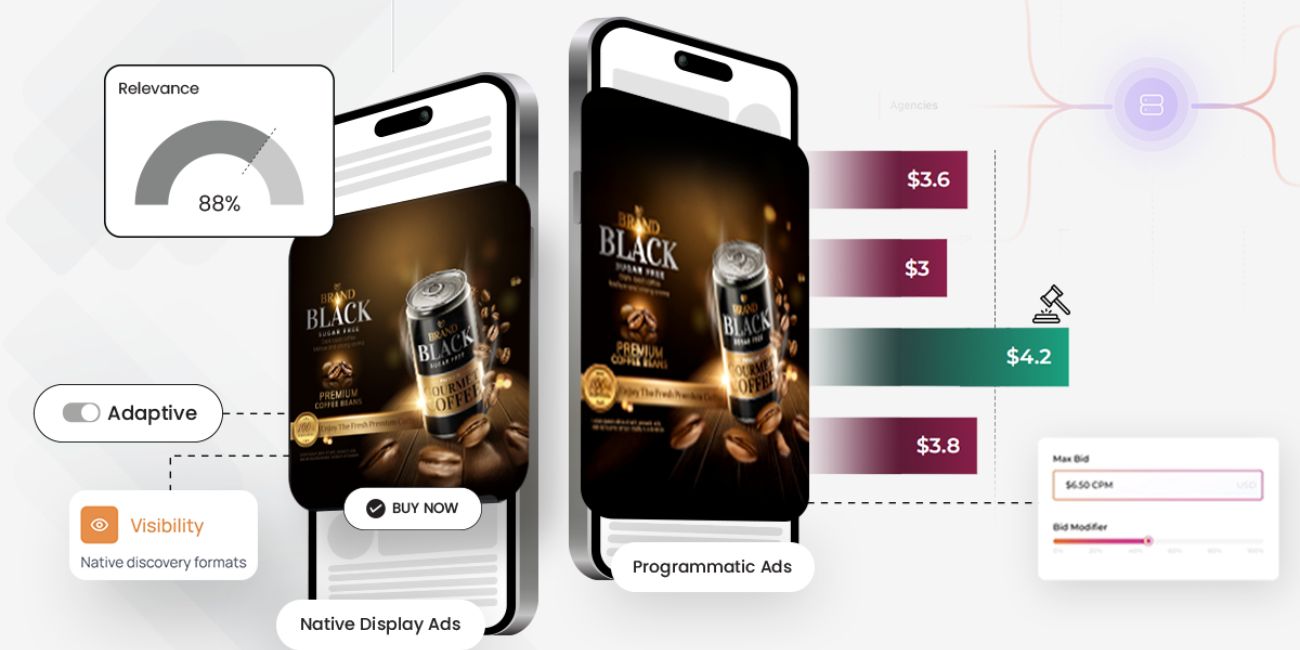
On mobile, the DSP layer carries the majority of the execution work. Mobile accounts for the largest share of programmatic ad impressions globally, and the performance demands of mobile campaigns, particularly app installs and CPA-based acquisition across in-app inventory where most mobile engagement happens, require ML-driven bid optimization that static ad server rules cannot deliver.
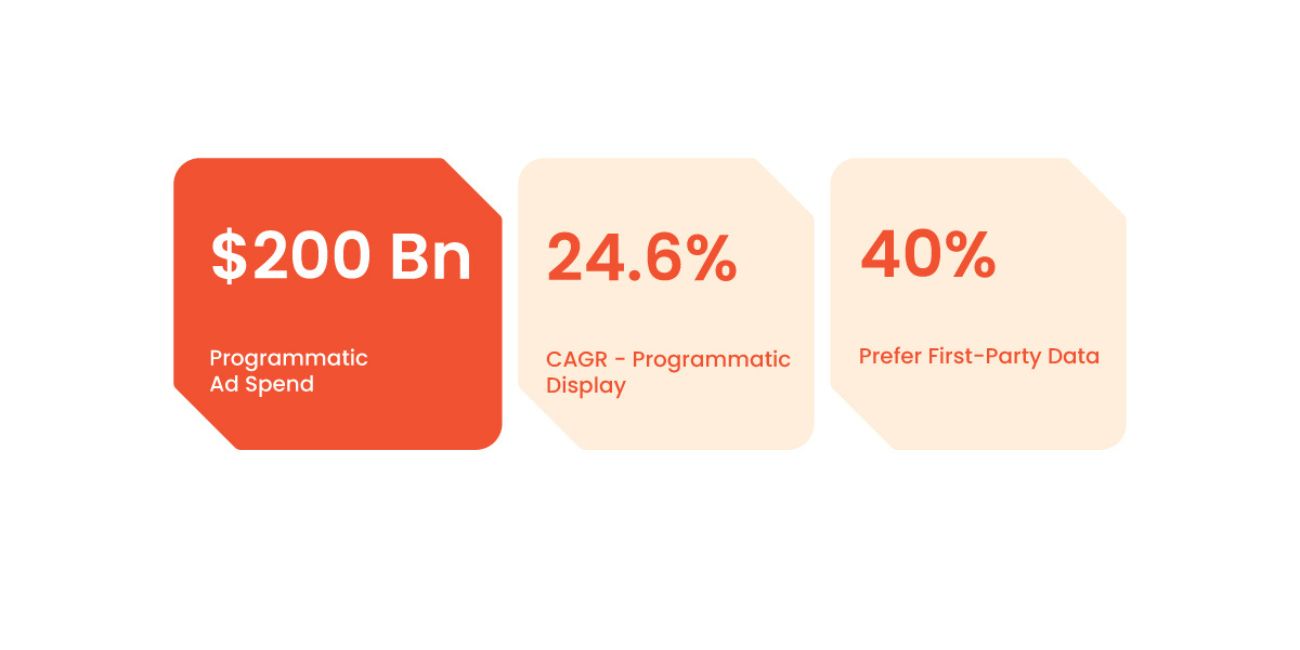
US programmatic display spending is expected to exceed $203 billion in 2026, representing year-over-year growth of 12.5%, per EMARKETER’s Programmatic Advertising Forecast and Trends H1 2026. Mobile in-app environments account for a significant share of that volume.
Mobile performance campaigns live and die on the quality of the DSP’s signal processing. How accurately does the platform predict install probability from a given impression? How quickly does it learn which supply sources convert? How effectively does it suppress fraudulent traffic before it consumes budget? A mobile performance DSP built for these demands, with access to OEM-level inventory, in-app supply across tens of thousands of apps, and buying models including CPI and CPA, gives performance teams the optimization leverage that general-purpose DSPs cannot match in mobile-first markets across Asia-Pacific, Latin America, and emerging markets.
AI Is Reshaping DSPs and Ad Servers Through 2030
The boundary between what a DSP does and what an ad server does is shifting as AI capabilities mature inside both platforms, according to eMarketer’s Programmatic Advertising Forecast & Trends H1 2026. Agentic buying promises fundamental changes to how ads are bought and sold, and AI is already reshaping programmatic operations from bidding to creative production. Understanding these changes helps media planners make infrastructure decisions that hold up through 2030, not just through this planning cycle.
AI Inside DSPs
Predictive bidding models now anticipate conversion probability before the auction rather than reacting to past performance data. Lookalike modeling expands reach beyond first-party seed audiences to find high-intent users at scale. Dynamic creative optimization assembles the most effective creative combination per impression in real time.
Future Market Insights projects the programmatic display industry to expand at a CAGR of 24.6% from 2026 to 2036, increasing from $106.4 billion to $959.7 billion, per the Future Market Insights Programmatic Display Advertising Market Report. This is a growth trajectory driven substantially by AI optimization capabilities inside DSP platforms.
AI Inside Ad Servers
Contextual intelligence is moving into ad serving decisions. Ad servers are beginning to use real-time content classification to match creatives to page context at the impression level rather than the placement level. Brand safety enforcement is shifting from blocklist-based rules to AI-powered content scoring that classifies risk signals dynamically. Frequency intelligence is becoming predictive, capping based on anticipated engagement behavior rather than raw impression counts alone.
What Changes Between 2026 and 2030
The convergence of DSP and ad server functions inside unified platforms will accelerate. The functional distinction between the two tools will not disappear. The separation of buying decisions from delivery decisions remains critical for governance, measurement integrity, and billing reconciliation. But the technical barriers between them will lower as unified platforms mature.
Cookieless targeting is now the operational baseline. 40% of US marketers relied on first-party data as their primary privacy-compliant targeting approach in 2025, per eMarketer’s Programmatic Advertising Forecast & Trends H1 2026, and that share will grow steadily through 2030. Contextual signals, first-party data, and cohort-based targeting are replacing cookie-dependent audience segments in both DSP bidding logic and ad server decisioning.
Programmatic will expand beyond display and video into DOOH, audio, gaming, and immersive formats. CTV ad spending will surpass traditional TV for the first time in 2028, per eMarketer’s Digital Video Forecast & Trends Q2 2026. This is one signal of the broader channel expansion shaping programmatic infrastructure through the end of the decade.
Common Mistakes Advertisers Still Make
Understanding what not to do is as operationally valuable as understanding what each platform does. These five mistakes appear in media plans regularly and none of them appears in most competing articles on this topic.
Mistake 1: Using a DSP to manage guaranteed direct deal delivery.
DSPs are built for auction environments. They do not manage impression commitments against a fixed contract the way an ad server does. Running direct deals through a DSP without ad server trafficking creates delivery shortfalls and reporting discrepancies that surface during billing reconciliation.
Mistake 2: Relying on an ad server for audience discovery and prospecting.
An ad server serves ads to inventory that already exists inside the campaign through prior arrangement. It does not discover new audiences or bid for new impressions. Expecting ad server infrastructure to do the job of a DSP leads to missed reach and underperformance on programmatic-funded campaigns.
Mistake 3: Running CTV without CTV-native delivery controls.
CTV has structurally different technical requirements from web and mobile. Pod management, competitive separation, and impression validation in streaming environments require purpose-built CTV infrastructure. Applying generic DSP buying logic to CTV inventory without ad serving controls appropriate for the streaming environment produces avoidable delivery failures.
Mistake 4: Treating the two platforms as substitutes.
The most common framing error in this space. DSPs and ad servers are two layers of the same infrastructure stack, each responsible for a distinct set of decisions. Brands operating only one layer give up either campaign reporting integrity or buying efficiency.
Mistake 5: Using DSP delivery reports as the sole measurement source.
DSPs report on what they purchased and optimized toward. Independent ad server measurement provides the third-party verification that makes campaign reporting credible to finance teams and external stakeholders requiring impartial delivery confirmation.
Questions Media Planners Should Ask Before Choosing a Stack
Media planners and performance teams building or auditing programmatic infrastructure in 2026 should run through these questions before committing to platform decisions.
What is the primary campaign objective?
Guaranteed delivery against premium named inventory, or performance optimization across the open web? This single question determines whether an ad server, a DSP, or both are required as a baseline.
What buying models does the campaign use?
Guaranteed CPM against named publishers, open exchange RTB, private marketplace deals, or programmatic guaranteed? Each buying path has different infrastructure requirements and different measurement standards.
What inventory environments does the campaign run across?
Web display, mobile in-app, CTV, YouTube, OEM, or DOOH? Different channels require channel-native platforms rather than generic tools forced into specialized inventory environments.
What measurement standard does the campaign require?
DSP-reported performance, independent ad server delivery verification, or both reconciled against each other? The measurement requirement determines the minimum infrastructure needed before the campaign launches.
What fraud protection and brand safety standards apply?
Both DSPs and ad servers have roles in fraud filtering and brand safety enforcement, but the specific controls differ significantly between the two and vary across inventory environments.
Conclusion
The global programmatic display market is on track to reach $959.7 billion by 2036, accelerating from $106.4 billion in 2026 at a CAGR of 24.6%, per Future Market Insights. The infrastructure decisions brands and agencies make today, which platforms manage buying, which manage delivery, and how the two reconcile, will compound in impact as that market grows.
Getting the stack right in 2026 is not just an operational improvement. It is a competitive advantage that shows up in every campaign metric that matters.
Related reading: DSP vs Ad Server: Key Differences Explained for 2026
Frequently Asked Questions
How is CTV advertising different from standard programmatic?
CTV requires pod-level ad serving controls, managing ad breaks, competitive separation, non-skippable delivery, and server-side ad insertion. Standard web or mobile programmatic infrastructure was not built to handle these requirements. CTV campaigns consistently perform better on purpose-built CTV platforms combining programmatic buying with native delivery controls.
What is the future of DSPs and ad servers by 2030?
Both platforms will absorb more AI capability, with predictive bidding, contextual decisioning, and dynamic optimization becoming standard in both layers. Cookieless targeting using first-party data and contextual signals will be the operational baseline. Programmatic reach will expand into DOOH, audio, gaming, and immersive formats, with both buying and delivery infrastructure adapting to new inventory environments.
Related Post