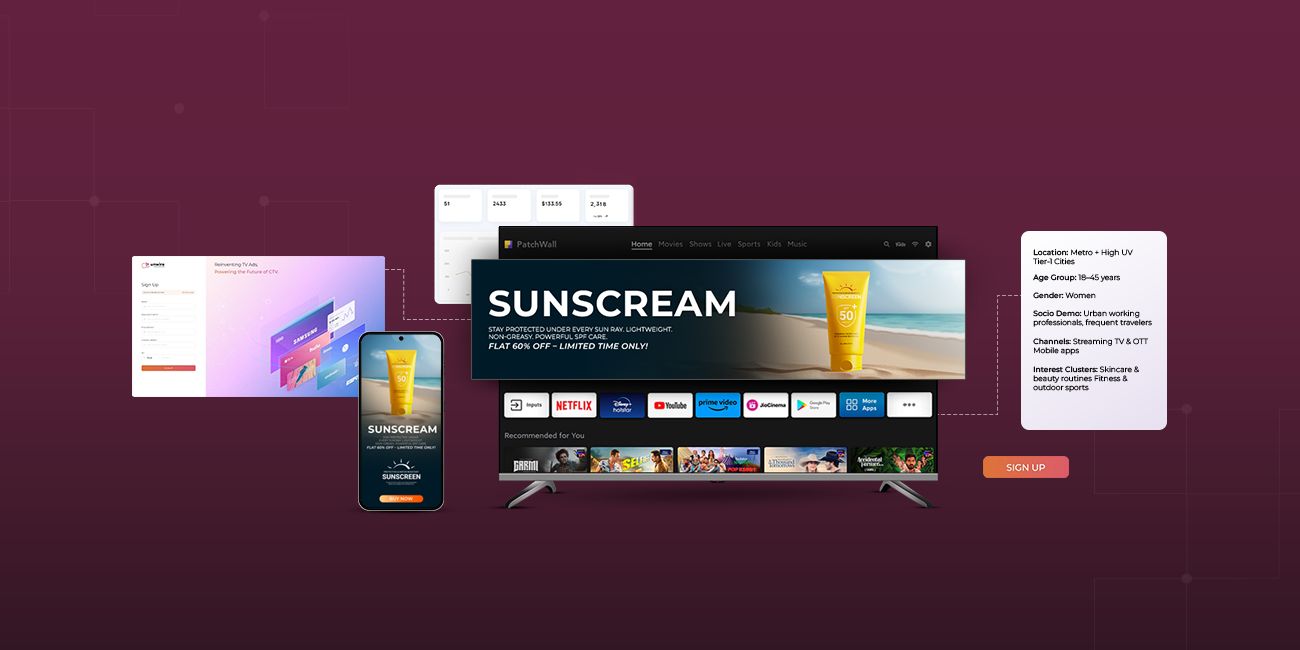
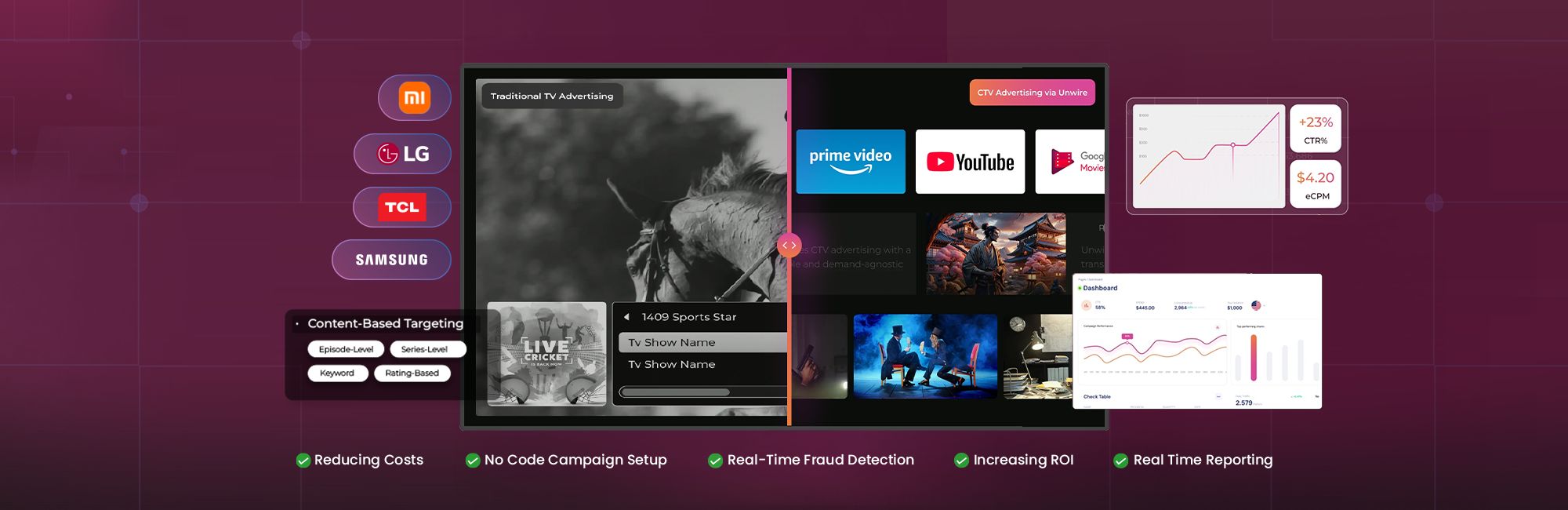
Television advertising looks very different today compared to five years ago. Audiences now watch television through internet streaming more than traditional cable connections. This shift has fundamentally changed how brands reach customers.
U.S. connected TV advertising will reach $37.95 billion this year, growing 14.5% from the December 2025 forecast. Brands continue reallocating budgets from traditional television to streaming platforms. By 2028, CTV advertising will surpass traditional TV spending for the first time, reaching $51 billion.
This shift matters for advertisers across all business sizes. CTV enables brands to reach audiences who no longer watch cable television through video ads delivered on large household screens. At the same time, campaigns can target defined audience segments and measure performance in ways traditional television never supported.
This guide explains the fundamentals of CTV advertising what it is, how it works, typical costs, and how campaigns launch. The goal is to present the channel clearly and practically as it becomes a core part of modern media strategy.
Understanding CTV Advertising: The Basics
What is CTV Advertising?
Connected TV (CTV) refers to a television that streams content through the internet instead of traditional cable delivery. This includes smart TVs with built-in apps, televisions connected via devices such as Roku or Fire TV, and gaming consoles used for streaming content. CTV advertising involves placing video commercials within this streamed content across platforms like Disney+, Hulu, and similar services.
The primary difference from traditional television lies in ad delivery. Streaming platforms serve different ads to different households based on location, interests, and viewing behavior. Advertisers can also measure ad exposure and resulting actions. As a result, CTV combines the visual impact of television with the targeting and measurement capabilities of digital advertising within a single environment.
Who Uses CTV in 2026?
Connected TV has reached mass adaptation. According to Statista, 117 million U.S. households used connected TV devices in 2025, and that number is projected to reach 121 million by 2027.
Streaming now represents the dominant form of television consumption. Viewers spend nearly three hours per day on CTV, while traditional TV viewing continues to decline to around two hours in 2026. This shift positions streaming as the primary television environment for audience reach.
CTV audiences span across age groups. Early adoption came from the 18–34 demographic, but usage has expanded significantly among older households as smart TVs became standard in most homes. As a result, CTV provides broad household coverage rather than a niche or youth-only audience.
The CTV Advertising Ecosystem

What Are The Key Players in CTV Advertising
Four primary groups enable the CTV advertising ecosystem:
Device Manufacturers: Companies such as Samsung, LG, TCL, and Xiaomi manufacture smart TVs with advertising environments integrated into their operating systems. Home screen placements and native interface ads originate directly from these devices. Xapads Media partners with OEM manufacturers through Mi.Xapads, providing access to Xiaomi’s ecosystem, reaching 564 million+ MIUI users across 272 countries.
Streaming Services: Platforms including Netflix, Hulu, Peacock, Paramount+, and many other apps distribute the content that audiences watch. Many operate ad-supported tiers, creating premium video inventory where brand commercials appear within streaming content.
Technology Platforms: Ad technology platforms manage delivery, measurement, and buying across multiple publishers. Within the Xapads ecosystem, Unwire.tv enables access to premium CTV inventory through OTT header bidding and contextual targeting. For broader omnichannel branding across CTV, OEM, native, and display environments, Xaprio centralizes execution in a single platform.
Advertisers and Agencies: Brands, agencies, and marketing teams design campaigns and purchase media placements where commercials are delivered across connected TV environments.
Major CTV Platforms and Inventory Sources
CTV advertising allows brands to appear across many TV apps, channels, and placements.
Smart TV Operating Systems: Smart TV operating systems provide built-in ad placements directly on the television home screen. Platforms like Samsung, TCL, and Xiaomi MIUI, etc., show these placements before viewers choose any content. This position gives brands high visibility because the ad appears at the moment the TV turns on, and attention is naturally focused on the screen.
FAST Channels: Free Ad-Supported Streaming TV (FAST) platforms such as Tubi, Pluto TV, and the Roku Channel stream thousands of channels at no cost to viewers and monetize through commercials, giving advertisers large-scale reach.
AVOD Platforms: Ad-Supported Video on Demand services like Hulu, Peacock, and Paramount+ offer lower-priced subscriptions supported by advertising. According to Statista, CTV advertising spend will exceed $40 billion by 2027, driven largely by these ad-supported tiers.
Premium Streaming Services: Platforms including Netflix, Disney+, and Max now run ad-supported plans that place commercials within premium content. In 2026, subscription OTT with ads generates approximately $16.23 billion in advertising revenue.
Types of CTV Inventory
Not all CTV ad space works the same. Understanding the differences helps advertisers plan budgets and placements more effectively.
Premium vs Standard Inventory:
Premium inventory places ads inside popular shows, major platforms, and high-quality content environments. It costs more but usually delivers stronger performance. Standard inventory costs less and appears alongside lower-demand or niche content.
Direct Publisher Inventory:
Advertisers buy ad placements directly from platforms such as Hulu or Peacock. This approach provides stronger placement control but typically requires higher minimum spends.
Programmatic Marketplace Inventory:
Automated buying systems allow advertisers to purchase CTV inventory across multiple platforms from a single interface. Platforms like Unwire.tv by xapads enable efficient buying, broader reach, and access to premium inventory across streaming services, FAST channels, and OEM environments through one self-serve workflow.
Private Marketplace Deals: Publishers offer advertisers access to premium inventory at pre-negotiated prices. This method guarantees higher quality placements without competing in the open auction. Unwire.tv supports PMP, programmatic guaranteed, and custom deal configurations with full control over targeting, budgets, and timelines.
The CTV Advertising Landscape in 2026
Market Size and Growth Statistics
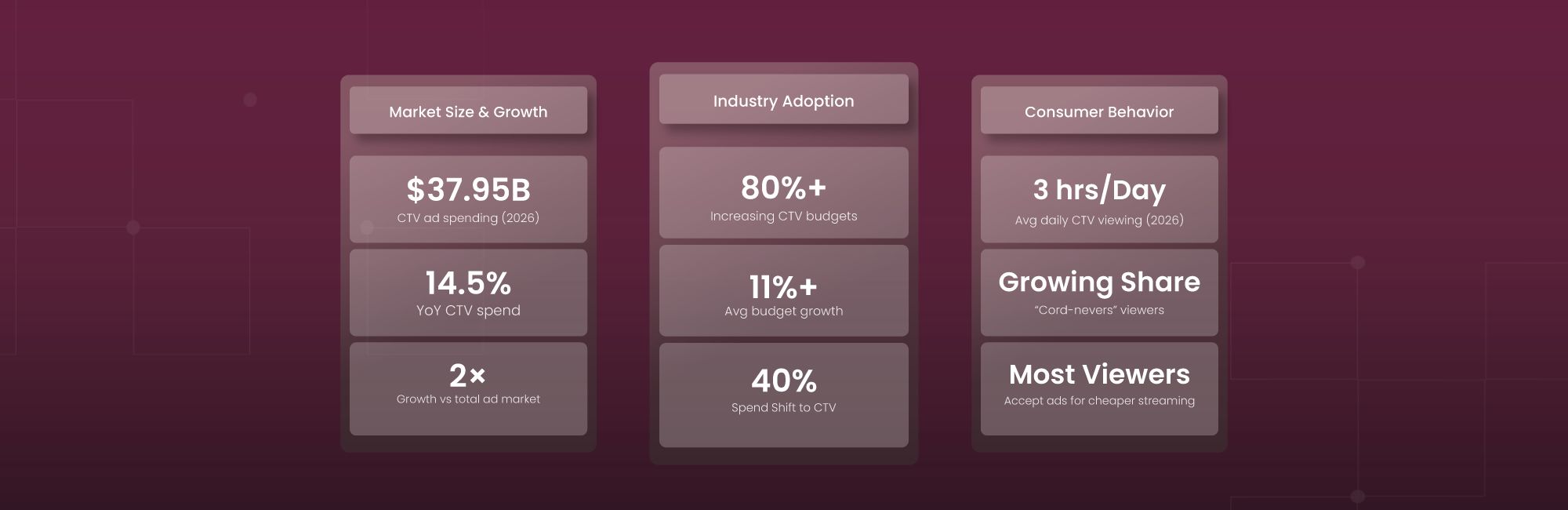
The numbers tell a clear story. According to eMarketer, CTV ad spending will increase nearly 15% (14.5%) in 2026 to reach $37.95 billion.
This isn’t a small growth. This is one of the fastest-growing advertising channels in America. While total advertising might grow 5-7% annually, CTV grows more than twice that fast. By 2028, CTV ad spending will reach $46.89 billion. That’s when CTV will surpass traditional television advertising for the first time in history. eMarketer projects the U.S. CTV market will reach $51 billion by 2029.
Looking globally, Statista reports worldwide CTV advertising revenue will exceed $42+ billion by 2028.
Different regions show different adoption patterns. North America leads with the highest spending per household. Europe grows steadily as streaming services expand. Asia-Pacific shows explosive growth as internet infrastructure improves and streaming platforms launch across the region.
Industry Adoption Rates
More advertisers shift budgets to CTV every year. Nearly 80% of marketers plan to increase their CTV budgets in 2026, many by more than 11%.
The Question is which industries invest most heavily in CTV? Automotive companies lead the pack. Retail brands follow close behind. Financial services, healthcare, and consumer packaged goods all increase CTV spending significantly.
According to Statista, nearly four out of ten marketers increasing CTV spend reallocated budgets from regular digital TV. Another 40% shifted money from other digital channels. This shows CTV isn’t just getting new money. It’s taking dollars from channels that aren’t performing as well.
Consumer Behaviour Shifts
People have changed how they watch television. According to eMarketer, average time spent per day with CTV will increase to nearly three hours in 2026, while time spent with traditional TV continues falling to just two hours.
Cord-cutting accelerated during recent years. eMarketer research shows 2025 was the first year cord cutters overtook households with paid TV. More people now watch without cable than with it. Some people never had cable at all. They went straight to streaming. The industry calls them “cord-nevers.”
Viewer preferences reveal something interesting. Most people actually accept ads if it means paying less for content. They understand the tradeoff. Free or cheap streaming with a few commercials? Most viewers take that deal happily.

CTV Advertising Formats Available
Standard Video Advertisements
The most common format is the regular video commercial. These work just like traditional TV ads, but they appear during streaming content.
Where ads appear:
- Pre-roll ads play before content starts
- Mid-roll ads interrupt content at natural breaks (like traditional commercial breaks)
- Post-roll ads appear after content ends
How long ads run: Most ads run for 15 or 30 seconds. Some platforms allow 60 seconds. The 30-second ad is most common because TV advertising has used it for many years.
Can viewers skip them?: Most CTV ads are non-skippable. Viewers must watch the entire commercial. This drives completion rates above 90%, much higher than ads on computers or phones where people can skip more easily.
Emerging Interactive Ad Formats
New formats make CTV advertising more interactive than traditional television.
Pause Screen Ads:
The platform shows an ad when viewers pause content. The ad stays on the screen during the pause, so it receives clear attention during a natural break. These ads usually cost less than video ads while still delivering strong visibility. Unwire.tv supports pause screen placements and maintains 100% viewability.
Home Screen Banners:
Smart TV operating systems display ads on the home screen before content starts. These placements appear while viewers browse apps or choose what to watch, which creates high visibility. OEM partnerships through Mi.Xapads expand this opportunity across Xiaomi TV ecosystems.
QR Code-Enabled Ads:
This format has exploded in popularity. Advertisers add QR codes to regular video commercials. According to eMarketer, nearly two-thirds of U.S. social network users watch TV or streaming while scrolling on second screens in 2026. People have their phones in hand already. They see something interesting, scan the code, and land on a website or shopping page within seconds.
Carousel Ads: Some platforms support interactive units that display multiple products or messages inside one ad. Viewers can browse options using the remote control. These formats generate higher engagement compared to standard passive video ads.
Sponsored Content and Integrations
Beyond commercials, brands can sponsor entire shows or channels:
Branded Content: Brands create or sponsor shows that naturally include their products or services. This approach provides longer exposure while keeping the viewing experience natural instead of interruptive.
Channel Sponsorships: Brands sponsor entire FAST channels or content categories. The brand name appears across the viewing interface, which builds repeated awareness whenever viewers browse or watch that content.
Product Placement: Brands place products directly inside streaming content, similar to traditional TV placements but with measurable performance and reporting.

CTV Advertising Costs and Pricing
Understanding CTV Ad Pricing
CTV usually costs more per 1,000 impressions than many digital formats like banner ads. However, it delivers higher attention and higher completion rates, which often makes the cost worthwhile for brands.
Pricing changes based on inventory and targeting. National campaigns on premium streaming platforms cost more than local campaigns on FAST channels. Narrow audience targeting also costs more than broad reach targeting because the system selects specific households instead of showing ads to everyone.
A simple comparison helps explain this. A billboard costs more than a small newspaper ad, but the billboard appears larger, clearer, and harder to ignore. CTV works in a similar way compared to display advertising. The cost per impression is higher, but the brand receives big-screen visibility and full-length viewing.
Minimum budgets have also changed over time. Earlier CTV buying required very large budgets to start. Modern self-serve platforms such as Unwire.tv by Xapads allow campaigns to launch with smaller budgets. Brands can test campaigns on premium inventory before increasing investment.
CTV Pricing Models
Connected TV advertising primarily operates on a CPM (Cost Per Thousand Impressions) pricing model. Advertisers pay for every 1,000 ad impressions delivered on connected TV screens. In a CTV environment, ads appear full-screen within premium streaming content and are typically non-skippable. Because of this structure, viewability and completion rates are naturally high, often exceeding 90% across quality inventory.
For this reason, CPM is the standard and most widely used pricing model in CTV. Unlike web or mobile environments, CTV does not require additional pricing models such as vCPM or CPCV. Ads are designed to be fully viewable and played within the content stream, making high visibility and strong completion inherent to the format.
By operating on a CPM model, campaigns benefit from transparent pricing, predictable buying structures, and high-quality exposure. In premium CTV ecosystems, CPM remains the industry standard because the format itself ensures strong visibility and high completion by design.
What Influences CTV Ad Costs?
Several factors affect the final cost of a CTV campaign.
Inventory Quality: Premium shows with limited ad space cost more. Newly released or high-demand content usually carries higher pricing than older library content. Ads inside popular premium programming receive higher demand from advertisers, which increases the cost.
Targeting Specificity: Broad audience targeting costs less than precise targeting. Campaigns targeting wide age groups remain more affordable. Campaigns targeting narrow demographics, interests, and locations require more filtering, so pricing increases.
Ad Format: Standard 30-second video ads follow common pricing benchmarks. Interactive formats may have different pricing structures. Longer ads usually cost more than shorter ads because they occupy more viewing time.
Time of Year: Advertising demand rises during the holiday season (October–December), which increases prices. After the holiday period, demand drops and pricing typically becomes lower.
Geographic Market: National campaigns cost more than local campaigns. Highly competitive cities usually have higher bid competition, which raises pricing compared to smaller markets.
CTV Budget Planning
Budget size depends on campaign goals, target market, and platform selection.
Testing Phase: Start with a controlled test budget. Measure performance first, then increase spending after identifying effective targeting and creatives.
Local Campaigns: Geographic targeting allows spending only within service areas. This approach improves efficiency compared to nationwide campaigns.
National Campaigns: Larger budgets help achieve reach across multiple markets and platforms. Broader coverage requires more inventory.
Platform Allocation: Avoid concentrating the full budget on one platform initially. Test multiple platforms, compare performance, and then increase allocation toward stronger performers.
Testing vs Scaling: Reserve part of the budget for ongoing testing of new audiences, creatives, and placements. Allocate the larger portion toward proven combinations. This structure supports continuous improvement while maintaining stable performance.
Getting Started with CTV Advertising
Prerequisites for CTV Campaigns
Before launching a campaign, prepare the required assets and setup.
Video Commercials: CTV requires video ads. High production quality matters because viewers watch on large TV screens where low quality becomes noticeable. Most platforms accept MP4 or MOV formats.
Technical Requirements:
- Resolution: Minimum 1920×1080 (1080p)
- Aspect ratio: 16:9 widescreen
- Duration: 15, 30, or 60 seconds
- File size: Usually under 500MB
Tracking Setup: Set up tracking pixels, dedicated landing pages, or promo codes to measure performance. Configure conversion tracking before launching the campaign to record actions such as website visits or purchases.
Brand Safety: Ads should appear alongside suitable content. Platforms with content categorisation and verification controls help maintain quality placements. Unwire.tv by Xapads integrates HUMAN and Pixalate verification to maintain 99%+ fraud-free delivery across its CTV inventory.
Choosing a CTV Buying Approach
There are three primary ways to buy CTV inventory, and Unwire.tv supports all three models depending on business needs.
Self-Serve Platforms:
Platforms such as Unwire.tv allow direct campaign management with full control over targeting, budgets, creatives, and pacing. Marketing teams can monitor performance through live dashboards and make real-time adjustments. This approach suits teams with internal expertise or those seeking operational control and flexibility.
Managed Service Providers:
In this model, the platform or a dedicated team manages campaigns on behalf of the advertiser. Unwire.tv also offers managed campaign support, including strategy planning, inventory selection, optimisation, and reporting. This option works well for teams with limited internal bandwidth or those preferring guided execution.
Agency Partnerships:
Traditional media agencies integrate CTV into broader media strategies across multiple channels. Unwire.tv collaborates with agencies as a technology and inventory partner, enabling structured planning, premium inventory access, and transparent reporting for large or complex campaigns.
Which approach fits the situation

Setting Up a CTV Campaign (High-Level)
Follow this basic workflow to launch a campaign:
Step 1: Define the Objective Decide the campaign goal first — brand awareness, website traffic, sales, or app installs. The objective determines targeting, inventory, and measurement.
Step 2: Select Platforms and Inventory: Choose the streaming platforms and content categories that match the intended audience. Evaluate reach, audience profile, and expected cost before selecting inventory.
Step 3: Prepare Creative Assets : Upload video ads, add interactive elements such as QR codes if required, and configure companion banners where supported.
Step 4: Configure Budget and Pacing : Set daily or total campaign budgets. Select pacing strategy (even delivery across days or faster delivery for quick reach). Define bid limits or enable platform auto-optimisation.
Step 5: Launch the Campaign: Verify readiness before activation:
- Creative assets uploaded and approved
- Targeting configured correctly
- Budget limits set
- Tracking pixels functioning
- Brand safety controls enabled
- Attribution method defined
- Reporting dashboard prepared

CTV Advertising Metrics and KPIs
Core Performance Metrics
Measure these key metrics in every CTV campaign:
Impressions and Reach: Impressions show how many times the ad played. Reach shows how many unique households saw the ad. For awareness campaigns, reach matters more than total impressions.
Frequency: Frequency measures how often the same household sees the ad. Very high frequency wastes budget. Very low frequency reduces impact. Most campaigns perform best around 2–4 exposures per household per week.
Video Completion Rate (VCR): VCR shows the percentage of viewers who watch the full ad. CTV usually delivers VCR above 90%, much higher than desktop or mobile video. Unwire.tv delivers 85%+ view-through rates with non-blockable video ads.
Viewability: Viewability measures how many impressions met visibility standards. CTV typically exceeds 90% viewability, compared to desktop (~70%) and mobile (~50–60%). Unwire.tv maintains 100% viewability across premium channels.
Performance Benchmarks
- VCR above 90% → Excellent
- VCR 80–90% → Good
- VCR below 80% → Needs investigation
- Viewability above 90% → Standard for CTV
- Frequency 2–4 per week → Optimal range
Advanced Engagement Metrics
For interactive CTV campaigns, measure these additional metrics:
Interaction Rate: This shows the percentage of viewers who interact with elements inside the ad. A 2–4% interaction rate usually indicates strong creative performance.
QR Code Scans: This counts how many viewers scan the QR code shown in the ad. It directly reflects active interest and purchase intent. eMarketer reports that second-screen behaviour connects TV viewing with immediate mobile actions through QR-enabled ads.
Business Impact Metrics
Connect CTV performance to real business outcomes:
Brand Awareness Lift: Measure changes in awareness, consideration, and favorability among exposed audiences compared to control groups. Brand lift studies regularly show a stronger impact from CTV than many digital video formats.
Unwire.tv also supports brand lift measurement studies in partnership with third-party research providers to help advertisers quantify awareness and perception impact.
Website Traffic: Track visits from households exposed to CTV ads using device graphs, IP matching, or automatic content recognition signals.
Store Visits: For physical locations, measure footfall increases among exposed households using location data partners.
Sales Impact: Measure revenue impact using matched-market testing, multi-touch attribution, or media mix modelling. While CTV primarily drives awareness and consideration, it can contribute to overall sales performance as a part of a broader media mix strategy.
Quality and Verification in CTV
Brand Safety on CTV
Protecting brand reputation depends on controlling where ads appear:
Content Controls: Platforms classify content by genre, rating, and theme. Advertisers can exclude categories that do not match brand values. For example, ads can be prevented from appearing next to R-rated content.
Filtering Inappropriate Content: Platforms allow blocking of violence, adult material, or sensitive topics using standard exclusion lists available within campaign settings.
Industry Frameworks: The Global Alliance for Responsible Media (GARM) defines standardized brand safety categories. GARM-compliant platforms apply consistent rules across publishers. Unwire.tv by Xapads uses context-based intelligence to enable brand-suitable placements at the content level, targeting specific genres, programme types, and viewing environments across premium CTV inventory.
Brand Suitability: Beyond basic safety, placements should match brand positioning. For example, a luxury brand may avoid certain entertainment formats even if the content meets standard safety guidelines.

Ad Fraud Prevention
CTV faces fraud challenges that require vigilance:
Made-for-Advertising Filtering: Some content exists only to generate ad revenue, offering poor viewer experiences. Filter out these MFA sites and apps.
Verification Partners: Services like HUMAN, Pixalate, DoubleVerify, and Integral Ad Science detect fraud before and after ad delivery. According to eMarketer, measurement standards have become essential for CTV quality assurance.
Quality Platforms: Choose platforms that prioritise fraud prevention. Unwire.tv by Xapads integrates verification partners HUMAN and Pixalate, maintaining 99%+ fraud-free delivery across its CTV inventory.
Viewability Standards for CTV
Understanding viewability in CTV requires a slightly different perspective compared to web and mobile environments.
How Viewability Works in CTV
In web and in-app advertising, viewability is measured using pixel-based standards. The Media Rating Council (MRC) defines a viewable video impression as at least 50% of the ad’s pixels remaining in view for 2 continuous seconds. This standard exists because users can scroll past ads, switch tabs, or partially view content.
However, CTV operates in a full-screen, non-scrollable environment. When an ad plays on a connected TV, it typically occupies 100% of the screen within the video player. As a result, traditional pixel-based viewability measurement is less relevant in CTV.
How CTV Viewability Is Measured
In CTV, viewability is generally determined by playback confirmation signals rather than pixel tracking. According to Google Ad Manager’s guidance on inferred viewability in qualified CTV environments, inventory is presumed to be fully on screen and counted as viewable after 2 continuous seconds of playback.
Measurement then focuses on:
- Ad start confirmation
- Quartile completion milestones (25%, 50%, 75%, 100%)
- Full completion rates
- Valid playback within the video stream
Because CTV ads are rendered full-screen and are often non-skippable, viewability rates are naturally high across premium inventory.
Best Practices for Ensuring Quality
- Work with trusted third-party measurement and verification partners
- Prefer platforms that offer transparent reporting on ad delivery and completion
- Monitor completion rates and playback metrics regularly
In CTV environments, completion rate and playback confirmation are stronger indicators of inventory quality than traditional pixel-based viewability standards used in web and mobile advertising.
CTV Advertising Challenges in 2026
Fragmentation Across Platforms
The CTV ecosystem remains fragmented:
Multiple Operating Systems: Roku, Amazon Fire, Samsung, LG, and others all have different platforms. Creating campaigns across all platforms requires extra work.
Inconsistent Measurement: According to eMarketer, over 32% of advertisers cite measurement as the biggest addressability challenge in CTV. Each platform measures audiences differently, making it hard to compare performance or calculate true reach.
Campaign Management Complexity : Managing campaigns across multiple CTV platforms means multiple logins, different interfaces, and separate reporting systems. This fragmentation wastes time and makes optimization harder. Unwire.tv solves this by bringing everything into one unified dashboard where you manage inventory, targeting, budgets, and reporting all in one place.
Attribution and Measurement Gaps
Measuring CTV impact has improved, but challenges remain:
Closed Ecosystems: Some platforms don’t share data with third parties, making independent verification impossible.
Cross-Device Tracking: Connecting TV exposure to mobile or desktop actions requires probabilistic matching, which isn’t always accurate.
Privacy Regulations: Cookie restrictions and privacy laws limit tracking capabilities. CTV must rely more on first-party data and privacy-safe measurement solutions.
Ad Fatigue Management
Keeping audiences engaged requires fresh creative:
Frequency Control Limitations: Some platforms lack sophisticated frequency controls, leading to overexposure of the same ad to the same households.
Creative Rotation: Showing the same ad repeatedly reduces effectiveness. You need multiple creative versions for longer campaigns.
Audience Saturation: Limited inventory on some platforms means quickly exhausting available reach in narrow targeting scenarios.
The Future of CTV Advertising (2026-2030)
Emerging Technologies
Technology will transform CTV advertising:
AI-Driven Systems: Artificial intelligence will better predict what viewers want to watch, helping advertisers find relevant audiences. According to eMarketer, AI’s role in CTV is shifting toward foundational infrastructure that improves context, relevance, and scale. AI-powered video intelligence will analyse content frame-by-frame for precise contextual targeting, delivering ads at exactly the right moments within streaming content.
Voice Interactions: Viewers may soon interact with ads using voice commands, enabling new engagement formats.
Augmented Reality: AR overlays could let viewers visualise products in their homes or try virtual experiences from TV ads.
Dynamic Personalization: AI will power nearly universal personalization, enabling dynamic creativity that adapts to each viewer in real-time.
Privacy and Regulation Evolution
Privacy-first advertising will become standard:
Privacy-First Approaches: As third-party cookies disappear, CTV will rely more on contextual targeting and privacy-preserving technologies.
Clean Rooms: Secure data environments will let advertisers and platforms analyze audiences without sharing raw data, protecting privacy while enabling targeting.
Regulatory Changes: Expect more regulations similar to GDPR and CCPA globally, requiring transparent data practices and consumer consent.
Market Evolution Predictions
Where CTV is heading:
Continued Growth: CTV ad spending will keep growing to reach $46.89 billion by 2028, with eMarketer projecting $51 billion by 2029, though growth will moderate as the market matures.
Regional Opportunities: Outside the most mature markets, Connected TV is evolving unevenly, with each region shaping its own version of the channel rather than following a single global path. In Asia–Pacific, growth is being fueled by millions of households adopting affordable smart TVs and shifting mobile streaming habits onto larger screens, creating massive reach but still price-sensitive advertising environments.
Across Europe, broadcasters and streaming platforms are rebuilding television through addressable advertising and privacy-first measurement frameworks, making the region important for premium, regulation-compliant campaigns.
Latin America is developing as a blended ecosystem where pay TV and streaming coexist, encouraging advertisers to use CTV primarily for cost-efficient reach expansion. Meanwhile, the Middle East and Africa represent emerging, engagement-heavy markets where younger audiences consume streaming as their primary television experience, offering long-term strategic value even as monetization models continue to mature.
Format Innovation: Interactive and shoppable ads will represent growing portions of CTV advertising, with engagement-focused formats becoming standard.
Channel Integration: CTV will integrate more closely with social media, search, and retail media to create seamless customer journeys.
Shoppable TV and Commerce Integration
Television is becoming transactional:
Direct Purchase: Viewers will buy products directly from TV ads without leaving their couch. QR codes are just the beginning.
Live Shopping: Real-time shopping events on connected TVs will create urgency and engagement similar to home shopping networks but more interactive.
QR-to-Cart: Scan a code, and products go straight to your online shopping cart, removing friction from TV commerce.
Getting Started with Unwire.tv by Xapads
Unwire.tv is a contextual CTV advertising platform built for TV-first campaigns. It places brand ads in the right viewing moment across premium TV and streaming environments, while giving clear performance visibility.
What Unwire.tv Offers
Unwire.tv connects advertisers, broadcasters, and streaming platforms inside one working ecosystem. The platform provides:
- Premium CTV inventory across streaming services and FAST channels
- Smart TV placements through OEM partnerships, including Mi.Xapads
- Context-based targeting by content genre, programme type, and viewing environment
- 100% viewability across premium channels
- 85%+ view-through rates with non-blockable video ads
- 99%+ fraud-free delivery verified by HUMAN and Pixalate
Why Choose Unwire.tv
Full Control: Campaign targeting, budgets, and creatives stay fully configurable. Clear reporting shows where ads run and what is being spent.
Smart Media Planner: The planner suggests campaign setups with live previews before launch.
Deal Configuration: PMP, programmatic guaranteed, and custom deals can be configured quickly with defined targeting and timelines.
Real-Time Reporting: Live dashboards provide ongoing performance updates and downloadable reports for analysis.
Who Should Use Unwire.tv
- Brands looking for premium CTV inventory with transparent reporting
- Marketing teams running contextual TV campaigns
- Advertisers targeting audiences across Asia-Pacific, Europe, Middle East, and Latin America
- Agencies managing multiple CTV campaigns
How to Get Started
Visit unwire.tv/book-demo and submit the short form with business details and campaign requirements. After submission, an Unwire specialist schedules a demo and explains campaign setup, targeting options, and reporting workflow.
Conclusion
CTV advertising has evolved from an emerging channel to an essential marketing tactic in 2026. With 117 million U.S. households using connected TV devices and streaming approaching three hours of daily viewing time, CTV provides television-level reach along with digital-level targeting precision.
The fundamentals remain clear. CTV enables brands to deliver video commercials through internet-connected televisions, apply audience targeting, measure performance accurately, and manage spending more efficiently than traditional TV advertising.
Launching requires three core elements: strong video creative, a defined audience strategy, and a suitable budget. Self-serve platforms have reduced traditional entry barriers and made CTV accessible across different business sizes.
Next steps involve defining campaign objectives, preparing creative assets, and selecting a suitable CTV platform. Initial testing helps identify effective approaches, followed by scaling based on performance results.
Frequently Asked Questions About CTV Advertising
- Which industries benefit most from CTV advertising?
Nearly every industry can succeed with CTV. Automotive, retail, financial services, healthcare, travel, and consumer packaged goods see particularly strong results. The big screen works well for products that benefit from visual demonstration or emotional storytelling.
- Can CTV ads run only in specific cities or regions?
Yes. CTV supports geographic targeting at country, state, city, and zip-code level, which makes it suitable for regional and local campaigns.
- How does CTV targeting work?
CTV targeting uses signals from TV manufacturers and streaming platforms, including device type, screen, location, demographics, content genre, programme type, and viewing context. Platforms like Unwire.tv also support contextual targeting based on the content being watched.
- Can small businesses use CTV advertising effectively?
Absolutely. The accessibility of self-serve platforms and lower minimum budgets make CTV viable for small businesses. Local restaurants, service providers, and retailers can reach neighbourhood audiences without wasting money on broader TV coverage they don’t need.
- What is the minimum ad duration for CTV?
Most platforms accept 15-second ads as the minimum, though 30-second spots remain the standard. Some platforms support 6-second bumper ads, but these work best for very simple messages or retargeting existing customers.
Related Post