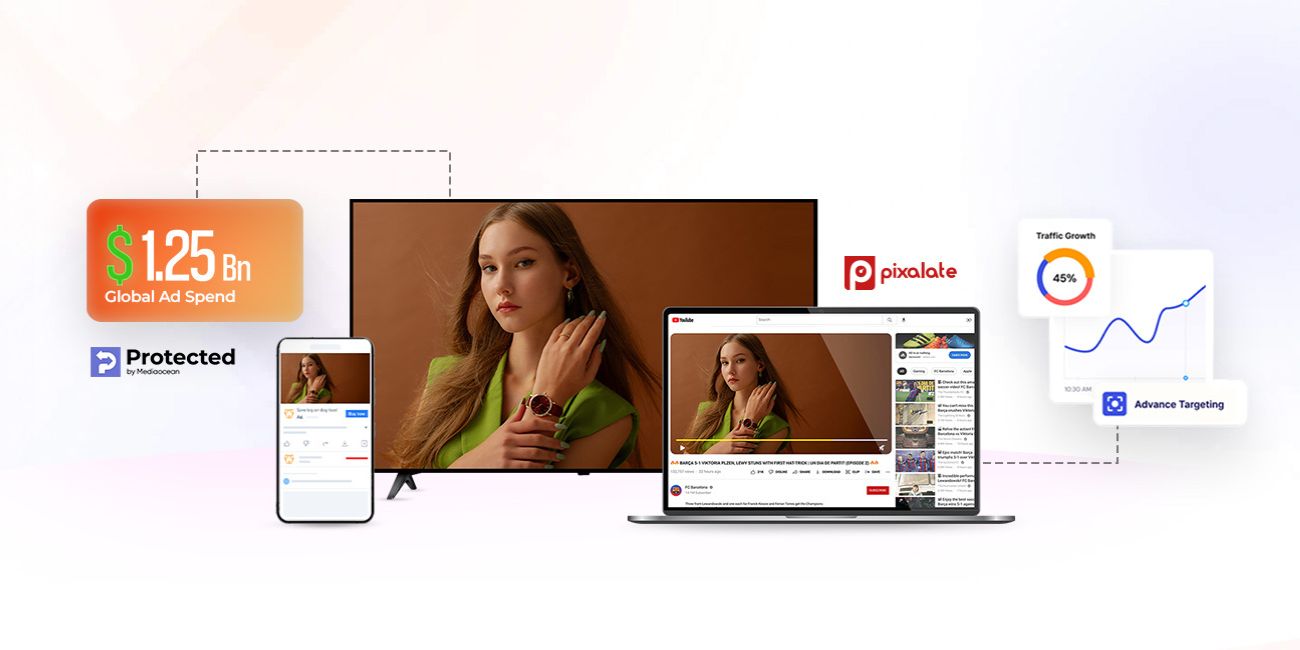
Programmatic advertising now powers over 90% of every digital display dollar spent globally. This guide cuts through the noise: how the technology actually works, what has shifted dramatically since mid-2025, and why channels like retail media, CTV, and DOOH are now central — not supplemental — to every serious media plan.
1. What Is Programmatic Advertising?
Programmatic advertising is the automated, AI-driven process of buying and selling digital ad space in real time. Instead of lengthy negotiations, spreadsheets, and insertion orders, software analyses user data and places bids on ad impressions in under 100 milliseconds — before a page even finishes loading.
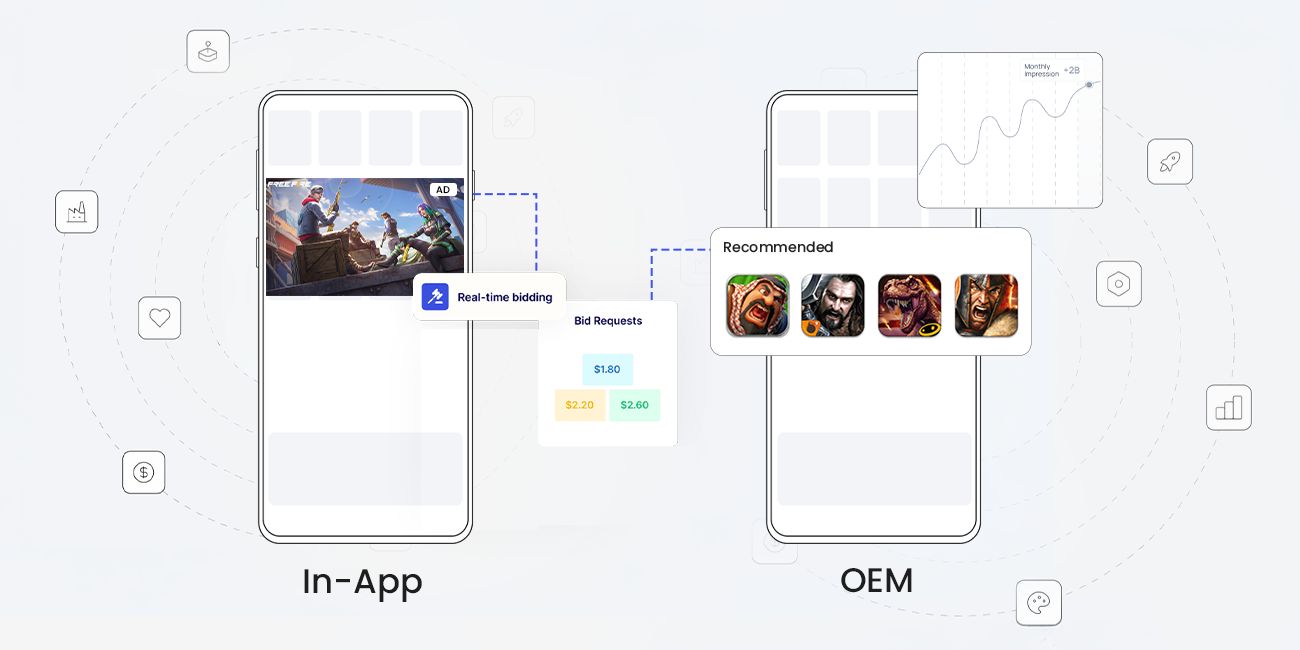
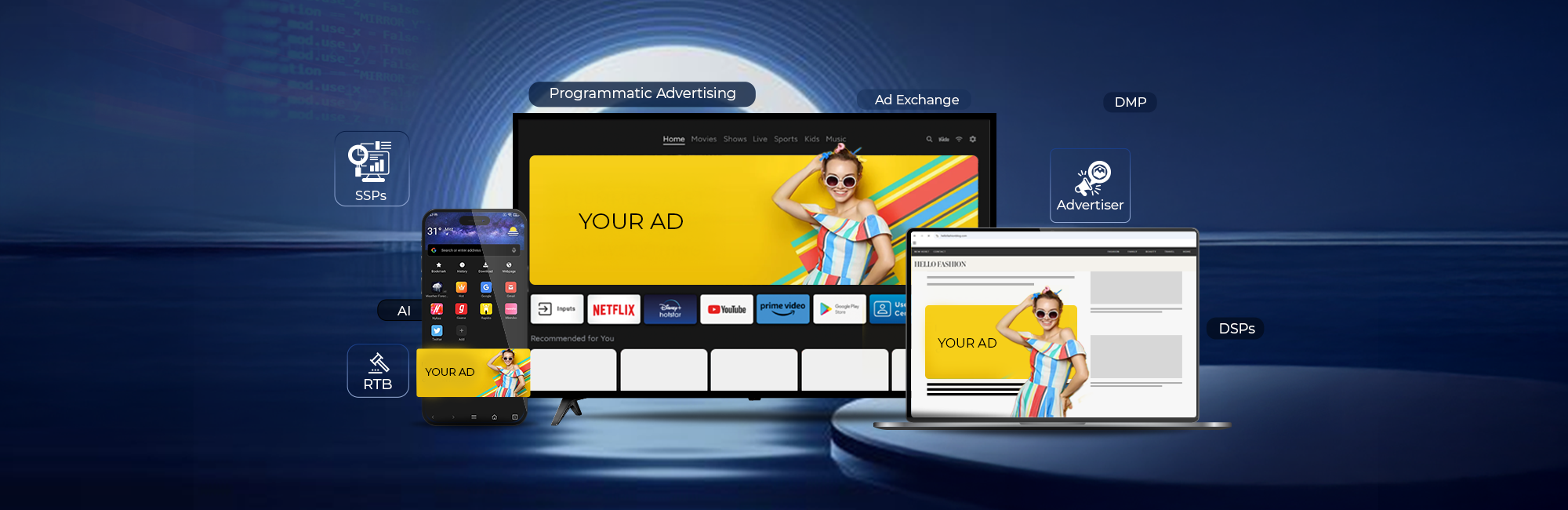
Think of it as a hyper-efficient stock exchange, except what is being traded is human attention. Every time someone opens a website, app, or streaming platform, a silent auction takes place. Demand-side platforms (DSPs) bid on behalf of advertisers; supply-side platforms (SSPs) auction inventory on behalf of publishers; and ad exchanges facilitate the marketplace. The winning ad renders instantly, and the user never notices the auction happened.
| In Plain Terms
Programmatic advertising is no longer a channel choice. In 2026, it is the core infrastructure through which virtually all digital media is bought, optimised, and measured. |
What separates today’s programmatic from its early form is intelligence. Platforms like Xerxes — Xapads’ proprietary AI/ML-driven programmatic engine — connect advertisers to 18,000+ websites, 25,000+ mobile applications, and 50+ SSPs globally, serving 100+ DSPs, multinational agencies, and Fortune 500 brands with AI bidding that maintains a fraud rate below 0.8%.
| $595B
Global programmatic spend in 2024, growing 14.6% YoY |
~$800B
Projected global programmatic spend by 2028 |
85%
Of all global ad revenue will be programmatic by 2030 |
2. How Programmatic Advertising Works: Step-by-Step
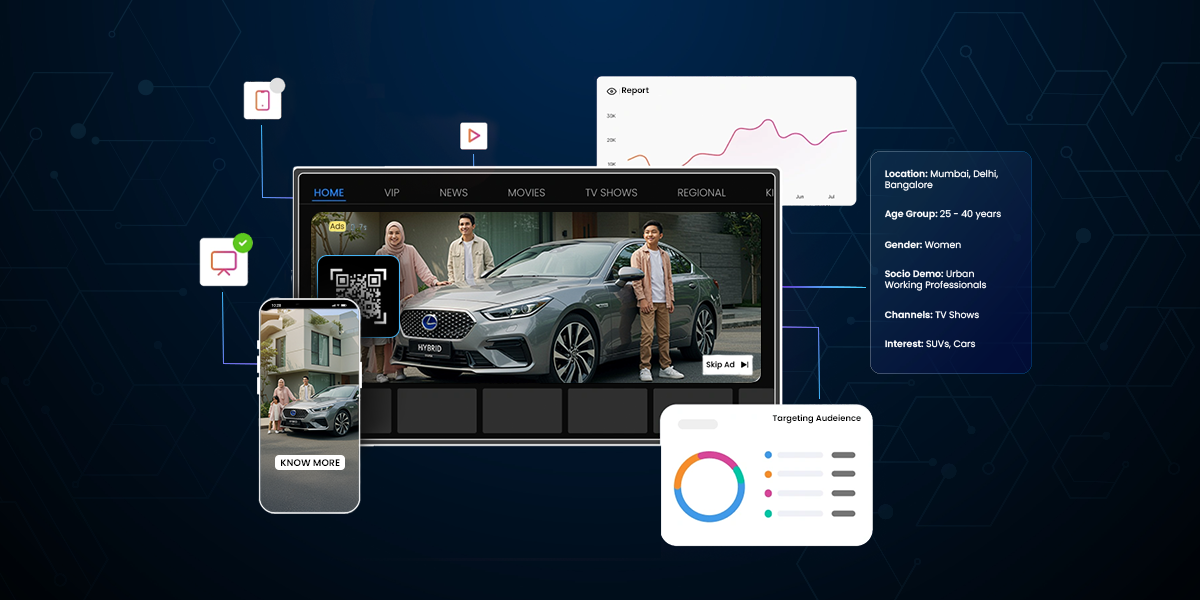
| 1 | User Lands on a Page
A person opens a website, app, or streaming platform. The publisher’s ad server detects an available ad slot and sends a bid request to its connected SSP — including page URL, content category, device type, geographic location, and anonymised user signals subject to consent. |
| 2 | SSP Triggers a Real-Time Auction
The SSP broadcasts the bid request to relevant ad exchanges and DSPs simultaneously. Each DSP evaluates the impression against its active campaigns. Advertiser rules such as ‘bid ₹4 CPM for finance professionals in Mumbai’ or ‘avoid political content’ fire instantly. |
| 3 | DSPs Submit Bids (under 100ms)
AI algorithms assess the user’s likelihood to convert based on contextual signals, behavioural patterns, and historical performance data. Eligible advertisers submit bids. Most major exchanges in 2026 use first-price auction mechanics, where the winner pays their actual bid — requiring smarter bid-shading strategies from AI-powered platforms like Xaprio. |
| 4 | Winner is Verified and Ad Renders
The winning creative is checked for malware, brand safety, and viewability compliance before rendering in the ad slot. The entire process completes before the page finishes loading. The advertiser pays only for a verified, human impression. |
| Key 2026 Distinction: First-Price Auctions Are Now Standard
The industry has largely completed its migration from second-price to first-price auction mechanics. This means the highest bidder pays what they bid, not one cent above the next bid. Marketers using AI-powered bid optimisation in DSPs like Xerxes and Xaprio are better positioned to avoid overpaying while maximising win rates. |
3. Six Types of Programmatic Buying
The method you choose directly impacts reach, cost, control, and inventory quality. Here is how the six primary buying types compare in 2026:
| Type | How It Works | Best For | Cost Level |
| Open RTB | Open auction to all eligible buyers in real time | Scale, broad reach, performance campaigns | Lowest CPMs |
| Private Marketplace (PMP) | Invite-only auction with premium publishers | Brand safety, premium inventory, trusted supply | Mid-high CPMs |
| Programmatic Guaranteed | Fixed price, reserved impressions, no bidding | Must-have placements, product launches, guaranteed reach | Fixed / Premium |
| Preferred Deals | Publisher offers inventory before open auction at fixed CPM | Priority access without full commitment | Fixed CPM |
| Header Bidding | Multiple SSPs bid simultaneously on publisher’s page load | Publishers maximising yield; buyers accessing better inventory | Market-driven |
| Programmatic Direct | Direct publisher deal executed entirely via automation | Scheduled campaigns, guaranteed brand-safe placements | Negotiated |
| Which should you use?
For brand awareness on Disney+ Hotstar with guaranteed placements — Programmatic Guaranteed. For performance-driven app installs at scale across APAC — Open RTB via Xerxes with AI bidding. For trusted, fraud-safe premium inventory — PMP via Xapads’ Exchange. |
4. The Programmatic Tech Stack Explained
Understanding the full ecosystem is what separates a marketer who runs campaigns from one who engineers outcomes. Here are Xapads’ five core platforms:
| DSP · Mobile Performance
Xerxes AI/ML-powered mobile DSP. Accesses 2.4B+ users across OEM, Desktop, Mobile, Apps, Video, and OTT. Integrated with 18K+ websites, 25K+ apps, and 50+ SSPs globally. Delivers 18% higher re-engagement and 20% LTV improvement through AI-led optimisation. ↑ 18% Re-engagement · <0.8% Fraud Rate · xerxes.media |
DSP · Omnichannel Brand
Xaprio Omnichannel DSP for brand recall via display, video, CTV, Native, OEM, and Rich Media from a unified interface. Includes green supply path optimisation to reduce carbon footprint alongside media costs. CTV + Display + Native · Unified Reporting · xaprio.com |
| Contextual AI · YouTube
Pulse AI + Human Intelligence platform for YouTube ad targeting. Detects celebrities, brands, objects, on-screen text, audio, and sentiment at frame level. GARM-compliant. Reduces ad spend wastage by 65% vs. demographic-only targeting. 30–40% Engagement Lift · 99.7% Brand Safety · pulsevid.ai |
CTV · Streaming Ads
Unwire Unified CTV advertising platform connecting advertisers to OEMs, FAST channels, streaming apps, and broadcasters. Single dashboard across all CTV with real-time analytics and 100% viewability guarantee. 100% Viewability · 95%+ Completion Rate · unwire.tv |
The Full Ecosystem at a Glance
| Layer | Role | Xapads Platform | Key Function |
| DSP | Buy ad inventory | Xerxes, Xaprio | AI bidding, targeting, optimisation across all channels |
| SSP / Exchange | Sell ad inventory | Xapads Exchange (mi.xapads.com) | Yield optimisation, publisher monetisation, PMPs |
| Contextual AI | Privacy-safe targeting | Pulse | Frame-level YouTube content analysis, brand safety |
| CTV Platform | Streaming ad delivery | Unwire | OEM + FAST + streaming unified buying |
Key Takeaways
- Use RTB for cost-efficient, large-scale campaigns.
- Choose PMPs for premium, brand-safe inventory.
- Guaranteed deals work best for must-have placements.
- Header bidding benefits publishers but improves advertiser access.
Each method has trade-offs between cost, control, and convenience. The right choice depends on your budget, audience, and campaign goals.
5. How Programmatic Is Evolving in 2026
5.1 US Programmatic Spend Crosses $200 Billion
The clearest signal of programmatic’s maturity is the scale of spend. In 2026, US programmatic ad spending will top $200 billion for the first time, with most automated buys now transacted via direct deals rather than open exchange bidding, according to eMarketer’s Programmatic Advertising Forecast H1 2026. Programmatic now accounts for 90% of all digital display ad dollars worldwide, with that share forecast to remain at 90% through the end of 2026.
5.2 AI Is the Engine, Not Just a Feature
The shift from rules-based automation to genuine machine intelligence has matured fully in 2026. Predictive bidding models trained on billions of impression signals now anticipate conversion probability before an auction closes. Dynamic Creative Optimisation (DCO) means a single campaign template generates thousands of personalised variations in real time. Agentic AI — systems that take autonomous, multi-step actions within campaigns — is now the top emerging capability in CTV and programmatic display. According to analysis of campaign data, AI-driven programmatic workflows can increase publisher and advertiser revenue by 20–30% compared to conventional rule-based optimisers.
5.3 The Real Cookie Story: An Opt-In Model, Not Deprecation
Here is what many 2025 guides got wrong: Google did not fully deprecate third-party cookies. Instead, Chrome introduced an opt-in model in 2024. Third-party cookies still exist, but their reliability as a universal targeting mechanism is permanently compromised. According to research cited across eMarketer and industry surveys, 74% of marketers still rely on third-party cookies to some degree — but 78% have now made first-party data activation their top priority. The industry has accelerated three parallel responses: first-party data strategies, Universal ID frameworks like UID2, and contextual AI targeting. Platforms like Pulse — which targets based on video content signals rather than user identity data — represent where the market is heading regardless of cookie status.
| Stat
78% of enterprise marketers now prioritise first-party data activation as their top targeting strategy. Source: eMarketer, 2026 Digital Marketing Survey |
5.4 Sell-Side Curation: The New Structural Shift
One of the most consequential changes in 2026 is the rise of programmatic curation, where publishers and data providers package curated audience segments tied to specific inventory into pre-built deals. Rather than relying on DSPs to find the right impressions through open exchange bidding, curated packages allow buyers to activate high-quality, pre-verified inventory with audience data already embedded. Xapads’ Exchange facilitates these deal structures for publishers across APAC and MENA, offering PMPs and Programmatic Guaranteed options with pre-vetted demand partners.
5.5 LLMs Powering Contextual Targeting at Frame Level
Large Language Models can now analyse rich media content at granular levels — from individual scenes in YouTube videos to podcast transcripts — enabling contextual placements that were technically impossible two years ago. Pulse goes further by combining AI text and visual analysis with human intelligence review, detecting on-screen text, celebrity appearances, product logos, emotional tone, and brand suitability signals within individual video frames. This approach has delivered 30–40% improvement in engagement quality within the first 30 days for campaigns run through the platform, with a 99.7% brand safety compliance rate.
6. The Channels Reshaping Programmatic in 2026
6.1 Connected TV (CTV)
CTV is entering a new phase of acceleration in 2026. US CTV ad spending will reach $37.95 billion in 2026 — a 14.5% increase year-over-year — according to eMarketer’s December 2025 forecast. CTV will surpass traditional TV ad spending entirely by 2028, reaching $46.89 billion.
| $37.95B
US CTV ad spend in 2026 (+14.5% YoY) |
80%
Of marketers increasing CTV budgets by 11%+ in 2026 |
$46.89B
CTV ad spend by 2028, surpassing linear TV for first time |
Retail media and CTV are converging rapidly — retail media CTV ad spending is growing roughly three times faster than retail media search, according to eMarketer. Xapads’ Unwire platform accesses premium CTV inventory across OEMs, FAST channels, and streaming apps with 100% viewability and contextual alignment, enabling campaigns like NEOM’s precision-targeted launch on Disney+ Hotstar.
6.2 Retail Media Networks
Retail media is now a top-three advertising channel globally alongside search and social — and it was absent from most 2025 programmatic guides. Retail media spend reached 15.4% of global digital ad spend in 2025 and continues double-digit growth into 2026, per eMarketer’s Retail Media Forecast. US retail media ad spend is projected to reach $69.33 billion in 2026, with most incremental spend flowing to Amazon Ads and Walmart Connect.
For brands selling through retail channels, retail media networks offer targeting that open exchange inventory cannot replicate: users who searched for your product category last week, completed a purchase in a related category, or belong to a verified loyalty tier with known purchase behaviour. Integrating retail media into your programmatic strategy via DSPs gives you the fullest picture of the purchase journey with closed-loop attribution.
6.3 Digital Out-of-Home (DOOH)
Programmatic DOOH is now a mainstream performance channel. US programmatic DOOH spend is projected to reach $1.23 billion in 2026, representing 23% growth year-on-year, per eMarketer’s OOH Forecast. DOOH will account for 45.2% of total OOH ad spend by 2028, up from just 22% in 2016.
DOOH’s strongest asset: it requires zero cookie dependency, making it naturally privacy-compliant while offering contextual targeting at scale. A 2026 survey found 76% of consumers take action after seeing a DOOH ad, and 73% view DOOH ads more favourably than any other media format including television, social, and digital display. In-store retail media is expected to drive 55.9% of DOOH’s total growth between 2025 and 2029.
6.4 Programmatic Audio
The digital audio advertising market is projected to reach $14.84 billion by 2029, growing at a CAGR of 5.62%, according to Statista. Dynamic Ad Insertion (DAI) technology allows host-read sponsorships to be inserted post-production and swapped by listener demographics and geography. For brands targeting mobile-first, audio-immersed audiences — commuters, gym-goers, professionals — programmatic audio delivers high engagement in zero-competition environments.
7. Programmatic Strategies: SMEs vs. Enterprise
For SMEs: High-Impact Tactics on Lean Budgets
Programmatic is not exclusively for large advertisers. Self-serve platforms now have accessible minimum budgets and AI-assisted bidding that prevents overspending on low-value impressions.
- Geo-fenced, mobile-first campaigns. Target users within a 3km radius during peak hours using Xerxes’ regional filters — every impression reaches a geographically relevant audience.
- Retargeting before prospecting. Pixel website visitors who browsed your product pages and serve them dynamic ads with personalised messaging — consistently the highest-ROI programmatic tactic at small budgets.
- AI bidding caps. Rules like ‘maximum CPC of ₹12’ or ‘daily spend cap of ₹5,000’ prevent runaway spend while the algorithm optimises within your guardrails.
- Start with rewarded video. In-app rewarded formats maintain near-zero blocking rates and deliver verified engagement — users actively choose to watch.
For Enterprises: Precision at Global Scale
Enterprise advertisers operating across multiple geos, verticals, and channels need a multi-platform architecture. The most effective 2026 strategy combines specialist platforms for each task:
| Objective | Platform | Why |
| Mobile performance, OEM, APAC scale | Xerxes | AI bidding across 2.4B+ users, <0.8% fraud, low CPI optimisation |
| Brand campaigns, CTV-first, omnichannel | Xaprio | Unified CTV + Display + Native + Rich Media in one DSP |
| YouTube contextual targeting | Pulse | Frame-level brand safety, 3x higher conversion vs. demo targeting |
| Premium CTV, streaming, OEM inventory | Unwire | 100% viewability, single dashboard across all streaming channels |
| Publisher monetisation, PMPs, direct deals | Xapads Exchange | Curated supply paths, reduced ad tech tax, APAC/MENA focus |
8. Top Programmatic Challenges and How to Solve Them
| ⚠️ | Ad Fraud | Fraud Filters + Ads.txt |
| 🛡️ | Brand Safety in 2026 | AI Contextual Classification |
| 🔍 | Transparency and the Ad Tech Tax
Supply-path complexity hides fees consuming 40–60% of advertiser budgets, per eMarketer analysis. Supply-Path Optimisation (SPO) — auditing and trimming redundant SSP hops — and direct publisher deals via PMPs significantly reduce this tax. Xapads’ Exchange provides direct, optimised paths minimising intermediaries. |
SPO + Direct Deals |
| 🍪 | Identity and Privacy Targeting | First-Party + Contextual AI |
| 🚫 | Ad Blocking
Approximately 30% of internet users globally use ad blockers, per eMarketer. The response is format strategy: native ads integrating contextually within content see 60% higher engagement. Rewarded video formats in mobile gaming environments maintain near-zero blocking because users actively choose to watch. |
Native + Rewarded Formats |
9. Case Studies: Programmatic in Action
| CASE STUDY 01 | MENA | OTT / Web3
MyCo Dubai: “Watch, Earn, Own” Campaign MyCo, a Web3 OTT platform, needed to grow awareness for its unique ‘Watch It, Earn It, Own It’ model and drive quality app installs among crypto-savvy OTT users in the UAE. Xapads leveraged Xerxes’ AI-driven targeting to identify users aged 25–45 with overlapping interests in crypto and streaming, running YouTube pre-roll and in-app mid-roll ads timed around active video consumption moments. Pulse AI analysed viewer sentiment around cryptocurrency trends to serve ads in contextually aligned, high-engagement moments. |
|||
| 2M+
Impressions |
1.5M+
Unique Users |
1.7M+
Video Views |
6
Awards Won |
| CASE STUDY 02 | INDIA | CTV / Branding
NEOM: Reaching Premium Audiences via CTV on Disney+ Hotstar NEOM needed to build awareness among aspirational, high-net-worth audiences in India. Xapads deployed Unwire to run pre-roll video ads on Disney+ Hotstar, targeting HNI users aged 18–45 with interests in travel, sustainability, and innovation. Audience segments excluded war-related content to maintain full brand safety alignment. The CTV-first approach allowed NEOM to tell a cinematic story to an audience actively engaged in premium streaming content. |
|||
| HNI
Premium Audience |
4
Awards Won |
100%
Viewability Rate |
Brand-Safe
100% Compliant |
| CASE STUDY 03 | SEA | YouTube + CTV + Mobile
Ramadan Campaign: Cross-Channel Contextual Precision During Ramadan, a leading FMCG brand needed to reach home bakers in Indonesia preparing for Iftar without wasting impressions on unrelated audiences. Xapads deployed a coordinated 360° strategy: Pulse on YouTube for contextually aligned video placements, Unwire for CTV campaigns targeting home chefs via streaming, and Xaprio for Rich Media ads on mobile. Cross-device frequency capping ensured users were not over-served, and zero cookie dependency meant full privacy compliance throughout. |
|||
| 360°
Cross-Channel Reach |
3x
Higher Conversion vs Demo |
Zero
Cookie Dependency |
GARM
Brand Safety Compliant |
10. Frequently Asked Questions
Q What is the difference between programmatic advertising and Google Ads?
Google Ads operates within Google’s owned ecosystem (Search, Display, YouTube). Programmatic advertising spans the entire open internet — thousands of publishers, exchanges, and app environments — accessed through DSPs like Xerxes or Xaprio. Google Ads is one shop; programmatic is the entire mall.
Q How much does programmatic advertising cost in 2026?
Open exchange CPMs typically range from ₹75–₹380 (approx. $1–$5 globally). CTV and premium PMP inventory ranges from $15–$40 CPM. AI bidding in platforms like Xerxes often delivers lower cost per conversion than fixed-rate media, even at higher CPMs.
Q What has replaced third-party cookies for targeting?
Three approaches are now mainstream: (1) First-party data — email lists, CRM data, loyalty members — activated through your DSP; (2) Universal IDs like UID2 for consented identity resolution; and (3) Contextual AI targeting, where platforms like Pulse analyse content signals instead of user identity, achieving precision placement with zero personal data dependency.
Q What is the latest development in programmatic in 2026?
Three major shifts define 2026: (1) US programmatic spend crossing $200B with direct-deal transactions now the majority; (2) Retail media reaching $69B+ in the US alone, now a top-three channel; and (3) Sell-side curation going mainstream, with pre-packaged audience-plus-inventory bundles replacing raw open exchange bidding.
Q Is programmatic advertising suitable for small businesses?
Yes. Self-serve DSPs have accessible minimum budgets, and AI bidding removes the need for specialist ad ops. SMEs benefit most from hyper-local geo-targeting, mobile retargeting, and performance-focused campaigns that pay only for impressions matching your audience profile.
Q What is the difference between a DSP and an SSP?
A DSP (Demand-Side Platform) is used by advertisers to buy ad impressions. An SSP (Supply-Side Platform) is used by publishers to sell their inventory. They meet at an ad exchange, where real-time auctions determine which ad runs on which page. Xapads operates on both sides: Xerxes/Xaprio (DSP) and Xapads Exchange (SSP).
Thanks for reading! Curious about how Programmatic Advertising can grow your business?
Let’s talk — book a free consultation today and discover what’s possible.
Related Post