The festive season of 2025 has brought a new reality to programmatic advertising. With global programmatic ad spend reaching $595 billion and projected to hit $779 billion by 2028, brands are rethinking how they distribute budgets across DSP channels during peak shopping periods.
Why Traditional Budget Plans Fail
Holiday advertising has changed. The 2025 festive season shows spending concentrated heavily in December, with 42% of shoppers beginning purchases before Thanksgiving and 31% continuing through New Year. This extended shopping window demands smarter budget distribution, not just bigger budgets.
Traditional even-spend approaches leave money on the table during peak moments while overspending during slower periods. The solution lies in strategic flighting, a method that aligns your DSP budget with actual consumer behavior patterns rather than calendar dates.
Understanding Channel Performance in Festive Windows
CTV Takes Center Stage
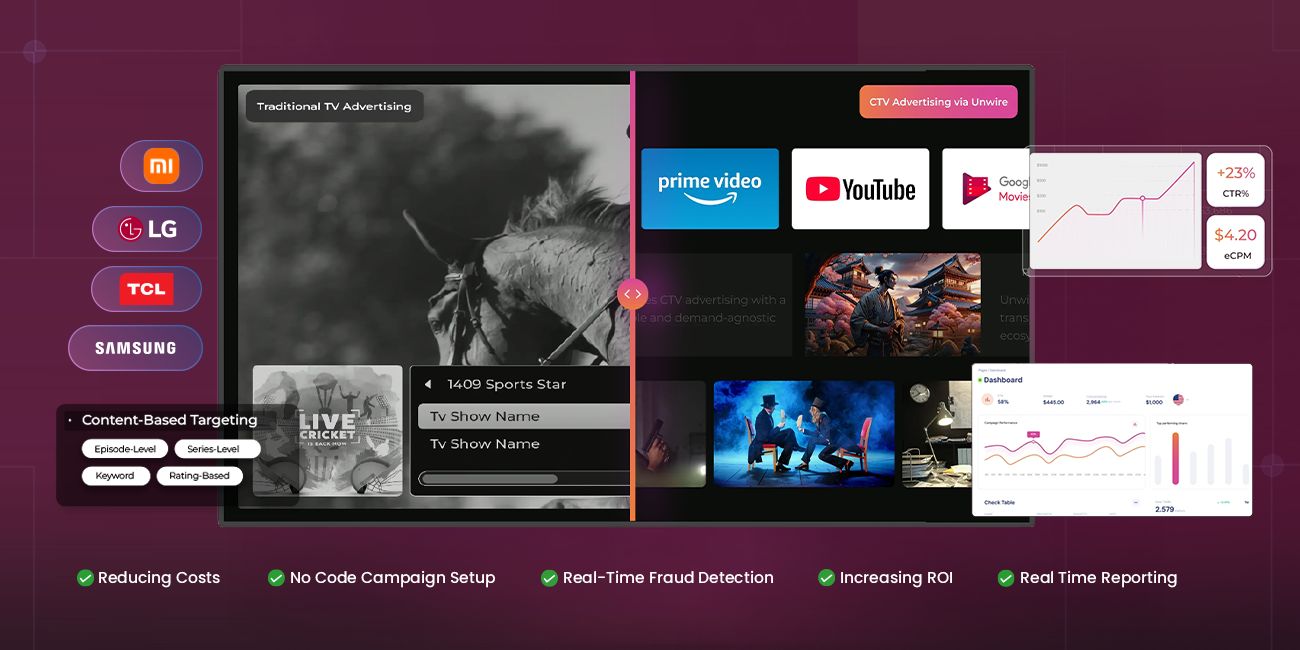
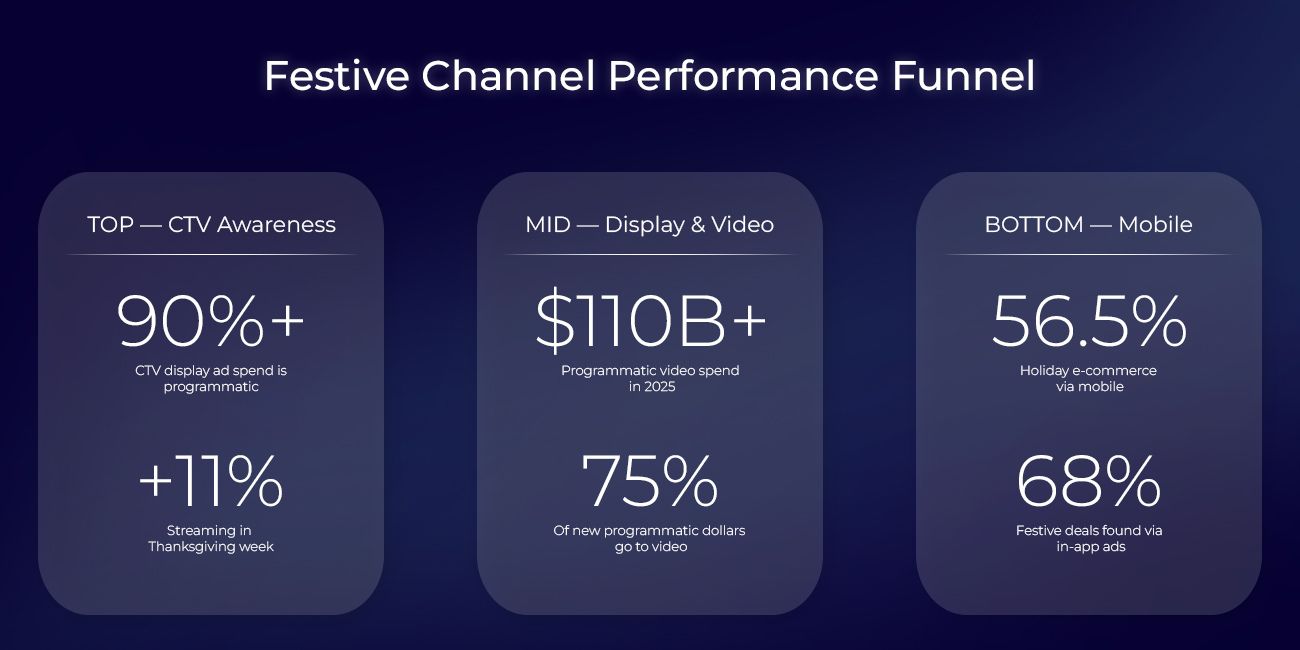
Connected TV has become the festive season champion. Over 90% of CTV display ad spend now happens programmatically, and streaming viewership grows by 11% during Thanksgiving week and 19% during Christmas week compared to regular periods.
What makes CTV powerful for festive campaigns? Viewers spend 8% more time watching streaming content in Q4, creating extended opportunities to reach audiences when they are most receptive. The lean-back viewing experience combined with household-level targeting makes CTV ideal for building brand awareness at the top of your funnel.
Mobile Dominates Discovery
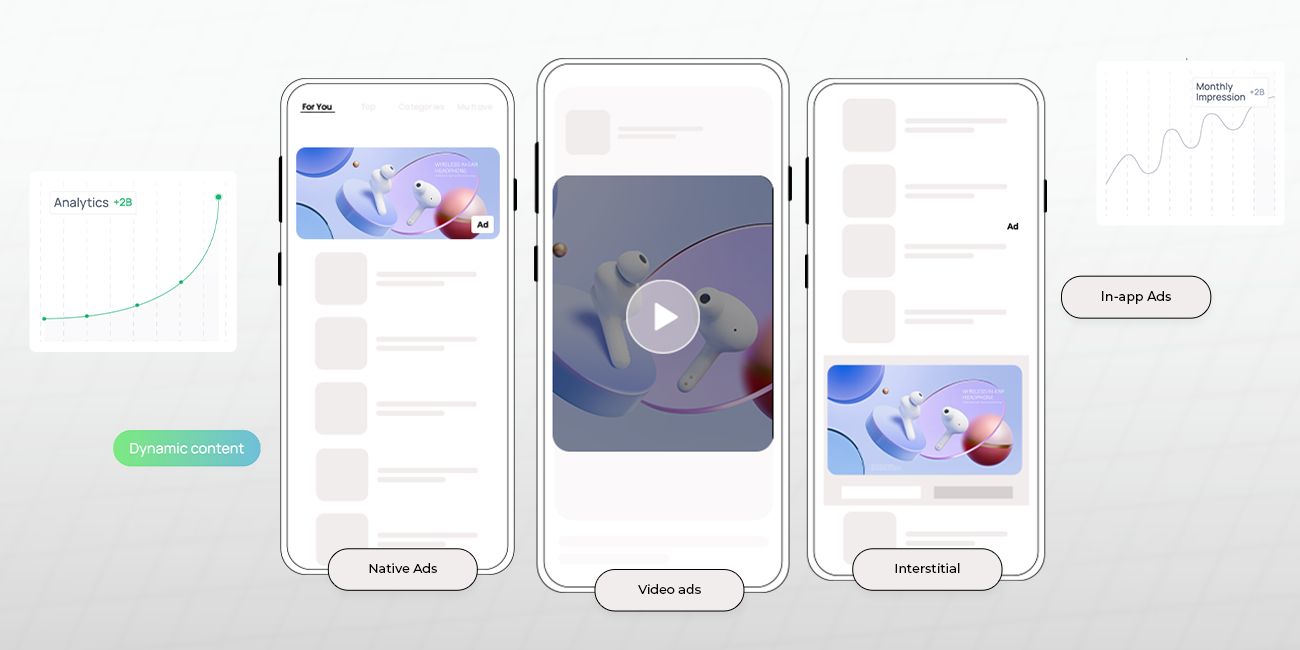
While CTV builds awareness, mobile drives discovery. Mobile commerce will account for 56.5% of US holiday e-commerce sales in 2025, with nearly 68% of festive deals discovered through in-app ads. Your DSP strategy must account for this shift by allocating sufficient budget to mobile display and native formats during peak discovery hours.
Display and Video Create Mid-Funnel Momentum
Display and video advertising remain crucial for consideration phases. Programmatic video ad spending will surpass $110 billion in 2025, accounting for 75% of new programmatic ad dollars. These formats work best when layered between CTV awareness and mobile conversion tactics.
The Three-Phase Festive Flight Strategy
Smart festive flighting divides campaigns into three distinct phases, each with its own budget allocation and channel mix.
Phase 1: The Build-Up (Early October to Mid-November)
This phase focuses on awareness and audience building. Your budget split should emphasize reach over frequency:
Recommended Channel Mix:
- CTV: 30-35% of phase budget
- Display and Video: 25-30%
- Mobile: 20-25%
- Native: 10-15%
- Rich Media: 10-15%
The goal here is broad reach at lower CPMs. Early October offers lower competition and more efficient pricing compared to November peaks. Build your audience pools and create brand familiarity that will pay dividends in later phases.
Phase 2: The Peak (Black Friday through Cyber Monday)
This compressed period demands aggressive tactics. 48% of digital ad budgets get spent in the last 30 days before peak shopping, but smart marketers front-load awareness earlier to maximize peak conversion.
Recommended Channel Mix:
- Mobile: 40-45% of phase budget
- Display and Video: 30-35%
- CTV: 15-20%
- Native and Rich Media: 10-15%
During peak days, shift budget toward conversion-focused channels. Mobile takes priority as shoppers actively compare prices and make purchase decisions. Retargeting becomes critical, focusing on users who engaged during Phase 1.
Phase 3: The Extended Season (Post-Cyber Monday through New Year)
Many brands make the mistake of going dark after Cyber Monday. However, 31% of shoppers plan holiday purchases from Cyber Monday through New Year. This phase captures budget-conscious shoppers and gift card redemptions.
Recommended Channel Mix:
- Display and Video: 35-40% of phase budget
- Mobile: 30-35%
- CTV: 20-25%
- Native: 10-15%
CPMs drop significantly in late December, making this an efficient time to maintain presence. Focus on retargeting warm audiences and clearing inventory with promotional messages.
Dynamic Budget Allocation: The Real-Time Advantage
Static budget allocation kills performance. Modern DSPs enable real-time budget shifting based on performance signals. Here is how to implement dynamic allocation:
Set Performance Triggers
Define clear KPIs for each channel and phase. When a channel exceeds efficiency targets by 15-20%, automatically shift 10-15% more budget from underperforming channels. This approach requires daily monitoring but can improve overall ROAS by 20-35%.
Leverage Dayparting Intelligence
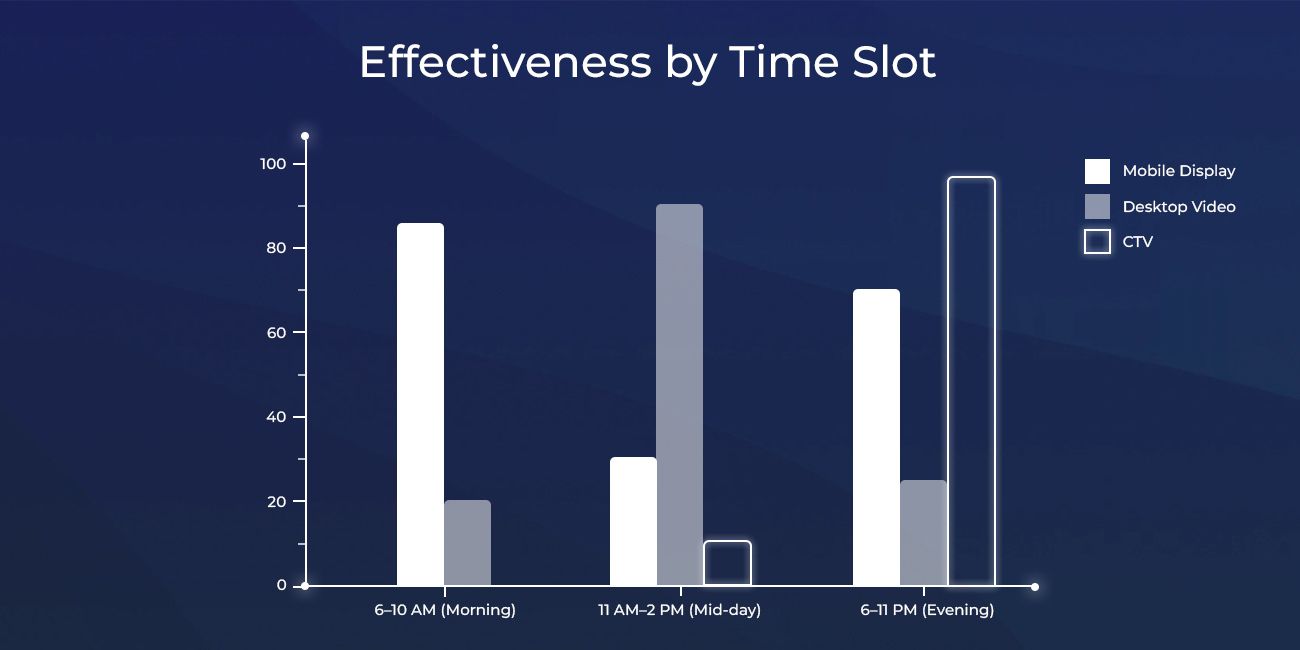
Not all hours deliver equal value. Analysis shows that dayparting optimization can reduce CPC by 8-14%. During festive seasons, shopping behavior peaks at specific times:
- Morning (6 AM to 10 AM): Mobile display for commuters
- Midday (11 AM to 2 PM): Desktop video for office browsers
- Evening (6 PM to 11 PM): CTV and mobile for at-home shoppers
Allocate larger portions of daily budget to these high-intent windows rather than spreading evenly across 24 hours.
Geographic Budget Weighting
Consumer behavior varies by region. Use first-party data and DSP analytics to identify high-performing geographies, then weight budget accordingly. A 60-40 split favoring top-performing regions typically outperforms even distribution by 15-25%.
Avoiding the Common Festive Budget Traps
Trap 1: Setting and Forgetting
The biggest mistake brands make is establishing a budget plan in October and never adjusting it. Festive consumer behavior shifts rapidly. What worked during early November may fail during Cyber Week.
Solution: Schedule daily budget reviews during peak periods and weekly reviews during build-up and extended phases. Empower your team to make 10-15% budget shifts without approval delays.
Trap 2: Ignoring Frequency Management
During festive periods, consumers see 3-5x more ads than normal. Without proper frequency capping, you waste budget on oversaturated audiences.
Solution: Set strict frequency caps across your DSP campaigns. For awareness phases, cap at 3-4 impressions per user per week. During conversion phases, allow 5-7 impressions but diversify creative to prevent fatigue.
Trap 3: Underinvesting in Creative Variety
Festive campaigns with single creative sets perform 40-60% worse than those with diverse ad variations. Budget for creative development, not just media spend.
Solution: Allocate 15-20% of total festive budget to creative production and testing. Create minimum 5-7 variations per channel, testing different messages, offers, and visual approaches.
Trap 4: Neglecting Post-Holiday Opportunities
The period between December 26 and January 15 offers unique value. CPMs drop by 30-50% while shopping continues as consumers use gift cards and return credits.
Solution: Reserve 10-15% of total festive budget for post-holiday campaigns. Focus on clearance messaging and early-year promotions to maintain momentum into Q1.

Xaprio’s Festive Campaign Success Stories (Case Studies)
Real campaign data validates the three-phase festive flighting approach. Two recent campaigns executed through Xaprio demonstrate how strategic channel allocation drives measurable outcomes during peak shopping seasons.
Panasonic Smart Washing Machine: Festive Season Precision
When Panasonic launched its new Smart Washing Machine line during the festive season, the brand needed strong audience connection during the competitive Q4 shopping window. Using insight-driven display and native advertising through Xaprio’s omnichannel platform, the campaign achieved remarkable engagement.
Campaign Results:
- 103,000+ reach during festive shopping peak
- 94,000+ new users acquired
- Strong brand recall during high-competition period
The success came from strategic budget allocation across multiple touchpoints. Native ads blended seamlessly into content feeds where consumers actively researched appliance purchases, while display ads maintained consistent visibility across premium publisher inventory. This coordinated approach captured both active shoppers and browsers during extended festive browsing sessions.
Asian Royale Glitz Paint: High-Impact Rich Media Engagement
Asian Paints launched its Royale Glitz Ultra Sheen Paint featuring Bollywood star Deepika Padukone through innovative rich media advertising. The campaign leveraged sensor-powered, interactive formats that responded to user motion and gestures, creating immersive brand experiences during the festive home renovation season.
Campaign Results:
- 5 million+ reach across target audiences
- 303,000+ user engagements with rich media formats
- 2x brand recall lift
Rich media formats delivered exceptional engagement rates by transforming passive ad viewing into interactive experiences. Users could explore paint colors, visualize room transformations, and engage with celebrity-endorsed content through motion-responsive interfaces. This elevated engagement translated directly to increased brand consideration during the peak festive renovation period.
Red Bell Food Colours: Awareness Building Through Innovation
Red Bell’s launch of oil-based food colours required breaking through during the festive baking and cooking season. Xaprio’s innovative branding solutions focused on capturing audience awareness and building brand recall among home cooks and professional bakers.
Campaign Results:
- 4.2 million+ reach during festive cooking season
- 64,000+ clicks driving website traffic
- Strong awareness establishment for new product category
The campaign strategically timed awareness building to coincide with increased festive cooking activity. Display and native formats educated audiences about product benefits while driving traffic to purchase channels during peak seasonal demand.
These three campaigns share common success factors: strategic channel selection aligned with campaign goals, creative formats matched to audience behavior, and budget allocation timed to seasonal demand patterns. The results validate the three-phase festive flighting framework outlined earlier in this article.
Looking Ahead: Festive Strategies for 2026-2030
The next five years will reshape festive advertising through several key trends:
AI-Powered Budget Optimization
AI bidding systems are expected to run 90%+ of programmatic buying by 2027. These systems will automatically redistribute budgets across channels based on predicted performance, not just historical data. Early adopters will gain 25-40% efficiency advantages.
Smart DSPs will analyze thousands of signals including weather patterns, local events, competitive spending, and social sentiment to optimize budget allocation in real-time. This removes human error and captures opportunities that manual management misses.
Retail Media Integration
Retail media networks will exceed $30 billion by 2026, representing nearly 16% of all programmatic display. Festive strategies must incorporate retail media as a core channel, not an add-on.
Forward-thinking brands are already testing integrated campaigns that combine traditional DSP channels with retail media placements, creating seamless customer journeys from awareness to purchase within single platforms.
Contextual Targeting Evolution
With 72% of consumers saying content context influences their brand perception, contextual placement will become as important as audience targeting. Festive campaigns must align with appropriate content environments, not just demographic profiles.
Advanced contextual AI will analyze video content frame-by-frame and parse complete podcast transcripts to find perfect placement moments. This granular approach improves relevance while respecting privacy boundaries.
Cross-Device Journey Optimization
Consumers now touch an average of 3-4 devices during purchase journeys. Multi-channel programmatic campaigns produce 22% higher recall versus single-channel approaches. Festive budgets must account for orchestrated cross-device experiences.
The winning strategy involves sequential messaging that acknowledges where consumers are in their journey and which device they are currently using. CTV builds awareness, mobile drives discovery, desktop facilitates comparison, and mobile completes conversion.
Real-World Success: How Strategic Flighting Delivers Results
Leading brands have already proven the power of strategic festive flighting. Consider these outcomes from recent campaigns:
A major consumer electronics brand implemented a three-phase flighting strategy across CTV, display, and mobile channels. By allocating 30% of budget to early awareness building, 50% to peak conversion windows, and 20% to extended season, they achieved a 156% increase in conversions compared to their previous even-spend approach.
The key differentiator was dynamic reallocation. When mobile display showed 35% higher efficiency during peak days, they automatically shifted an additional 15% of budget from underperforming CTV placements. This flexibility captured high-intent moments that rigid planning would have missed.
Another success came from a fashion retailer who used geographic budget weighting during the festive season. By analyzing first-party purchase data, they identified that three metropolitan areas delivered 60% of their revenue but received only 40% of ad impressions. Reweighting budget to match revenue contribution increased overall ROAS by 42%.
Practical Implementation with Modern DSP Platforms
Executing this strategy requires a DSP that supports sophisticated flighting and dynamic allocation. Here is what to look for:
Essential Platform Capabilities
Omnichannel Reach: Your DSP must provide seamless access to CTV, display, video, mobile, and native inventory from a single interface. Fragmented buying across multiple platforms creates coordination problems and missed optimization opportunities.
Real-Time Budget Control: Look for platforms offering automated budget pacing with custom rules. The ability to set performance triggers that automatically redistribute budget can improve efficiency by 20-30% versus manual management.
Cross-Channel Attribution: Understanding how channels work together is crucial for smart allocation. Your DSP should provide multi-touch attribution that properly credits CTV awareness for mobile conversions that happen days later.
Brand Safety Integration: Festive campaigns run at high velocity with expanded budgets. Built-in brand safety verification prevents budget waste on unsuitable inventory that could damage brand reputation during crucial shopping windows.
The Xaprio Advantage for Festive Campaigns
When planning festive flighting strategies, consider platforms that simplify complex channel orchestration. Xaprio, a demand-side platform from Xapads Media, offers a unified approach to omnichannel programmatic advertising.
The platform provides CTV-first capabilities that prioritize high-impact storytelling on the biggest screen in the house, paired with seamless access to display, video, native, and rich media formats. This unified access eliminates the coordination challenges that plague multi-platform festive campaigns.
What sets advanced DSPs apart for festive execution is green supply path optimization, which reduces intermediaries and improves transparency. During high-CPM festive periods, eliminating unnecessary ad tech tax can stretch budgets 10-15% further while reducing carbon footprint.
Brand safety becomes even more critical during festive campaigns when budgets scale rapidly. Integrated safeguards from verification partners ensure every impression delivers in fraud-free, brand-suitable environments. This protection prevents the reputation damage that can occur when automated systems scale too aggressively without proper guardrails.
For marketers looking to test festive strategies before committing full budgets, Xaprio offers a demo media planner that lets you experiment with channel mixes and budget allocations without platform commitments. This low-risk testing helps refine your approach before the crucial shopping season begins.
Your 2025 Festive Action Plan
Start planning your festive flighting strategy now with these concrete steps:
60 Days Before Festive Season
- Analyze previous year performance by channel and time period
- Identify top-performing audience segments and geographic markets
- Build creative asset library with 5-7 variations per channel
- Establish baseline budget allocation for each phase
- Set up attribution tracking and conversion measurement
30 Days Before Festive Season
- Launch Phase 1 awareness campaigns with 20% of total budget
- Begin building retargeting audiences from early engagers
- Test different creative messages and offers at small scale
- Fine-tune dayparting schedules based on early performance
- Confirm budget reserves for Phase 2 scaling
During Peak Festive Period
- Monitor performance daily and shift budgets toward top performers
- Activate Phase 2 conversion campaigns with 50% of total budget
- Increase frequency caps on high-intent audiences
- Adjust geographic weighting based on real-time conversion data
- Launch competitive conquesting for maximum share of voice
Post-Holiday Extension
- Deploy Phase 3 campaigns with remaining 30% of budget
- Focus on clearance messaging and early-year promotions
- Retarget holiday browsers who did not convert
- Capture gift card redemptions with extended offers
- Analyze full campaign performance to inform next year strategy
The Bottom Line
Festive flighting is not about spending more but about spending smarter. By aligning budgets with actual consumer behavior patterns, leveraging channel strengths at appropriate journey stages, and maintaining flexibility for real-time optimization, brands can achieve 30-50% better returns from festive campaigns.
The winning formula combines three-phase strategic planning with dynamic execution capabilities. Build awareness early when CPMs are low, go aggressive during peak conversion windows, and capitalize on extended season opportunities that competitors ignore.
As we look toward 2026 and beyond, AI-powered optimization and cross-channel orchestration will become table stakes. The brands that start mastering strategic flighting now will build advantages that compound over coming festive seasons.
Your festive success depends not on budget size but on allocation intelligence. Start planning your strategic flighting approach today, test different channel mixes, and build the data foundation that will power increasingly sophisticated campaigns in years ahead.
Related Post