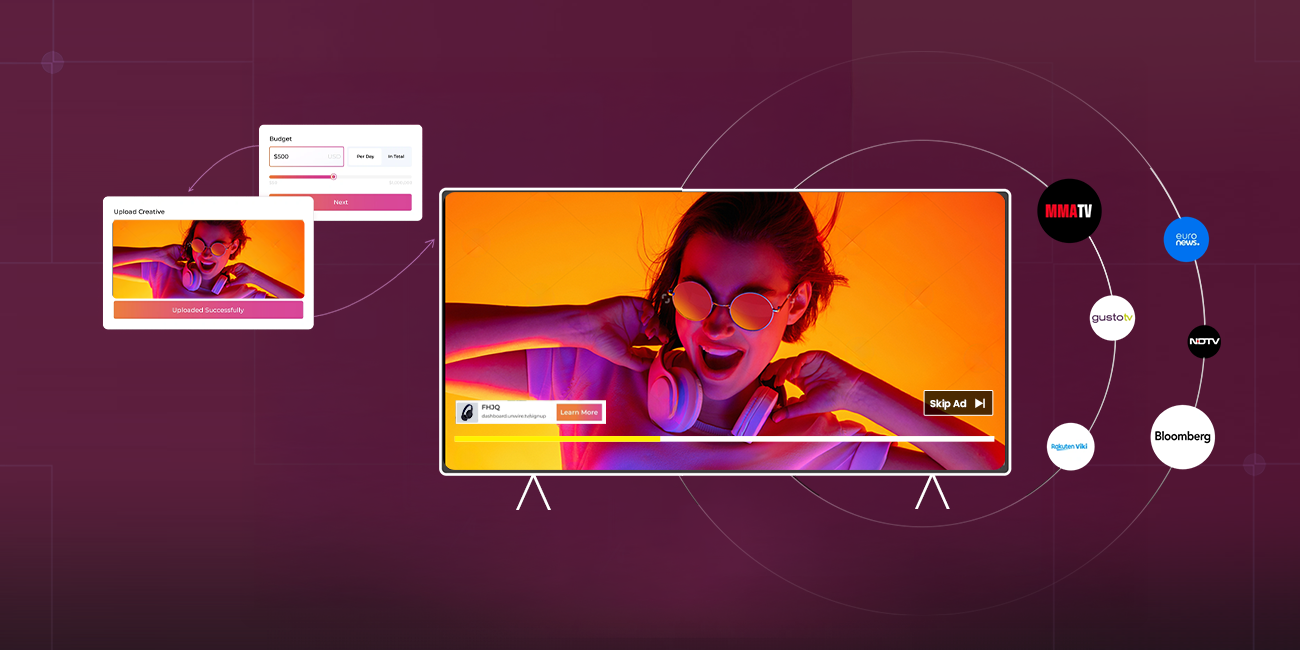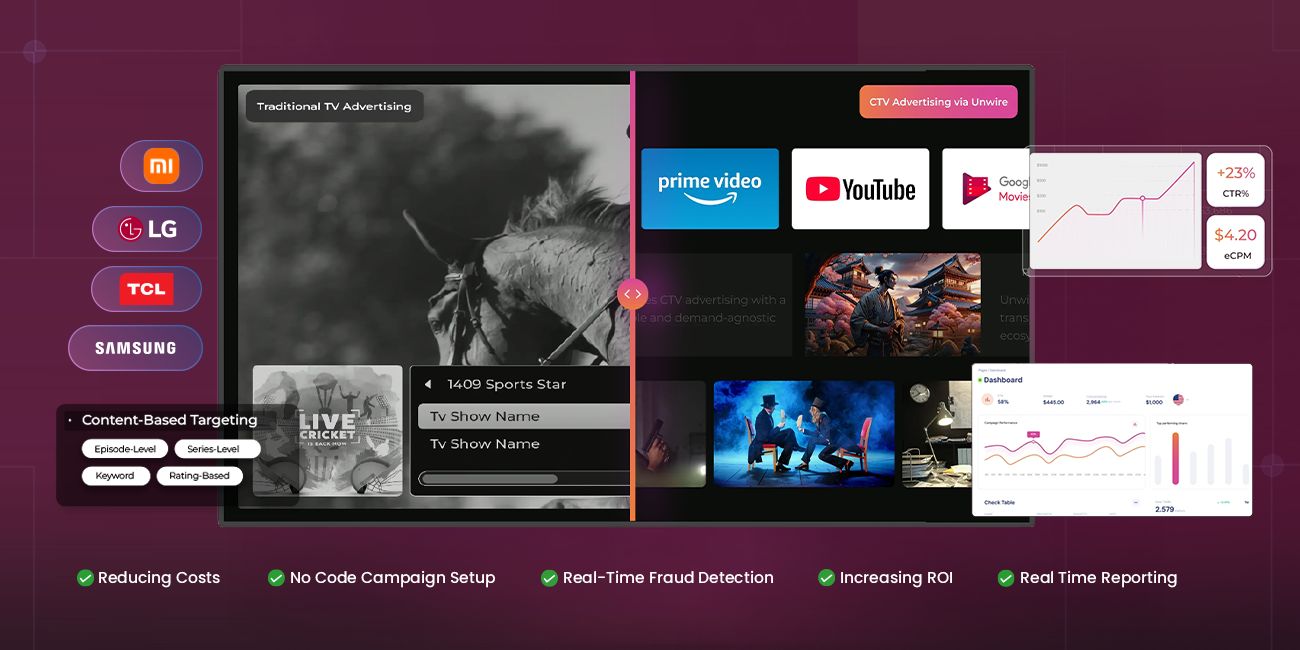
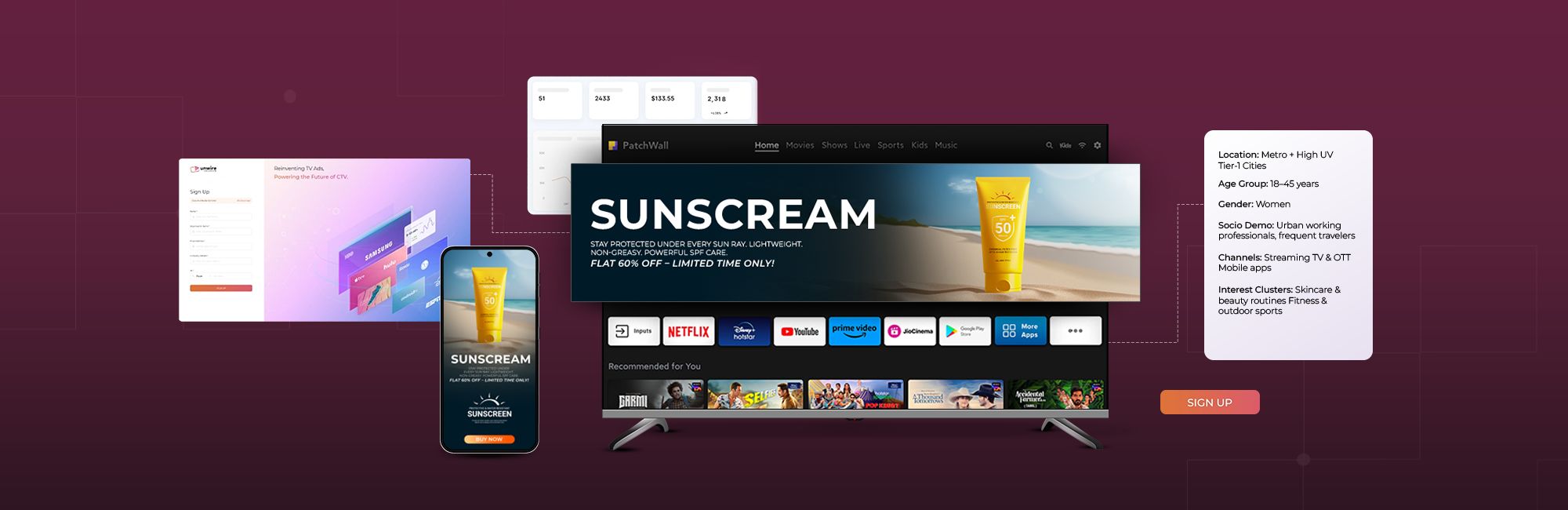
Every second, millions of video ads travel through the internet at lightning speed. Each ad goes through an automated auction, gets matched to specific viewers, and appears on connected TV screens—all in under 100 milliseconds.
Most marketers see strong CTV performance metrics. Campaigns deliver measurable results. But the technical process behind ad delivery remains unclear for many advertisers. This knowledge gap creates problems. Without understanding how the technology works, brands cannot optimize campaigns effectively. Troubleshooting delivery issues becomes difficult. Budget allocation decisions lack a technical foundation.
This guide provides complete technical transparency. Advertisers will learn exactly how ads move from campaign setup to viewer screens. The technical breakdown covers split-second auctions happening behind every commercial. Marketers will understand why some ads perform better than others, and how this technology delivers targeting precision that traditional TV could never match.
This matters more than ever in 2026. Programmatic CTV ad spending reached $33 billion in 2025 according to eMarketer’s CTV advertising forecast, and automated systems now handle most CTV ad delivery. Technology keeps getting smarter. Advertisers who understand how it actually works gain a massive competitive advantage.
Understanding the CTV Advertising Ecosystem
Core Infrastructure Components
CTV advertising operates as a complex technical ecosystem with multiple integrated components. Each piece plays a specific role in getting ads from advertisers to viewers.
Connected TV devices form the foundation. These include smart TVs with apps built directly into the hardware , streaming sticks like Xiaomi, Roku or Amazon Fire TV, gaming consoles running streaming apps, and cable boxes with internet connections. According to Statista’s research on CTV advertising in the US, 117 million U.S. households used connected TV devices in 2025, and that number keeps climbing. Each device contains privacy-safe device or household identifiers that help the system determine where to send ads.
Streaming platforms and publishers provide the content viewers actually watch. Hulu, Peacock, Paramount+, Netflix, and hundreds of other services deliver shows and movies. They also control when ads appear during content and sell that ad space to advertisers.
Ad servers and CDNs (Content Delivery Networks) store video ads and deliver them quickly. When an ad wins an auction, the system retrieves it from the nearest CDN location. This ensures smooth playback without buffering.
DSPs (Demand-Side Platforms) let advertisers buy ad space across many platforms at once. For CTV advertising, platforms like Unwire.tv connect advertisers directly to premium CTV inventory through OTT header bidding and programmatic deals. Instead of negotiating with each streaming service separately, advertisers access thousands of CTV placements through one unified platform.
SSPs (Supply-Side Platforms) help publishers sell their ad inventory. They connect publisher inventory to multiple buyers at the same time, maximizing the price publishers receive.
Ad exchanges and marketplaces bring buyers and sellers together. These digital marketplaces run the auctions that determine which ads appear. Billions of these auctions happen every single day across the internet.
How Components Work Together
All these pieces connect through the programmatic advertising supply chain.
The process flows as follows: A viewer opens a streaming app on their TV. The app contacts its ad server requesting an ad for this viewer. The ad server sends that opportunity to one or more SSPs. The SSPs broadcast the opportunity to connected DSPs. DSPs evaluate the opportunity and submit bids. The highest bid wins. The winning ad gets delivered to the viewer. All of this happens in under 100 milliseconds.
Data flows constantly between these systems. Publishers share information about available ad space. Advertisers send targeting criteria and bids. Verification partners check for fraud. Measurement systems track performance. Attribution platforms connect ad exposure to actions viewers take later.
Real-time bidding infrastructure makes this possible. The technology uses a standard called OpenRTB (Open Real-Time Bidding) that lets all these different systems communicate with each other. CTV platforms support OpenRTB protocols, ensuring compatibility with the entire programmatic ecosystem.
The infrastructure operates like a massive highway system. Inventory flows in one direction. Bids flow in the other direction. Creative assets get delivered through a separate route. Data travels constantly in all directions. The infrastructure handles billions of transactions daily.
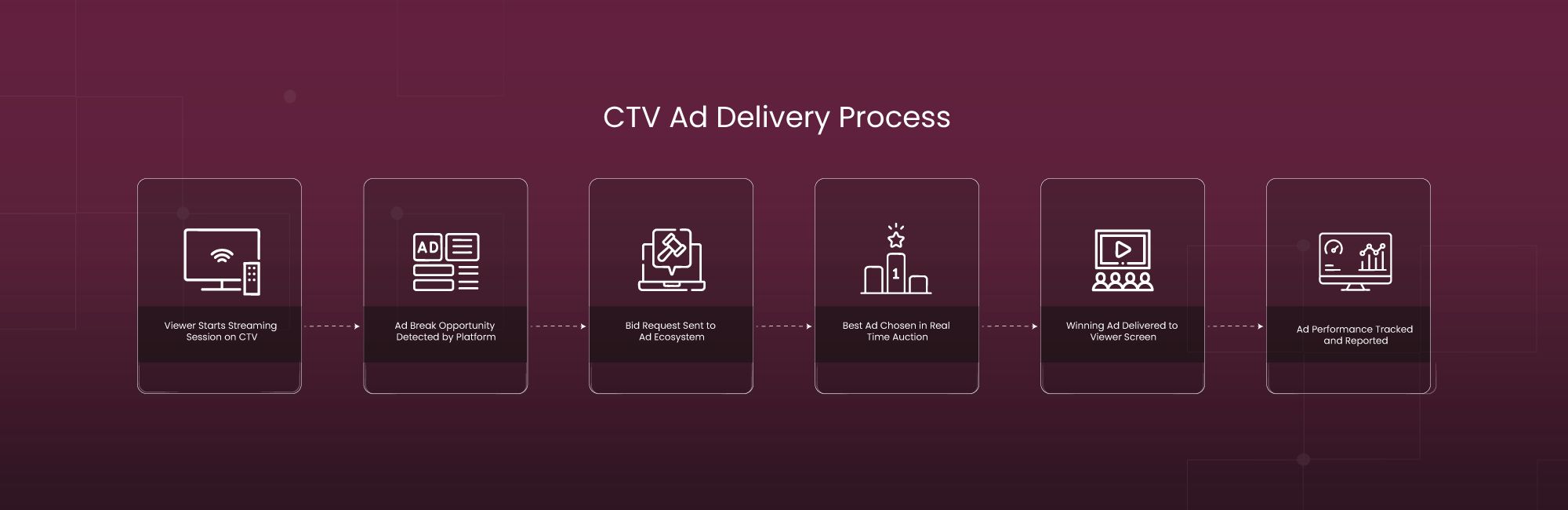
The Complete CTV Ad Delivery Process (Step-by-Step)
The following section explains exactly what happens when an ad appears on connected devices. Understanding this process helps advertisers optimize campaigns and troubleshoot delivery issues effectively.
Step 1: The Viewing Session Begins
When a viewer opens a streaming app like Hulu, this action triggers a complex sequence behind the scenes.
The app identifies the device immediately. It sends information like device type, operating system, IP address, and other identifiers to the streaming platform’s servers. The platform prepares to serve content based on viewer selection. Behind the scenes, it also prepares to insert ads at appropriate moments.
Initial data exchange occurs automatically. The device communicates what video formats it supports, what screen resolution it has, and other technical details. This ensures the platform sends compatible content and ads that will play smoothly.
Step 2: Ad Opportunity Identified
When viewers start watching content, the platform’s content management system determines exactly when ad breaks should occur. These aren’t random interruptions. They’re carefully programmed into the content stream.
The system decides between server-side ad insertion (SSAI) or client-side insertion. Most modern streaming uses SSAI because it creates a smoother viewing experience. The technical details of how this works appear later in this guide.
The ad pod structure gets determined next. Will this break show one ad, two ads, or three? How long is each slot? A typical mid-roll break might have three 30-second ad slots, creating a 90-second commercial break similar to traditional TV.
Timing and placement determination happens automatically based on content metadata. The system identifies this as episode 3 of a drama series, a mid-roll break at the 12-minute mark, with a total break length of 90 seconds.
Step 3: Ad Request Sent
The streaming platform sends what’s called a bid request to the advertising ecosystem. This request contains crucial information that helps match the right ad to the right viewer.
The request includes viewer data, but it’s anonymized to protect privacy. Instead of “John Smith in Chicago,” it might say “Male, 35-44, Chicago metro area, interested in technology.” Device details get included (smart TV, 55-inch screen, connected via WiFi). Geographic information comes from the IP address. Inventory details specify the streaming service, content type, and exact ad placement.
This information flows through SSPs to connected DSPs in milliseconds. CTV advertising platforms evaluate thousands of these requests every second, bidding on the most relevant opportunities for their advertisers.
Step 4: Real-Time Bidding Auction
Multiple DSPs receive the same bid request at exactly the same time. Each one evaluates the opportunity against their advertisers’ campaign criteria.
The CTV advertising platform checks all active campaigns instantly. Which advertisers are targeting 35-44 year old males in Chicago? Which ones want placements in drama content? Which ones have a budget remaining for today? Which ones set bids high enough to compete?
For matching campaigns, the system calculates bid prices in milliseconds. Machine learning algorithms consider historical performance, remaining budget, time of day, content quality, and dozens of other factors. The algorithm might determine this impression is worth $35 CPM based on past performance with similar audiences.
Multiple advertisers compete for the same impression. Maybe five different campaigns all bid on this opportunity. Each submits their maximum bid. The highest bid wins the auction.
All of this happens in about 50-100 milliseconds. By the time viewers notice the show paused for a commercial, the auction has already finished and a winner was selected.
Step 5: Winner Selected and Ad Delivered
The highest bid wins the auction. When a car advertiser bids $38 CPM and wins, the system immediately springs into action to deliver their ad to the viewer’s screen.
The ad creative gets retrieved from the nearest CDN location. For viewers watching in Chicago, the system pulls the video file from a CDN server in Chicago. This ensures fast delivery without buffering delays.
The ad reaches viewer devices in one of two ways. Either it’s blended into the video before it arrives (server-side insertion), or the device loads it separately right when the break starts (client-side insertion). In both cases, the ad plays automatically and the content transitions to the commercial smoothly.
The entire process from “ad opportunity identified” to “ad playing on screen” takes less than one second. Viewers experience what feels like seamless viewing, unaware of the complex technical process that just occurred.
Step 6: Tracking and Verification
As the ad plays on viewer screens, multiple tracking systems activate simultaneously.
Impression tracking pixels fire the moment the ad starts playing. These tiny pieces of code tell the advertiser “the ad is now showing to a real viewer.” Viewability gets measured in real-time. Did at least 50% of the ad pixels appear on screen for at least 2 continuous seconds? That’s the industry standard for a viewable impression.
Completion tracking monitors whether viewers watch the entire ad. If the viewer watched all 30 seconds without changing the channel or pausing, that counts as a completed view. According to eMarketer’s CTV advertising research, CTV typically achieves completion rates above 90%, far exceeding other digital video formats like pre-roll ads on websites.
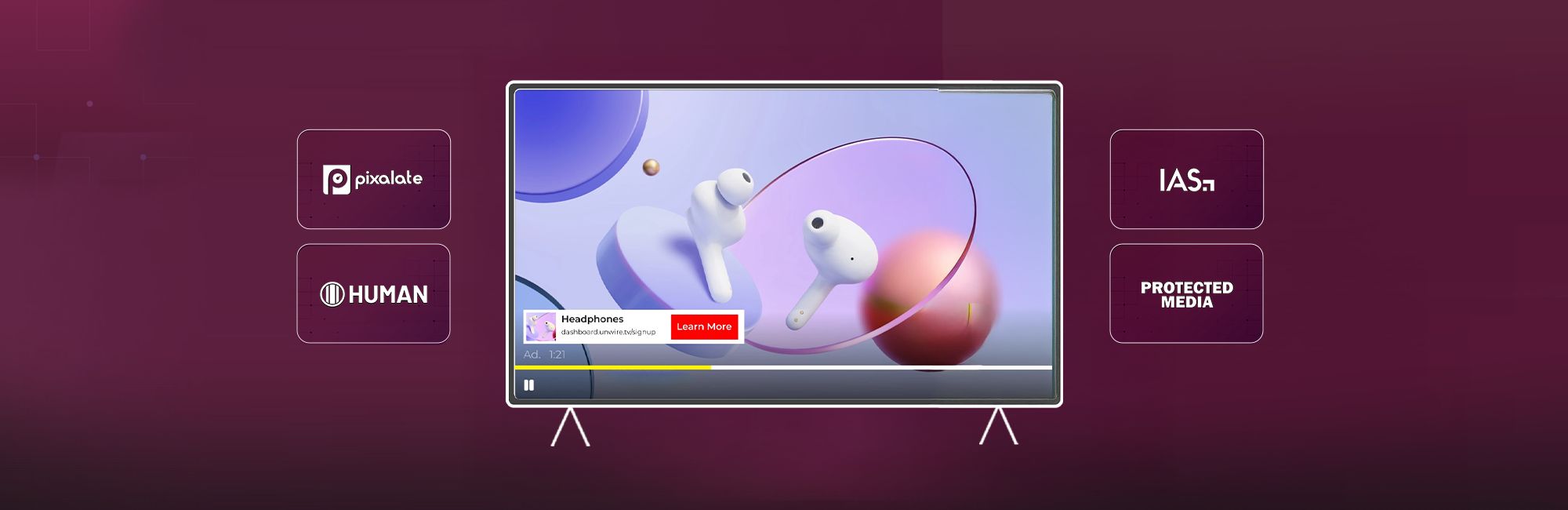
Fraud detection systems verify legitimacy in real-time. Is this a real device or a bot farm? Is a human actually watching, or is the TV just running in an empty room? Verification partners like HUMAN and Pixalate check for signs of fraud continuously. Unwire.tv by Xapads integrates HUMAN and Pixalate verification, maintaining 99%+ fraud-free delivery across its CTV inventory.
All this tracking data flows back to reporting systems. Within minutes, advertisers can see performance data updating on their dashboards. No waiting days or weeks for reports like in traditional TV advertising.
Server-Side Ad Insertion (SSAI) Technology Deep Dive
What is SSAI and Why It Matters
Server-Side Ad Insertion (SSAI) is a streaming ad delivery method where ads are dynamically stitched into video content at the server level before the stream reaches the viewer’s device.
In traditional client-side ad insertion (CSAI), the video player pauses content playback, sends an ad request to an ad server, waits for the ad response, plays the ad, and then resumes content. This process can create buffering delays, visible transitions, and exposure to ad blockers because the ad request happens directly from the user’s device.
SSAI changes this model. Instead of the player requesting ads separately, the streaming server handles ad decisioning and inserts ad segments directly into the video stream. From the device’s perspective, it receives a continuous stream of video segments from a single source. The player is not aware of which segments are ads and which are content.
Streaming platforms prefer SSAI because it delivers a broadcast-quality experience with smooth transitions between content and ads. It also reduces buffering and lowers susceptibility to traditional ad blockers, since ads are not requested separately by the player.
How SSAI Works Technically
The SSAI workflow operates entirely on the server side:
A viewer requests a content stream.
When the stream reaches an ad break marker, the SSAI system triggers an ad decision request.
The ad server runs an auction and returns the winning creative(s).
The SSAI system prepares the selected ads, including transcoding if required to match the content bitrate and format.
The system rewrites the streaming manifest (HLS or DASH playlist file) to insert ad segment URLs into the sequence of content segments.
The viewer’s device fetches video segments according to this updated manifest.
Playback continues seamlessly as the player retrieves content and ad segments in order from the same streaming endpoint.
Importantly, SSAI does not permanently merge ads into the video file. Instead, it dynamically modifies the manifest so that ad segments are delivered in-line during playback.
SSAI Advantages and Technical Challenges
- Seamless, TV-like ad transitions
- Reduced buffering compared to client-side insertion
- Lower exposure to traditional ad blockers
- Greater control for platforms over stream integrity
- Measurement Considerations
Because ads are stitched server-side, traditional client-side tracking methods (such as browser-based pixels) may not function as expected. SSAI environments often rely on server-side tracking beacons, quartile event signaling, and platform-level measurement integrations to ensure accurate reporting.
Programmatic CTV Buying Mechanics
Understanding Programmatic CTV
Programmatic advertising means using automated systems to buy and sell ad space. Instead of humans negotiating deals over email and phone calls, software makes decisions in real-time based on data and algorithms.
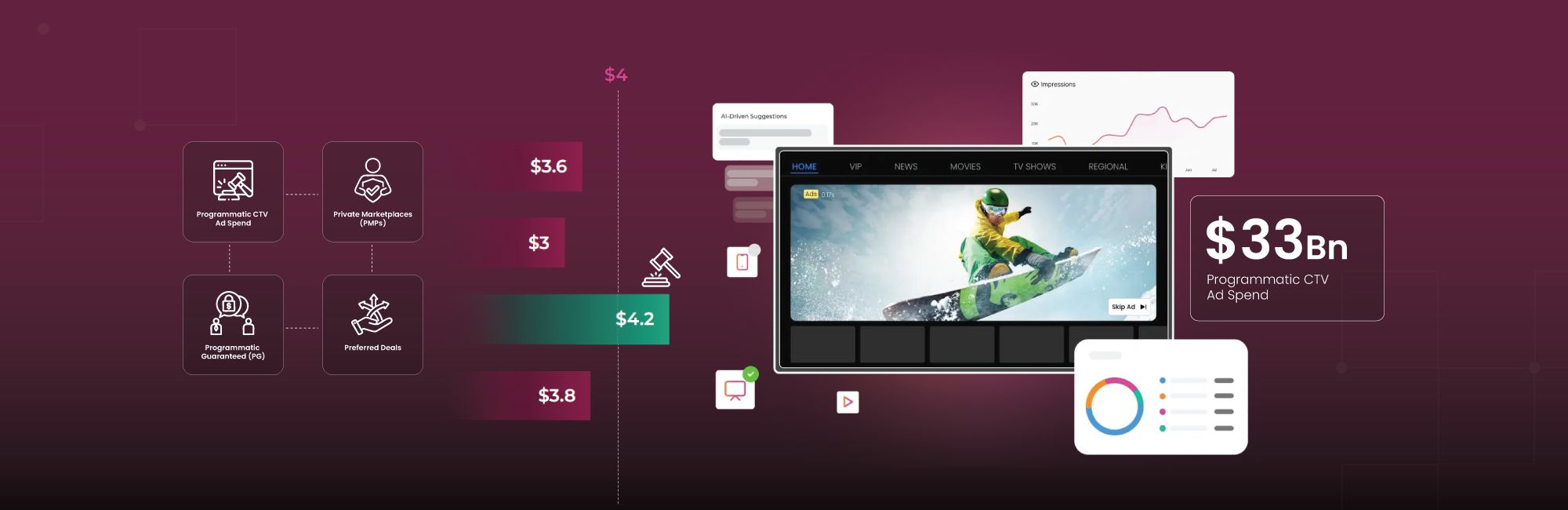
According to eMarketer’s programmatic advertising forecast, programmatic CTV ad spending reached $33 billion in 2025 and continues growing rapidly, representing the vast majority of all CTV advertising. Automation has become the dominant way brands buy connected TV ads.
What programmatic actually means in practice: Advertisers set campaign goals, targeting criteria, and budget limits in a CTV advertising platform. The platform’s algorithms then automatically bid on relevant ad opportunities across thousands of publishers. Campaigns don’t require manual selection of each individual placement. The system optimizes based on real performance data.
Automated buying differs dramatically from manual buying. Manual buying requires negotiating with each publisher separately, submitting insertion orders by email, waiting days for confirmation, and managing each relationship individually. Programmatic buying provides access to a large portion of available inventory through a single interface, while some premium placements may still require direct agreements.
Algorithms make split-second decisions constantly. Should the campaign bid on this impression? How much should the bid be? Which creative version should appear? These decisions happen in milliseconds based on data and machine learning, not human guesswork.
Types of Programmatic Deals
Programmatic doesn’t mean one-size-fits-all. Different deal types suit different campaign objectives and brand requirements.
Open Auction (RTB) represents the most common approach. Brand campaigns compete with all other advertisers in real-time bidding. The highest bid wins each impression. This offers maximum scale and efficiency. Advertisers can access a broad range of CTV inventory across many publishers, though some premium placements remain limited to direct deals. Prices fluctuate naturally based on supply and demand.
Private Marketplaces (PMPs) give advertisers access to premium inventory at negotiated prices. Publishers invite selected advertisers to bid on specific inventory before offering it to the open market. Brands might get first access to prime-time inventory on a major streaming service. Prices are typically higher than open auctions, but quality gets guaranteed. Unwire.tv by Xapads supports full PMP deal configuration, giving advertisers premium access with complete control over targeting, budgets, and timelines.
Programmatic Guaranteed (PG) combines automation with commitment. Advertisers agree upfront to buy a specific volume of impressions at a fixed price. The publisher guarantees delivery of those impressions. This works well when brands want certainty of placement and volume for major brand campaigns.
Preferred Deals give advertisers the option to buy specific inventory at a fixed price before it goes to auction. Brands aren’t obligated to buy every impression, but they get the first right of refusal. This balances flexibility with access to quality inventory.
When should advertisers use each type? Open auctions work best for scale and cost efficiency. PMPs shine for premium placements with specific trusted publishers. PG delivers guaranteed volume for large-scale brand campaigns. Preferred deals offer flexible access to quality inventory without hard commitments.
How Bidding Algorithms Work
The algorithms powering programmatic bids are sophisticated. Understanding what happens under the hood helps advertisers optimize campaign performance.
Machine learning models analyze historical performance data constantly. They learn which types of impressions convert better for specific campaign goals. Maybe impressions between 8-10 PM perform 40% better than afternoon impressions for a product category. The algorithm discovers these patterns and factors them into future bid calculations automatically.
Historical performance data drives continuous optimization. The system tracks impressions, completions, engagement signals, and conversions across devices. The AI identifies patterns that humans would never spot. Device type X converts 2x better than device type Y. Content genre A delivers better completion rates than genre B. The algorithm learns and adapts.
Predictive modeling forecasts the value of each impression before bidding. Based on historical patterns, the system estimates the likelihood and value of a potential conversion before placing a bid on behalf of the advertiser. It then calculates the optimal bid amount and submits it automatically.
Budget pacing algorithms ensure campaigns don’t exhaust daily budgets in the first hour. If a campaign has a $10,000 daily budget, the algorithm distributes spending intelligently across all 24 hours based on when target audiences are most active. It might spend more during peak viewing hours like evenings and less overnight when fewer people watch.
All these calculations happen in milliseconds for every single bid request. The system evaluates millions of opportunities daily, bidding aggressively on the most valuable ones and passing on opportunities that don’t match campaign goals.
CTV Data Collection and Targeting Technology
How CTV Collects Viewer Data
CTV targeting works completely differently from web advertising. There are no cookies stored on TVs. Instead, the system uses alternative identifiers designed to work within modern privacy regulations.
Device-level identifiers act like fingerprints for connected devices. Each connected device has unique identifiers that persist across viewing sessions over time. These IDs don’t reveal actual viewer identities, but they let advertisers reach the same household across multiple viewing sessions for frequency capping and retargeting.
IP address information provides geographic targeting capabilities. Household IP addresses indicate approximate location, usually accurate to city or zip code level. This enables local businesses to advertise only in their service area without wasting budget on viewers hundreds of miles away.
Automatic Content Recognition (ACR) data comes from smart TVs themselves. Many smart TVs detect what content viewers are watching by analyzing the actual video signal. This data gets anonymized and aggregated, showing viewing patterns without identifying individual viewers personally. Advertisers can target based on viewing history without ever knowing actual viewer identities.
Streaming platform data provides rich targeting when available. When viewers log into services like Hulu with their account, the platform knows viewing history, content preferences, and demographic information if provided during signup. This data enables precise targeting while maintaining viewer privacy through anonymization.
Targeting Implementation
Advertisers use this data to reach specific audiences effectively through sophisticated matching systems.
The system matches viewer profiles to advertiser targeting criteria. An advertiser wants to reach “women 25-34 interested in fitness content.” The platform checks available impressions against this specific criteria. When viewing sessions match the target profile closely enough, households become eligible to see that advertiser’s ads during their stream.
Geographic targeting via IP address works automatically in the background. A local restaurant advertising in Chicago? The system only bids on impressions from Chicago-area IP addresses. National campaigns targeting all Americans? The platform bids on all U.S. impressions regardless of location. The process happens instantly and accurately.
Demographic inference from viewing patterns provides targeting without collecting personal data. If a household watches mostly sports content, gaming streams, and action movies, the system infers certain demographic characteristics probabilistically. This targeting isn’t perfectly accurate, but it improves constantly through machine learning.
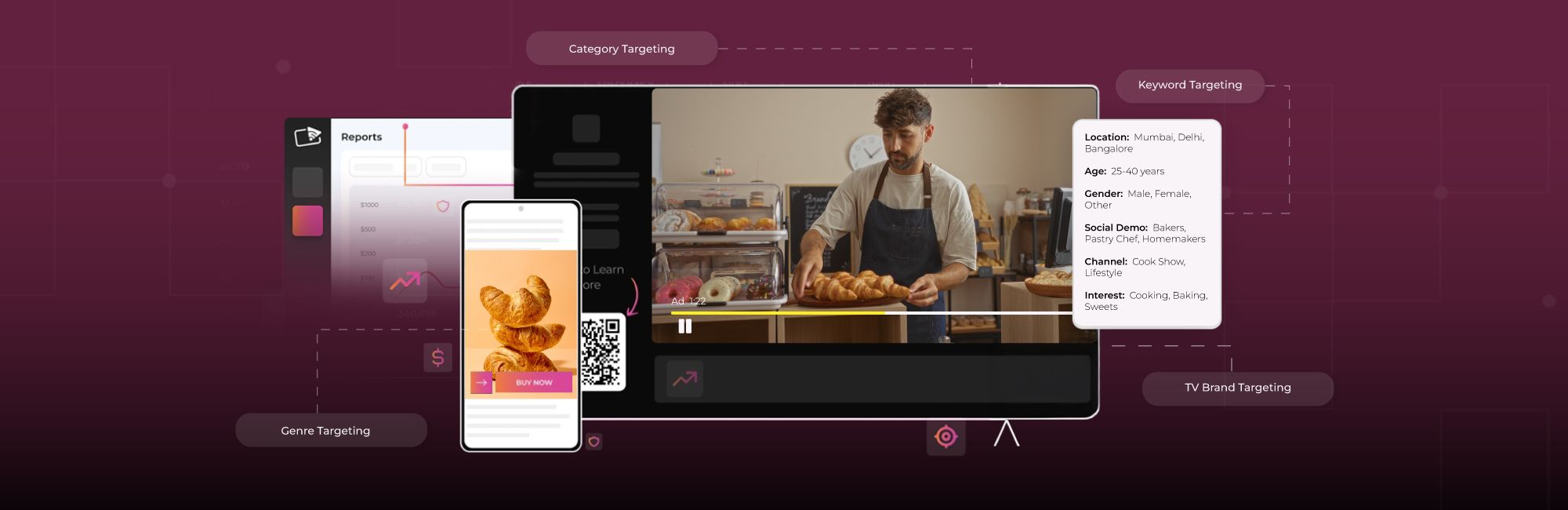
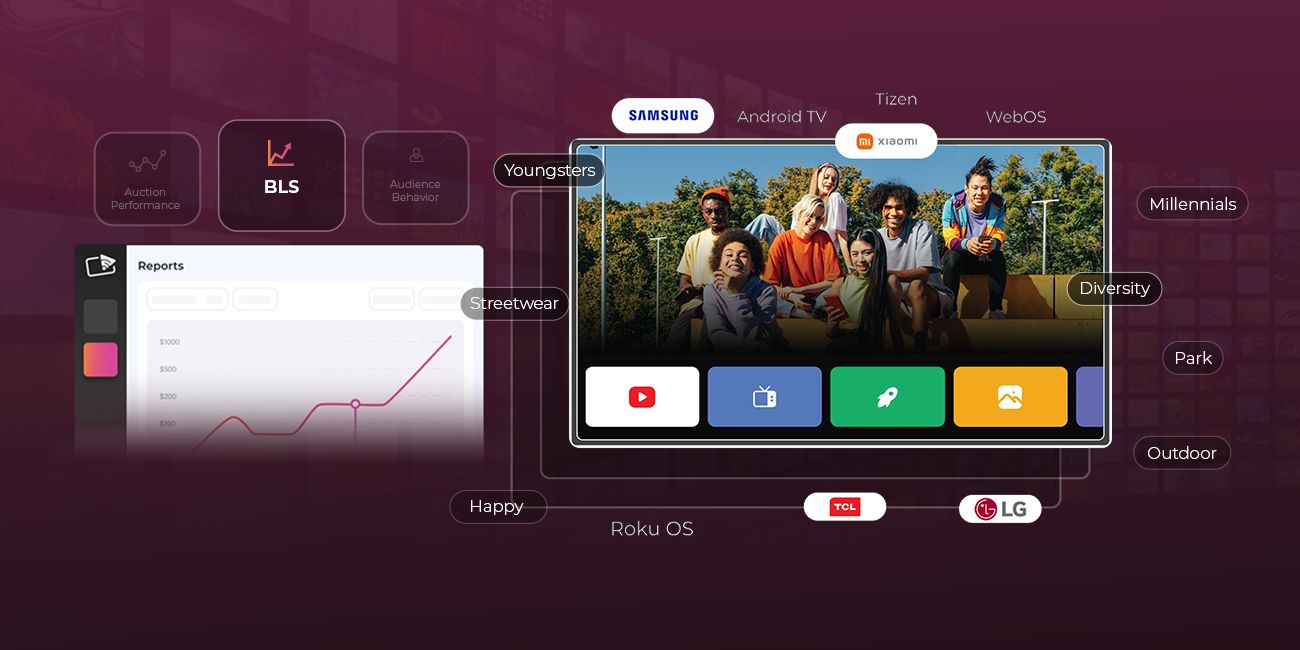
Contextual targeting based on actual content matters increasingly in 2026. Unwire.tv by Xapads offers context-based targeting that goes far beyond basic demographics. Advertisers can target by content genre, specific programme types, and viewing environment. The platform’s contextual intelligence matches brand ads to the right viewing moments across premium CTV inventory automatically.
The system analyzes content at multiple levels simultaneously. Genre-level targeting identifies broad categories like drama, comedy, sports, or documentaries. Programme-level precision narrows focus to specific shows or series. Scene-level analysis examines individual moments within content to understand emotional tone and thematic context. This multi-layered approach ensures ads appear in the most relevant contexts.
Unwire.tv Smart Media Planner enhances contextual precision further. The tool evaluates viewing environment factors including time of day, device type, and content consumption patterns. A cooking show watched at 6pm dinner time receives different ad treatment than the same show watched at midnight. Context extends beyond what appears on screen to include when and how viewers engage with content.
Privacy-Compliant Data Usage
Privacy regulations influence how CTV targeting operates across regions. Platforms follow region-specific frameworks to support compliant advertising while maintaining viewer trust.
Anonymization techniques protect identity by using non-personally identifiable device signals rather than real names or direct personal information. Campaigns operate on pseudonymous or aggregated identifiers instead of individual profiles.
Aggregated audience segments group viewers into large cohorts such as “sports enthusiasts” or “cooking content viewers.” Advertisers target segments rather than individuals, reducing identification risk.
Consent management frameworks support regulatory compliance in applicable regions. For example, GDPR governs data protection across the European Union, while CCPA applies in California. Platforms apply technical controls based on geographic jurisdiction to align with local legal requirements.
These controls allow advertising systems to function within privacy frameworks while maintaining operational efficiency.
Creative Delivery and Optimization Systems
Ad Creative Storage and Retrieval
The following section explains what happens to advertiser video ads after upload to a CTV advertising platform.
Content Delivery Networks (CDNs) store video ad files in data centers located around the world. When advertisers upload a video ad, the platform automatically distributes copies to CDN locations globally. This ensures fast delivery regardless of where viewers live.
Multiple format requirements exist because different devices support different video formats and specifications. Advertisers might upload one MP4 file, but the system creates multiple versions automatically for various devices and connection speeds. A 4K version for gigabit fiber connections, a 1080p version for standard broadband, and a 720p backup version for slower rural connections.
Transcoding and encoding processes convert original files into all these multiple versions automatically. Powerful servers handle this conversion work behind the scenes. Advertisers upload video once; the system creates dozens of optimized versions without additional work required.
Creative specifications matter significantly for quality results. Most platforms require 1920×1080 resolution (1080p) as the absolute minimum. Aspect ratio must be 16:9 standard widescreen. File format should be MP4 or MOV. File size limits vary by platform and are usually governed by bitrate and duration rather than a fixed universal cap. Audio must meet broadcast standards with proper mixing and limiting.
Dynamic Creative Optimization (DCO)
DCO represents an advanced capability where video ads automatically adapt based on who’s watching and what context they’re in.
Real-time creative assembly means viewers might see slightly different versions of the same campaign. The system might swap in different product images, updated pricing information, or varied call-to-action text based on viewer characteristics and real-time data.
Personalization elements get inserted automatically without manual work. A car dealership might show different vehicle models to different viewers based on their inferred preferences from viewing history. The base creative template stays the same, but key personalized elements change dynamically.
A/B testing automation runs constantly in the background. The system might show version A of a creative to half the target audience and version B to the other half, automatically tracking which performs better across every metric. It then gradually shifts more traffic to the winning version.
Performance-based creative rotation ensures top performers get more visibility. If creative A drives 50% more conversions than creative B for the same product, the algorithm automatically shows creative A proportionally more often to maximize overall campaign performance.
Quality Assurance Systems
Before any ad goes live and reaches real viewers, multiple automated quality checks occur behind the scenes.
Automated creative scanning checks technical compliance instantly. Does the file meet required specifications exactly? Is the audio properly mixed at correct levels? Are there any visual defects or technical glitches? Sophisticated systems catch these issues before ads ever serve to viewers.
Technical validation confirms file format, length, resolution, and aspect ratio all meet strict requirements. The system automatically rejects non-compliant creatives immediately with clear error messages explaining exactly what needs fixing.
Brand safety pre-screening checks creative content for inappropriate material that might violate policies. Automated computer vision systems scan for explicit content, controversial imagery, or other issues that might break platform policies or damage brand reputation.
Compliance verification checks technical and platform policy requirements before ads go live. However, advertisers remain responsible for legal disclosures, content ratings, and regulatory compliance based on their region and industry.
CTV Measurement and Attribution Technology
Performance Tracking Methods
Tracking CTV ad performance involves multiple sophisticated technical approaches working together seamlessly.
Impression tracking methods fire invisible pixels the instant ads begin playing on screens. These pixels send data to tracking servers confirming the ad actually appeared to a real viewer. The data includes precise timestamps, specific device types, approximate geographic location, and which creative version played.
Completion rate measurement monitors actual video playback carefully. Did the viewer watch 25% of the ad? 50% of it? 100% all the way through? Tracking checkpoints throughout the video report progress accurately. According to eMarketer’s CTV advertising research, CTV completion rates typically exceed 90% thanks to non-skippable ad formats built into streaming platforms.
Viewability standards follow MRC (Media Rating Council) strict compliance requirements. For CTV specifically, at least 50% of ad pixels must remain visible on screen for at least 2 continuous seconds. Unwire.tv achieves 100% viewability across premium channels by ensuring proper technical ad insertion every single time.
Attention metrics collection goes beyond basic viewability measurements. Advanced systems measure how long TV screens actually remain powered on during ads, whether anyone is physically in the room based on ACR data patterns, and whether viewers interact with second-screen mobile devices during commercial breaks.
Cross-Device Attribution Systems
Connecting TV ad exposure to actions viewers take on other devices requires sophisticated attribution technology.
Household-level tracking links multiple devices in the same physical household. If a household’s smart TV shows an ad for a product, and someone in that household searches for that exact product on their phone an hour later, attribution systems can connect those two events probabilistically.
Device graph technology maps complex relationships between different devices. Specialized companies maintain massive databases showing which phones, tablets, computers, and TVs likely all belong to the same household. These graphs use various technical signals like shared IP addresses, WiFi network identifiers, and behavioural usage patterns.
Probabilistic versus deterministic matching represent two different technical approaches to attribution. Deterministic matching uses confirmed links, like the exact same login credentials on multiple devices. Probabilistic matching uses statistical models to infer likely connections. Most CTV attribution relies on probabilistic methods since perfect deterministic data is limited.
Converting TV exposure to digital actions gets measured through various methods. QR code scans from TV ads provide direct attribution since viewers actively scan from their TV screen. According to eMarketer’s social media research, nearly two-thirds of U.S. social network users watch TV while simultaneously scrolling on second screens in 2026, making this cross-device attribution increasingly important and accurate.
Real-Time Reporting Infrastructure
Modern CTV platforms provide instant performance visibility that traditional TV advertising could never match.
Data aggregation systems collect information from multiple technical sources simultaneously. Impression data flows from ad servers, completion data streams from video players, conversion data arrives from attribution platforms. Everything flows into unified reporting databases in real-time.
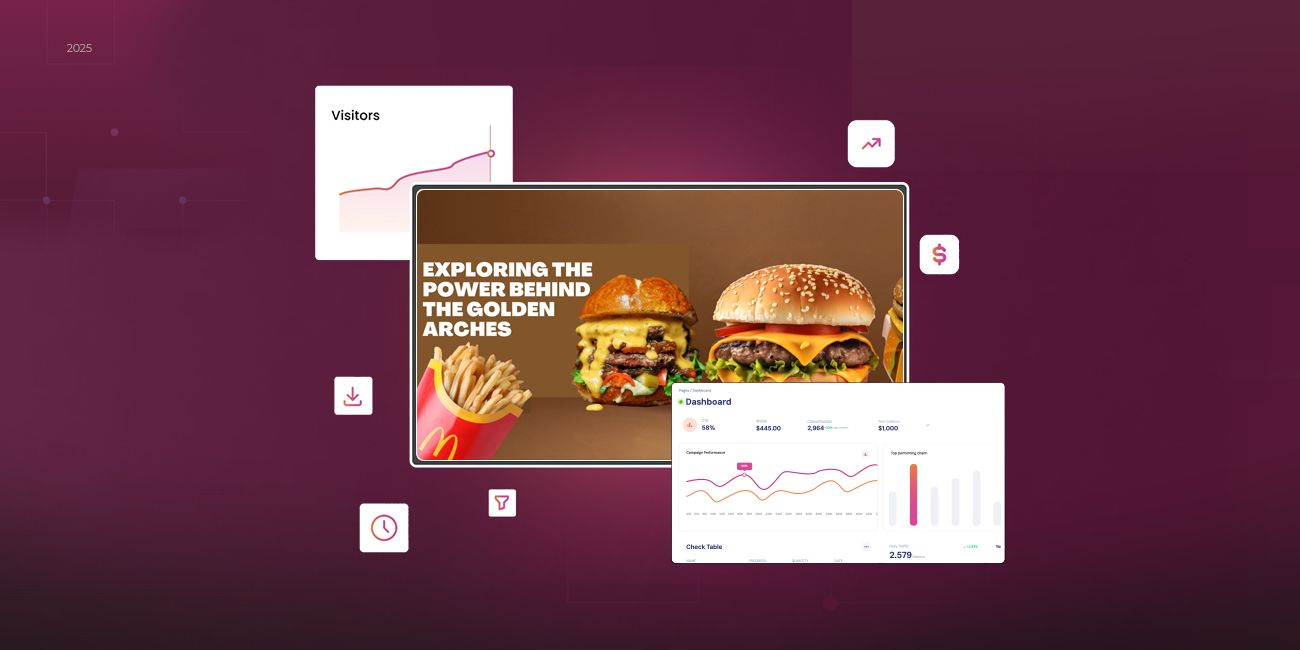
Dashboard updates happen continuously throughout the day. CTV advertising platforms show live metrics as campaigns actively run. Advertisers don’t wait days or weeks for static reports like traditional TV buying. Platforms show impressions, completion rates, and engagement metrics updating every few minutes. Unwire.tv provides live dashboards with instant insights and export-ready reports built specifically for fast decision-making.
API integrations allow seamless data export to other systems advertisers already use. Brands can pull CTV performance data directly into business intelligence platforms automatically. APIs enable scheduled automated data transfers, letting advertisers sync CTV campaign data with analytics platforms and CRM systems without manual work.
Export capabilities let advertisers download detailed reports for deeper analysis anytime. Export raw data to Excel spreadsheets, CSV files for data science work, or integrate directly with cloud data warehouses for advanced analytics.
Ad Verification and Fraud Prevention
Invalid Traffic Detection
Fraud exists in all digital advertising, including CTV. Sophisticated automated detection systems work constantly to protect advertisers from waste.
Bot detection algorithms identify non-human traffic patterns automatically. Real human viewers exhibit certain natural behavioral patterns when watching content. Bots behave completely differently. They might load videos impossibly quickly, never pause content naturally, or watch 100 ads consecutively without breaks. Detection systems flag these anomalies instantly.
Device fingerprinting analyzes available technical signals such as device model, OS version, IP patterns, and app behavior to identify suspicious or emulated devices. Real legitimate devices have consistent fingerprints over time. Fraudulent bot setups often show suspicious inconsistencies.
Behavioral analysis examines viewing patterns carefully for red flags. Real viewers show varied and inconsistent viewing behavior over time, while automated traffic often shows repetitive and highly predictable patterns. Fraudulent bot traffic shows completely unnatural patterns like 24/7 continuous viewing or instant channel changes with no natural human delay.
Pattern recognition systems learn what legitimately normal viewing looks like. Machine learning models train on billions of confirmed legitimate impressions. They then automatically flag any deviations from established normal patterns for deeper investigation.
Verification Partner Integration
Third-party independent verification adds crucial fraud protection that platforms can’t provide alone.
Partners like HUMAN and Pixalate specialize in sophisticated fraud detection. Unwire.tv by Xapads integrates these leading verification partners directly across its entire CTV inventory, maintaining 99%+ fraud-free delivery rate consistently.
Pre-bid filtering blocks suspicious inventory before advertisers waste budget. Verification systems maintain constantly updated lists of known fraudulent publishers and apps. DSPs automatically check these blacklists before submitting any bids.
Post-impression verification confirms ads actually served to real human viewers after delivery. After an impression occurs, verification partners analyze hundreds of technical signals to confirm legitimacy. Suspicious impressions get flagged immediately and advertisers potentially receive refunds for fraudulent traffic.
Fraud score calculation assigns specific risk scores to each impression. Low-risk impressions with scores of 1-2 proceed normally without delays. Medium-risk impressions scoring 3-5 might receive additional scrutiny. High-risk impressions scoring 6-10 get blocked immediately or flagged for manual investigation.
Made-for-Advertising (MFA) Detection
Not all fraud involves technical bots. Some unethical publishers intentionally create low-quality content purely to generate advertising revenue.
Content quality assessment examines publisher sites and streaming apps carefully. Do they genuinely provide real value to viewers? Or do they exist solely to show as many ads as possible? Quality scoring systems help identify these made-for-advertising properties automatically.
Engagement metric analysis reveals actual viewer behavior patterns. Legitimate quality publishers see viewers spending significant time with content, returning regularly over weeks, and engaging meaningfully through interactions. MFA properties show suspiciously brief visits and immediate exits after ad exposure.
Publisher reputation scoring intelligently aggregates multiple quality signals together. Historical performance over time, genuine viewer engagement levels, actual content quality, strict compliance with platform policies. High-reputation publishers get prioritized for premium ad inventory. Low-reputation publishers get filtered out automatically.
Automated filtering systems apply all these quality checks in real-time before bidding. Before submitting any bid on available inventory, the system instantly checks comprehensive quality scores. Inventory falling below quality thresholds gets automatically excluded from consideration entirely.
Context-Based Targeting Technology
AI-Powered Contextual Analysis
Contextual targeting technology has evolved dramatically in recent years. Modern AI systems understand video content at sophisticated levels.
AI-powered content scanning analyzes video content automatically. The system watches every single video frame, listens to all audio, reads on-screen text accurately, and identifies objects, people, and scenes intelligently.
Frame-by-frame video analysis examines content at extremely detailed granular levels. The AI might detect a specific car brand in frame 247, recognize a particular celebrity actor in frame 1,854, or identify beach vacation scenes starting at frame 3,421. This granular analysis enables precise moment-level ad placement.
Keyword extraction from audio tracks transcribes all spoken dialogue and identifies key topics automatically. If characters discuss vacation plans, the system immediately understands “travel” context. If they mention specific brand names or products, the system recognizes those commercial references instantly.
Scene and object detection identifies all visual elements comprehensively. The AI recognizes outdoor versus indoor scenes, daytime versus nighttime settings, specific geographic locations, thousands of object types, and human activities. A car commercial might automatically target scenes showing vehicles or traffic.
Content Classification
Beyond surface-level analysis, sophisticated systems classify content meaningfully for advertisers.
Automated content categorization assigns accurate genres and themes. Is this comedy, drama, action, documentary, reality TV? The system classifies all content automatically based on multiple technical signals analyzed together.
Programme and episode-level targeting enables precision far beyond just broad genre targeting. Advertisers might target specific individual episodes of particular shows. Or target all cooking competition shows regardless of which streaming service airs them. Unwire.tv enables targeting by specific content, individual programmes, genres, and viewing environment across premium CTV inventory.
Emotional context detection identifies the overall mood and tone of content scenes. Is this scene tense and dramatic? Light and humorous? Romantic and emotional? Advertisers can strategically match their ad’s emotional tone to content tone for better resonance with viewers.
Brand suitability scoring goes beyond basic brand safety to identify ideal premium placements. A luxury automotive brand might specifically want “premium” high-quality content even if all content meets basic brand safety standards. Sophisticated scoring systems rate content specifically for brand fit and quality.
Real-Time Contextual Matching
All this sophisticated analysis happens in real-time to enable precise moment-level targeting.
Matching ads to specific content moments means showing exactly the right ad at the perfect time. A pizza delivery ad might automatically appear during cooking show scenes. A car commercial might appear during road trip adventure scenes. The system makes these intelligent connections automatically without human intervention.
Sentiment analysis integration understands deep emotional context. The AI detects whether a scene feels emotionally positive, negative, or neutral. Advertisers can strategically match their ad sentiment to content sentiment, or deliberately contrast for impact and attention.
Scene-appropriate ad selection considers what’s literally happening on screen. During an intense action sequence, showing a calm serious financial services ad might feel jarring. The system intelligently selects ads that naturally fit the current viewing context.
Viewer intent inference combines content context with broader viewing patterns. Someone watching cooking shows at 6pm dinner time likely has completely different intent than someone binge-watching the same show at 2am. The system factors these behavioral signals into targeting decisions automatically.
Interactive CTV Ad Technology
QR Code Integration
QR codes have become one of the most effective interactive elements for CTV advertising in 2026.
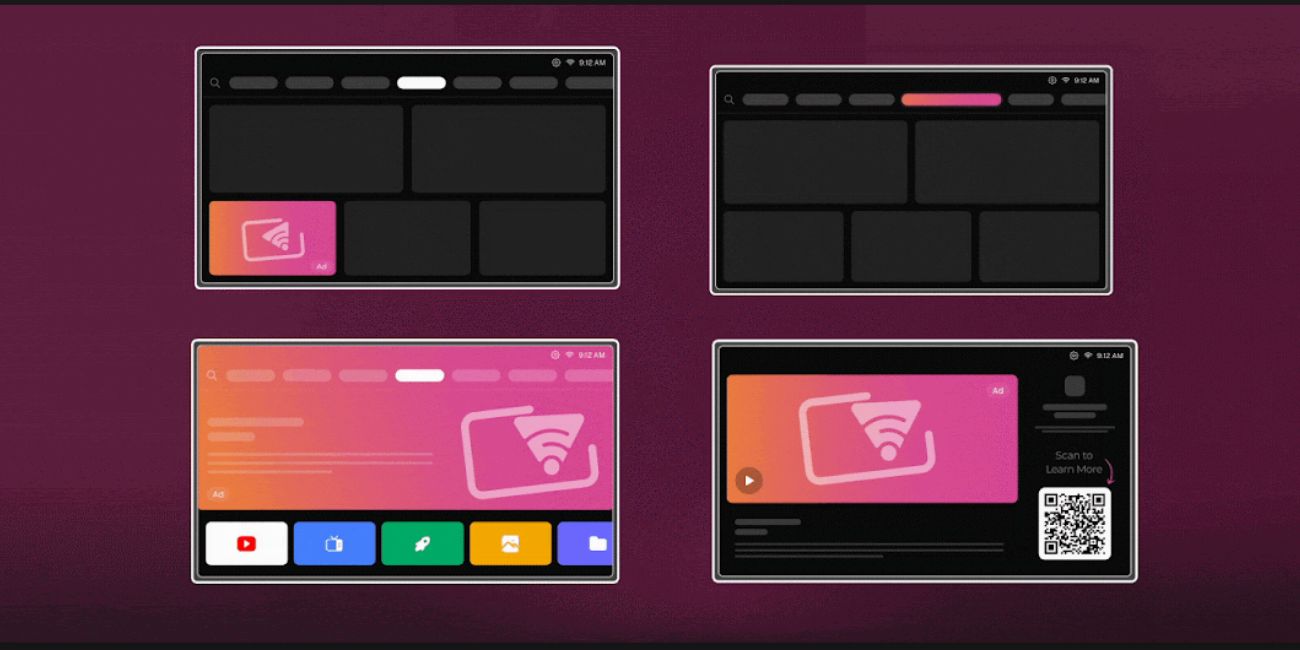
QR code generation and insertion happen automatically. Advertisers upload standard video creative files. The platform can dynamically overlay scannable QR codes on specific frames, maintaining visual quality while adding functionality.
Mobile device detection when scanned triggers immediate attribution tracking. When a viewer scans the code with their phone camera, the system instantly records the scan event, timestamps it precisely, links it to the specific TV ad impression, and redirects to the target URL.
Attribution tracking across devices connects TV viewing behavior to mobile actions. When viewers scan a QR code from a TV ad and then purchase that product on their phone 10 minutes later, sophisticated attribution systems can link that mobile purchase back to the TV ad exposure. This cross-device tracking enables accurate ROI measurement.
Conversion tracking systems follow the complete customer journey from initial scan to final purchase. Advertisers see exactly which specific TV impressions drove QR code scans, which scans led to website visits, and which website visits ultimately converted to actual purchases.
Pause Ad Technology
Pause ads represent another innovative interactive format gaining popularity.
Pause detection mechanisms monitor playback status constantly in real-time. When a viewer pauses content for any reason, the system detects this instantly and prepares to show a relevant pause ad immediately.
Static ad overlay systems display ads directly on the paused screen. Unlike video ads that play automatically, pause ads are static images that appear while content remains paused. Unwire.tv offers pause screen advertising that captures viewer attention during natural viewing breaks without being intrusive.
Resume behavior monitoring tracks precisely when viewers resume playback. If someone pauses for 30 seconds, the pause ad stays on screen for the same duration. The system measures exactly how long pause ads remain visible to each viewer.
Engagement measurement tracks whether viewers actually interact with pause ads. Did they scan a QR code? Click a button using their remote control? These direct interactions indicate high engagement levels.
Clickable Interactive Elements
Advanced CTV ads now include clickable elements that viewers can activate using TV remote controls.
Remote control interaction capture detects button presses accurately. When a viewer presses “select” or “OK” on an interactive ad element, the system captures that specific action immediately.
Button overlay rendering displays clickable buttons directly on video ads. “Learn More,” “Shop Now,” “Get Offer.” These clear buttons appear within the ad creative itself, explicitly inviting viewer interaction.
Action tracking systems record every single interaction comprehensively. Button clicks, navigation between elements, total time spent viewing interactive components. All this detailed behavioral data flows to analytics platforms.
Response processing determines what happens next after interaction. Click “Learn More” and additional detailed content might appear. Click “Shop Now” and a QR code might display for convenient mobile purchase.

How Different CTV Platforms and Devices Work
OEM-Level Ad Placements
Beyond streaming apps, device manufacturers create advertising placements at the operating system level.
Home screen placements position brand messages before viewers select content. These placements deliver high visibility because they appear within the device interface itself. Through OEM partnerships such as Mi.Xapads, advertisers can access large-scale home screen environments across connected devices, including Xiaomi ecosystems operating in 272 countries and regions.
App launch interstitials display ads when viewers open streaming apps. This format captures attention during natural transition moments.
Screensaver ads appear when TVs remain idle. These placements maintain brand presence in ambient viewing environments without interrupting active content consumption.
System-level placements can also appear within navigation menus, app stores, and device interfaces. These formats operate outside traditional mid-roll ad breaks and extend visibility across the entire device journey.
OEM advertising expands reach beyond in-stream video and strengthens upper-funnel visibility within premium device environments.
Smart TV Operating Systems
Smart TV operating systems function differently at a technical level. Each OS follows its own app architecture, video standards, and ad delivery rules.
Samsung Tizen runs on Samsung smart TVs globally. It operates on a Linux-based framework with a proprietary app ecosystem. Ads can appear within streaming apps, on home screens, or within system placements. Creative files must comply with Samsung’s codec and format requirements.
LG webOS powers LG smart TVs worldwide. It supports in-app ad delivery and system-level integrations similar to Tizen but follows slightly different encoding and insertion standards.
Roku OS runs on Roku streaming devices and select smart TV models. It emphasizes performance and simplified navigation. Ad creatives must meet Roku’s specific technical requirements and marketplace rules.
Amazon Fire TV OS, built on Android architecture, powers Fire TV devices and partner TV models. It integrates with Amazon’s broader advertising ecosystem and retail infrastructure.
Each operating system defines its own specifications for resolution, bitrate, duration, and audio standards. Advertisers can prepare multiple creative versions or rely on programmatic CTV platforms that manage automatic transcoding and cross-device compatibility.
Major Streaming Service Technologies
Major streaming services operate independent advertising infrastructure, each with unique technical frameworks and monetization models.
Inventory environments accessible through platforms such as Unwire.tv by Xapads can include publisher partners such as Plex, JioHotstar, Watcho, Sun NXT, YuppTV, Amasian, Little Dot Studios, Bloomberg, Euronews, NDTV, Rakuten Viki, Gusto TV, MMA TV, and other premium streaming ecosystems.
Each publisher controls ad pod structure, insertion methodology, frequency rules, and content alignment standards.
Some services use server-side ad insertion for seamless playback. Others combine hybrid models depending on content type, including live and on-demand programming.
Premium news environments such as Bloomberg, Euronews, and NDTV operate with strict brand safety frameworks. Entertainment and regional platforms such as Sun NXT, Watcho, JioHotstar, and YuppTV provide access to culturally relevant audiences across markets.
Each streaming service enforces its own creative specifications and technical policies. Programmatic CTV platforms unify access across these environments through a centralized buying interface, while maintaining compliance with individual publisher standards.
Getting Started with CTV Advertising
Technical Requirements
To advertise on CTV successfully, brands need properly formatted creative assets that meet strict specifications.
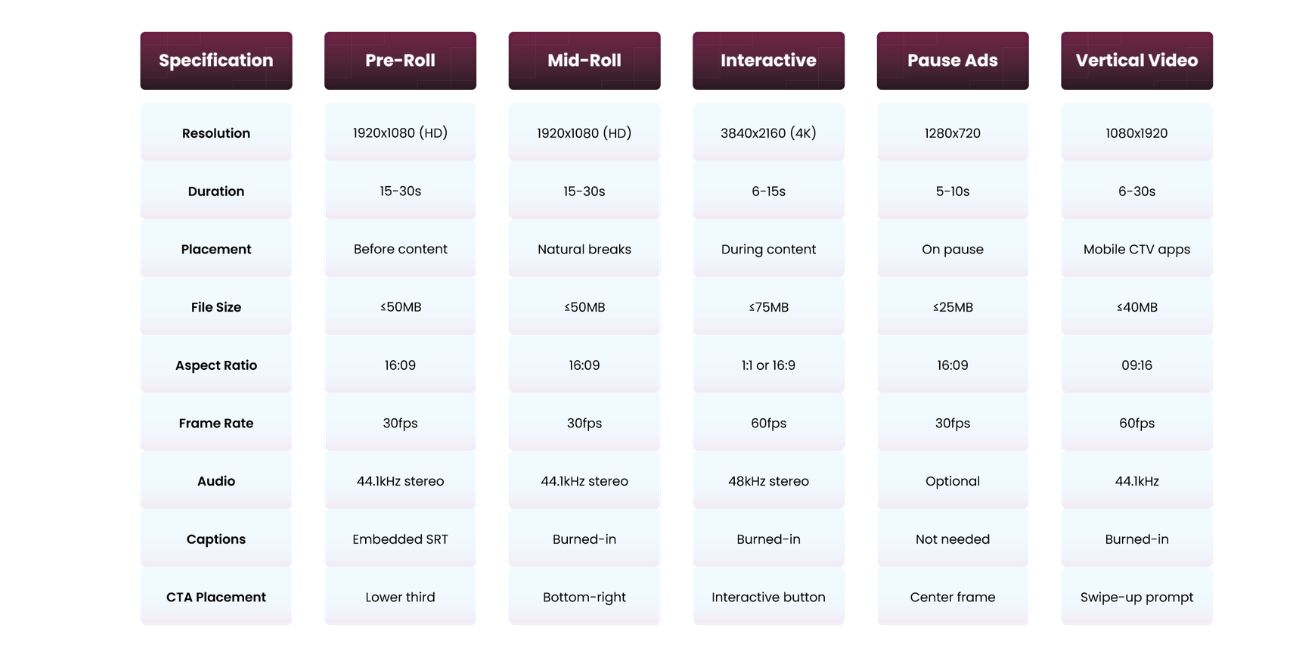
Video format requirements include MP4 or MOV files. MP4 H.264 encoding works on virtually all platforms reliably. Some platforms accept additional formats, but MP4 ensures maximum compatibility everywhere.
Resolution standards require 1920×1080 (1080p) as the absolute minimum. Many platforms support 4K (3840×2160) for premium quality, but 1080p remains the practical standard. Avoid SD resolutions like 720p or lower as they look poor on large modern screens.
Aspect ratios must be 16:9 standard widescreen. This matches modern TV screens perfectly. Other aspect ratios get awkwardly letterboxed or outright rejected by platforms.
File size limitations vary by platform. Most accept files up to 500MB maximum. Larger files might upload but can cause playback issues. Optimize campaign videos for quality while keeping file size reasonable.
Audio specifications require proper mixing at broadcast levels. -24 LUFS is the standard loudness target. Audio too loud causes clipping. Audio too quiet gets lost. Professional audio mastering ensures consistent levels.
Closed captioning requirements are becoming standard everywhere. Many platforms now require caption files in SRT or VTT format for accessibility compliance. Even when not required, captions typically improve performance metrics.
Tracking Implementation
Proper tracking implementation enables accurate measurement of campaign performance.
Tracking pixel integration involves adding small pieces of code to advertiser websites or mobile apps. These pixels fire automatically when conversions occur, attributing them back to specific CTV impressions that drove them.
Event tracking setup defines what actions campaigns need to measure. Website visits? Add to cart? Actual purchases? Configure tracking events for each important action in the conversion funnel.
Conversion pixel placement determines where pixels fire in the customer journey. The “thank you” page after purchases is most common. Confirmation pages, account creation pages, anywhere meaningful conversions occur.
Attribution parameter configuration ensures proper credit assignment. UTM parameters, custom identifiers, or proprietary tracking systems all need proper setup for accurate attribution.
Platform Access
Getting started requires some initial configuration steps.
Account creation is straightforward on CTV platforms like Unwire.tv. Visit unwire.tv/book-demo to schedule a personalized demo and get started quickly.
Payment method configuration enables ad spending. Credit cards work for most advertisers. High-volume advertisers might set up monthly invoicing arrangements.
Billing setup determines how brands pay for campaigns. Prepay by adding funds to account balances. Or set up automatic payments that bill credit cards as spending occurs.
Team access management lets brands add colleagues with appropriate permissions. Campaign managers might have full access. Executives might have view-only access to reports.
Common Technical Challenges and Solutions
Ad Delivery Issues
Sometimes ads don’t deliver as expected. Common issues and practical solutions follow.
Buffering and playback problems usually stem from file size or encoding issues. Solution: Optimize video files properly, ensure correct encoding settings, use recommended bitrates for smooth playback.
Creative file errors occur when files don’t meet platform specifications exactly. Solution: Validate files carefully before uploading, use platform-specific encoding presets, test across different devices.
Targeting mismatches happen when campaign targeting criteria are too narrow or contradictory. Solution: Expand targeting parameters, remove conflicting criteria, use OR logic instead of restrictive AND logic.
Solutions and troubleshooting start with checking platform status pages. Is the issue widespread affecting everyone or just affecting specific campaigns? Next, verify creative specs meet all requirements. Finally, contact support with specific error messages.
Measurement Discrepancies
Numbers often differ across platforms. Why this happens and what to do about it:
Why numbers differ across platforms: Different counting methods, different time zones, different attribution windows. One platform might count an impression when the ad loads. Another counts when the ad becomes viewable. These methodological differences create discrepancies.
Deduplication challenges occur when the same viewer sees ads on multiple platforms. Do platforms count that as one unique person or two separate impressions? Different systems handle this differently creating confusion.
Attribution window variations mean platforms use different timeframes. One might attribute conversions within 7 days of ad exposure. Another uses 30 days. Same campaign, but wildly different conversion counts.
How to reconcile data: Choose one source of truth, usually the analytics platform. Understand each platform’s specific methodology. Accept that perfect alignment is impossible. Focus on directional insights rather than exact numbers.
Scale and Performance Optimization
Growing campaigns sometimes hit unexpected obstacles.
Budget pacing problems happen when spending occurs too fast or too slow. Solution: Adjust pacing settings, use automated pacing algorithms, set hourly budgets in addition to daily budgets.
Inventory availability limits how much brands can spend. If campaigns are trying to spend $100,000 daily targeting an extremely narrow audience, there might not be enough inventory. Solution: Expand targeting, use multiple platforms, accept that some audiences have natural scale limits.
Bidding inefficiencies waste budget on low-performing inventory. Solution: Use automated bidding algorithms, exclude poor-performing placements, focus spending on inventory that drives results.
Optimization strategies improve performance: Start with broader targeting, identify what works, then narrow focus to top performers. Test different bidding strategies. Refresh creative regularly. Monitor frequency to avoid overexposure.
The Future of CTV Technology (2026-2030)
Emerging Technical Innovations
The technology keeps evolving rapidly. What’s coming next:
AI-powered creative generation will create ads automatically. Describe what the brand wants, and AI generates complete video ads tailored to that brand. Early versions already exist. By 2028, expect widespread adoption across the industry.
Real-time personalization at scale means every viewer sees slightly different ad versions. Viewer name, location, recently viewed products, preferred language. All inserted automatically without manual work.
Advanced attention measurement goes beyond basic viewability to measure actual attention. Eye-tracking technology, focus detection, engagement analysis. Systems will know not just if the TV was on, but if humans actively watched and paid attention.
Blockchain for transparency could verify ad delivery and prevent fraud. Distributed ledgers record every impression immutably. No disputes about whether ads served. The blockchain proves it cryptographically.
Privacy-Preserving Technologies
Privacy requirements drive innovation in privacy-safe advertising approaches.
Clean room technology lets advertisers and platforms collaborate on targeting without sharing raw data. Advertiser customer lists and publisher viewer data never leave their respective secure systems. But brands can still effectively target their customers on that publisher’s inventory.
Privacy sandbox implementations from companies like Google create privacy-safe alternatives to third-party cookies. These technologies enable effective targeting and measurement while preventing cross-site tracking.
Federated learning approaches train machine learning models without centralizing sensitive data. Each device trains locally on its own data. Only the learnings themselves get shared, not the actual data. Models improve while privacy stays protected.
Differential privacy methods add mathematical noise to datasets, ensuring individual records can’t be identified while maintaining statistical accuracy for advertising purposes.
Conclusion
CTV advertising has moved from an experimental channel to a core media investment in 2026. With 117 million U.S. households using connected TV devices and streaming accounting for a large share of daily viewing time, CTV now delivers scale comparable to traditional television—combined with the precision and measurability of digital advertising.
Behind every CTV ad impression, a sophisticated infrastructure operates in milliseconds. Real-time auctions evaluate each opportunity. Server-side ad insertion ensures smooth playback. Context-based targeting aligns ads with premium content environments. Verification systems protect campaigns through strict fraud controls. All these systems work together automatically to deliver reliable, measurable outcomes.
Understanding these mechanics allows advertisers to plan smarter campaigns, optimize performance more confidently, and allocate budgets with greater clarity. CTV no longer operates as a “black box.” It functions as a transparent, technology-driven environment built for modern media planning.
As streaming adoption continues to expand and programmatic infrastructure evolves, CTV will remain a central pillar of full-funnel strategy. Advanced contextual intelligence, interactive formats, and real-time reporting will continue strengthening performance and accountability across campaigns.
Platforms such as Unwire.tv by Xapads provide dedicated CTV infrastructure with premium inventory access, contextual targeting capabilities, 100% viewability standards, 85%+ view-through rates, and 99%+ fraud-free delivery across verified environments.
CTV has become measurable, scalable, and performance-ready. For brands building future-focused media strategies, it represents a technically mature and strategically essential channel.
Related Post