Contextual advertising has always been about understanding the environment around an ad. But the depth of that understanding is changing rapidly. Earlier approaches could identify keywords, topics, or broad content categories. Today, AI can interpret multiple signals within the content itself, from language and imagery to audio, scenes, objects, actions, and sentiment. This evolution is giving rise to what we can think of as Contextual 2.0: a more granular approach to understanding the content surrounding an impression.
On YouTube, this shift is particularly relevant. Context can change from one scene to the next, and a single video can contain multiple signals. AI makes it possible to interpret them at scale, helping advertisers move beyond broad contextual classifications toward more precise and relevant media environments.
The scale of this opportunity is significant. As of April 2026, YouTube’s advertising audience reached 259 million in the US, making the ability to understand video content at scale increasingly important for advertisers.
What Is Contextual 2.0?
Contextual advertising started with:
Keywords → Categories → Topics
AI is pushing it toward:
Semantics → Visuals → Audio → Objects → Scenes → Actions → Emotions → Moments
The shift is not simply about adding more signals. It is about being able to interpret them together. The IAB’s research on AI-powered video highlights multimodal AI as an emerging approach to contextual targeting, combining video, audio, speech, imagery, and metadata to deepen contextual understanding and move beyond broad content exclusions.
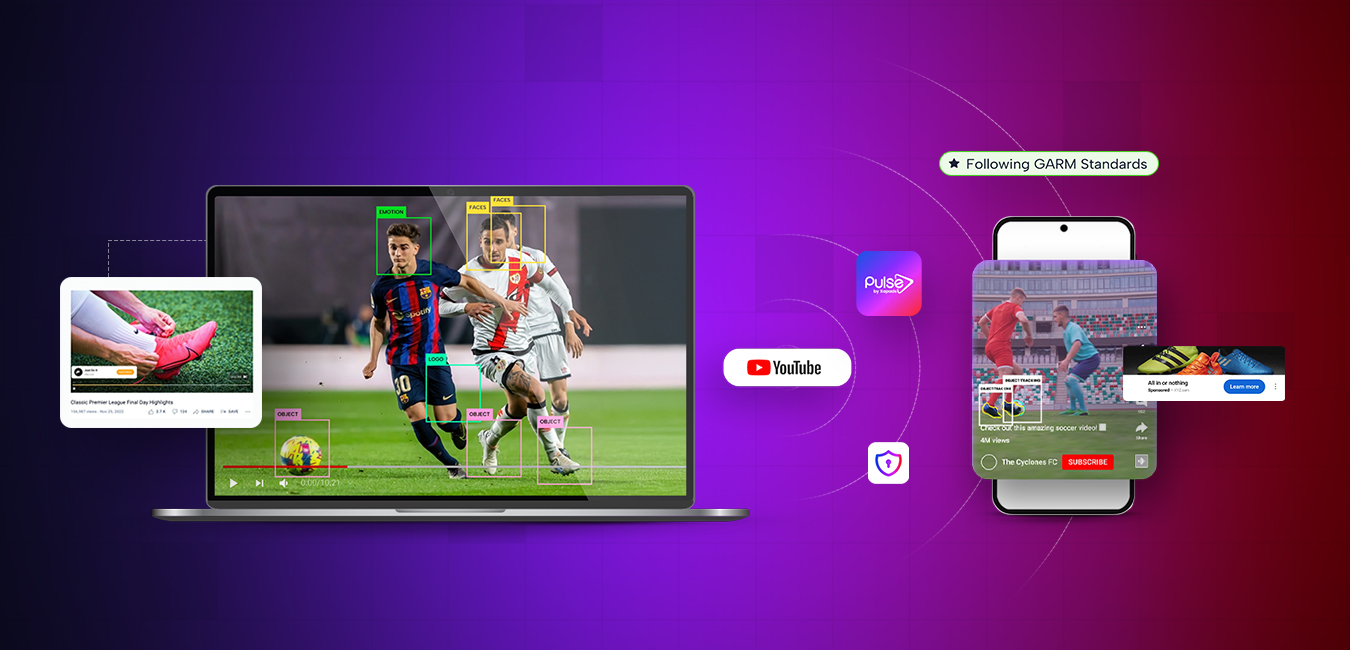
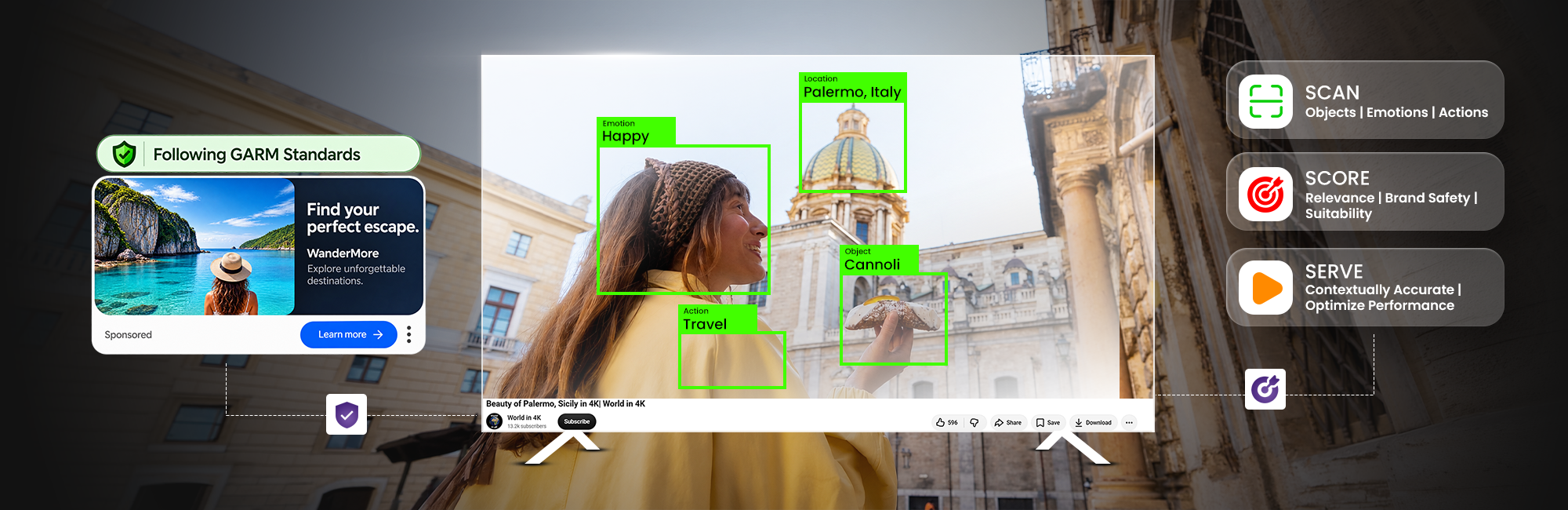
This is where Contextual 2.0 becomes significant. Instead of asking only what a piece of content is about, AI can understand what is actually happening within it, what appears on screen, which objects are present, what actions are taking place, what is being discussed, and what emotional tone the content carries. For advertisers, this creates a richer layer of context. A sportswear brand, for example, may not simply want to target “sports” content. It may want to appear around training, athletic performance, running, or moments of achievement. A travel brand may want to identify destination-led scenes, hotels, airports, or travel experiences while avoiding unsuitable environments.
This deeper understanding also creates greater control over brand safety and brand suitability. Instead of relying only on broad exclusions, advertisers can evaluate whether the specific content environment is relevant, appropriate, and aligned with the brand.
AI Is Making Context Faster, Granular, and More Actionable
The real change AI brings to contextual advertising is not just the number of signals it can identify. It is the speed at which those signals can be processed, interpreted, and turned into media decisions. A video can contain multiple contextual signals within seconds. AI can continuously scan these environments, identify relevant patterns, score them against campaign objectives, and help determine where an ad should appear. This transforms contextual targeting from a relatively static classification into a more dynamic layer of media intelligence.
And contextual intelligence does not have to replace audience targeting. The two can work together. Audience targeting answers: Who should we reach?
Contextual intelligence answers: What are they watching, what is happening within that content, and is this environment right for the brand?
When these layers work together, advertisers can combine demographic, geographic, device, and audience signals with content-level intelligence to create more precise campaign activation. The Pulse framework reflects this through its audience mapping layer alongside its intelligence, brand safety, and brand suitability layers. This combination takes contextual targeting beyond simply finding relevant content. It helps advertisers make more informed decisions about who to reach, where to reach them, and in what context.
Contextual 2.0 for YouTube
This is where Pulse, Xapads’ AI-powered contextual advertising platform, comes in. Pulse helps advertisers reach relevant audiences on YouTube by understanding the content they are consuming. Its intelligence layer goes beyond keywords to analyze video content frame by frame and identify signals.
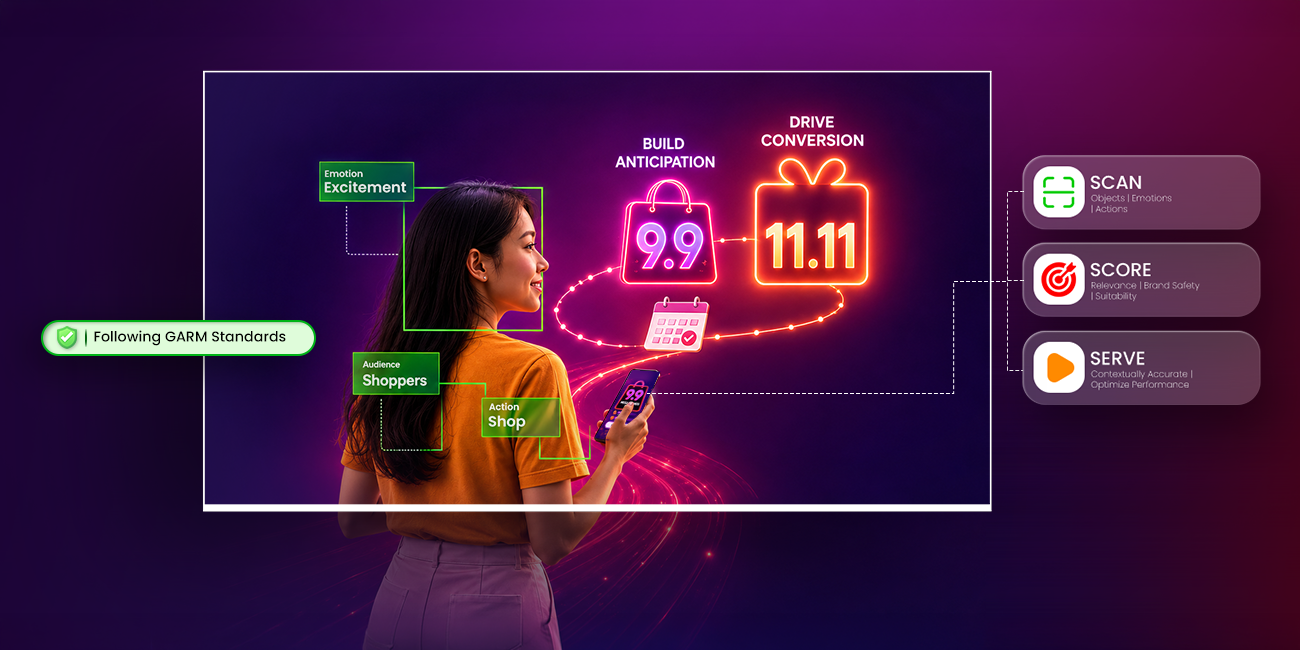
The process follows Scan → Score → Serve.
1. Scan
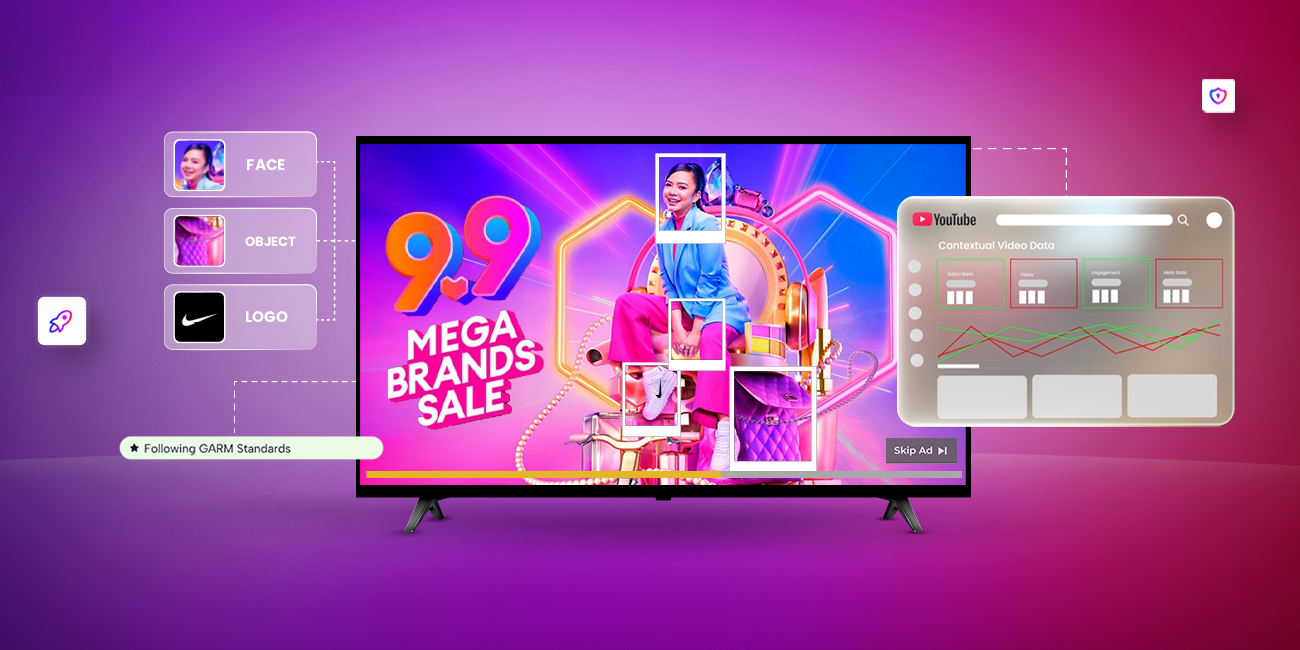
Pulse continuously scans video content to identify contextual, visual, and content-level signals. This can include objects, scenes, faces, logos, actions, emotions, and other signals within the video environment. For an advertiser, this means moving beyond a broad category and being able to identify more specific ad placements for their products.
2. Score
The identified signals are then evaluated for contextual relevance, performance potential, brand safety, and brand suitability. This allows the system to distinguish between content that may belong to the same broad category but offer very different levels of relevance or suitability. The Pulse deck describes this through contextual mapping, performance scoring, content filtering, and suitability controls.
3. Serve
The resulting intelligence informs campaign activation, helping ads appear within contextually aligned and GARM-safe environments. Pulse can also use performance signals to support real-time optimization, allowing campaigns to become more responsive to what is working. The result is a shift from simply buying a category to understanding the specific context within that category.
Context Meets Audience Intelligence
Pulse’s framework combines its core Intelligence Layer with Audience Mapping, Brand Safety, and Brand Suitability. This allows contextual signals to work alongside campaign parameters such as audience, geography, and device rather than operating in isolation.
That creates a more complete view of the media environment. A campaign can identify the right audience, then refine where that audience is reached based on what they are consuming. Geographic targeting can define where the campaign should run, while contextual intelligence can determine which content environments are most relevant within those markets.
This shift also aligns with changing consumer expectations. According to eMarketer, 94% of consumers surveyed across the US, UK, and Canada preferred contextual advertising over ads based on browsing history, while almost 80% said they were more likely to engage with ads that match the content they are viewing.
When audience intelligence and contextual understanding work together, the media buy becomes more precise without depending on a single targeting signal. The opportunity is to understand not just who an advertiser wants to reach, but where that audience is, what they are consuming, and whether that environment is right for the brand.
From YouTube to a Connected Contextual Ecosystem
Contextual intelligence also has the potential to extend beyond a single YouTube format or screen. Pulse is designed to extend across Shorts, in-stream, mobile, web, and CTV, allowing contextual intelligence to become part of a broader omnichannel advertising strategy. This creates an opportunity for signals from one content environment to inform what happens next.
A viewer may discover a travel destination through a longer-form brand experience on CTV, continue researching YouTube Shorts, and later encounter it on mobile web. The screens are different, but the underlying journey can be connected through a richer understanding of context and audience behavior. In this model, contextual intelligence becomes more than a placement tool. It becomes a signal that can inform the broader media journey.
Contextual Relevance Needs Brand Suitability
More contextual signals also mean more responsibility around where brands appear. Pulse separates brand safety from brand suitability. Brand safety focuses on preventing delivery alongside harmful or unsafe environments, while brand suitability allows campaigns to apply filters that reflect the individual brand’s values and sensitivities.
This distinction matters because a piece of content can be technically safe but still not be appropriate for every brand. AI-powered analysis across frame, audio, and context can help identify unsuitable environments while reducing the need for blanket exclusions. The objective is not simply to block more content but to create a better balance between safety, relevance, and scale.
Where Context Goes Next
The future of contextual advertising lies in continuous, intelligent interpretation. As AI evolves, it can move beyond individual signals to understand how scenes, objects, actions, emotions, and audience signals work together. Across YouTube, mobile, web, and CTV, this can make context a dynamic layer of media intelligence, helping brands move beyond finding audiences to understanding the environments and moments where they are most relevant.
Contextual 2.0 is only the beginning. As AI becomes more sophisticated, advertising can become more precise, relevant, and responsive to the moments that matter.
Related Post