Programmatic advertising now runs most digital media buying. Media budgets flow through automated auctions every second, across websites, apps, connected TV platforms, and mobile environments. Yet many advertisers still struggle to explain which platform handles which part of that process, and why the distinction changes campaign outcomes.
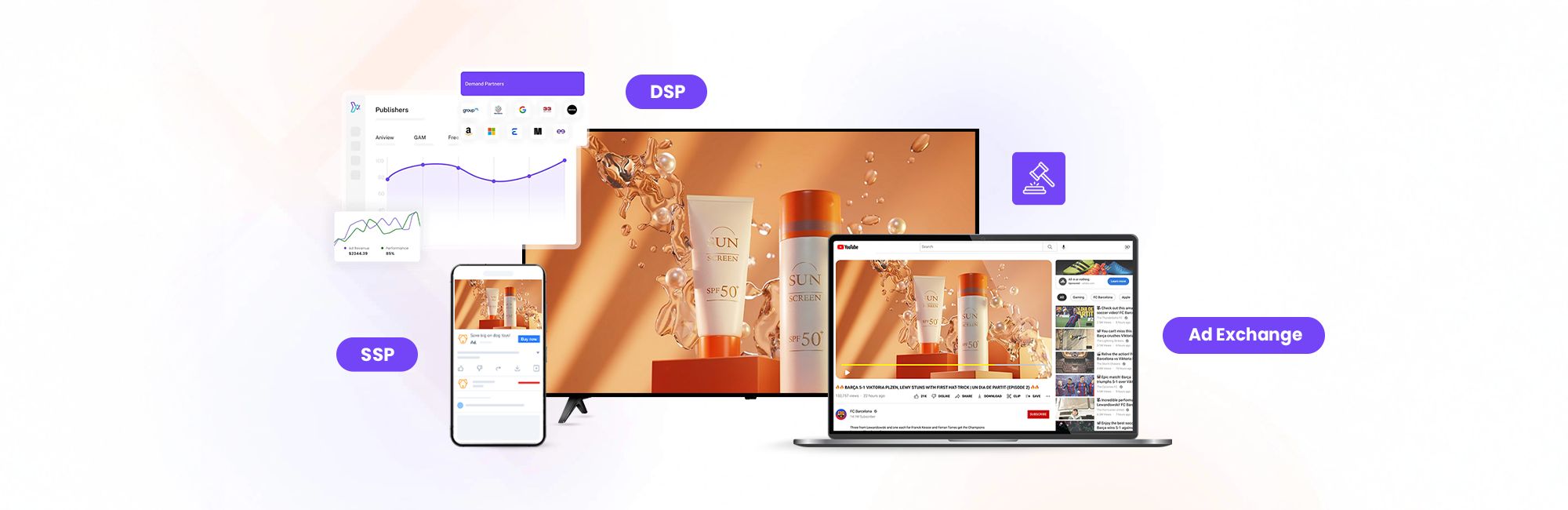
That knowledge gap costs money. Three platforms power the entire programmatic ecosystem. A demand-side platform serves buyers. A supply-side platform serves publishers. An ad exchange connects both and runs the auction. Each one performs a different function. Each links to the others. Together they execute every automated ad transaction running right now, across every screen and market worldwide.
This guide explains each platform clearly, maps how they interact in real time, and shows how advertisers match platform type to campaign objective. Media planners and performance marketers who understand this ecosystem make sharper buying decisions and protect more of their media budgets.
What Programmatic Advertising Means for Advertisers in 2026

Programmatic platforms automate digital media buying. Algorithms evaluate impressions, calculate bids, and deliver ads in milliseconds. Marketing teams define strategy and goals. Technology executes buying decisions across millions of auctions per second without pause.
According to eMarketer, US programmatic ad spending will exceed $200 billion in 2026.US programmatic ad spending will surpass $200 billion in 2026. That same report confirms programmatic now accounts for 92.6% of total display ad spending, making automated buying the clear operating standard for digital media.
A separate eMarketer chart, By 2026, programmatic will account for 90% of display advertising budgets worldwide, confirms the same trajectory at a global level.
For media planners and performance marketers, this means almost every digital impression now trades through automated infrastructure. Understanding DSPs, SSPs, and ad exchanges is a budget accountability requirement, not a technical preference.
The full system runs on three platform types. DSPs serve buyers. SSPs serve publishers. Ad exchanges connect both. Every campaign running programmatically right now, regardless of channel or format, flows through this exact structure.
What a DSP Does and What Advertisers Can Control

A demand-side platform (DSP) is basically the main tool advertisers use to buy ads in the world of programmatic advertising. It gives media planners and marketers one place to handle everything—audience targeting, bidding, budgets, and campaign performance—across a bunch of different ad sources.
Here’s how it works: when a potential ad spot opens up, the DSP jumps into action. It quickly checks out a bunch of details—like device type, location, what kind of content the user is looking at, the campaign’s settings, and any audience data available. If the impression matches the campaign’s targeting, the DSP bids for it automatically.
All this happens in just milliseconds, and it’s happening thousands of times at once. No one needs to babysit the process—it’s fast and precise, saving everyone a ton of time.
Advertisers get to decide how they bid—maybe they stick to fixed CPM, or maybe they let algorithms optimize everything for results, like app installs or video views. All the performance data from every supply source gets pulled together in one dashboard, so advertisers can easily track, compare, and tweak their campaigns whenever they want.
Managed DSP vs Self-Serve DSP
Not all DSPs work the same. They mostly fall into two main groups: managed DSPs and self-serve DSPs.
Managed DSPs give you both the tech and a service team. That team handles setup, optimization, and running the campaigns, letting advertisers focus on big-picture strategy and reviewing the results.
Self-serve DSPs put everything in advertisers’ hands. You and your team can launch, change, and optimize campaigns directly, without going through an external agency.
For 2026, self-serve programmatic buying is blowing up. More brands, founders, and performance teams are jumping on board for better control, faster turnaround, lower costs, and straight-up real-time data at their fingertips.
Why channel-specific DSPs matter
Every inventory type has its own set of rules for getting results. A mobile DSP, for example, focuses on app installs and cost-per-acquisition goals. CTV DSPs handle things like unskippable video, targeting entire households, and keeping brands safe at the content level. YouTube’s contextual tools use AI to scan videos across Google’s platform for smarter ad placements.
If you run a generic DSP on a channel-specific campaign, your results usually suffer. Advertisers who match the DSP to the campaign’s needs get smoother delivery and data that actually tells them something useful.
What an SSP does and why Inventory Quality starts here

SSPs—supply-side platforms—are how publishers sell their ad space. Streaming services, app developers, websites—they all hook up to SSPs to let advertisers buy inventory automatically. SSPs control who gets to bid, set minimum prices, and run auctions for the publisher.
For advertisers, the SSP is where inventory quality starts. Publishers using SSPs with solid fraud prevention serve up cleaner, safer impressions. But publishers using less reliable networks can pass along more invalid traffic, which puts your brand at risk.
SSPs have another trick: they let publishers set floor prices the lowest amount they’ll accept for an impression. If your bid clears that floor, it goes into the auction; if it doesn’t, it’s either ignored or rerouted. Media planners who understand floor pricing build smarter bidding strategies, especially in high-demand spots like premium CTV and top-tier apps.
Header bidding and what it means for buyer competition
Header bidding shakes up the game. It lets publishers send their inventory to multiple SSPs at once, before the ad server even gets involved. More buyers can jump in and compete for each impression, which boosts auction quality for premium supply.
DSPs keep connections to lots of SSPs for precisely this reason. If your DSP hooks into only two SSPs, you’ll miss auctions that a DSP with twenty connections can win. So broad SSP connectivity isn’t just a badge of honor—it genuinely helps you land better inventory.
The SSP a publisher chooses also says a lot about its quality controls. Ones that partner with verification tools—like HUMAN or Pixalate—provide safer, cleaner traffic. Weak SSPs let more invalid impressions slip through. Every player in the chain affects what you end up getting.
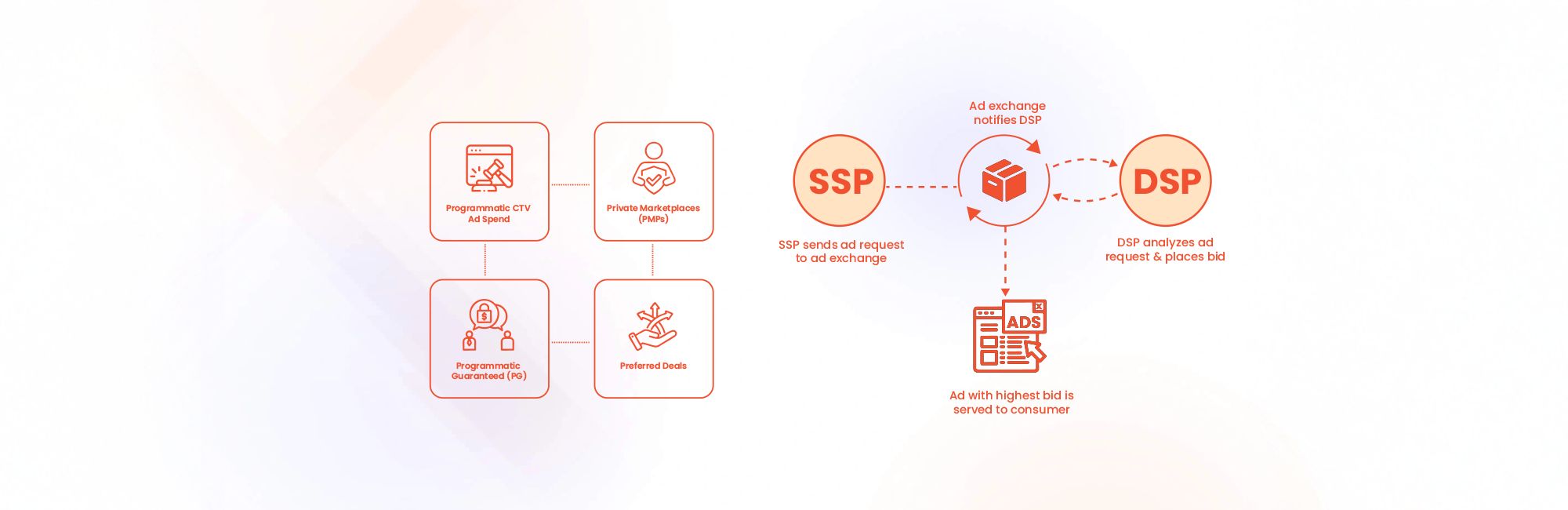
The ad exchange is basically the trading floor. DSPs throw in bids. SSPs put up inventory. The exchange runs the auction, picks a winner, and routes the creative back to the publisher so the ad shows on screen. It’s fast—about 100 milliseconds from bid to display. The exchange doesn’t own inventory; it just makes the buy happen.
There are three main ways buyers use the exchange:
Open exchange: broad reach, variable quality
Open exchange is open to anybody with a DSP. You can tap into tons of impressions, CPMs are usually lower, and a lot of bidders fight over a wide range of publishers.
The downside? Quality swings all over the place. With no filters or tight controls, you get anything from top-notch publishers to ones with questionable safety standards. Targeting can help narrow things down, but you still need to stay on top of fraud and brand safety in open exchange environments.
Private marketplace (PMP): curated inventory, controlled access
A private marketplace is an invitation-only auction. Publishers offer specific inventory to a defined group of buyers at pre-agreed terms. Programmatic mechanics still run the transaction, but access is controlled.
PMPs give advertisers priority access to premium publishers such as top streaming services, quality app networks, and brand-safe news environments, without the opacity of open exchange. Deal IDs identify the inventory package, and DSPs activate the deal automatically when matching impressions appear. PMP combines programmatic efficiency with direct-deal quality, making it the preferred model for brand-sensitive campaigns.
Programmatic guaranteed (PG): reserved inventory at an agreed price
Programmatic guaranteed is the programmatic equivalent of a traditional direct buy. Advertiser and publisher lock in a fixed price, committed impression volume, and campaign window before the campaign starts. Execution is still automated, but price and delivery volume stay fixed throughout.
PG deals suit major brand campaigns requiring impression commitments or premium placement reservation. CPM ranges in PG deals vary significantly by geography, publisher tier, content category, and deal structure. These figures represent general market reference points only and require confirmation per specific publisher negotiation.
Many advertisers use all three buying models in one media plan. Budget allocation across open exchange, PMP, and PG should reflect campaign objective, quality requirements, and commitment appetite.
How DSP, SSP, and ad Exchange work together in real time
The full programmatic transaction completes in roughly 100 milliseconds. Understanding the sequence shows advertisers where value gets created and where it can leak.
An ad slot becomes available on a publisher’s app or streaming content. The publisher’s SSP sends a bid request to connected ad exchanges. That request carries available data about the impression, covering content category, device type, geography, and available audience signals.
The exchange distributes the bid request to connected DSPs. Each DSP evaluates the impression against active campaigns, applies targeting filters, and returns a bid price. The exchange selects the highest qualifying bid, notifies the winning DSP, and routes the creative to the publisher. The ad loads. Total time elapsed: roughly 100 milliseconds.
Where the advertiser’s media budget actually goes
Not every dollar in a programmatic CPM reaches the publisher. Each platform layer takes a fee. The DSP charges a technology fee. The exchange takes a percentage. The SSP takes its cut before passing revenue upstream. What an advertiser commits in spend does not equal what a publisher receives in revenue.
eMarketer’s Programmatic Advertising Forecast and Ad Tech Trends H1 2025 identifies supply chain transparency as a top-priority concern for media buyers in 2026. Advertisers who understand the fee waterfall ask better platform questions and choose supply paths with fewer unnecessary intermediaries.
Supply path optimisation: removing cost without removing value
Supply path optimisation, called SPO, removes unnecessary intermediaries between a DSP and a publisher. Instead of a bid travelling through multiple SSPs before reaching the publisher, SPO routes that bid through the shortest, most direct path available.
For advertisers, SPO means more of each CPM reaches actual working media. Latency drops, too, which improves delivery quality in time-sensitive environments. DSPs that practice SPO actively extract more value from the same budget without increasing spend.
Key Differences every advertiser needs to understand
The roles are distinct and should never be confused. The DSP manages buying, covering, targeting, bidding, and measurement. The SSP manages selling, covering inventory packaging, floor prices, and buyer access. The exchange manages the transaction, running the auction and executing the match.
Advertisers access inventory through a DSP. Publishers monetise inventory through an SSP. Both parties meet on an exchange. The transaction flows in one direction: advertiser, then DSP, then exchange, then SSP, then publisher. Understanding that direction makes every platform conversation more productive.
How the mobile programmatic stack differs from CTV and display
Mobile programmatic runs through in-app environments and OEM placements on smartphones. Auctions happen inside active app sessions, on device home screens, and across mobile web inventory. Bidding optimises toward user actions such as taps, installs, and registrations.
CTV programmatic runs through apps installed on connected television devices. CTV has never used third-party cookies. Targeting relies on IP-based household data, content-level signals, and platform-provided audience data. Ad formats in CTV are non-skippable by design. Completion rates in CTV environments typically exceed 85%, which is structurally higher than mobile or display formats.
Display programmatic runs through web-based banner and video inventory at the highest volume and lowest average CPM of the three channel types. It requires the most active brand safety and viewability management. Each channel demands different buying logic, different platform infrastructure, and a different measurement framework.
How Mobile Programmatic DSPs drive Performance outcomes
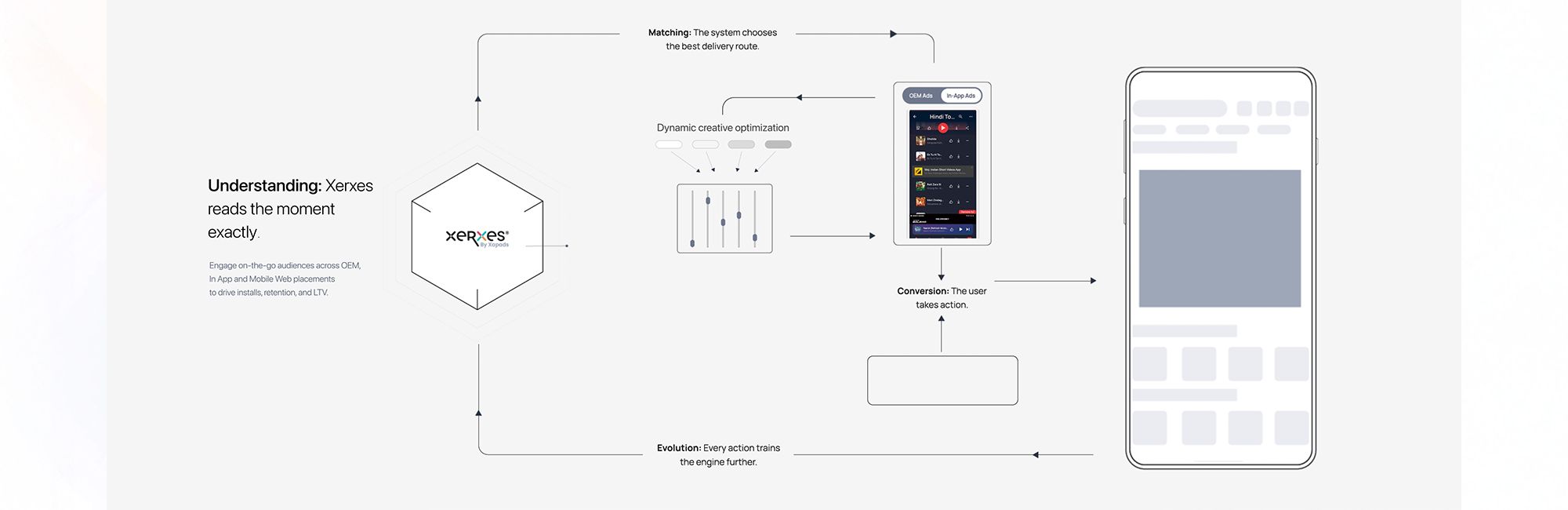
Mobile programmatic is the most performance-oriented environment in the programmatic ecosystem. Advertisers running app campaigns, mobile user acquisition programs, and OEM placements operate in a buying environment built around measurable actions, not just impression counts.
Standard display DSPs optimise toward CPM and click metrics. Mobile performance DSPs optimise toward installs, registrations, and in-app actions. The algorithm logic, signal inputs, and bid adjustments differ significantly between the two. Applying a display-optimised DSP to a mobile performance campaign produces weaker conversion results at a higher cost per action.
A mobile performance DSP integrates attribution data from platforms like AppsFlyer and Human. That data feeds into the bidding algorithm in real time. The DSP identifies which impression types produce the most valuable users and shifts budget toward those sources automatically, without waiting for a weekly review cycle.
CPI and CPA buying: performance over impression volume
Cost-per-install (CPI) and cost-per-action (CPA) buying models connect advertiser spend directly to outcomes. Advertisers pay when a defined action occurs. This model moves delivery risk from the advertiser to the platform.
CPI buying works best for user acquisition campaigns where install volume and user quality matter equally. CPA buying targets downstream events such as purchases, subscriptions, or completed registrations. Both models need a mobile performance DSP with strong ML optimisation to run efficiently at scale.
OEM inventory and In-app supply: The mobile performance edge
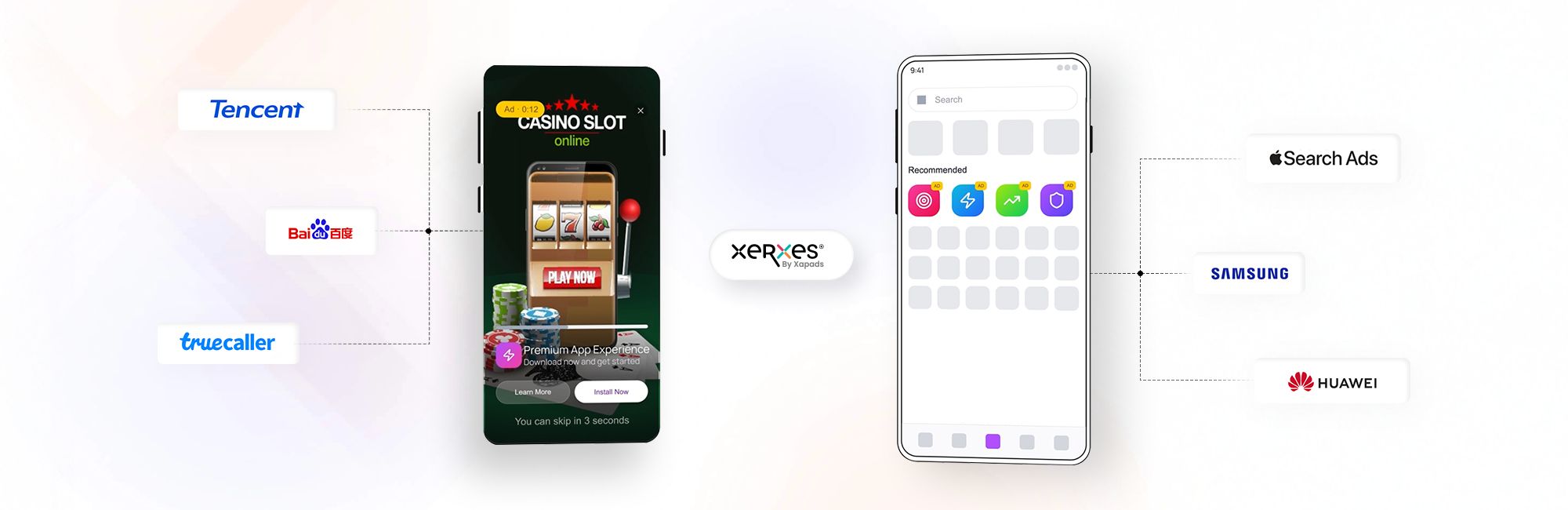
OEM inventory refers to placements built directly into device operating systems. Home screen units, app recommendation formats, and preload campaigns on major Android OEM devices reach users at the device level, before third-party apps compete for attention.
In-app inventory delivers ads inside active user sessions, where attention levels are measurably higher than on mobile web. The combination of OEM placements and premium in-app supply gives mobile performance DSPs an inventory quality edge that browser-based buying cannot replicate.
Advertisers evaluating self-serve mobile performance DSPs should examine four factors: inventory breadth across apps, SSPs, and OEM networks; buying model flexibility for CPI and CPA optimisation; geographic coverage across high-growth markets; and real-time reporting depth without data delays.
What the Programmatic Ecosystem looks like from 2026 to 2030
The programmatic ecosystem evolves continuously. Four structural shifts will reshape how advertisers buy media between now and 2030.
AI bidding is already standard inside most DSPs. By 2028, agentic buying will shift from experimental to operational. AI agents will autonomously manage campaign parameters, negotiate deal terms, and reallocate budgets across platforms in real time. Advertisers who build clean campaign structures and clear KPIs now will deploy agentic systems more effectively when that capability goes mainstream.
Sell-side curation is also reshaping inventory access. SSPs and publishers bundle inventory with contextual signals and offer pre-packaged audience deal structures to buyers. Advertisers receive curated inventory combined with contextual relevance in a single deal, rather than raw impressions from an open pool. According to eMarketer’s Programmatic Advertising Forecast H1 2026, curated deals represent a growing share of programmatic transactions in 2026.
Third-party cookies remain active in Chrome as of 2026, following Google’s decision to abandon deprecation in July 2024. The industry has continued building alternative targeting infrastructure in parallel. Contextual targeting, IP-based signals, and publisher-side audience tools are growing in sophistication. By 2030, programmatic targeting will operate across a multi-signal environment where no single identity approach dominates.
Programmatic infrastructure is also expanding beyond web, mobile, and CTV. Digital out-of-home screens, in-car displays, and retail media networks are all building programmatic buying layers. Advertisers who understand the core DSP-SSP-exchange framework will adapt to these new environments far faster than those who do not.
How the Xapads ecosystem fits the Programmatic stack
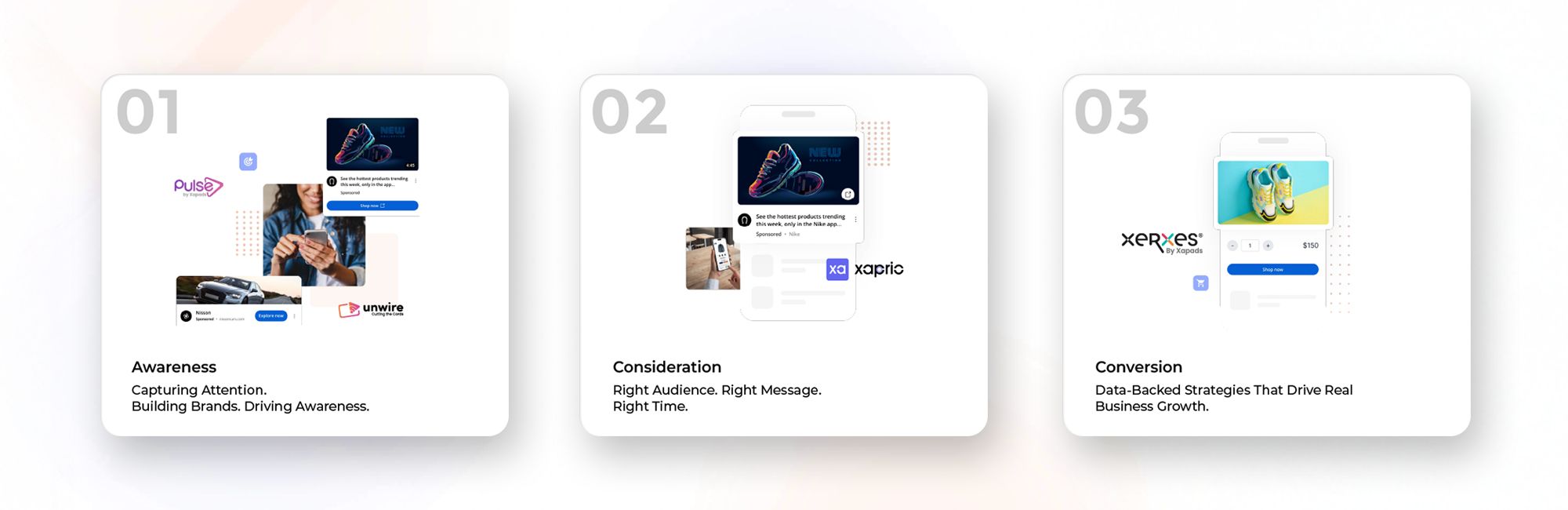
Every programmatic campaign runs across a funnel, from initial brand exposure to measurable conversion. Each stage requires a different platform type, a different format, and a different optimisation logic. Our Xapads Media ecosystem maps a dedicated, purpose-built platform to each stage of that funnel, covering 1.9B+ audiences across 245+ countries through technology designed for the specific demands of awareness, consideration, and conversion.
Awareness
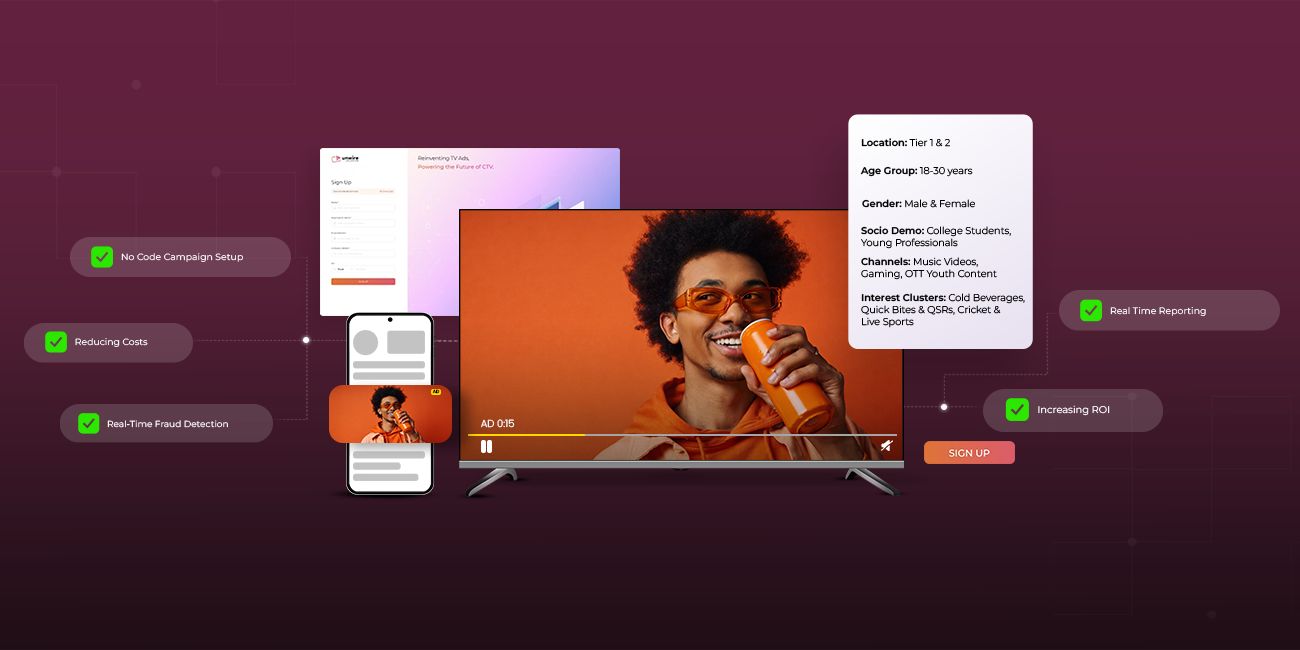
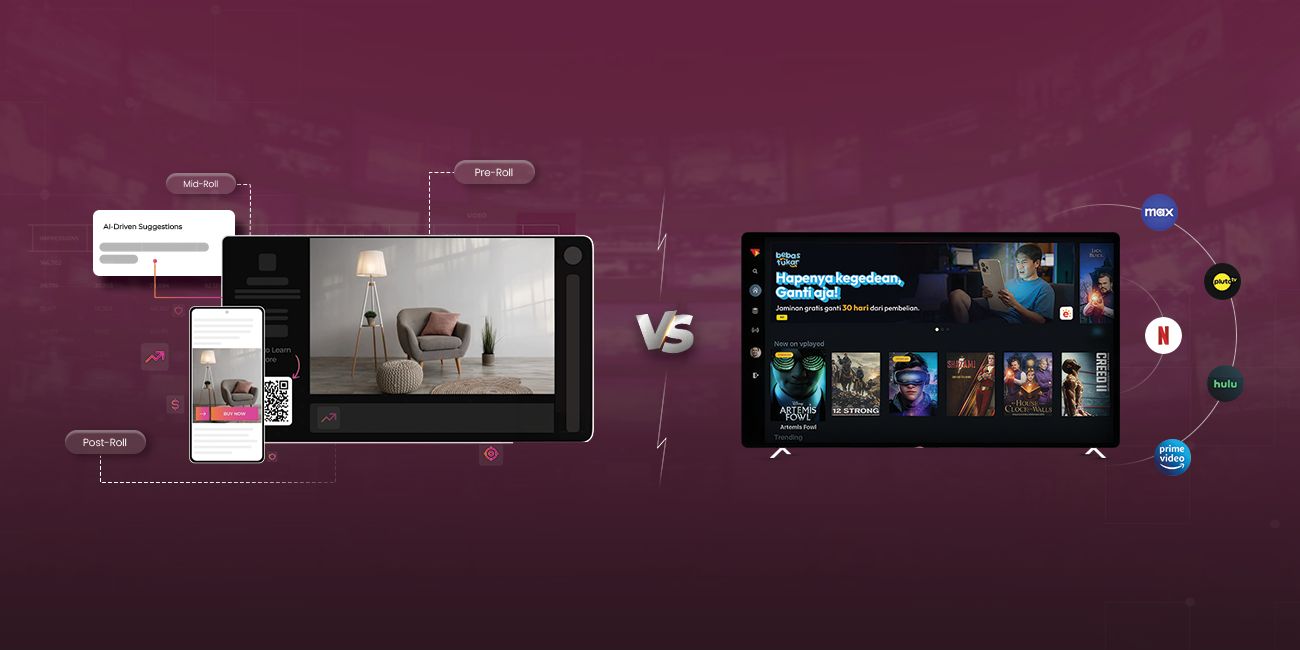
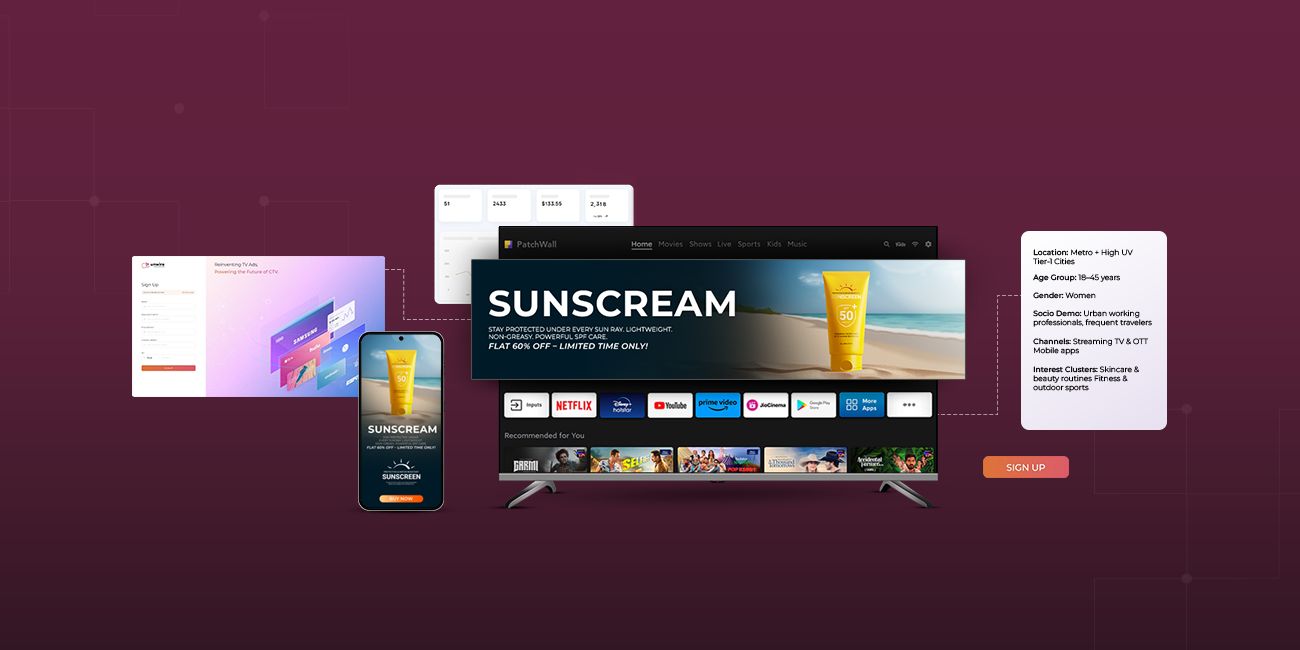
Unwire.tv delivers programmatic CTV campaigns across 120M+ global households through non-blockable video ads. The platform achieves near-full-screen inferred viewability and an 85%+ view-through rate across premium channels, with 99%+ fraud-free delivery verified by HUMAN and Pixalate. Advertisers access OTT header bidding, Smart Media Planner, PMP and PG deal configuration, context-based targeting by content genre across 20 categories, and real-time reporting dashboards from a single platform.
PulseVid.ai powers YouTube advertising through AI-driven contextual targeting. The platform analyses video content signals including keywords, themes, visuals, audio, and sentiment, then places ads in brand-suitable environments aligned with GARM safety standards. Categories such as violence, adult content, and hate speech are automatically filtered. Advertisers gain clear visibility into which YouTube content environments drive the strongest brand safety and campaign performance.
Consideration
Xaprio runs omnichannel branding campaigns from a single DSP across CTV, OEM, native, display, and video. The platform delivers 2x brand recall lift, supports 50+ ad formats, and generates an average of 7.4 seconds of rich media engagement per session. Time spent on Xaprio rich media runs 3.2x higher than static banners. Supply access covers 70+ global and OEM partners with 100% transparent buying. Advertisers running consideration campaigns use Xaprio to maintain consistent, cross-screen brand presence through a single unified media plan.
Conversion
Xerxes powers mobile performance campaigns across 18K+ websites, 25K+ mobile apps, and 50+ SSPs. The platform runs AI and ML optimisation natively across CPM, CPC, CPI, and CPA buying models, connecting spend directly to measurable outcomes such as installs, registrations, and purchases. Xerxes reaches 472M+ monthly active users in India, 212M+ across Southeast Asia, 122M+ in the Americas, and 105M+ across Europe. Advertiser teams run the full platform independently through a self-serve dashboard with no managed service layer required.
This structure connects awareness, consideration, and conversion through one coordinated programmatic ecosystem. Each platform performs one specific role. No single product attempts to do everything. Explore the full ecosystem at xapads.com.
How to Match DSP type to campaign objective
Programmatic is not one tool. It is a stack of tools, each built for a different objective. The DSP type, buying model, and inventory channel must all align with what a campaign needs to achieve. Advertisers who match these three variables correctly get cleaner delivery, more relevant measurement, and stronger returns from the same media budget. Those who do not end up running the right message through the wrong infrastructure, which produces weaker results at a higher cost per outcome.
Awareness campaigns
Awareness campaigns need broad reach, high-attention formats, and conditions that build strong brand recall. CTV programmatic delivers non-skippable video to household-level audiences in lean-back viewing environments, where completion rates typically exceed 85%. Those completion rates create durable brand impressions that skippable or static formats cannot match at comparable scale. YouTube contextual targeting adds a complementary awareness layer, placing ads alongside relevant, brand-safe video content through AI-driven analysis of keywords, themes, and content signals. Together, CTV and YouTube contextual buying give awareness campaigns both reach and content alignment in environments where audiences engage with full attention.
Consideration campaigns
Consideration campaigns need repeated, engaging contact with audiences already aware of the brand. A single awareness impression does not move a brand into an active decision set. Sustained, cross-screen presence does. Rich media formats running across CTV, display, native, and video simultaneously keep a brand present through longer decision cycles. Omnichannel DSPs managing multiple formats from a single platform give consideration campaigns consistent frequency management, cross-screen sequencing, and unified performance reporting. The result is a brand message that follows audiences across devices in a coherent sequence, rather than fragmented and disconnected placements that each operate in isolation.
Conversion campaigns
Conversion campaigns need precision, speed, and direct outcome measurement. The buying logic, algorithm inputs, and optimisation signals that serve awareness campaigns produce poor results when applied to conversion goals. Mobile performance DSPs optimise bids in real time against install, registration, and purchase signals. CPI and CPA buying models connect every dollar of spend directly to a measurable action, shifting delivery risk from the advertiser to the platform. The mobile in-app environment, combined with OEM placements and performance-focused SSP supply, delivers lower cost-per-action outcomes than awareness-oriented programmatic channels. Conversion campaigns belong in purpose-built performance environments where the platform algorithm, buying model, and inventory type all point toward the same measurable outcome.
How Xerxes gives advertisers self-serve mobile performance access
Most advertisers running mobile performance campaigns either depend on managed services or work through general-purpose DSPs not designed for performance outcomes. Xerxes provides a self-serve mobile performance DSP built for outcome-driven campaigns.
Xerxes runs on AI and ML optimisation. Advertiser teams access the full platform independently. Campaign setup, audience targeting, bid management, and performance reporting all run from a single self-serve dashboard. No managed service layer sits between the advertiser and live campaign data.
The platform connects to 18K+ websites, 25K+ mobile apps, and 50+ SSPs. Buying models include CPM, CPC, CPI, and CPA, with algorithm-driven optimisation running natively across all four. Advertisers run performance-optimised campaigns at scale without requiring external tools or a managed service layer.
Geographic coverage spans the markets that drive mobile growth. Xerxes reaches 472M+ monthly active users in India, 212M+ across Southeast Asia, 122M+ in the Americas, and 105M+ across Europe. That depth of mobile reach, combined with self-serve access and performance-native bidding logic, makes Xerxes a strong fit for in-house mobile acquisition teams.
Xerxes operates within the Xapads Media programmatic ecosystem, which reaches 1.9B+ audiences across 245+ countries and has earned 100+ industry awards across 9 global offices.
The Bottom line for advertisers in 2026
The programmatic ecosystem becomes straightforward once each role is clear. DSPs buy. SSPs sell. Exchanges connect both. Open exchange, PMP, and PG each serve a different campaign need. CTV, mobile, and display each require a different buying approach and a different platform.
According to eMarketer, programmatic will account for over 92% of all display ad investment in 2026. Advertisers who understand this ecosystem at a platform level, not just a budget level, make better decisions, recover wasted spend, and build more effective full-funnel strategies.
The next step is straightforward. Match each campaign objective to the right platform layer. Then choose tools built specifically for that purpose.
Related Post