Programmatic advertising now powers over 92.6% of all global digital display ad spending, and in 2026, total programmatic spending crosses the $200 billion mark for the first time.
Yet most media plans still get one thing consistently wrong. The deal type gets far less attention than the budget, the creative, or the targeting. That is a costly oversight.
Brands pour millions into programmatic campaigns and still waste a significant portion of that spend. Not because the inventory is wrong. Not because the audience targeting is off. The deal structure simply does not match the campaign goal. A performance campaign running on programmatic guaranteed inventory. A brand launch is sitting in open auction with zero safety filters. These mismatches drain ROI quietly, quarter after quarter, without anyone identifying the root cause.
This guide covers every type of programmatic deal active in 2026. It explains how each one works, what it actually delivers, where it fits in a campaign strategy, and how the landscape is shifting between now and 2030. It also goes beyond the standard four deal types to cover OEM advertising and contextual YouTube targeting, two layers that most media planning resources still overlook entirely.
What Is a Programmatic Deal?

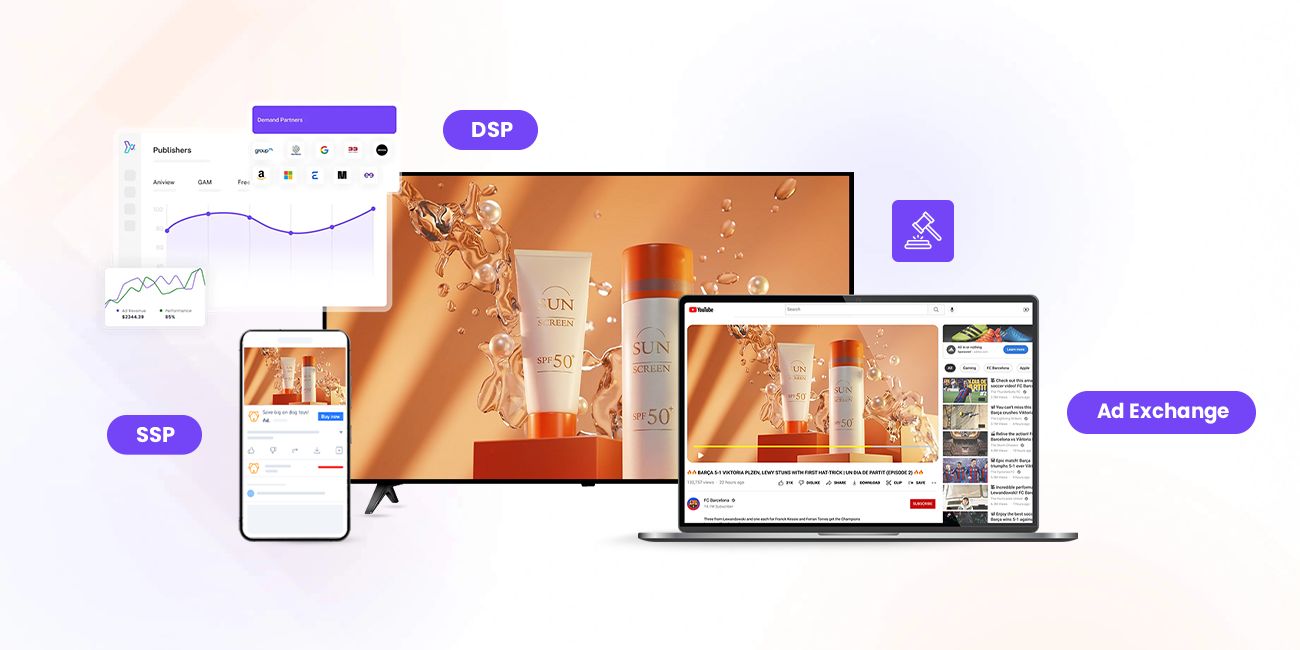
A programmatic deal is an automated agreement between an advertiser, operating through a demand-side platform (DSP), and a publisher, operating through a supply-side platform (SSP), to buy and sell ad inventory. Technology handles the transaction. Some deals settle in milliseconds through live auctions. Others run through pre-arranged automated pipelines where pricing, volume, and delivery terms are fixed in advance.
The programmatic ecosystem connects DSPs and SSPs through ad exchanges. Publishers make inventory available and advertisers can bid on or reserve that inventory. The technology layer in the middle handles matching, pricing, and delivery.
Not all programmatic inventory sells the same way. The deal type establishes the rules. It defines who can access the inventory, at what price, whether delivery is guaranteed, and how much control the advertiser holds over the placement environment. These rules have a direct impact on brand safety, cost efficiency, delivery certainty, and overall campaign performance.
The global programmatic display market is projected to reach $959.7 billion by 2036, expanding from $106.4 billion in 2026 at a compounded annual growth rate of 24.6%. At this scale, deal type fluency is not optional knowledge for media planners and brand advertisers. It is foundational.
Why Deal Type Selection Matters More Than Budget in 2026
Most media planning conversations open with the budget question. How much to spend, which channels to activate, and which audience segments to prioritize. The deal type question almost never gets the same attention at the planning table, and yet it determines how well everything else actually performs.
Three questions that every media planner and advertiser must answer before a single campaign goes live.
The first question: Is this a reach campaign or a performance campaign? Reach campaigns need scale and brand-safe content environments. Performance campaigns need efficiency, measurable actions, and tight cost control at the install or acquisition level. Each goal belongs in a different deal structure.
The second question: how much placement control does this campaign require? Luxury brands, pharmaceutical advertisers, and financial services campaigns cannot afford to appear next to harmful, irrelevant, or low-quality content. That level of control requires closed deal environments, not open auction.
The third question: does delivery need to be guaranteed? A brand launch tied to a fixed calendar date needs guaranteed impressions delivered on specific days. A performance campaign optimizing toward a cost-per-install goal needs the flexibility to shift spend dynamically based on what is converting. These two campaign types require completely different deal structures.
Getting even one of these three answers wrong means the deal type will undermine the campaign before a single impression is served.
The 4 Core Types of Programmatic Deals
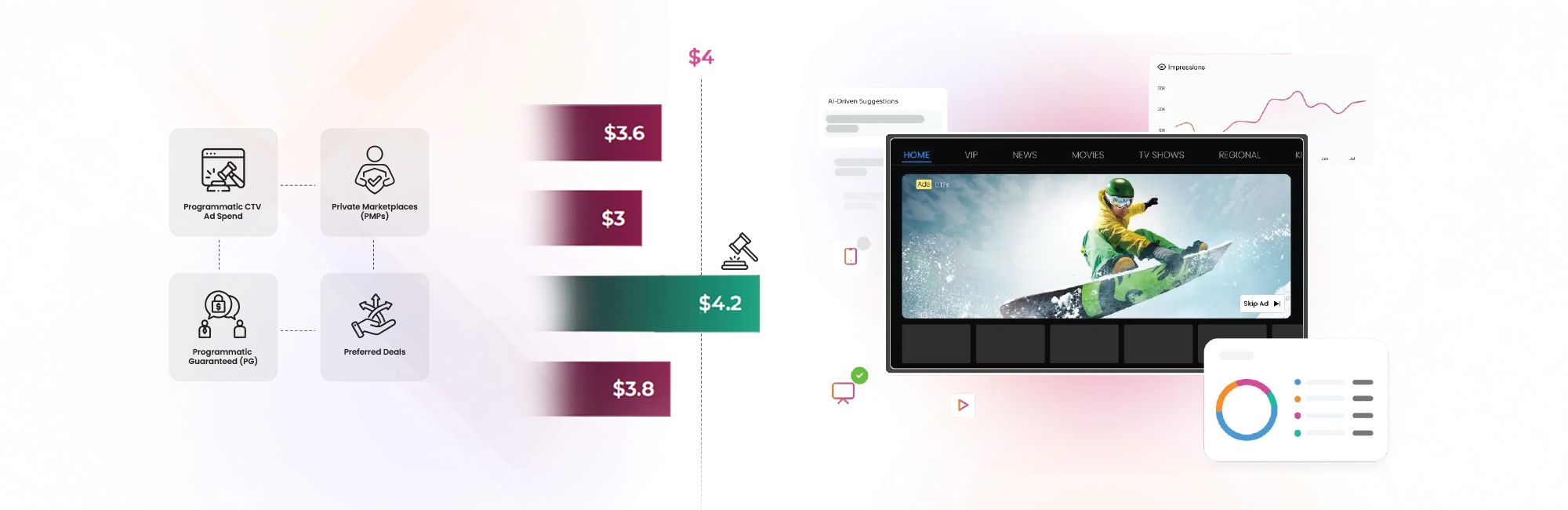
1. Open Auction (Real-Time Bidding or RTB)
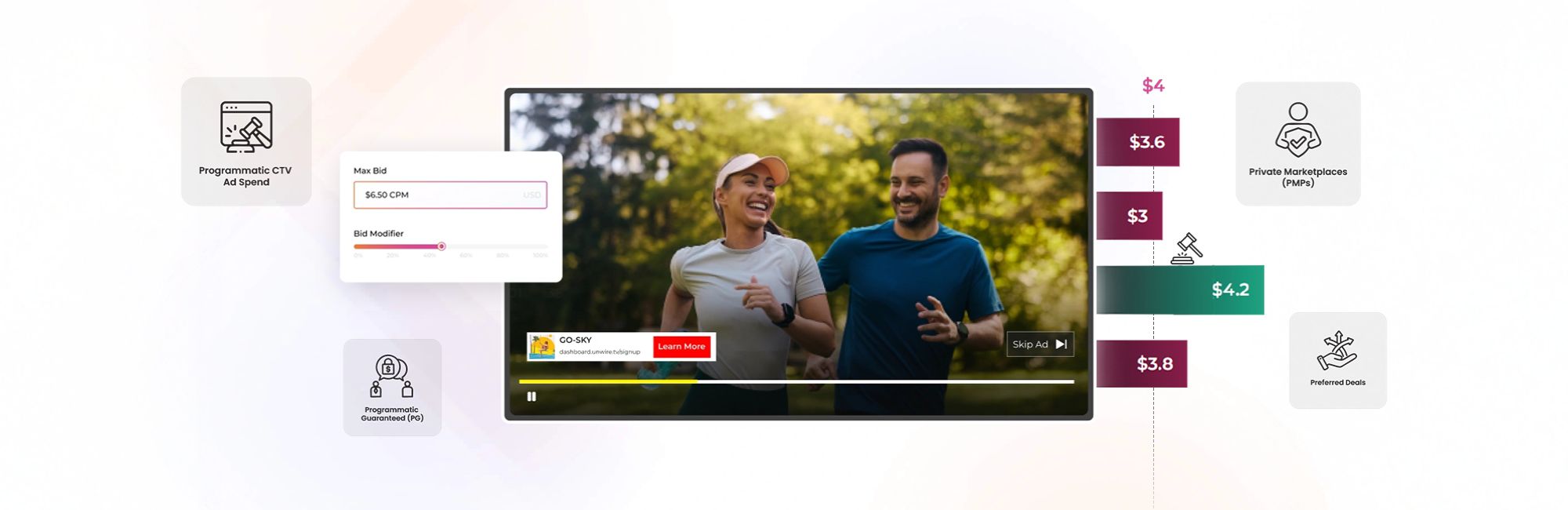
Open auction is the most widely used deal type in programmatic advertising. It is also called real-time bidding (RTB) or the open exchange. Any DSP connected to an ad exchange can bid on available publisher inventory the moment a page or app loads. The publisher sets a floor price. Every eligible DSP evaluates the bid request and places a bid at the same time. The highest bid wins the impression in under 100 milliseconds.
Here is how the mechanics work in sequence. A user opens an app or a webpage. The publisher’s SSP fires a bid request to the ad exchange containing information about the impression and the user context. All connected DSPs evaluate the request and place bids. The winning DSP gets the impression. The ad serves. The entire process completes within the time it takes a page to finish loading.
Real-time bidding accounted for 41.3% of the global programmatic advertising market share in 2025, making it the single largest transaction method in the ecosystem. Open auction works best for campaigns that need scale and broad reach. Advertisers testing new markets, running app install campaigns at volume, or pushing cost-efficient awareness use open auction as their primary buying environment.
The tradeoff is real and worth understanding clearly. Open auction carries the lowest brand safety of all programmatic deal types. Exposure to ad fraud is higher, particularly in mobile in-app environments. Transparency into exact placement environments is limited. There is a documented risk of data leakage through bid stream exposure. Every open auction campaign, especially in mobile, needs active MMP integrations and fraud verification tools running at all times.
Pros of Open Auction
Maximum reach across thousands of publishers simultaneously. No minimum spend commitment, which makes it the easiest deal type to start and test. Flexible buying models from CPM through CPA. Fast to launch with minimal setup complexity.
Cons of Open Auction
Lowest brand safety of all deal types. Higher ad fraud exposure, especially on mobile in-app inventory. Limited visibility into placement environments. Bid stream data leakage risk. No guaranteed delivery or price stability.
Brand safety guidance for open auction
For campaigns in sensitive verticals, including finance, healthcare, or luxury, always layer in third-party brand safety verification. Tools from providers like Integral Ad Science (IAS) and HUMAN filter fraudulent or unsafe inventory at the bid level before an impression is ever purchased.
How open auction connects to the full programmatic stack
Open auction is the primary environment for performance-driven campaigns, especially in mobile programmatic. It provides the scale and flexibility required for real-time optimisation across large volumes of in-app and mobile web inventory.
When Xerxes, a mobile performance DSP from Xapads, runs open auction campaigns, it focuses specifically on mobile environments. The platform operates across 25,000+ mobile apps, and 50+ SSPs, supporting CPM, CPC, CPI, and CPA buying models. It delivers reach across India (472M+ monthly active users), Southeast Asia (212M+), the Americas (122M+), and Europe (105M+).
This level of scale and performance optimization is driven by open auction access within mobile ecosystems, where real-time bidding and continuous optimization enable efficient outcome-based campaigns.
2. Private Marketplace (PMP)
A Private Marketplace, commonly called a PMP, is an invitation-only real-time bidding environment. A publisher or a group of publishers curates a pool of premium inventory and shares access exclusively with selected advertisers through a unique Deal ID. Bidding still happens in real time, but inside a controlled ecosystem rather than the open exchange.
The mechanics work like this. A publisher creates a Deal ID and defines the available inventory, the floor price, and the list of eligible buyers. That Deal ID goes to selected DSPs. Invited advertisers then bid competitively within the closed environment. The highest qualifying bid wins the impression.
More than 4 in 5 programmatic display ad dollars now transact via programmatic direct and private marketplaces, even when social networks are excluded from the analysis. PMP spending is expected to grow nearly 13% year over year, while open exchange spending grows approximately 3%. This shift reflects a clear market-wide preference for inventory quality, brand safety, and measurement transparency over the lowest possible bid price.
PMP deals suit premium brand campaigns that need higher-quality placement environments than open auction provides. Agencies and mid-to-large advertisers use PMP when targeting specific content environments where audience alignment and adjacency to brand-relevant content actually matter. The inventory quality is higher. Fraud exposure is significantly lower. Transparency into what inventory is available is better than anything the open exchange offers.
Pros of PMP
Premium inventory in higher-quality content environments. Better transparency than open auction. Significantly lower fraud exposure. Better CPM efficiency than Programmatic Guaranteed for campaigns that do not need delivery guarantees. Greater brand adjacency control.
Cons of PMP
Less scale than open auction. Higher floor CPMs. Requires either direct publisher relationships or platform access with pre-negotiated deals. More complex to set up than an open auction.
2026 trend worth tracking
Curated marketplaces are reshaping how PMP deals get structured in 2026. Publishers and ad tech platforms now bundle pre-built PMP deal packages organized by content vertical and moment. A Ramadan lifestyle inventory pack. A cricket season sports bundle. A fintech audience deal. Advertisers get instant access to contextually relevant inventory without manually negotiating each publisher relationship. This trend is accelerating as both buyers and sellers look for faster, more efficient paths to premium inventory.
How PMP connects to brand storytelling campaigns
Rich media and brand storytelling campaigns often require curated inventory and controlled placement environments. Xaprio supports branding campaigns through PMP deal structures across OEM, Native, Display, and Video inventory with 70+ global and OEM supply partners. This approach provides access to curated environments with stronger placement control compared with open exchange buying. PMP-based access helps maintain brand-safe delivery while supporting high-impact storytelling formats across multiple inventory sources.
3. Preferred Deals (Spot Buying or First Look)
A Preferred Deal, also called a spot buy or a first-look deal, is a one-to-one, fixed-price arrangement between a publisher and a single advertiser. The publisher offers a specific block of inventory at a pre-negotiated CPM. The advertiser gets first access to that inventory before it enters any auction environment, open or private.
The mechanics work like this. Publisher and advertiser agree on a fixed CPM and an inventory package through direct negotiation. The advertiser then gets first-look priority on that inventory in real time. The advertiser can accept or decline each impression as it becomes available. Any impression the advertiser passes on moves to PMP or open auction.
The most important thing to understand about preferred deals is that inventory is not guaranteed. The advertiser gets priority access and a fixed price, but delivery depends entirely on how much the advertiser actually chooses to buy and how much eligible inventory the publisher generates during the campaign window.
Preferred deals fit well for seasonal campaign moments. Diwali activations, Ramadan campaigns, end-of-year retail pushes, and major sporting events are all situations where advertisers want access to premium inventory at a predictable price without committing to a full guaranteed budget. It is also a practical way to test premium inventory performance before committing to a Programmatic Guaranteed deal.
Pros of Preferred Deals
Fixed, predictable CPM with no bid volatility. First-look priority over all other buyers. No minimum delivery commitment. Strong brand safety because the advertiser selects the placement environment directly. Good for tentpole or seasonal moments.
Cons of Preferred Deals
No guaranteed delivery. Limited scale, typically tied to a single publisher relationship. Requires direct negotiation, which adds time to campaign setup. Not efficient for campaigns that need consistent reach at scale.
4. Programmatic Guaranteed (PG or Automated Direct)
Programmatic Guaranteed is a fixed-delivery buying model where inventory volume, CPM, and campaign duration are defined in advance and executed through programmatic infrastructure. Delivery runs without open auction competition, ensuring controlled pacing and predictable reach across selected inventory sources.
The setup follows an automated DSP-led workflow. Inventory packages, pricing, targeting parameters, and delivery windows are configured within the buying platform. A Deal ID reserves the inventory. When eligible impressions become available, the DSP delivers ads automatically at the agreed price. Campaign pacing, frequency, and delivery monitoring continue in real time.
Unlike traditional direct buying, DSP-led Programmatic Guaranteed supports centralized optimization across reserved inventory. Delivery remains fixed, while pacing, frequency distribution, and performance monitoring adjust dynamically during the campaign. This structure combines delivery certainty with programmatic execution.
Programmatic Guaranteed fits campaigns requiring predictable reach, controlled environments, and reserved inventory access. This includes premium CTV placements, high-impact branding campaigns, limited-availability inventory, and structured rollout campaigns where auction-based buying may not provide consistent delivery.
Pros of Programmatic Guaranteed
100% impression delivery guarantee. Full brand safety with complete advertiser control over the placement environment. Price stability with no auction dynamics inflating CPM mid-campaign. Access to premium inventory that open auction and PMP cannot provide. Consistent delivery pacing throughout the campaign window.
Cons of Programmatic Guaranteed
High upfront budget commitment, with both sides locked in. Low flexibility once the deal is active, as changes require direct publisher renegotiation. Higher setup complexity than open auction or PMP. Not cost-efficient for campaigns that need dynamic optimization toward CPA goals.
2026 setup improvements
API-based deal infrastructure is eliminating the traditional PG setup bottleneck. What previously required days of back-and-forth between DSP and SSP teams now completes in hours through automated deal pipelines. Programmatic Guaranteed is becoming faster and more accessible even for mid-market brand advertisers who previously found the setup process too resource-heavy.
How Programmatic Guaranteed works for CTV campaigns
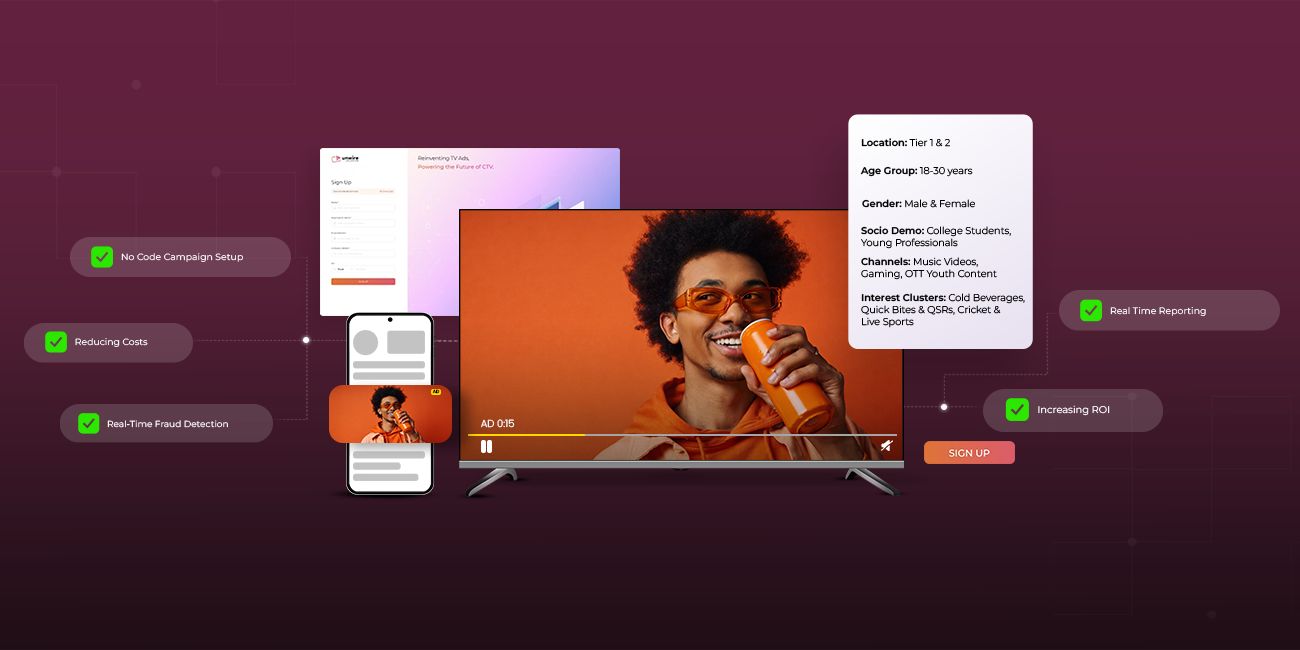
Global CTV ad revenue is forecast to surpass $42 billion by 2028, and Programmatic Guaranteed is the dominant deal type for premium CTV inventory on major streaming platforms. When brands run CTV campaigns through Unwire, the dedicated CTV advertising platform from Xapads, they access both PMP and Programmatic Guaranteed deal structures with 120 million plus global reach, 100% viewability across premium channels, 85% plus view-through rate on non-blockable video ads, and 99% plus fraud-free delivery verified by HUMAN and Pixalate.
The Deal Type Most Advertisers Overlook: OEM Advertising
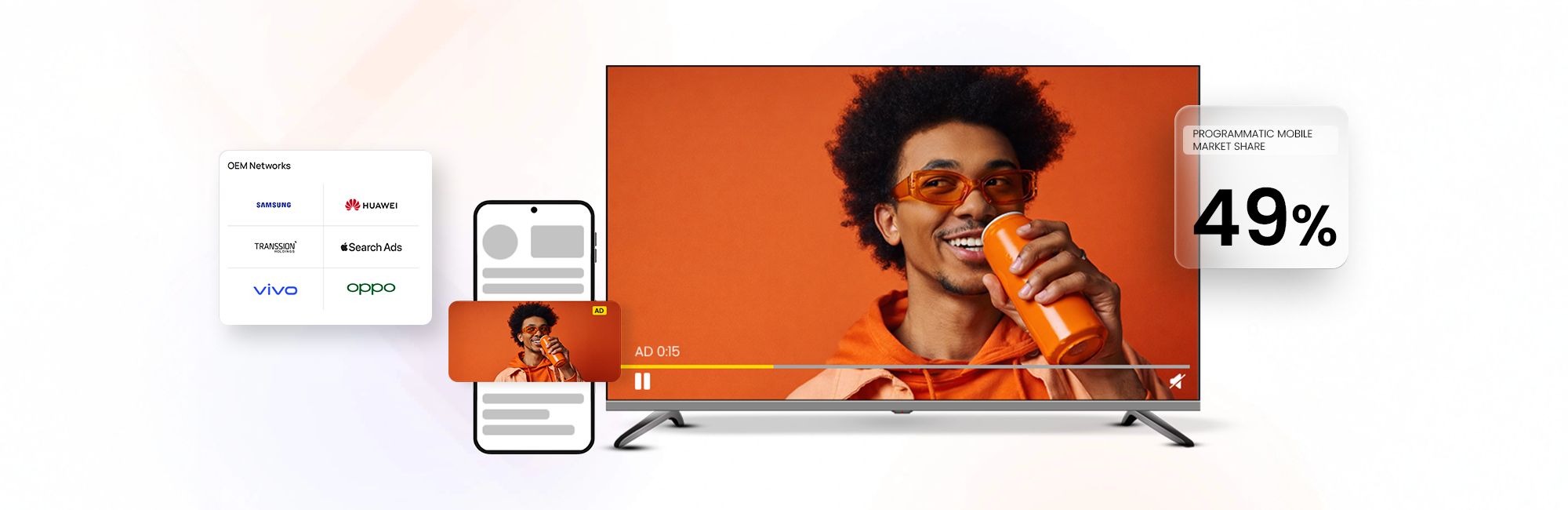
Every programmatic guide covers the four standard deal types. Almost none of them mention OEM advertising. That is a significant gap, particularly for advertisers targeting mobile-first markets across Asia, Latin America, or the Middle East.
OEM advertising gives brand advertisers direct access to device-level inventory. This includes the home screen, app drawer, lock screen, notification panel, and pre-installed app environment on smartphones and smart TVs. This inventory does not trade through open exchanges or standard SSP pipelines. It requires either a direct OEM partnership or access through an OEM-integrated demand platform.
Mobile Display captured 49.1% of the Asia-Pacific programmatic advertising market share in 2025, and the region’s programmatic market is worth $258.17 billion in 2026, growing at a 22.8% CAGR to reach $720.31 billion by 2031. India is forecast to expand at a 24.6% CAGR through 2031 as mobile adoption and digital payment uptake accelerate. The scale of OEM inventory in these markets is fundamentally different from what standard programmatic exchanges offer.
Xiaomi’s OEM network, as one example, reaches 564 million MIUI Monthly Active Users across 272 countries and regions, generating 3.2 billion average daily impressions. The regional breakdown: India at 133 million users, Europe at 104 million, South East Asia at 59 million, Latin America at 56 million, and Middle East at 23 million. Mi TV alone extends this to 60 million plus monthly unique digital users across 106 countries.
No open exchange deal, PMP, or preferred deal provides this type of device-level exclusivity. OEM inventory does not exist in any standard ad exchange. Brands that skip OEM are competing in a more crowded space while leaving enormous, undercrowded reach entirely untapped.
OEM placements appear natively within the device user interface, not inside a browser or a third-party app. The user sees the ad as part of their core device experience. This structural difference is why OEM placements consistently deliver stronger attention and brand recall metrics compared to standard mobile display formats.
Why OEM deal dynamics are different from standard programmatic
OEM inventory does not trade through real-time open exchanges. Access typically requires direct partnerships with device manufacturers or platforms holding OEM supply integrations. This structure reduces auction competition and enables controlled access to device-level placements. As a result, OEM environments often deliver stronger placement visibility, predictable pricing, and premium inventory access compared with open auction buying.
OEM inventory spans multiple device manufacturers across smartphones, smart TVs, and connected devices. Coverage includes placements such as home screen recommendations, lock screen formats, app discovery units, notification surfaces, and pre-installed app environments. These placements exist outside traditional SSP pipelines and operate within device-native UI surfaces.
Geographic OEM strength varies by manufacturer. Xiaomi maintains strong penetration across India, Southeast Asia, Europe, and Latin America. Samsung, Oppo, Vivo, Realme, and other Android OEM ecosystems also contribute significant device-level inventory across regional markets. Access to multiple OEM partners expands reach while maintaining device-native placement control.
MI.Xapads provides OEM inventory access through Xiaomi and additional OEM partnerships, including MIUI home screen placements, Mi TV inventory, and device-level ad formats. The platform delivers OEM reach across Asia-Pacific and global markets without routing through general open exchange environments.
How to Match Every Deal Type to the Right Campaign Goal
The deal type always follows the campaign goal. It does not follow the budget, the channel preference, or which deal type the team is most comfortable running. This is the decision logic that separates consistently effective media plans from ones that quietly waste spend on structural mismatches.
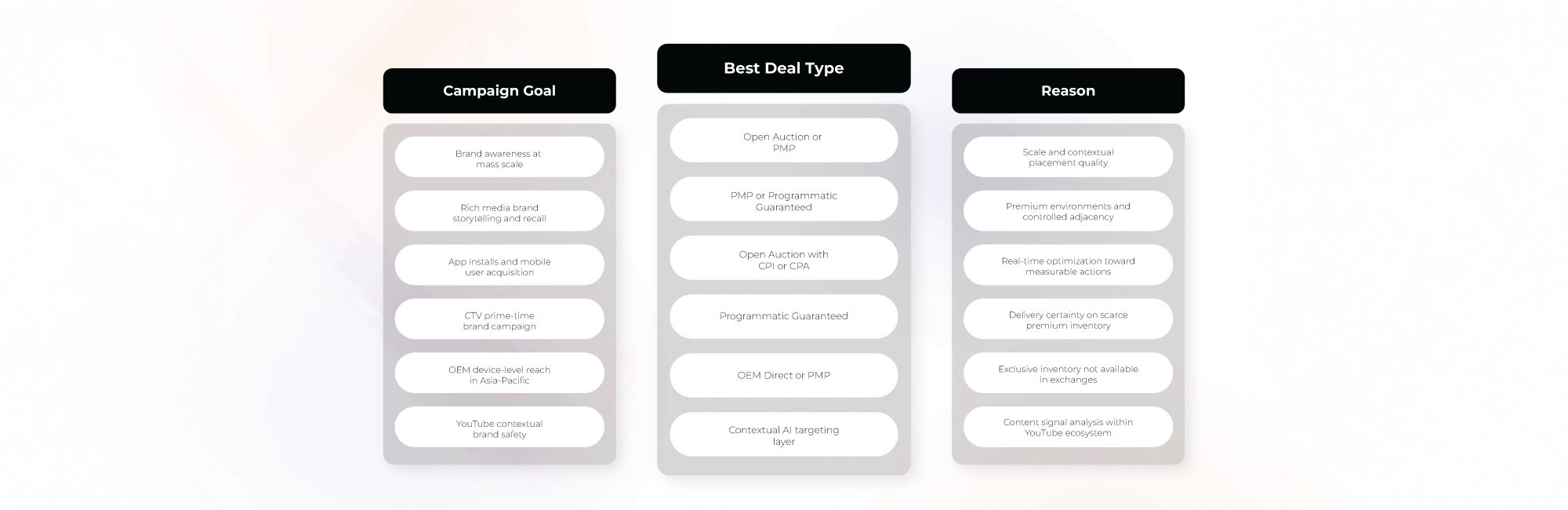
Reading across this framework, the logic becomes consistent. Awareness campaigns need reach and contextual relevance. Performance campaigns need real-time bid optimization toward measurable cost goals. Brand storytelling campaigns need premium inventory in controlled environments. CTV campaigns need guaranteed delivery on inventory where demand consistently exceeds supply. OEM and YouTube each require access methods that sit outside the standard programmatic exchange stack.
The common and expensive mistake is treating all of these as interchangeable buying environments. They are not. Each campaign type has a structural home in the programmatic deal ecosystem. Placing it anywhere else costs money without delivering the right outcome.
The Xapads full-funnel ecosystem maps directly to this: Awareness is powered by Unwire for CTV and Pulse for YouTube. Consideration runs through Xaprio for rich media storytelling. Conversion is driven by Xerxes for mobile performance. This covers 1.9 billion plus total addressable audiences across 245 plus countries.
Programmatic Deal Types Across Channels in 2026
Mobile In-App Programmatic Deals
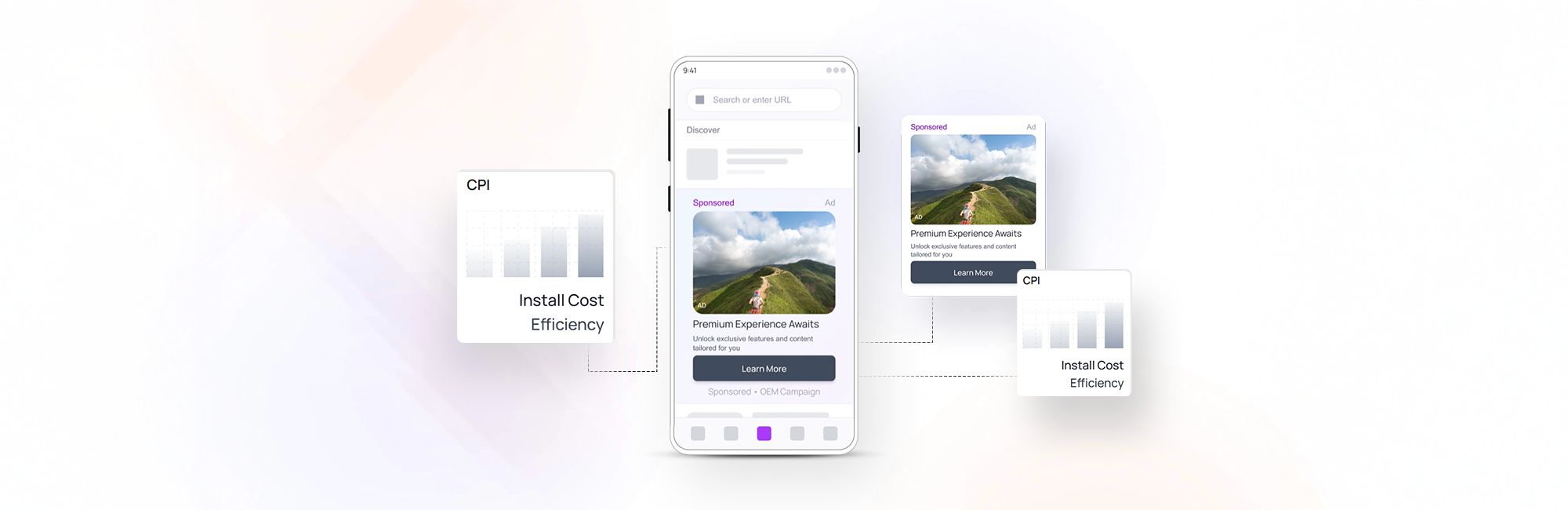
Mobile is the dominant channel in programmatic advertising. In Asia-Pacific, mobile display commands 49.1% of all programmatic ad spend. Open auction dominates mobile in-app buying because it offers the scale and real-time optimization that performance campaigns require at volume.
CPI and CPA buying models run almost entirely through open auction on mobile. Advertisers set target cost thresholds. The DSP adjusts bids automatically in real time to hit install or action goals. The challenge is that mobile in-app open auction also carries the highest fraud risk of any channel. Every mobile performance campaign needs MMP integrations, such as Appsflyer or Branch, to verify installs and filter fraudulent traffic before it drains budget.
PMP and preferred deals exist on premium mobile publishers including high-engagement news apps, utility apps, and content platforms. However, they play a smaller role in mobile than in CTV or desktop display. Performance advertisers in mobile default to open auction. Brand advertisers running mobile campaigns with strict safety requirements look to PMP or preferred deal environments.
The emerging trend in mobile programmatic is contextual targeting replacing behavioral audience targeting. As device-level identifiers become less reliable due to privacy regulation changes, contextual signals based on app category, content type, and real-time session behavior are becoming the primary targeting layer for mobile open auction campaigns in 2026.
CTV Programmatic Deals
CTV is the fastest-growing channel in programmatic advertising right now. US CTV ad spending will reach $37.7 billion in 2026, with nine streaming services now generating over $1 billion in annual ad revenue. Globally, CTV ad revenue is forecast to surpass $42 billion by 2028.
Programmatic Guaranteed deals dominate premium CTV inventory. For prime-time slots on major streaming platforms, inventory is scarce and demand consistently exceeds supply. Advertisers that do not secure CTV inventory through PG deals often find it sold before their campaigns can access it through PMP or open auction paths.
CTV PMP deals are also growing rapidly as streaming fragmentation creates more curated content environments organized by genre, audience type, and geography. Advertisers can now target CTV inventory by content vertical, daypart, and household composition through curated PMP packages without needing full PG commitments.
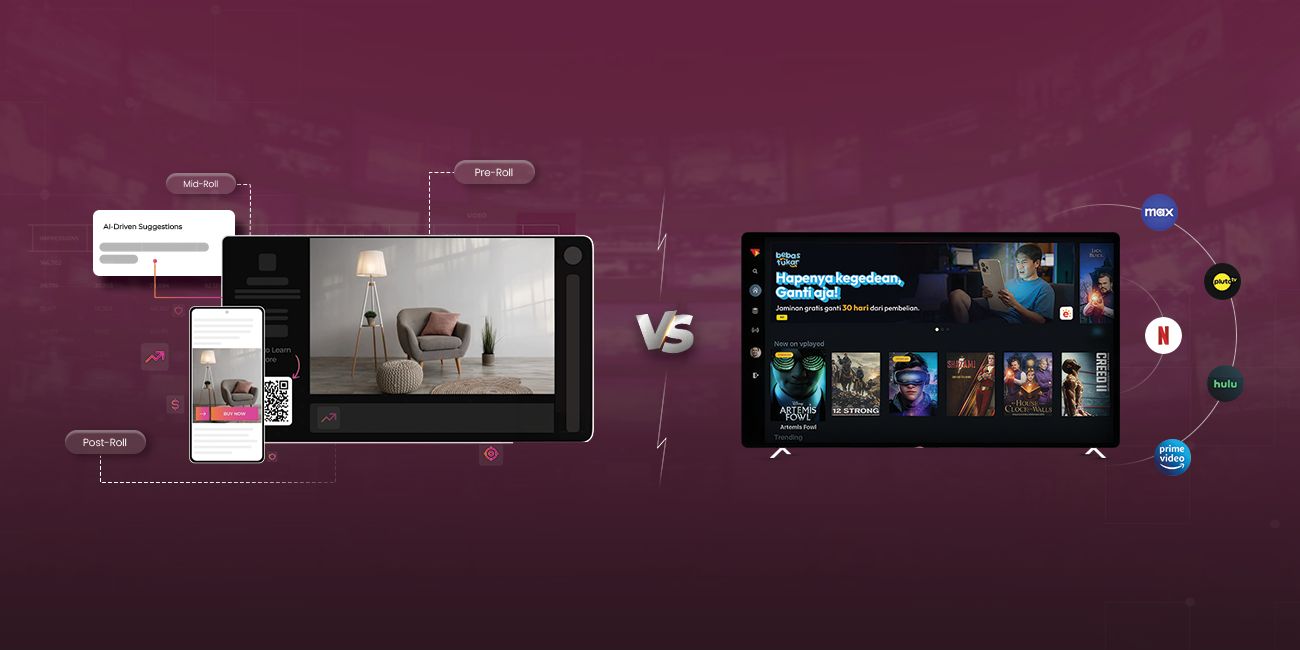
One distinction that matters for deal strategy in 2026: CTV and OTT are related but not identical. CTV refers specifically to content watched on a television screen through a connected device or smart TV. OTT is broader, covering streaming content delivered over the internet regardless of the screen type, including mobile and desktop. Deal structures built for CTV prime-time inventory do not automatically apply to the full OTT environment. Programmatic Guaranteed is built for CTV premium slots. Open auction and PMP are more appropriate across the broader OTT ecosystem.
YouTube Contextual Deals
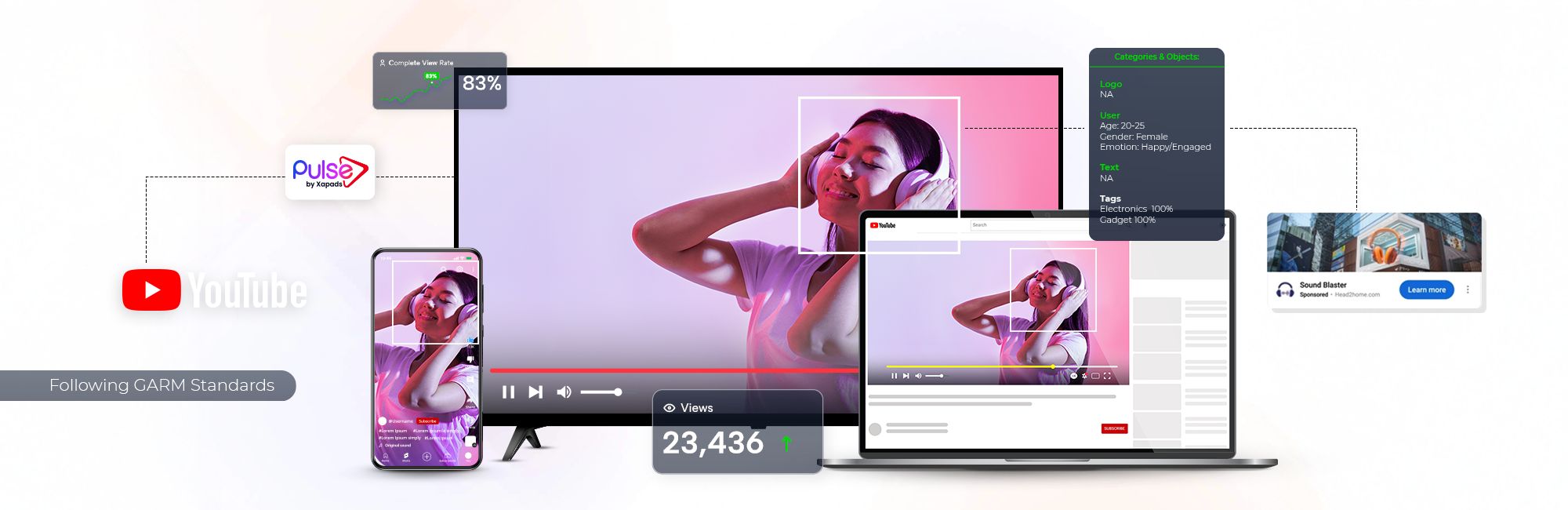
YouTube operates inside Google’s own ecosystem. It does not function as a standard SSP and does not trade inventory through typical open exchange or PMP pipelines in the same way display and mobile inventory does.
What has changed in 2026 is the emergence of contextual AI targeting layers that work on top of YouTube’s inventory system. These tools analyze video content signals including keywords, themes, on-screen text, audio sentiment, brand mentions, and visual context to identify the moments where an ad placement is most relevant and brand-safe.
Platforms operating at this contextual layer analyze YouTube videos using AI to detect relevance, brand safety signals, and content quality. The best ones follow GARM (Global Alliance for Responsible Media) safety standards, filtering out harmful categories including violence, adult content, and hate speech. This produces ads appearing only in contextually aligned, brand-safe YouTube moments rather than running broadly across a channel or topic category.
Pulse by Xapads operates at exactly this layer, using AI to analyze content signals and align video ads with brand-safe, contextually relevant YouTube moments. This is not traditional programmatic deal buying in the RTB or PMP sense. It is contextual intelligence running alongside YouTube’s inventory framework, and in 2026 it is one of the most effective tools available for brand advertisers who care about video placement quality and adjacency safety.
OEM Device Deals

OEM deals operate entirely outside the standard programmatic exchange infrastructure. Device manufacturers control their own inventory, and it is only accessible through direct OEM partnerships or OEM-integrated demand platforms.
The premium inventory in OEM advertising includes home screen takeovers, app drawer recommendations, lock screen native ads, notification panel placements, and pre-installed app environments. These placements appear before users ever open a browser or a third-party app, giving advertisers access to device-native moments that no standard programmatic exchange can reach.
The Asia-Pacific programmatic advertising market worth $258.17 billion in 2026 is growing at a 22.8% CAGR, with India forecast to expand at 24.6% CAGR through 2031 as the fastest-growing individual market. For advertisers targeting these regions, OEM inventory reaches audiences at a scale and exclusivity that standard programmatic exchanges cannot match. The combination of high daily impression volumes, device-level targeting precision, and lower advertiser competition makes OEM one of the most underutilized deal environments in programmatic advertising today.
Programmatic Deal Types: Full Comparison
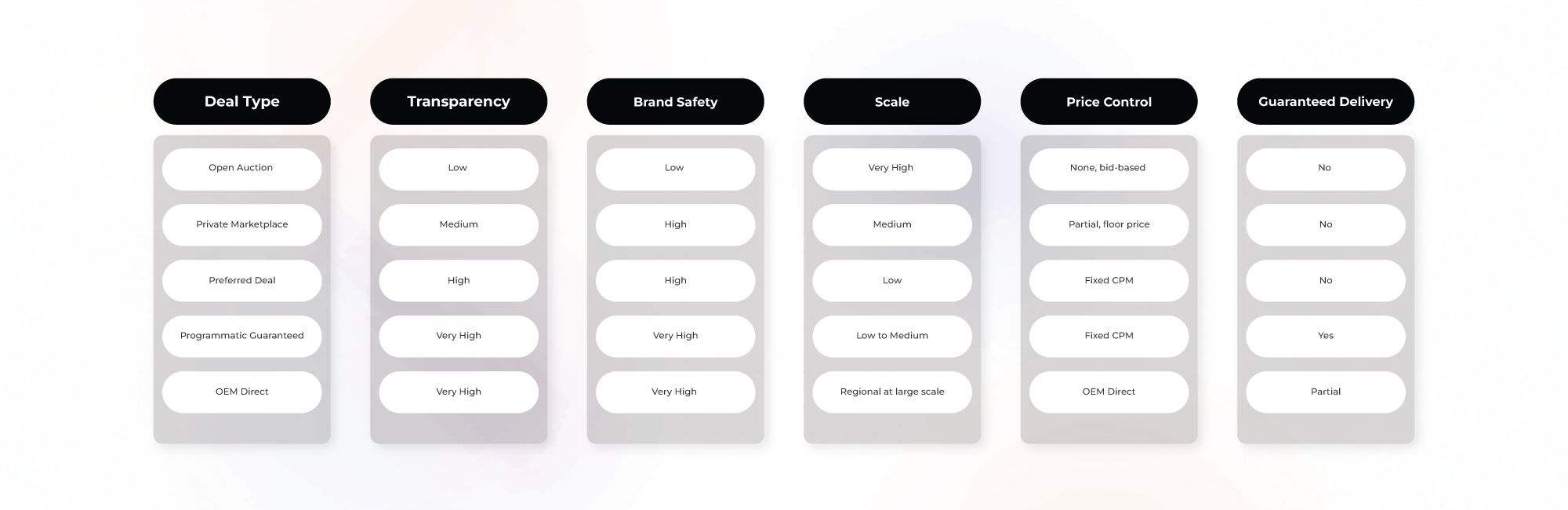
No single deal type wins across every dimension. The right choice is always a function of what the campaign needs to achieve, not which deal type is cheapest, most familiar, or easiest to set up. A practical way to read this table: if the campaign goal is to maximize reach and minimize cost per impression, open auction is the structural choice even with its brand safety tradeoffs. If the campaign goal is to guarantee delivery of a brand message on premium CTV inventory for a product launch, Programmatic Guaranteed is the structural choice regardless of its flexibility limitations.
How Programmatic Deal Types Are Evolving: 2026 to 2030

The four standard deal types will not disappear between now and 2030. But the infrastructure surrounding them is changing fast, and advertisers who understand what is coming will adapt before those changes become the new standard that everyone is chasing.
By 2030, programmatic advertising will generate 84.9% of total global advertising revenue, up from its already dominant position today. In the digital advertising market specifically, 81% of all digital advertising revenue will flow through programmatic channels by 2028. The growth is structural and accelerating. What is changing is how the deal types within that programmatic ecosystem will operate.
AI-Optimized Deal Selection
DSPs already use AI to optimize bids within a selected deal type. The next evolution, emerging by 2027 and 2028, is AI recommending the deal type itself. Based on campaign KPI, historical performance data, inventory availability, and real-time market conditions, the platform will surface the optimal deal structure before the campaign is even configured. Media planners will define goals. The technology will determine the deal architecture. Manual deal type selection will become the exception rather than the default for sophisticated media teams.
Attention-Adjusted CPMs Replace Impression-Based Pricing
The industry is moving from counting impressions served to measuring attention earned. Attention metrics that combine viewability with time-in-view and active engagement signals are already influencing how premium inventory gets priced in PMP deals. By 2027, attention-adjusted CPMs will become standard in Programmatic Guaranteed structures. Advertisers will pay for real cognitive engagement rather than for impressions that were technically delivered but never actually seen.
Green Supply Path Optimization Becomes Standard
Supply Path Optimization (SPO) is already reducing the number of intermediary hops between advertiser and publisher. By 2029, Green Supply Path deals that use direct and fewer-hop routes will become a contractual requirement for enterprise brand advertisers. These paths reduce the ad tech ecosystem’s carbon footprint, improve margin efficiency by removing unnecessary intermediaries, and increase transparency into where ad spend is actually going. The platforms that have already built direct supply relationships, including Xaprio’s Green Supply Path infrastructure, will have a structural advantage as GSP requirements move from best practice to procurement standard.
Curated Marketplaces Replace Generic PMPs
Generic PMP deals open to any advertiser within a broad category are giving way to hyper-curated marketplace packages. These are pre-built deal bundles organized around specific moments, audience types, and content verticals. A Ramadan food and lifestyle bundle. A FIFA World Cup streaming pack. A back-to-school family content deal. Advertisers are buying contextual relevance and moment alignment, not just access to a pool of publisher inventory. The curation layer is becoming the primary value, not the raw inventory itself.
Cross-Device Programmatic Guaranteed Deals
A single PG deal covering both CTV and mobile delivery sequencing, serving the same brand campaign on a connected TV in the living room and a mobile device in the same household, will become standard practice by 2028. This requires CTV and mobile DSPs to operate within a shared deal framework and exchange audience identity signals across device environments. Advertisers who build this cross-device PG capability early will unlock sequencing strategies, frequency management across screens, and cross-device attribution that single-channel PG deals cannot provide.
Common Mistakes Brands Make When Choosing Programmatic Deals
Running performance CPI campaigns on Programmatic Guaranteed inventory. PG locks in delivery on both sides of the deal. CPI campaigns need the flexibility to optimize, pause, and reallocate budget mid-flight based on what is converting. These two are structurally incompatible. Performance campaigns belong in open auction environments where real-time bid optimization is possible, not in PG structures built for delivery certainty.
Using open auction for brand-sensitive verticals without active fraud protection. Pharmaceutical, financial services, luxury, and children’s products all carry real reputational risk when ads appear next to harmful or inappropriate content. Running open auction in these verticals without brand safety verification layers is a liability. These campaigns require PMP or PG environments where placement control is built into the deal structure itself.
Locking the full campaign budget into Programmatic Guaranteed before testing inventory performance. PG is a bilateral commitment. Advertisers who lock significant budgets into PG without first validating that the specific inventory delivers expected results often end up trapped in underperforming deals with no contractual flexibility to adjust. The disciplined path is to test through PMP or preferred deals first, validate performance, and then graduate confirmed high-performing inventory to a PG commitment.
Ignoring OEM inventory entirely. OEM advertising is one of the least competitive but most scalable programmatic opportunities available in mobile-first markets right now. Brands that skip OEM miss exclusive device-level real estate that no open exchange can replicate at comparable scale. The combination of low advertiser competition and high daily impression volume makes this a genuine anomaly in the programmatic landscape that will not persist indefinitely as more advertisers recognize the opportunity.
Misaligning deal type with measurement methodology. A Programmatic Guaranteed campaign evaluated against CPA metrics will almost always appear to underperform. PG is built for delivery certainty and brand safety, not cost-per-action efficiency. The measurement framework must match the deal type and the campaign objective, or the evaluation will consistently produce misleading conclusions that drive bad budget decisions in the next planning cycle.
Frequently Asked Questions
What are the 4 types of programmatic deals?
The four core programmatic deal types are Open Auction (RTB), Private Marketplace (PMP), Preferred Deals (Spot Buying), and Programmatic Guaranteed (PG). Each one offers a different balance of scale, brand safety, price control, and delivery certainty. Selecting the right one is a strategic decision based on campaign goal, not a default setting based on familiarity or budget size.
What is the difference between PMP and Programmatic Guaranteed?
Both deal types offer higher brand safety than open auction, but they work differently. In a PMP, the advertiser still bids competitively inside a closed auction. Winning each impression is not guaranteed. In Programmatic Guaranteed, impression volume, CPM, and flight dates are all fixed in advance. The publisher commits to delivering a specific volume. The advertiser commits to buying it. PG removes auction dynamics entirely and replaces them with a bilateral delivery commitment.
Which programmatic deal type is best for CTV advertising?
Programmatic Guaranteed dominates premium CTV inventory, particularly for prime-time slots on major streaming platforms where inventory is scarce and demand consistently exceeds supply. PMP deals also work well for CTV campaigns that need flexibility without a full volume commitment. Both require access to a dedicated CTV advertising platform rather than a general display or mobile DSP.
What is a preferred deal in programmatic advertising?
A preferred deal is a one-to-one, fixed CPM arrangement where an advertiser gets first access to specific publisher inventory before that inventory enters any auction. Delivery is not guaranteed. The advertiser can accept or decline each impression in real time. Preferred deals provide access to premium placements at a stable price without requiring a full budget commitment upfront.
What is an open auction in programmatic advertising?
An open auction, also called RTB or real-time bidding, is a competitive bidding environment where all eligible DSPs simultaneously bid on publisher inventory. The highest bid wins the impression. Open auction offers the greatest reach and the lowest CPM entry point across all deal types, but it also carries the highest brand safety risk and requires active fraud protection to run responsibly.
Which programmatic deal type works best for mobile app installs?
Open auction with CPI and CPA buying models is the standard deal environment for mobile app install campaigns. It provides the scale and real-time bid optimization that performance campaigns require. For mobile performance campaigns, the DSP must support CPI and CPA buying models with direct MMP integration to measure and verify installs accurately.
What is OEM advertising and how does it relate to programmatic deals?
OEM advertising provides direct access to device-level inventory on smartphones and smart TVs, including home screens, app drawers, and lock screens. It does not trade through standard programmatic exchanges and requires either a direct OEM partnership or an OEM-integrated demand platform. Xiaomi’s OEM network alone reaches 564 million MIUI monthly active users across 272 countries, generating 3.2 billion average daily impressions. That scale and exclusivity is not available through any open exchange.
What is Supply Path Optimization and why does it matter for deal selection?
Supply Path Optimization (SPO) is the practice of reducing the number of intermediary hops between advertiser and publisher in the programmatic supply chain. Fewer intermediaries mean more of the advertiser’s CPM actually reaches the publisher, higher transparency into where ads are serving, and lower fraud risk. SPO is most relevant in open auction and PMP deals, where multiple SSPs may compete to represent the same publisher inventory. In Programmatic Guaranteed, the path is already direct by definition, which is one structural reason PG consistently delivers better brand safety and transparency metrics than open exchange buying.
Final Thought: The Deal Type Follows the Goal
Programmatic ad spending surpasses $200 billion in 2026, and the global programmatic display market is on track to reach $959.7 billion by 2036. The technology is mature. Channels have multiplied. Inventory is abundant across every screen, device, and content environment. The variable that consistently separates effective campaigns from wasted budget is the deal structure chosen at the start of every media plan.
Open auction delivers scale. PMP delivers quality. Preferred deals deliver priority access. Programmatic Guaranteed delivers certainty. OEM delivers device-level exclusivity that no exchange can match.
None of these is universally the right answer. All of them are correct in the right context with the right campaign goal behind them. The brands and media teams that build real deal type fluency are the ones whose programmatic spend performs consistently across the funnel, from the first awareness impression through to conversion. That fluency starts with understanding what each deal type is built to do, and resisting the temptation to default to whatever deal type is most familiar rather than the one that structurally fits the campaign goal.
Related Post